READ I got about four-fifths of the way through the book I’d decided to read for Chile, Isabel Allende’s epic The House of the Spirits, before it occurred to me to take a look at Allende’s biography. Alas, Allende wasn’t born in Chile, but in Peru. Since my self-imposed rules for this project require that the author … Continue reading The Booktrekker: Chile
#WorldKidLit Weekend: Ellie’s Voice or Trööömmmpffff
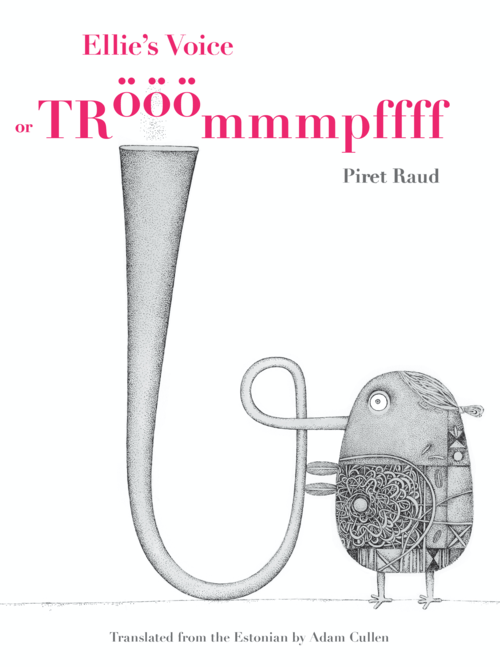
Ellie’s Voice or Trööömmmpffff,* an adorably whimsical Estonian picture book for ages 3-6, is about a seabird named Ellie, who has no voice. “Everything else has a voice,” Ellie thought sadly. "The trees rustle. The waves crash. Even the rain sings when it falls." I’m the only one who can’t make a sound." Ellie felt tears … Continue reading #WorldKidLit Weekend: Ellie’s Voice or Trööömmmpffff
The Booktrekker: Argentina
READ In trying to decide what to read for my blog post on Argentina, how could I not choose a book called The Tango Singer? Many people are aware of the iconic dance, but outside of Argentina, less may be known about the singers whose music helped provide the atmosphere for the tango’s fiery passion. This novel, by Tomás … Continue reading The Booktrekker: Argentina
#INTLYALITMONTH: That’s a wrap!
I cannot believe we have arrived at the end of the first ever International Young Adult Month! It’s been truly an honor to be the first guest editor of #IntlYALitMonth by the Global Literature in Libraries Initiative. It’s been an eye-opening experience for me as I have learned so much about international translated Young Adult Literature … Continue reading #INTLYALITMONTH: That’s a wrap!
#INTLYALITMONTH: We’ll Soon Be Home Again
Written By: Jessica Bab Bonde, Illustrated by: Peter Bergting Translation: Jessica Bab Bonde & Sunshine Barbito Lettering: Kathryn Renta ISBN: 978-1-50671-549-0 Publisher: Originally published in Sweden by Natur & Kultur, 2018, published in English by Dark Horse Books, 2020. Buy it here. We’ll Soon Be Home Again, is a graphic novel #ownvoices collection of stories … Continue reading #INTLYALITMONTH: We’ll Soon Be Home Again
#INTLYALITMONTH: A Castle In The Clouds
A Castle in the Clouds by Kerstin Gier Translated from the German by: Romy Fursland ISBN-10: 1250300193 ISBN-13: 9781250300195 Publisher: Holt Books for Young Readers (Henry Holt & Company) Buy it here Sophie Spark is completing an internship at Castle in the Clouds, a picturesque hotel in the Swiss mountains. On any given day, she … Continue reading #INTLYALITMONTH: A Castle In The Clouds
#IntlYALitMonth: Abigail
Abigail by Magda Szabó, translated from the Hungarian by Len Dix Who doesn't love a boarding school novel? Especially one written by an author who actually experienced life within a similar one for herself? Hungarians love this book so much, they voted it their third most-beloved novel during the Hungarian Big Read of 2005. So … Continue reading #IntlYALitMonth: Abigail
#INTLYALITMONTH: The Courage of Elfina
Written by André Jacob, Translated by Susan Ouriou Illustrated by Christine Delezenne ISBN:13: 978-1-4594-1419-8 Publisher: James Lorimer & Company LTD., Toronto Twelve-year-old Elfina lives in Paraguay with her grandmother, brother, and her dad, who she sees every couple of months as he is a migrant farm worker in Brazil. Elfina is aware that her family … Continue reading #INTLYALITMONTH: The Courage of Elfina
#INTLYALITMONTH: Juliet Respira Profundo
Juliet Respira Profundo Written By Gabby Rivera, Translated by Eva Ibarzabal ISBN: 978059329013 Juliet Respira Profundo is the Spanish translation of Juliet Takes A Breathe, written by Bronx-born Puerto Rican author Gabby Rivera, and translated by Eva Ibarzabal. Juliet Milagros Palante is a proud, brown and queer Bronx girl heading to Portland, Oregon. Juliet never imagined … Continue reading #INTLYALITMONTH: Juliet Respira Profundo
Speculative Fiction in Translation: A Wrap-Up
It's been an honor to bring you some of my favorite works of SF in Translation! I hope these posts have inspired you to read across borders and genres. See below for a list of this past month's posts and more. April 3: SFT: An Introduction April 5: The Queue (tr from the Arabic) April … Continue reading Speculative Fiction in Translation: A Wrap-Up

