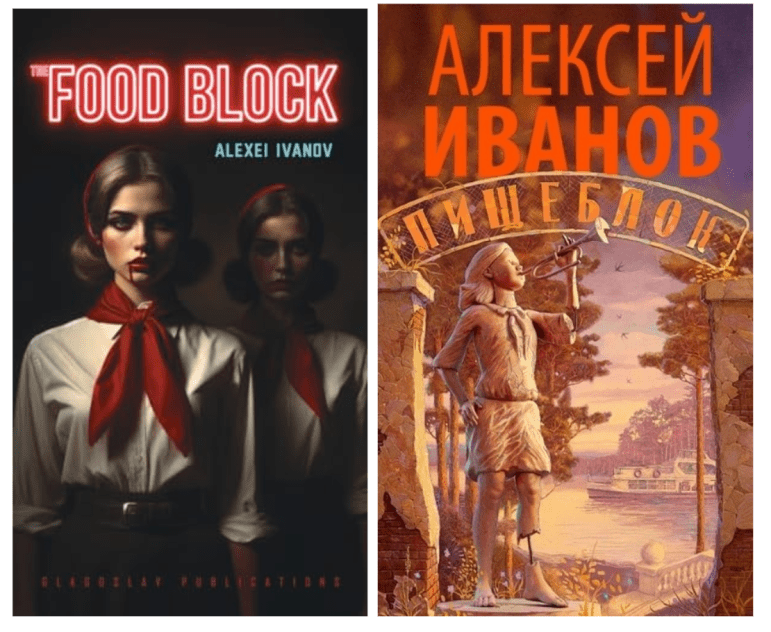
Part thriller, part nostalgic political critique, Alexei Ivanov’s The Food Block (2024, translated from Russian by Richard Coombes and published by Glagoslav Publications) takes place in a pioneer camp on the banks of the Volga set against the backdrop of the 1980 Moscow Olympics.

The Food Block (Пищеблок) was originally published in 2018, and was adapted for television in 2021. Ivanov is a prolific writer, known as much in Russia for his TV and film writing as for his novels. The Food Block, like some of his other projects, mixes genres – it has elements of both historical fiction and fantasy.
The novel gets off to a bit of a slow start, introducing a vast array of pioneer campers and camp leaders. (They are referred to by both their proper names and their diminutives throughout the book, which, given the sheer number of characters, can be confusing on occasion!) The first third of the story introduces the camp, as well as the characters – the athletes, the artists, the chess players, the staff and even the camp dogs – all searching for their place in the right “Circle.”
The 1980 Moscow Olympics, seen from two tiny black-and-white TVs, seem both unimaginably far away and incredibly important to the residents of the camp.
Our main character, 12-year-old Valerka Lagunov, begins to come into clearer view. He dreams of a true collective experience with his fellow pioneers, but none of the Circles seem to be right for him, and he is put through some mild re-education by the camp leaders when his inability to find his footing begins to annoy the other campers.
He is the first to notice that something is amiss. One night he dreams (or thinks he dreams) that one of the other pioneers is sucking – or slurping – the blood of his friends. He shakes it off, but not for long – there are vampires among them. He tries desperately to convince his camp leader, Igor, that something is amiss, but Igor dismisses him
These vampires are not ordinary vampires – once bitten they turn into perfect pioneer camp drones, little communist worker bees. They follow the rules, they do not question what is happening around them, and they all fit neatly into one of the camp’s Circles. Valerka, exposed to this picture-perfect (and simultaneously nightmarish!) vision of collectivism, begins to value his individualism, rather than seeing it as a failing.
Eventually he and Igor join forces to fight the vampires, and also to recognize the value of thinking for themselves and questioning the state ideology they have been immersed in for their whole lives.
A note on the text: This book would be suitable for older readers, as there is some crude language and a fair amount of sexual innuendo. There are also a few offensive jokes about other cultures.
You can buy a copy of The Food Block here or find it in a library here. (Book purchases made via our affiliate link may earn GLLI a small commission.)
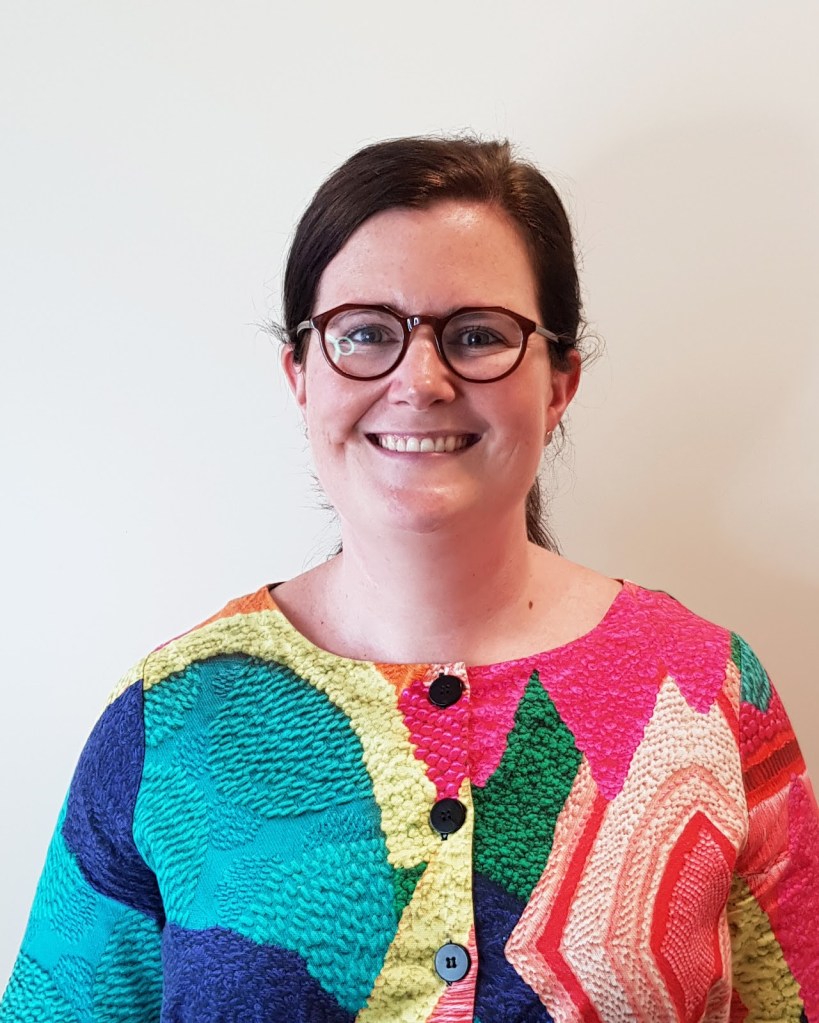
Kim Beeman is currently a teacher at Marymount International School in Rome. Before moving to Rome, Kim spent over a decade in Asia, working as a librarian at Shrewsbury International School in Bangkok and Tanglin Trust School in Singapore. She also co-founded the International School Librarians in Europe conference, and is a member of the advisory board for the Librarians Knowledge Sharing Workshop. Before working in school libraries, Kim worked as a cookbook librarian at The French Culinary Institute in New York City for many years, where she completed the professional culinary program and was certified as a sommelier through the Court of Master Sommeliers. [LinkedIn]
Disclaimer: The opinions and views expressed are the author’s and do not necessarily reflect those of GLLI.


One thought on “#INTLYA Month: Vampires and Collectivism in ‘The Food Block’”