A youth classic gets the graphic treatment
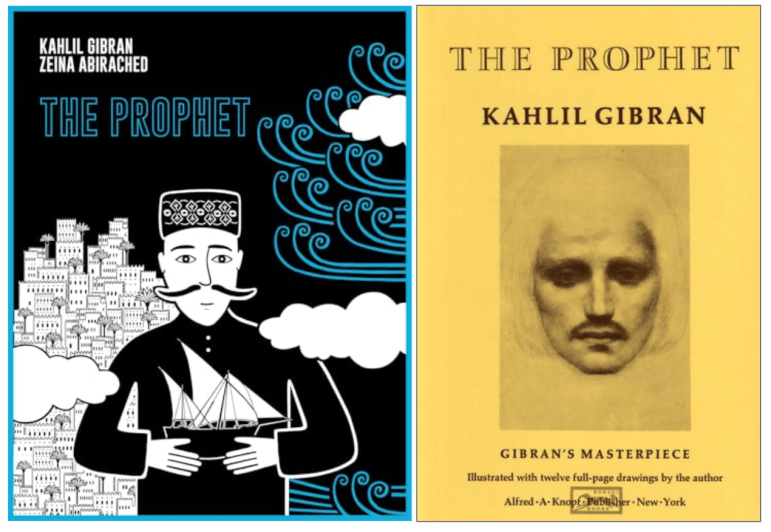
Zeina Abirached‘s graphic adaptation of The Prophet is a big beautiful book and a wonderful way to introduce young adults to Kahlil Gibran’s classic collection of 26 prose poems, which has never been out of print since its 1923 publication.
Watch this one-minute video provided by the publisher of someone just silently flipping through it.
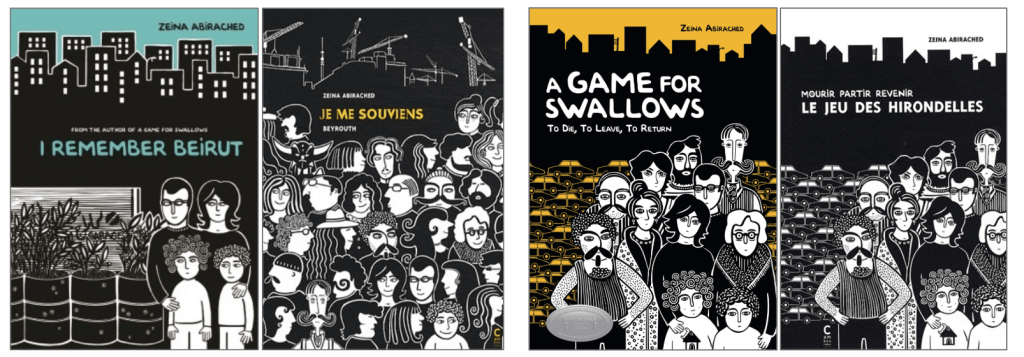
Zeina Abirached is best known for her two slim memoirs — I Remember Beirut (2008) (see this GLLI review Nov. 15, 2017)- and — A Game for Swallows: To Die, To Leave, To Return (2007) (see this GLLI review May 19, 2025) – both translated from French by Edward Gauvin.
She discusses her approach to creating the graphic adaptation of The Prophet in this Q&A style interview by Roza Melkumyan in September 2025.
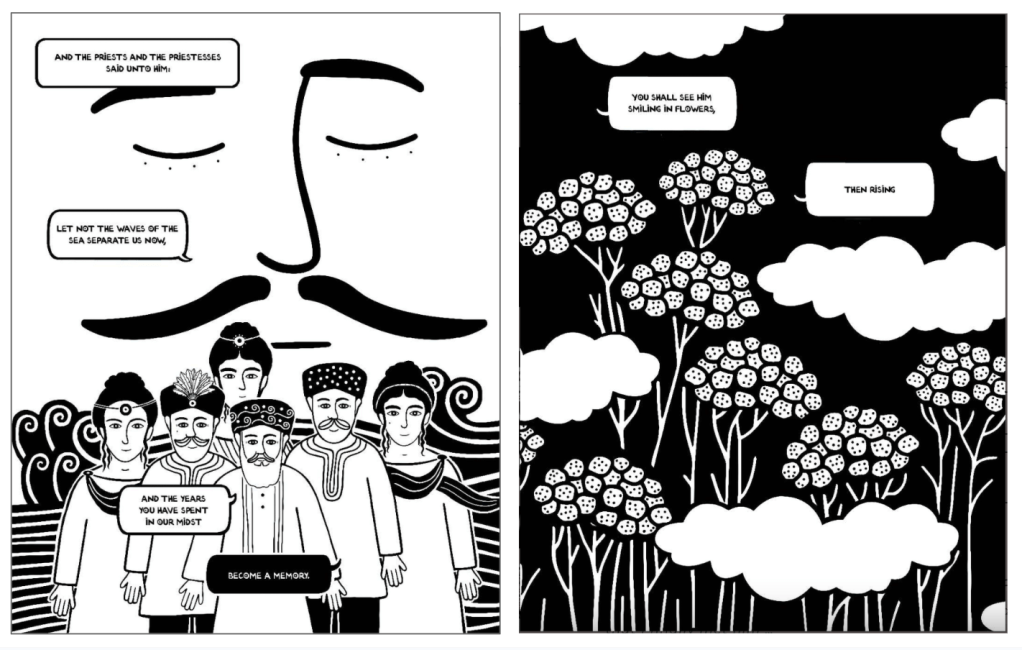
With the drawing, I tried to keep my oriental way of drawing in black and white, a bit like calligraphy. When you work in black and white, there are so many emotions you can express.
In the introduction to the book, Abirached explains how she grew up in Lebanon, like Gibran, and that a copy of the book followed her in each of her family’s moves, but she only sat down to read it long after she herself had left Beirut, and finally appreciated the story of a man living in exile for years who “becomes the prophet only in the moment when he must leave.”
I want to go into Gibran’s world. I want to find in his words a rhythm, a rising beat, something that will finally allow me to really listen to him. I want to propose an image, a view of this world, as a seed that allows our minds to flourish independently. I want to weave drawings and text, build the blocks of this narrative, and sow the graphics together. I want to travel in its silence. I want to join Gibran’s work in a dance.
See also an extended discussion of the book by Katie Logan in March 2025 in The Markaz Review — “Illustrating Intimacy: Zeina Abirached Remasters The Prophet”. She argues that “Abirached’s graphic novel is less an illustrated version of The Prophet and more a translated one, a fitting contribution to the global canon of Prophets.”
That review led me to a fascinating New Yorker profile of Gibran and his work by critic Joan Acocella in 2008 (note: paywall). Acocella follows Gibran from his birth in 1883 in Lebanon, to his family’s emigration to Boston in 1895 when Kahlil was twelve, to his eventual entry, thanks to several key mentors, as a wannabe in the world of art and literature. After hitting it rich with The Prophet, the story goes downhill. He basically drank himself to death by age 48.
Acocella reports that in the 1960s sales of The Prophet “sometimes reached five thousand copies a week. It was the Bible of that decade.” As a child of that era, I can attest it was on everyone’s bookshelves, including my own.
According to The Kahlil Gibran Collective (a site full of related material), The Prophet has been translated into 117 languages.
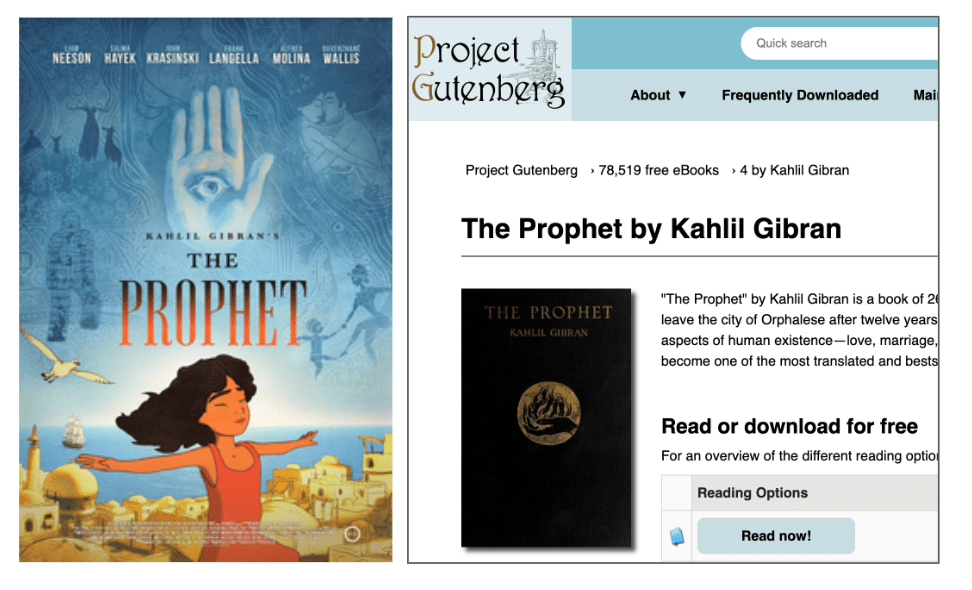
The original English text is available free on Project Gutenberg — and an animated film was made in 2014 (with Salma Hayek and Liam Neeson as voices) — watch the 2-min trailer here.
The Prophet is a text young people should be exposed to — even if just to recognize when others use quotations from it, whether for weddings, funerals, or Instagram/TikTok posts — and Zeina Abirached’s visual interpretation of it deserves a place in every school library.
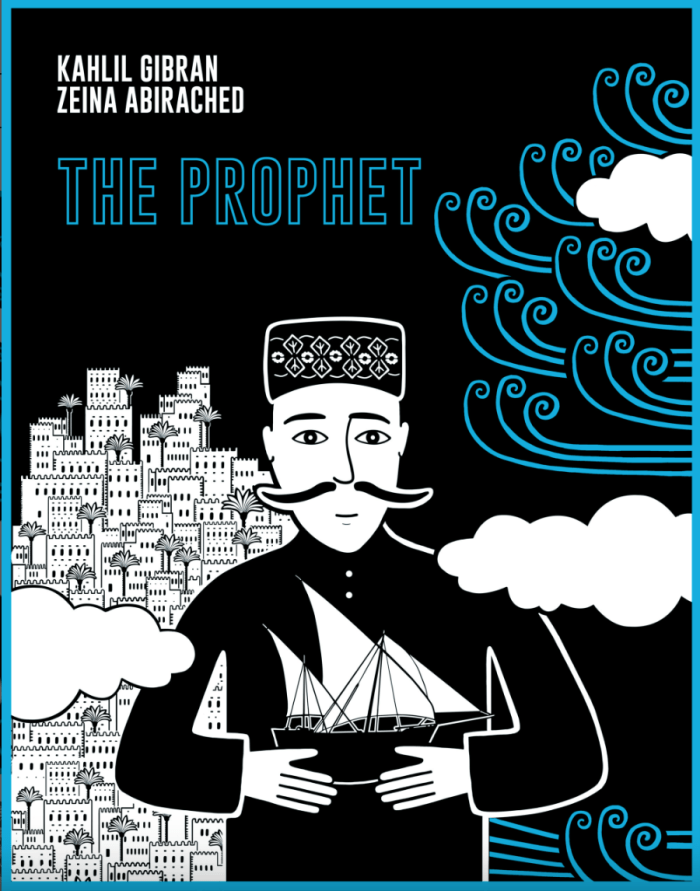
TITLE: The Prophet (2024)
PUBLISHER: Interlink Publishing
AUTHOR: Zeina Abirached / Text by Kahlil Gibran (1923)
Note: no credit is given for the translation of the introduction – merely “English edition copyright Interlink Publishing.”
ISBN: 9781623716455

Katie Day is an international school teacher-librarian in Singapore and has been an American expatriate for almost 40 years. She is currently on the GLLI Board and has served as the chair of the GLLI Translated YA Book Prize and co-chair of the Neev Book Award in India — as well as being heavily involved in international school librarian initiatives such as the Red Dot Book Awards in Singapore and the Siam Book Awards in Thailand.
Disclaimer: The opinions and views expressed are the author’s and do not necessarily reflect those of GLLI.


One thought on “#IntYALitMonth: The Prophet in Black & White”