Today’s post comes to you from Linda Hoiseth
Nothing. Something. Everything.
Nothing matters.
I have known that for a long time.
So nothing is worth doing.
I just realized that.
That’s what Pierre Anthon declared to his homeroom on the first day of their 7th-grade year in their small town in Denmark. He then stood up and walked out the door, leaving his class with the uncomfortable silence that followed.
Pierre Anthon climbed a plum tree in front of his house to contemplate nothingness, and taunted his classmates as they went to school each day. They were angry and scared. He couldn’t be right, could he? Weren’t they supposed to amount to something? Wasn’t that the point?
I first read Janne Teller’s Nothing over 10 years ago, and have been haunted by it ever since. It reminds me in many ways of Lord of the Flies; it shows teenagers struggling with big ideas and revealing some of the worst aspects of human nature. Initially banned in Denmark and other European countries because of its dark themes, it went on to win several awards, including a Printz Honor. It’s been translated into more than 36 languages.
Our narrator, Agnes, and the rest of her classmates were tormented daily by Pierre Anthon’s taunts from the plum tree as they walked to school. They met on the playground at lunchtime to discuss ways to get him to come down. When throwing stones at him didn’t work, they decided to prove to him that “something matters” by collecting important things and piling them in an abandoned sawmill.
The pile started modestly, with items of questionable value that the owners were happy to donate. When the teens realized that their pile wasn’t very convincing, they began to pressure each other to contribute things that they knew were really important to the owner: a beloved comic book collection (complete!), a favorite new pair of shoes, a pet hamster. As the classmates were guilted into donating their prized possessions to the cause, they wanted to inflict the pain of loss they felt on each other.
Over the next four months, they increasingly demanded more and more of each other: a prayer mat, blue braids, a coffin with dead baby brother’s body inside… and worse. As the sacrifices grew, the children became less compassionate toward one another. “And if it didn’t hurt,” Anna-Li added quietly, “there wouldn’t be any meaning in it.”
Meanwhile, Pierre Athon kept taunting: “You go to school to get a job, and you get a job to take time off to do nothing. Why not do nothing to begin with?”
“There’s nothing to wait for. And there’s nothing at all worth seeing. And the longer you wait the less there’ll be!”
“Chimpanzees have almost exactly the same brain and DNA as us. There’s nothing the least special about being human!”
When the last member of the class made his sacrifice and the final piece of meaning was added to the pile, their only desire was for Pierre Anthon to come and see it and admit that he was wrong. Instead, the teens were found out when the last contributor confessed to his parents (on his way to the hospital) what was going on.
The story of what the teens had done spread locally, across the country, and eventually around the world. Everyone had opinions – and even in this time before the internet age – the teens were “ . . . stunned by it all, by the rage and the fury in their words, both for and against . . . “
They hoped that the press coverage would bring Pierre Athon to the sawmill to see their tower of meaning. “One thing was certain: All the rage and the fury and the words for and against meant that the heap of meaning at once grew irresistibly more meaningful.”
As the pile of meaning was debated, condoned, and celebrated by the adults, the classmates felt increasingly powerless, and they still couldn’t convince Pierre Anthon of the truth in their quest for meaning. Like in Lord of the Flies, the group’s final act was unplanned, unstoppable, and unimaginable.
When I taught Lord of the Flies many years ago, I remember 10th-grade Adrienna being so upset. “People don’t act that way!” she insisted, but she wasn’t able to convince her classmates that humans are actually better than the novel portrays. Nothing brings up similar questions about human nature. And the answers are not any more comforting.
For such a heavy book, it’s a quick and accessible read. Agnes is a believable narrator, at times sympathetic and at times cruel. She punctuates her narrative with lines that stand alone on the page:
She shouldn’t have done that.
And her ideas are often emphasized by thoughts written in series of three:
Cold. Colder. Frost, ice, and snow.
Blue. Bluer. Bluest.
Less than pleasant. Unpleasant. Sickening.
Squat! Zilch! Nothing!
Dull. Duller. Dullest
Her narration is reflective and thoughtful, but is also one-sided and self-protective. This story, set in a fictional Danish town, viewed through the eyes of Agnes, could take place anywhere, at any time. And maybe anyone could be capable of the cruelty she and her classmates showed. That’s the question, isn’t it?
Nothing is not a title for everyone. It is dark and intense, and in this era of book challenges, it could certainly be a target. But it is also incredibly important, and the right reader will be captivated and left with a lot to think about.
NOTE: Nothing was made into a film in Danish in 2022.
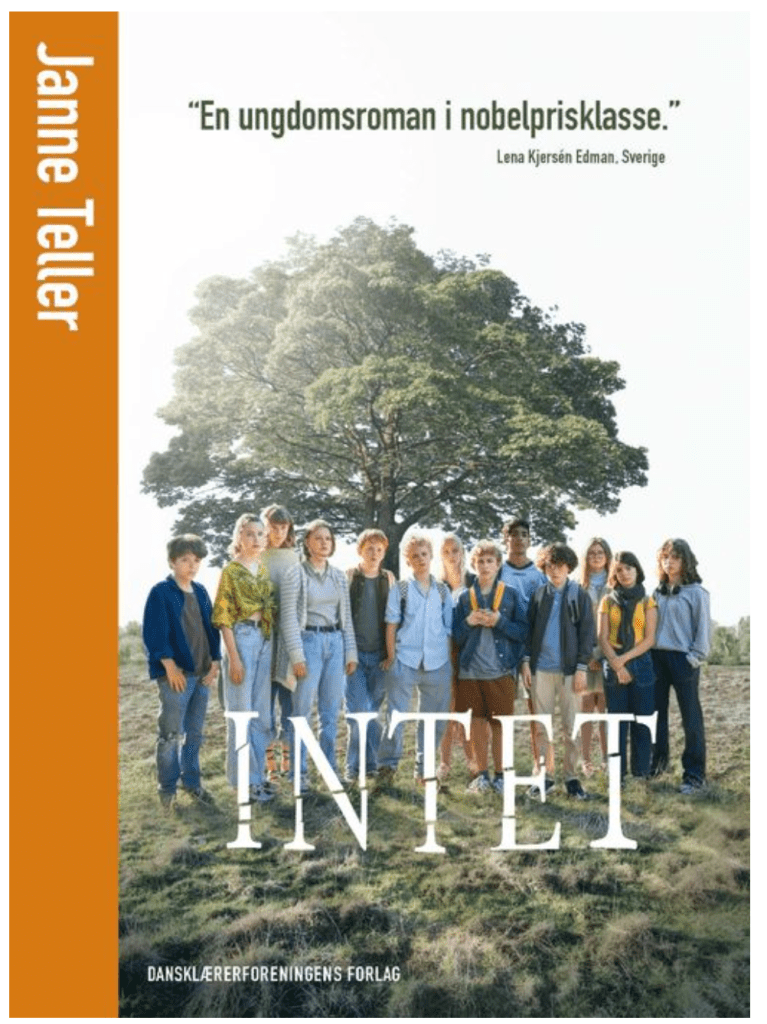
Trailer for the movie (1 min, 40 seconds):
TITLE: Nothing
AUTHOR: Janne Teller
Instagram: https://www.instagram.com/janneteller/
TRANSLATOR: Martin Aitken
Feb. 12, 2026 Interview on Literary Hub — entitled, “The Annotated Nightstand: What Martin Aitken is Reading Now, and Next”.

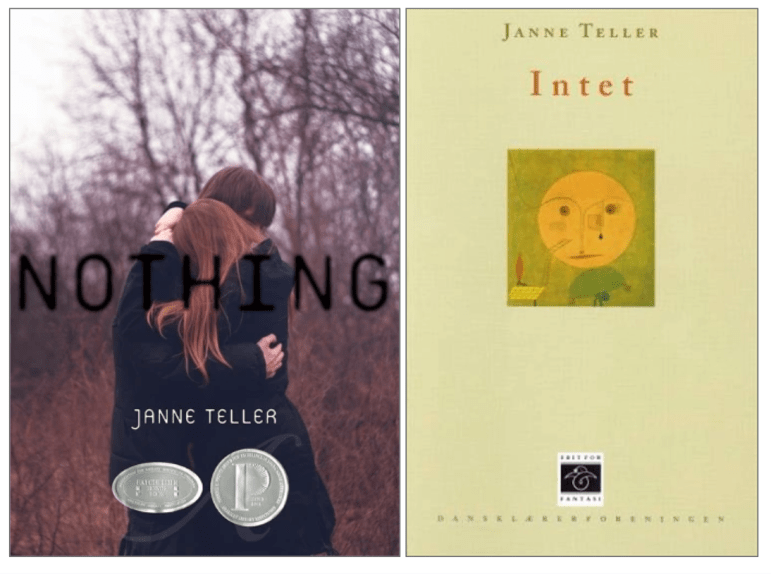
PUBLISHER: Atheneum Books for Young Readers / Simon & Schuster (2012). Originally published by Dansklærerforeningens Forlag in 2010 as “Intet.”
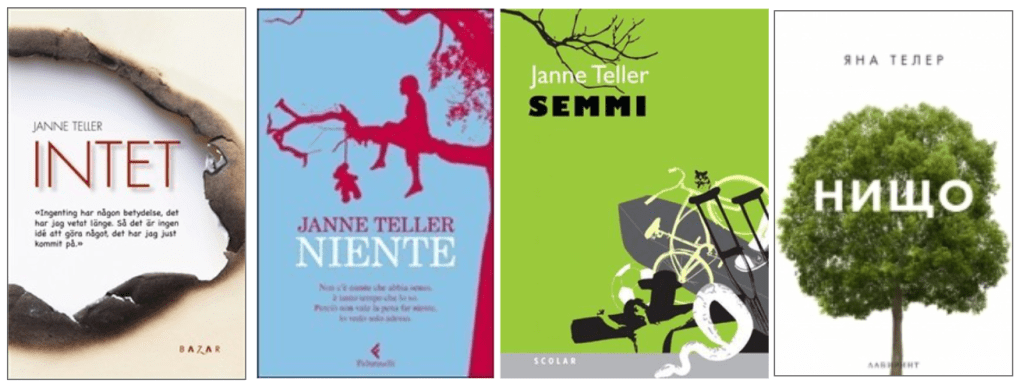
Also published in: England, Germany, Italy, France, Spain (Spanish, Catalan, Basque), Portugal, Brazil, Colombia, Mexico, Sweden, Norway, Finland, Faroe-Island, Netherlands, Belgium, Greece, North Macedonia, Bulgaria, Serbia, Slovenia, Croatia, Estonia, Slovakia, Türkiye, Russia, China, Japan, South-Korea, Taiwan
ISBN: 9781442441163
REVIEWS / AWARDS:
Michael L. Printz Honor, for literary excellence, USA 2011
Mildred Batchelder Award, USA 2011
Luchs, die Zeit, Germany 2010
Le Prix Libbylit, (Best young adult/children book French-speaking world 2008)
Prize of the Danish Cultural Ministry (Best children/YA book 2002)
You can buy a copy of Nothing here or find it in a local library. (Book purchases made via our affiliate link may earn GLLI a small commission.)
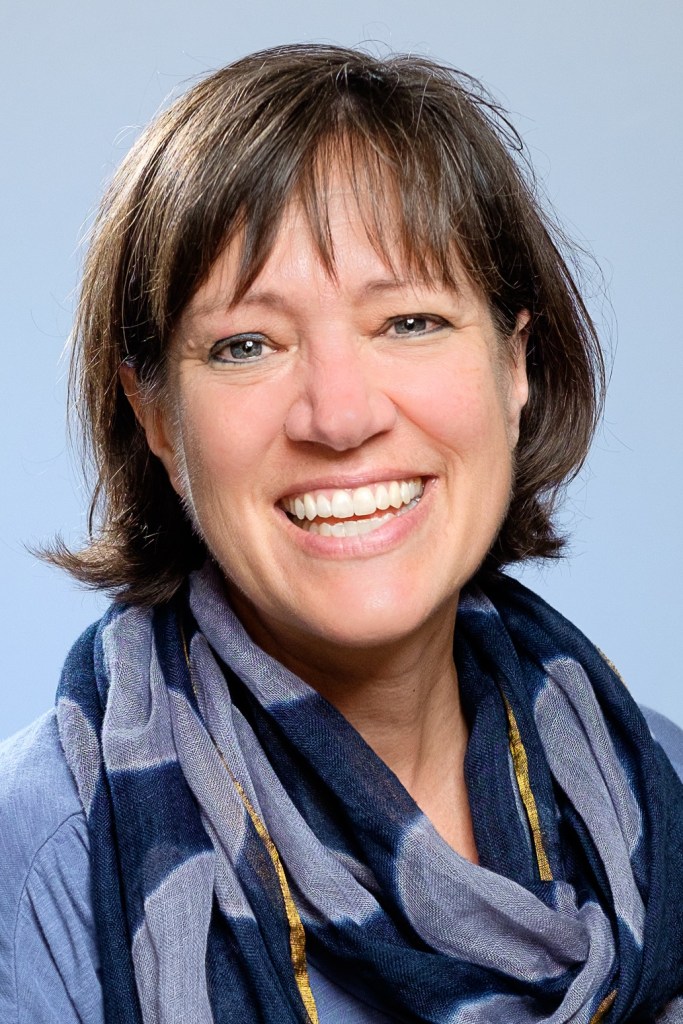
A Minnesota farm girl by birth, Linda Hoiseth has spent most of her 35+ year career internationally. She was a teacher (EAL, English language arts, drama, math, computers, keyboarding) in Japan, Kuwait, Malaysia, and Poland, and a teacher-librarian in Peru, Qatar, and India. She’s currently the high school librarian at the American School of Dubai.
Linda and her husband Robb raised their two kids internationally, and are now living the expat dream because their grandson (and his parents) live just down the road in Abu Dhabi. They’re thrilled that their home is again filled with picture books – some favorites from when their kids were little, and some of the amazing new titles published each year.
Disclaimer: The opinions and views expressed are the author’s and do not necessarily reflect those of GLLI.


One thought on “#IntYALitMonth: Nothing”