Today’s post comes to you from Eleanor Duggan
Across Memory, Identity, and Speculative Futures
I’ve always resonated with Dr. Bishop’s (1990) statement of books as mirrors, windows, and sliding glass doors that allow readers to see themselves, view into the experiences of others, and to foster empathy and deeper understanding through character’s words and actions. For many readers familiar with Taiwan through children’s literature, especially those who followed our earlier #TaiwanKidLitMonth, Taiwanese YA offers readers something more than coming-of-age stories.
Emerging from a literary landscape shaped by rapid political change, multilingual realities, and layered cultural histories, Taiwanese YA invites readers into questions of memory, belonging, and what it means to grow up in a place where personal and national identities are still actively being defined. This post is more than a Taiwanese YA in a nutshell, it is an invitation into a vibrant and ever-expanding literary landscape that is filled with voices, histories, genres, and perspectives that continue to challenge, surprise, and resonate far beyond Taiwan itself!
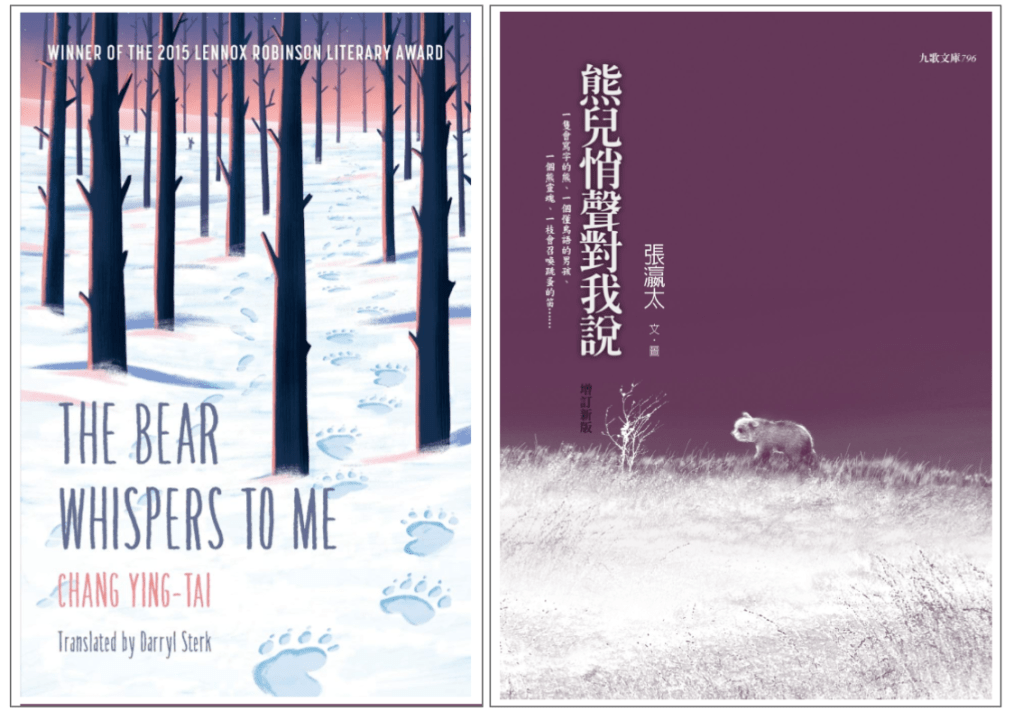
BOOK: The Bear Whispers To Me, written by Chang Ying-Tai, translated into English by #NameTheTranslator Darryl Sterk, and published by Balestier Press (2015) – ISBN: 9780993215407. Originally published in Chinese as 熊兒悄聲對我說, written by 張瀛太, and published by九歌文庫 (Chiuko) (2010) – ISBN: 9789574446179.
The Bear Whispers to Me is part coming-of-age story, part forest fable, the story unfolds through a young boy’s discovery of his father’s diary. It was a scrapbook-like archive filled with stories, drawings, memories, and fragments of life in Taiwan’s mountain regions.
What follows is less a conventional plot-driven narrative and more an immersive emotional landscape. Chang Ying-Tai writes with a dreamlike, almost musical quality, blending indigenous mythology, ecological consciousness, and childhood memory into a story that feels suspended between realism and folklore. Forests breathe with spiritual presence while animals move through the text not simply as creatures, but as companions, omens, and mirrors of human emotion. The relationship with nature is particularly striking. It’s not romanticised, but deeply intimate, presenting the natural world as inseparable from identity, ancestry, and memory.
For YA readers, the novel offers something refreshingly different from fast-paced fantasy fiction. Its emotional power lies in atmosphere, reflection, and sensory detail rather than dramatic twists. The narrative moves gently, allowing readers to inhabit the protagonist’s loneliness, curiosity, and gradual understanding of loss and inheritance. At its core, the book asks how stories, especially family stories, shape our understanding of ourselves and the worlds we come from, perfectly echoes back with one of my previous posts on the IB transdisciplinary theme, Who We Are.
The book is significant for the way it introduces readers to Taiwan’s Indigenous cultures and mountain communities and challenges simplified views of “Chinese” literature and identity. This makes the book especially valuable for Librarians and educators seeking globally minded YA literature that expands students’ literary and cultural frameworks.
As part of the Modern Chinese Literature from Taiwan series, The Membranes is the first Taiwanese queer sci-fi. First published in Taiwan in 1995, the novel feels remarkably contemporary, imagining a climate-ravaged future of the year 2100 where humanity survives beneath the ocean while questions of identity, technology, and embodiment become increasingly unstable.
At the center of the story is Momo, a celebrated dermal care technician living in an underwater city dominated by media conglomerates, surveillance technologies, and cyborg labor. Yet beneath its cyberpunk atmosphere, the novel is deeply intimate. Rather than focusing on action or spectacle, Chi Ta-Wei constructs a layered psychological narrative that gradually peels back assumptions about gender, memory, family, and even reality itself.
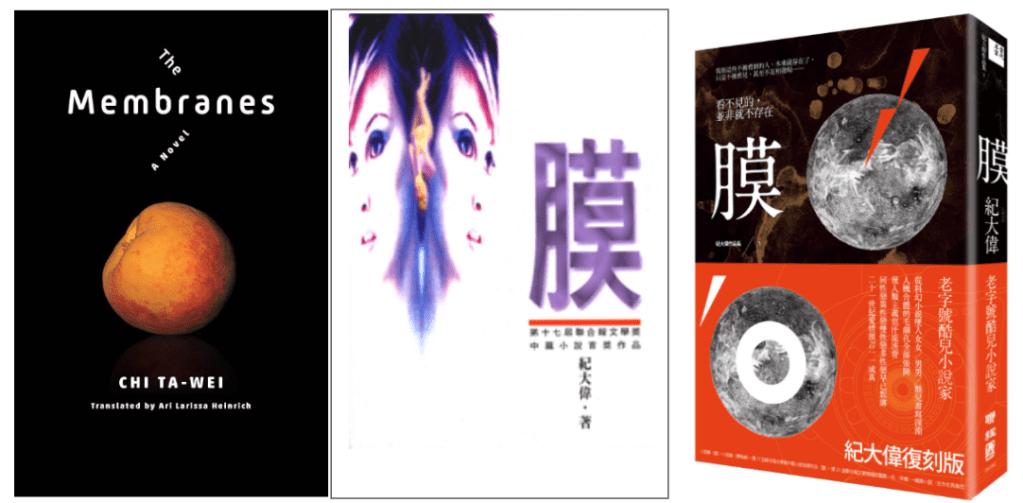
BOOK: The Membranes, written by Chi Ta-Wei, translated by #NameTheTranslator Ari Larissa Heinrich (2021), Columbia University Press — ISBN: 9780231195713. Originally published in Chinese as 膜, written by 紀大偉, and published by 聯經出版公司 (Linking Books) (1996 | 2011) — ISBN: 9789570815290 | 9789570837698.
What makes The Membranes particularly compelling for YA and crossover readers is how relevant its themes feel today. Although written decades ago, the novel anticipates conversations around digital isolation, curated identities, environmental collapse, and gender fluidity with startling precision. The carefully crafted words invite readers to sit with ambiguity, resisting easy answers while rewarding close, reflective reading.
See also this Sep. 14, 2021, article: Q&A: Ari Larissa Heinrich and Chi Ta-wei on The Membranes.
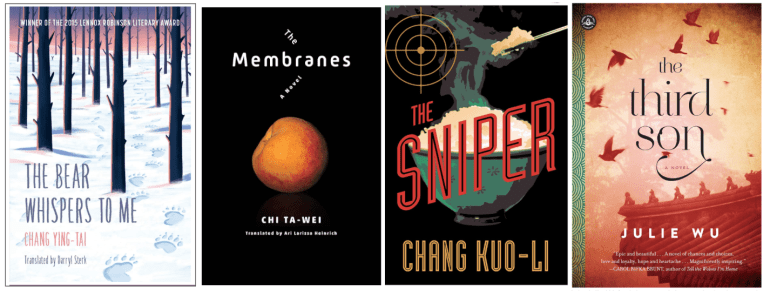
The Sniper is a sharp, fast-moving political thriller that combines suspense with deeper questions about justice, memory, and power. Set against the backdrop of contemporary Taiwan, the story unfolds through two parallel storylines. One follows a former Taiwanese Army sniper turned mercenary, now living a quiet and secluded life in rural Italy. The other centers on a veteran detective nearing retirement, who becomes entangled in two interconnected murder investigations. Spanning both Taiwan and Italy, the novel moves between familiar Taiwanese daily scenes, such as streets in Taipei, the old town of Jinshan, and the unique shrimp fishing ponds, and the distant landscapes of rural Italy, creating a cinematic narrative that brings readers to both Taiwan and Italy at once.
Rather than presenting a straightforward crime narrative, Chang gradually exposes the hidden networks of influence, corruption, and historical tension shaping modern society. The novel constantly challenges readers to reconsider who holds power, whose stories are believed, and how unresolved histories continue to shape the present. In this sense, The Sniper feels not only like a thriller, but also a reflection on collective memory and political accountability.
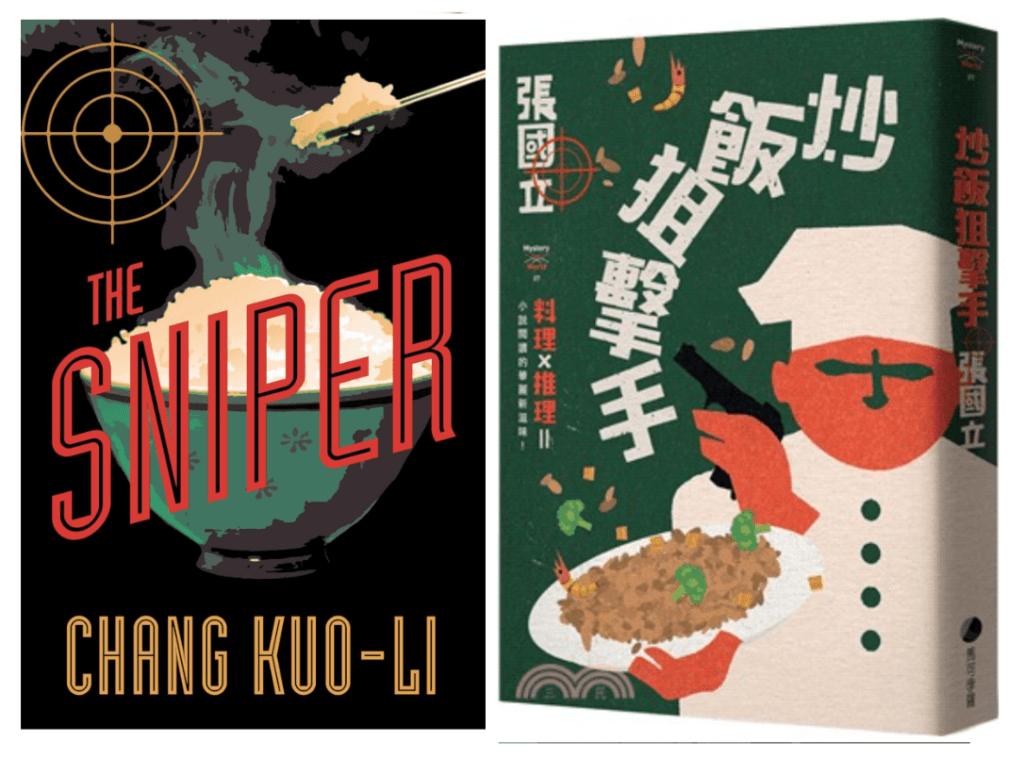
BOOK: The Sniper, written by Chang Kuo-Li, translated into English by #NameTheTranslator Roddy Flagg, 2021, Spiderline — ISBN: 9781487008574. Originally written in Chinese as 炒飯狙擊手 by 張國立, and published in 2019 by 馬可孛羅文化 (Marco Polo Press) — ISBN: 9789578759527.
The plot draws inspiration from the real-life murder case of Yin Qingfeng, a high-profile and still-unsolved case that shocked Taiwan decades ago. At the time of the murder, Chang, the author, was a journalist who tried to investigate, only to be discouraged by obstacles and dead ends at every turn. More than two decades later, with the case still unresolved and his career in journalism long behind him, Chang turned to fiction as a way to revisit the questions that reality could not answer. The result was The Sniper, a gripping and thought-provoking novel that transforms historical frustration and unanswered truths into compelling literary suspense.
What makes the book particularly engaging is its pacing and accessibility. The short chapters and escalating tension make it highly readable, while the layered political themes invite deeper discussion about media, nationalism, ethics, and civic responsibility. Readers who enjoy intelligent suspense fiction will find themselves drawn into both the mystery and the broader social questions the novel raises. For readers looking for Taiwanese fiction that is gripping, cinematic, and intellectually engaging at once, The Sniper is an excellent place to start!
The Third Son is a historical coming-of-age novel that traces one young man’s journey from Japanese-occupied Taiwan to the United States during the rise of the space age. Centered around Saburo, the neglected “third son” of a traditional Taiwanese family, the story explores what it means to grow up under the weight of expectations, hierarchies, and political upheaval.
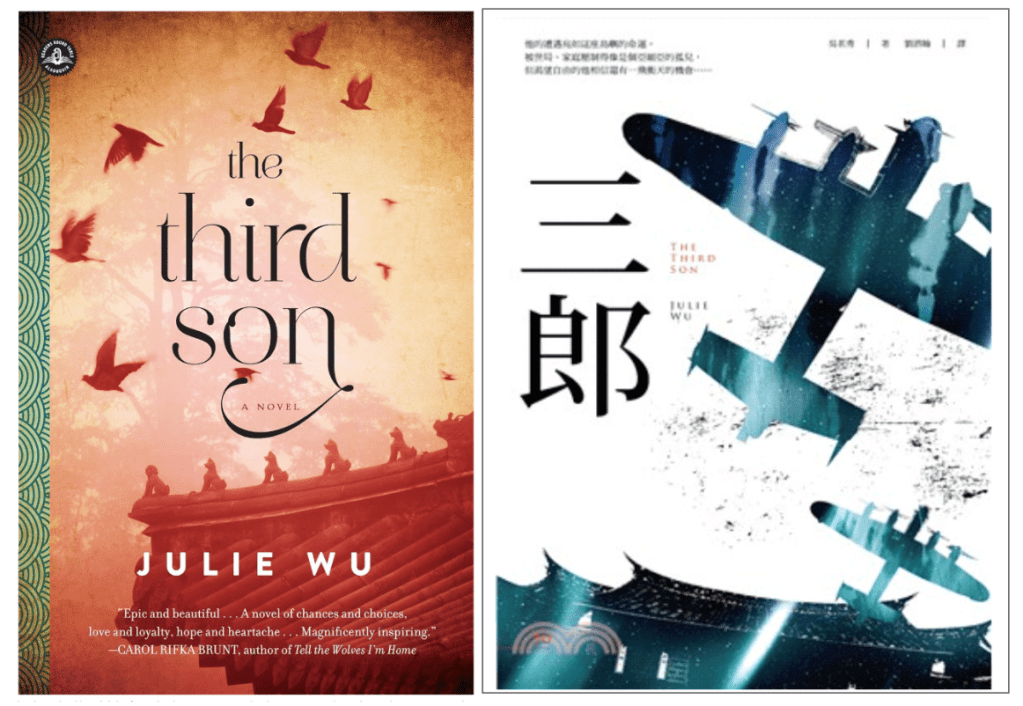
BOOK: The Third Son, written by Julie Wu, 2014, Algonquin Books — ISBN: 9781616203276. Translated from English to traditional Chinese by #NameTheTranslator Sihan Liu (劉泗翰), title: 三郎 & author: 吳茗秀, and published by 大塊文化 (Locus Publishing) (2015) 00 ISBN: 978986213596
It is Julie Wu’s debut novel. Interestingly, the novel was first published in English in 2013 and a Chinese edition was later released in Taiwan in 2015. Just like many other exceptional international literature that introduce various cultures to the world, The Third Son is a gateway to Taiwanese culture, history, identity, and experiences for global audiences.
Julie Wu skillfully intertwines intimate family dynamics with larger historical forces. Through Saburo’s life, we encounter pivotal moments in Taiwanese history, including the transition from Japanese colonial rule to KMT authoritarianism, the 228 Massacre, and the White Terror. These are more than distant historical events, but as realities that directly shape ordinary lives and relationships in Taiwan.
See also an interview with Julie Wu by LibraryThing — May 28, 2013.
For readers who want to explore more Taiwanese literature, I encourage you to revisit our GLLI #TaiwanKidLitMonth for an ongoing conversation between history and the present, between local experiences and global resonance:
- Taiwanese Young Adult Fantasy
- Young Adult Manga
BIBLIOGRAPHY:
Bishop, R. Mirrors, windows, and sliding glass doors. In Perspectives: Choosing and using books for the classroom (Vo. 6, No. 3). Ohio State University. 1990.
Wu, Sharon. “Yin Ching-feng Murder Case Returns to the Headlines.” Taiwan Panorama Magazine, Sept. 2000,.
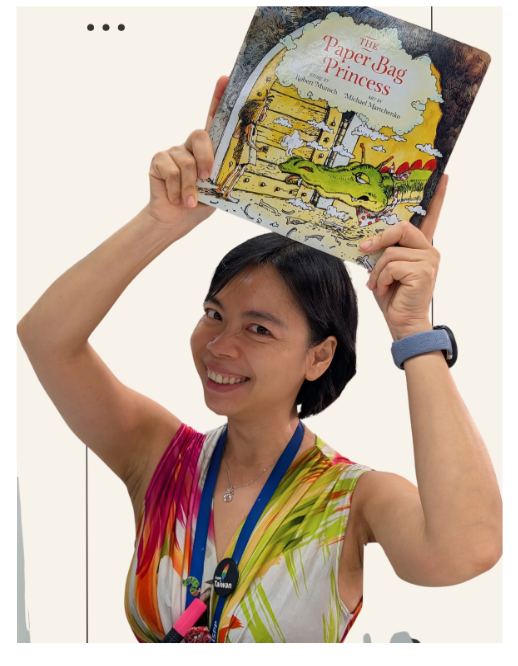
Eleanor Duggan is a passionate children’s book reader, a storytelling enchantress, an aspiring globetrotter, a part-time book crafter, and an impassioned foodie who is a cooking disaster. She is more known as an international school Teacher-Librarian, Founding Chair of the Toucan Award, the International Association of School Librarianship (IASL) Regional Director for Latin America and the Caribbean, and the International Federation of Library Associations and Institutions (IFLA) Section Secretary. She is a Taiwanese with a Belgian soul and is currently enjoying her life as a citizen of the world with her daughter and their 2 one-of-a-kind cats. You may find her via The Third Culture Librarian
Disclaimer: The opinions and views expressed are the author’s and do not necessarily reflect those of GLLI.


One thought on “#IntYALitMonth: Taiwan YA Literature”