By Kim Tyo-Dickerson
70th Anniversary Graphic Novel Adaptation of Lord of the Flies by Aimée de Jongh: A Masterpiece Reimagined in English and Dutch
What happens when a fictional group of British schoolboys crash-land on a deserted island with no adults, no rules, and no way out? Lord of the Flies is a gripping survival story and cultural satire that strips the promises of Western civilization down to its bones, exposing the fragility of social order and the ease with which violence, fear, and the will to dominate can overtake education, reason, and morality.
Watch 1-minute book trailer from Faber & Faber here.
First published in 1954, it’s a work of classic literature that continues to be read, referenced, and debated worldwide (in this spirit of debate, for an alternative view based on the true story of shipwrecked Tongan boys and the peaceful life they carved out of an island wilderness, see Rutger Bregman’s book Humankind: A Hopeful History (2019), translated by Elizabeth Manton and Erica Moore.
Dutch graphic novelist Aimée de Jongh puts it best:
“One question returns to me every so often: when do the rules of our carefully crafted civilization end, and was it really there in the first place? There’s no book in the world, I think, that investigates these questions as masterfully as Lord of the Flies” – De Jongh, “Note from the Artist” in Lord of the Flies: The Graphic Novel (2024).
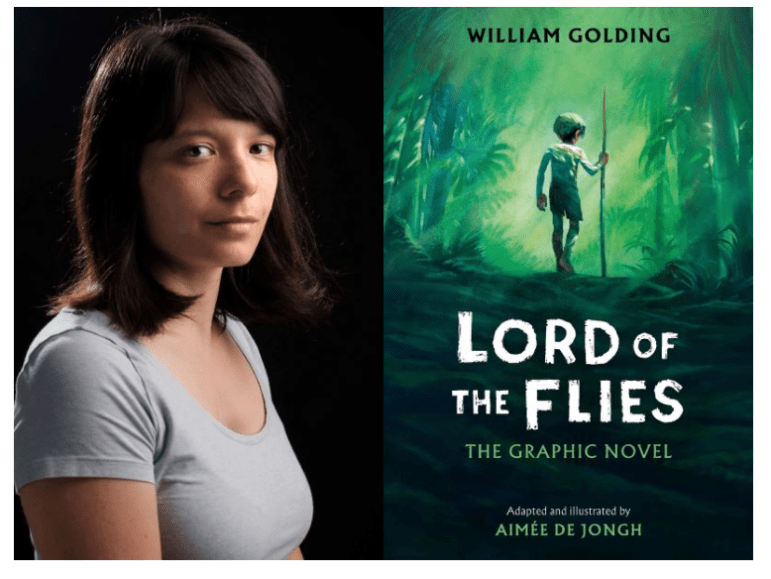
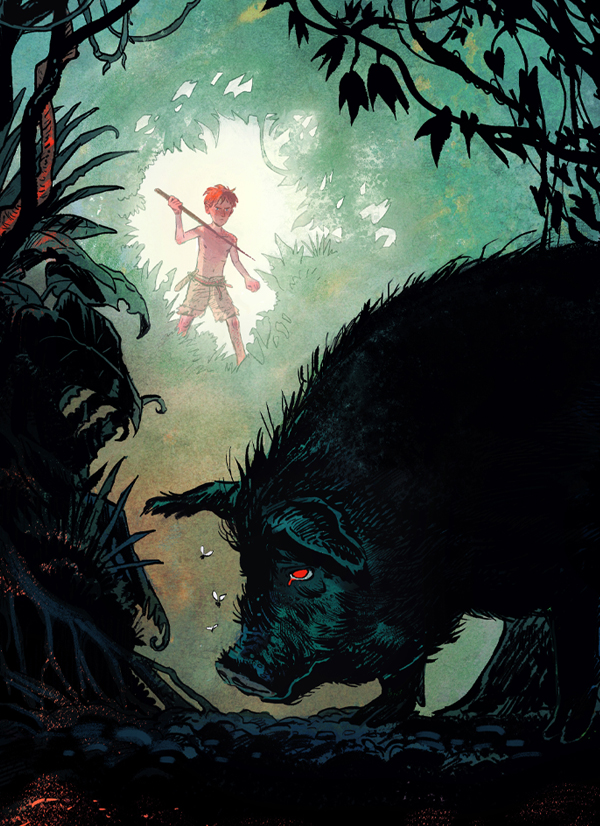
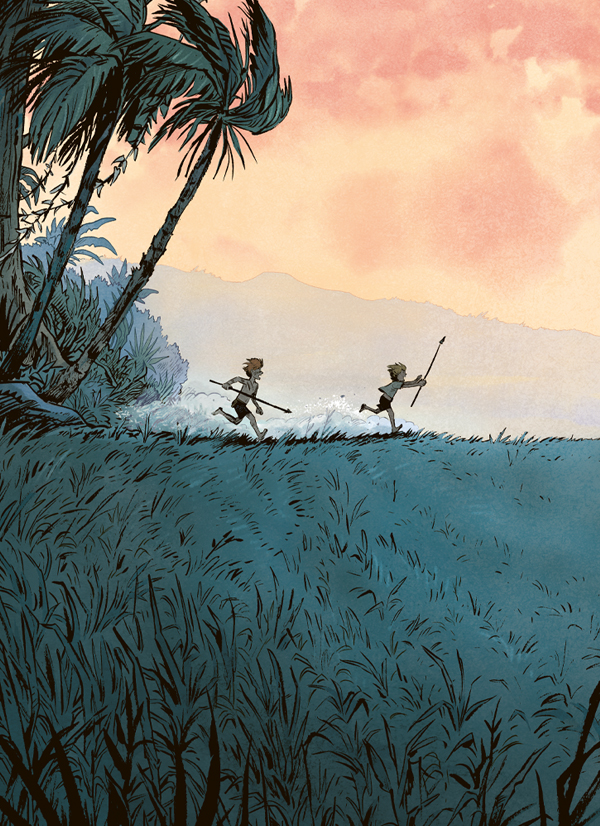
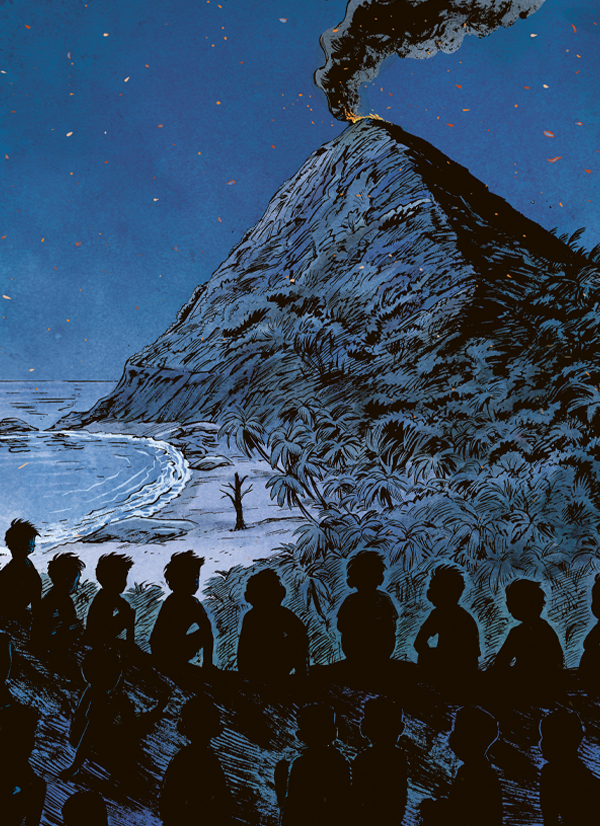
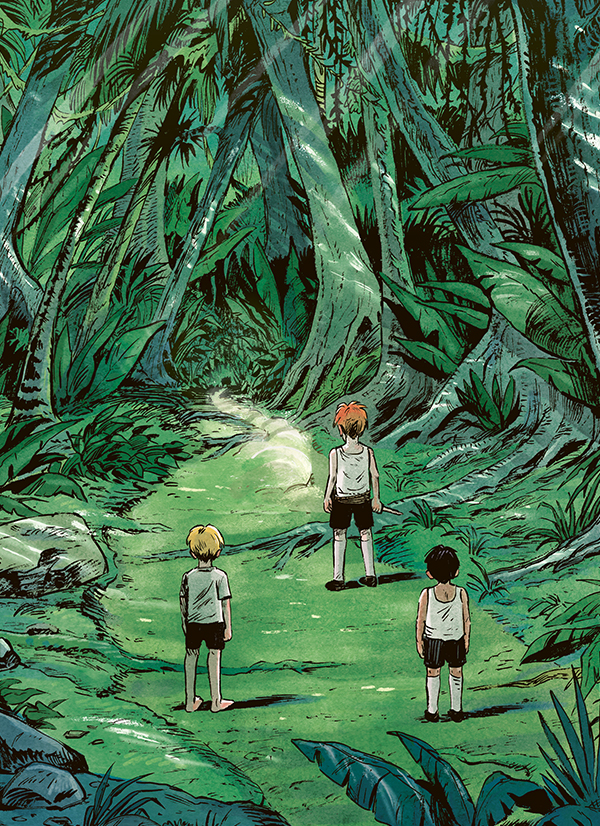
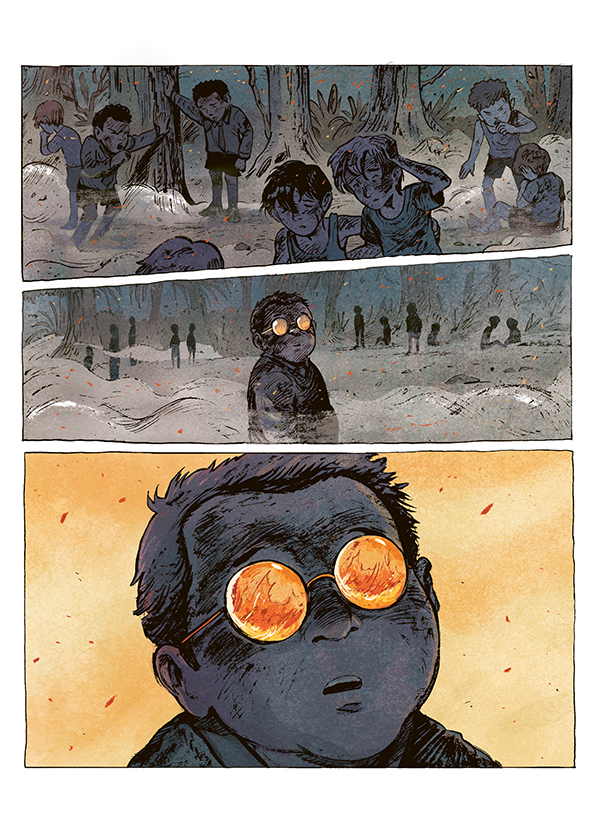
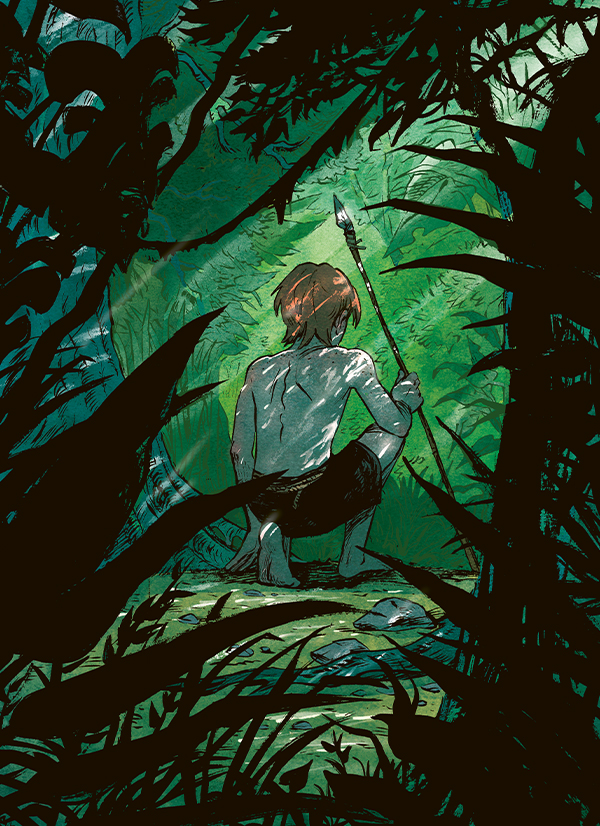
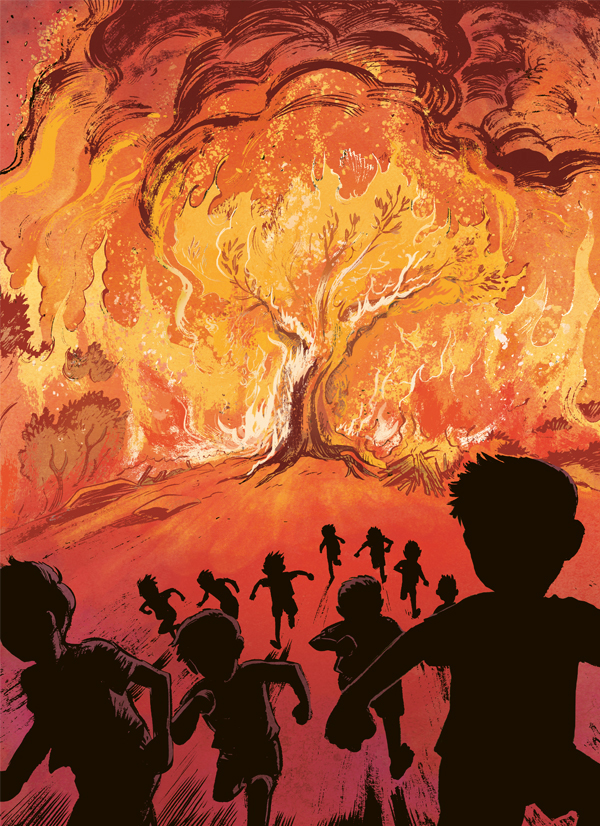
In 2024, to commemorate the 70th anniversary of the publication of Lord of the Flies, de Jongh won the commission to create the first official graphic novel adaptation. A full literary adaptation, de Jongh uses Golding’s original language, a carefully curated selection of dialog and exposition that punctuates each richly paneled and saturated scene with compelling illustrations that depict Golding’s dark subversion of the idealized, quintessentially British island adventure, turning it on its head into a grim psychological and moral study.
Over a Decade in the Making
De Jongh’s journey to adapt Lord of the Flies began more than ten years ago when she wanted to create a graphic novel and initially sought permission from Faber and Faber, Golding’s publisher, to create a graphic novel adaptation. Her request was turned down, as the rights were not available at the time. Undeterred, she made a second proposal three years later, which was also unsuccessful. It wasn’t until 2022 that Faber and the Golding estate approached her with an invitation to pitch her work for the adaptation, recognizing the upcoming milestone anniversary as the right moment to reimagine the novel for a new generation. It was not a given that, despite her enthusiasm for an adaptation over many years, De Jongh would be chosen. However, De Jongh was ultimately selected for the project, a testament to her passionate persistence and deep understanding of the source material (Cooke, “Lord of the Flies at 70: How a Classic Was Reimagined as a Graphic Novel”).
Lord of the Flies as International Young Adult Readers’ Rite of Passage
As the successful culmination of a multi-year pursuit of the adaptation project, de Jongh’s success is a testament to her commitment to the novel that so profoundly impacted her as a Young Adult reader:
“When I read this book in English class, at the age of 14 or 15, it really resonated with me. At that age, I found myself somewhere between a child and an adult. Reading about these kids on the island, I recognized parts of myself: Wanting independence like an adult, but also searching for protection like a child. It shaped me more than any other book “ – Interview with Aimée de Jongh, United by Pop
De Jongh and I share this seminal reading experience, which is the wonderful result of engaging with classic literature that continues to challenge, shape, and connect readers across generations, continents, and languages. I can still remember my own, stunned responses to reading Lord of the Flies in my high school English class in Ansonia, Ohio, in the mid-1980s. At that time, thirty years after publication, Lord of the Flies was a popular novel being studied in curricula all over the world. My reading experience was seismic in combination with my class’ other required texts including George Orwell’s 1984, which hit in a unique way in the actual 1980s, and Shirley Jackson’s short story “The Lottery” (you can read/listen to the entire short story via The New Yorker). This syllabus in rural Ohio created a potent, international, Gen X canon of Young Adult dystopian visions that we all took with us, like it or not, into adulthood.
More recently, my daughter was given a copy of Lord of the Flies to annotate in her IBDP English curriculum. My reading world came full circle. Now we have a shared story to reference in our discussions of popular dystopian YA books like The Hunger Games (Lord of the Flies is one of Collins’ favorite books), Wilder Girls by Rory Power, and Scythe by Neal Shusterman. Lord of the Flies is now omnipresent whenever our family discusses concepts like social Darwinism and Theory of Knowledge around the dinner table after school or when we visit local historical monuments like the Anne Frank House and are confronted with themes present in the novel, where human savagery, the breakdown of civilization, and the dangers of blind leadership can be interpreted in relation to the Holocaust. And it even provides us a lens for when we explore postcolonial art exhibits where questions of representation, particularly around gender, race, and power, mirror the exclusions embedded in Lord of the Flies, a novel that imagines a dystopian breakdown of society through an all-male, largely monocultural stance.
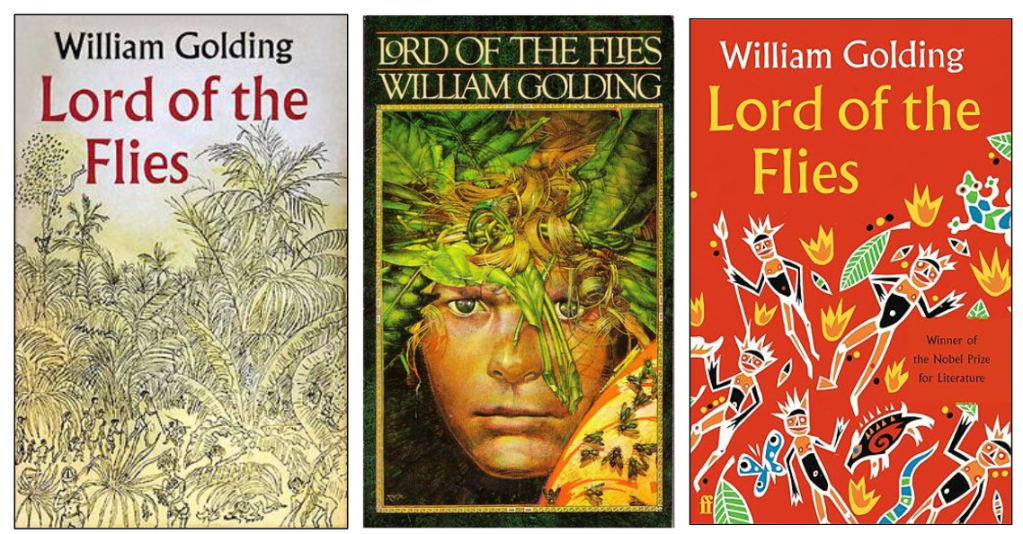
This deepening of our family’s engagement with Lord of the Flies, across generations, genres, and global contexts, makes Aimée de Jongh’s graphic adaptation feel especially powerful and is a clear example of the way the graphic adaptation reaches across generations and brings Golding’s classic to new readers. De Jongh’s illustrations don’t just accompany Golding’s text; they amplify it, evoking the same visceral reactions we experience when confronting historical injustices or dystopian fiction. De Jongh’s art brings the novel’s psychological intensity and moral ambiguity into sharp visual focus, making the boys’ descent into savagery both immediate and hauntingly familiar.
Crafting the Visual Narrative
Lord of the Flies has already been told through visual mediums, perhaps none more memorable than Peter Brook’s 1963 film adaptation (see trailer here), which both my daughter (in 2021) and I (in the 1980s) watched with our English classes. It is the film that Golding himself felt captured his book the best, “Brook’s 1963 film comes closest to realising Golding’s vision. It is a beautifully shot and enthralling dystopian nightmare” (Presley, “Lord of the Flies on Film”).

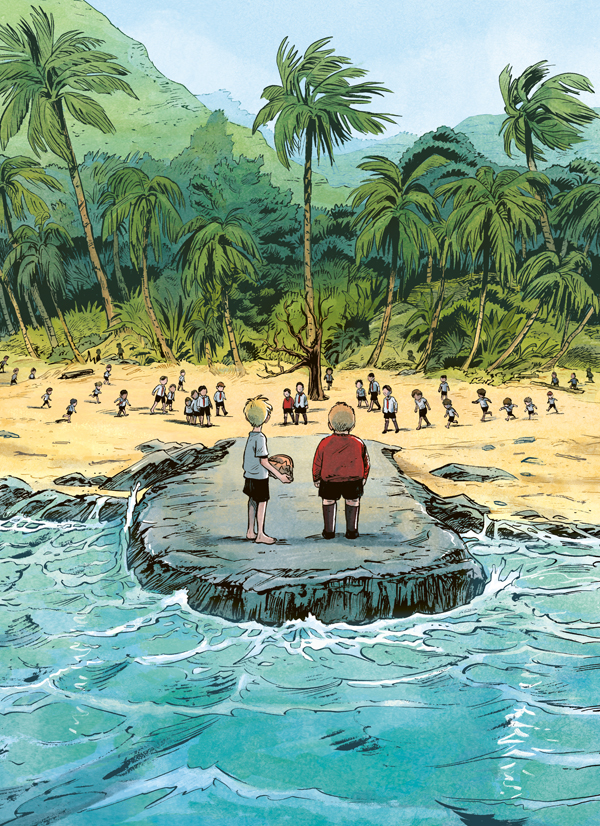
De Jongh exploits this visual side of the novel in her work, “There are many scenes which, for me as an artist, are very interesting to draw. For example, the contrast between the colorful island and the violence that takes place among the children” (Faber)
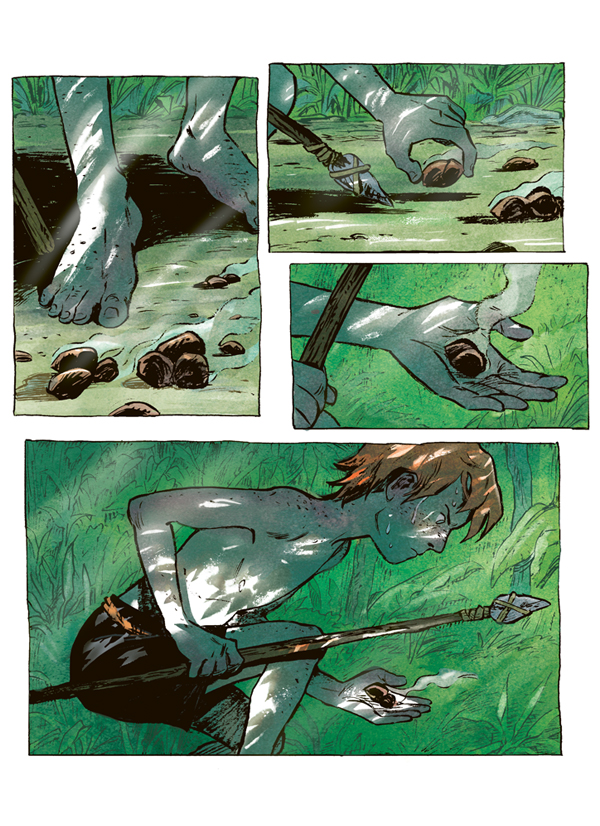
Indeed, De Jongh’s adaptation is notable for its use of color and visual symbolism to reflect the characters’ psychological states and the island’s descent into chaos. “Gezichtsuitdrukkingen, kleine details, contrastrijke uitsneden, close-ups en landschappen in vele kleurschakeringen zorgen ervoor dat je de toenemende wreedheid ademloos bekijkt” [Facial expressions, small details, contrasting cut-outs, close-ups and landscapes in many shades of colour ensure that you watch the increasing cruelty breathlessly] (Beens).
De Jongh collaborated closely with Golding’s family on the color palette of the novel, deciding to use bright, sunny colors in the beginning of the book and then, as the reader goes deeper into the story and the atmosphere changes, using colors that darken into grayer hues: “They [Golding’s family] said their father was trying to start off on a very bright island with lots of hope and fun and games and then slowly it would decay into darkness, so that’s one of the things I changed and I was really happy they told me because I think that it works better that way” (The Lakes International Comic Art Festival).

De Jongh also deliberately altered the boys’ appearances throughout the story to mirror their internal and physical transformations, emphasizing the loss of innocence and the emergence of savagery. Her approach was not merely illustrative but interpretative, seeking to add new layers of meaning to the original text through the graphic novel medium (Cooke).
Writing in English and Dutch
De Jongh started out trying to write the adaptation herself. However, believing that her level of English was not going to work for a Nobel Prize for Literature winner’s book, de Jongh made the choice to use Golding’s original text. And despite being “fully aware that these may sound old-fashioned at times” it worked brilliantly: “It gave the graphic novel something timeless, which I liked. It wouldn’t have worked to let the kids talk more modern, more hip” (Tayce).
In adapting the novel, de Jongh faced the challenge of translating Golding’s descriptive prose into visual narratives. She aimed to stay true to the original text, sometimes closely mirroring Golding’s language, while also making deliberate choices to enhance clarity for international readers. For instance, she added textual explanations to culturally specific scenes, such as the boys wearing choir costumes, to ensure comprehension across different cultures (Eg):
“I wanted everyone to be able to understand the story well. For example, in the beginning there is a scene where the boys from the story walk to the beach in a choir costume. Those costumes are very British. But in the Netherlands, Portugal or Italy not everyone understands that right away. So I put in the text what happens” (Eg).
The graphic novel was released simultaneously in over 25 countries, including a Dutch edition titled Heer van de Vliegen. While the Dutch translation of the original novel was handled by Harm Damsma and Niek Miedema, de Jongh was responsible for the Dutch version of the graphic novel. She meticulously selected the exact words from Golding’s novel in translation just as she did with the English adaptation (Jaeger).
Reception
Upon its release, de Jongh’s graphic novel adaptation received critical acclaim for its faithful yet innovative portrayal of Golding’s work. Judy Golding Carver, daughter of author William Golding, praised de Jongh for her vision and dedication to her father’s masterpiece:
“Aimée De Jongh is the ideal visual interpreter: a dedicated, extraordinarily talented artist, with a deep understanding of the novel and a determination to convey its extraordinary power. Aimée’s evolving vision of Lord of the Flies brings the island landscapes, both idyllic and violent, to life with the boys as individuals, crystallising their emotions and fears. She is the artist the novel has been waiting for” (Faber).
Lord of the Flies continues to resonate globally, a testament to its enduring themes and appeal. De Jongh’s graphic novel adaptation stands as a strong example of how classic literature can be reimagined through contemporary artistic forms, offering fresh perspectives while honoring the original’s intent. Her work not only introduces Golding’s narrative to new audiences, but also demonstrates the potential of graphic novels to explore complex human experiences.
When de Jongh was asked why graphic novel adaptations of classic literature matter, she offered a compelling reflection on the power of sequential art to convey story, language, and meaning: “I think graphic novels form a fantastic bridge between moving image and literature. There’s the visual aspect, the speed and movie-like sequences. But there’s also room for words, phrases, poetry, metaphors… Reading a graphic novel still means you’re experiencing the joy of reading.” Her adaptation of Lord of the Flies is not just a retelling, but an invitation, opening the door to classic literature for readers who might otherwise feel intimidated.
For more information on Aimée de Jongh’s adaptation, visit her official website here.
Book information
Lord of the Flies – the graphic novel by Aimée de Jongh (Adapter, Illustrator) and William Golding
ISBN: 9780571374250
Release date: September 12, 2024
Publisher: Faber & Faber
Details: 352 Pages / Hardcover / Full Colour
Interest level: Ages 12 – Adult
Languages: English, Italian, Portuguese, German, Dutch, French, Chinese, Korean, Norwegian, Spanish, Turkish, Greek, Romanian, Danish, Hungarian, Finnish, Ukrainian, Latvian
Read
Dulaney, Michael. “Real-life Lord of the Flies‘ author Rutger Bregman on why we need a kinder view of human nature”. ABC News, Australia, May 21, 2020.
Finney Boylan, Jennifer. “President of the Flies: What stories of shipwrecks and plane crashes can teach us about Trump’s America.” New York Times, May 27, 2020.
Freedland, Jonathan. “Rutger Bregman: the Dutch historian who rocked Davos and unearthed the real Lord of the Flies”. The Guardian, May 9, 2020.
Lowry, Lois. “Their Inner Beasts: ‘Lord of the Flies’ Six Decades Later”. New York Times, Oct. 27, 2016.
Watch
Why should you read “Lord of the Flies” by William Golding? – Jill Dash. Ted-ED, Dec 13, 2019.
“After witnessing the atrocities of his fellow man in World War II, William Golding was losing his faith in humanity. Later, during the Cold War, as superpowers began threatening one another with nuclear annihilation, he was forced to interrogate the very roots of human nature and violence. These musings would inspire his first novel: Lord of the Flies. Jill Dash dives into the timeless satire.”
LICAF 2024 Aimee de Jongh – Lord of the Flies – The Graphic Novel Launch in the North
Interview with author and illustrator Aimee de Jongh at Lakes International Comic Art Festival 2024. Nov 4, 2024.
Human-Kind or Human Evil with Rutger Bregman | What Now? with Trevor Noah Podcast
Full episode of Trevor Noah’s interview with Rutger Bregman. Segment about real life Lord of the Flies. March 6, 2025.
Reviews
The Guardian, “Five of the best young adult books of 2024”, UK
The Guardian, “Rachel Cooke’s best graphic novels of 2024”, UK
Awards
Winner Broken Frontier Award Best Graphic Novel of 2024, UK
Premio Giovani Lettori, Premio del Pubblico Graphic Novel, Biblioteche Di Roma 2025, Italy
Premio Romics del Fumetto: Premio Miglior Fumetto Europeo 2025, Italy
You can buy a copy of Lord of the Flies: The Graphic Novel here or find it in a library here. (Book purchases made via our affiliate link may earn GLLI a small commission.)
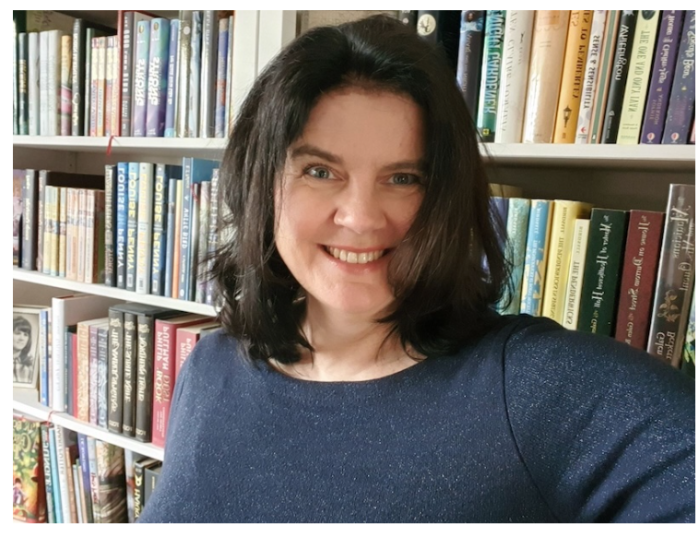
Kim Tyo-Dickerson is Head of Libraries and Upper School Librarian at the International School of Amsterdam. Kim has a Master of Library and Information Science from Syracuse University in Syracuse, New York. She also has a Master of Arts in English, with a concentration in 17th and 18th century British Literature, and a Bachelor of Philosophy in Interdisciplinary Studies with a Minor in Women’s Studies, from Miami University in Oxford, Ohio. With over 20 years of experience in school libraries in North America, Europe, and Africa, Kim brings a global perspective to her work. Her practice is deeply informed by her Ethiopian American family and is grounded in social justice, with a focus on diversity, equity, inclusion, and belonging. Kim was the guest editor for the Global Literature in Libraries Initiative’s #WorldKidLitMonth #DutchKidLit in September 2021. She also contributed to GLLI’s UN #SDGLitMonth in March 2021, writing on Sustainable Development Goal 5: Gender Equality. Kim’s languages are English, German, and Dutch, and she continues to explore multilingual intersections of language, literature, and identity. Connect with Kim on Bluesky and LinkedIn. Kim’s pronouns are she/her.
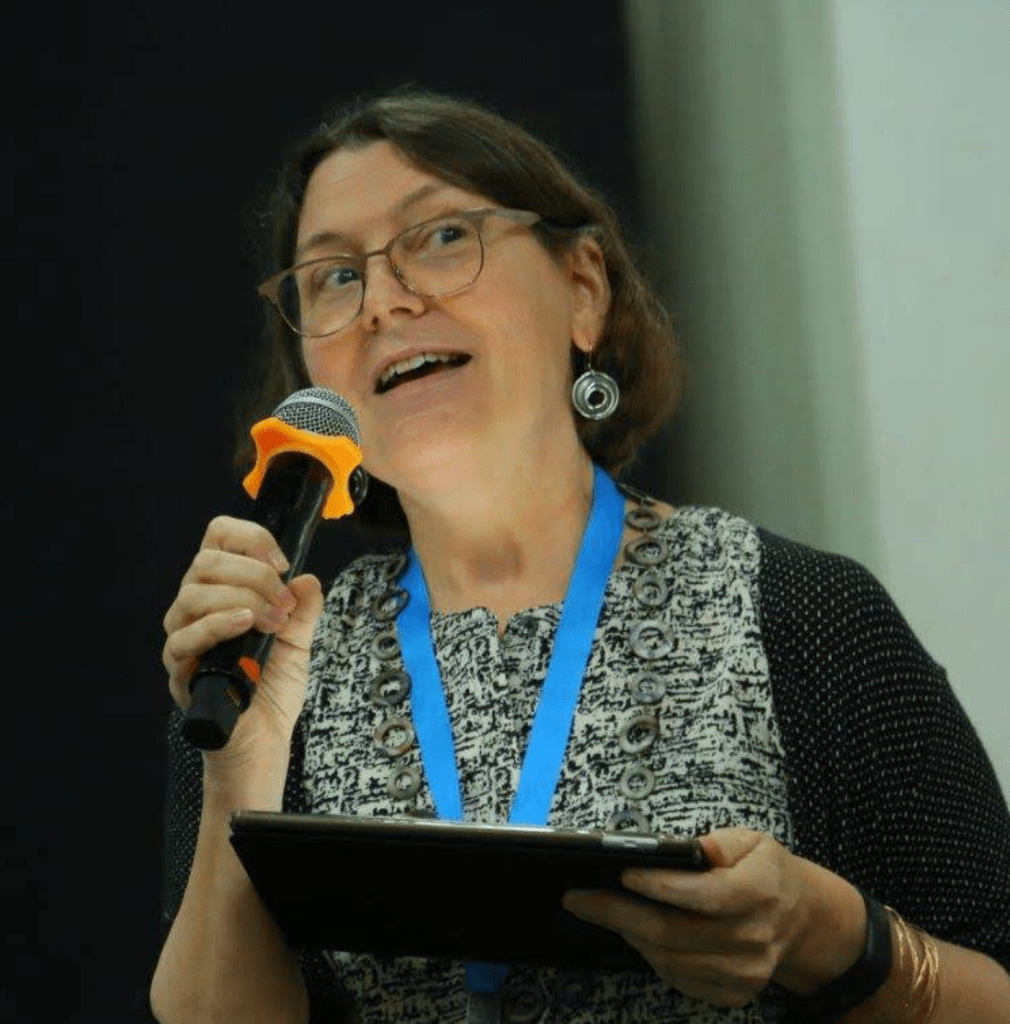
Katie Day is an international school teacher-librarian in Singapore and has been an American expatriate for almost 40 years (most of those in Asia). She is currently the chair of the 2025 GLLI Translated YA Book Prize and co-chair of the Neev Book Award in India, as well as heavily involved with the Singapore Red Dot Book Awards. Katie was the guest curator on the GLLI blog for the UN #SDGLitMonth in March 2021 and guest co-curator for #IndiaKidLitMonth in September 2022.
 Global Literature in Libraries Initiative
2 thoughts on “#INTYALITMONTH: The Graphic Lord of the Flies”