Today’s post comes to you from Kim Tyo-Dickerson & Helle Kirstein
Windows and Mirrors from the Shore
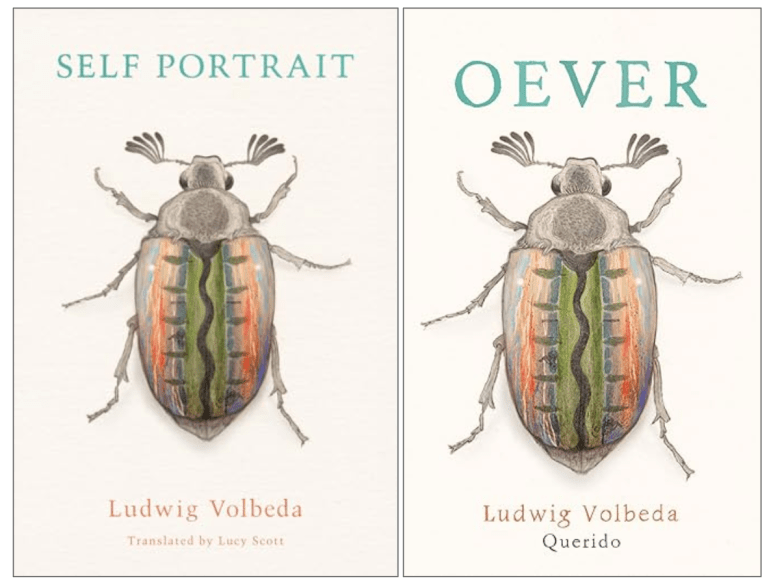
Self Portrait – by Ludwig Volbeda / Translated from Dutch by Lucy Scott (Levine Querido/2025) – NETHERLANDS
[Previously reviewed on this blog by Lynn Miller-Lachmann on Feb. 4, 2026]
Ludwig Volbeda’s debut Young Adult novel, Self Portrait, is an intimate, stream-of-consciousness epistolary novel that opens a window into a transgender teen’s experience. It masterfully charts the breaching of the banks of 14-year-old Jip’s imaginative inner world, pushed to its limits by the crucible of an art assignment that asks them to reveal themselves to the outside world.
How do you draw a self-portrait when who you are on the inside doesn’t match what the world sees on the outside?
Jip is facing the annual Dutch high school week of May vacation with a frustrating, overdue self-portrait art assignment for school hanging over their head. An enthusiast for biology and an artist of tiny things, Jip’s bedroom is covered in art, fine-lined, intimate drawings of insects and found objects. And yet, Jip cannot draw their own portrait. For an artist, creating a self-portrait is often a standard rite of passage and exploration of identity. Why is something so easy for others so hard for Jip?
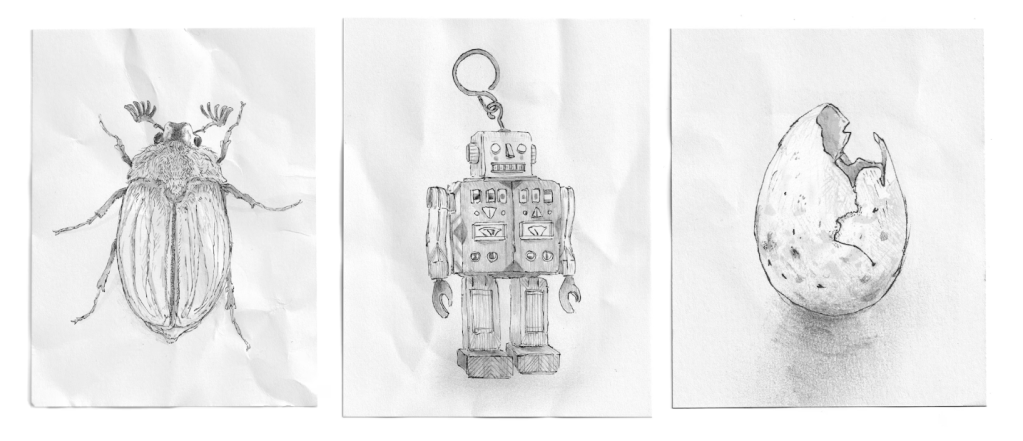
So, Jip stalls and draws more of their favorite insects describing their unusual characteristics, as well as exclaiming over broken eggshells or found objects.
Look! Here’s a may beetle. Did you know that lightning bugs are also beetles?
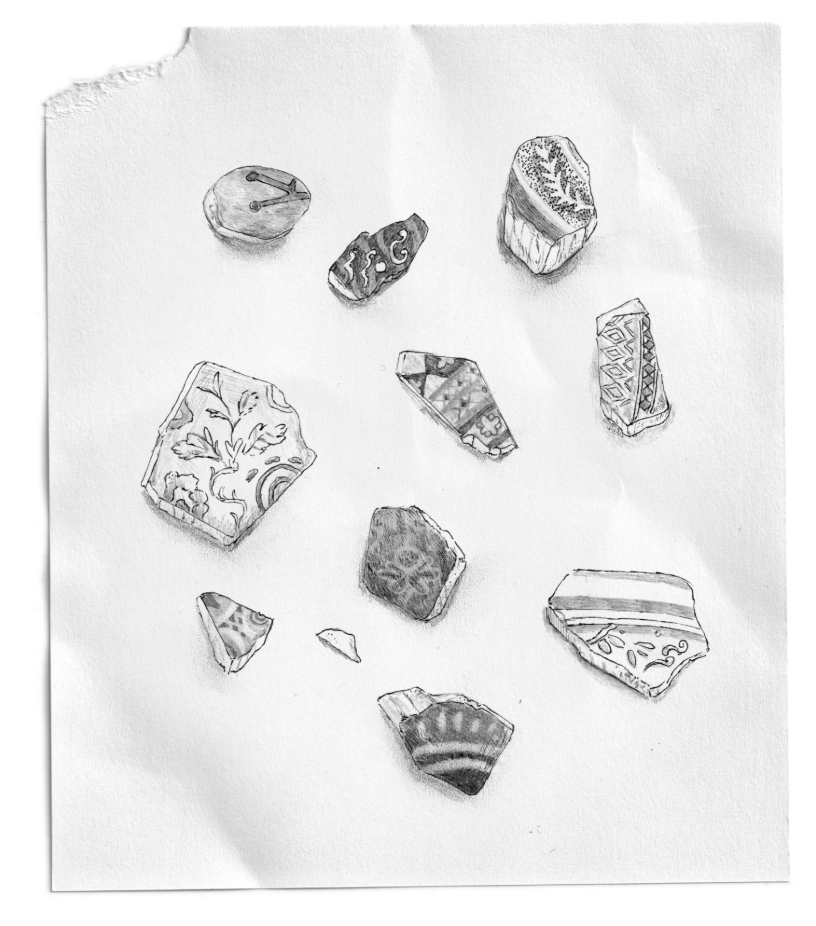
Look! Here are pottery shards found in the abandoned field.
Look! This is the stone that you had in your hand in the bike shed.
Alongside these daily drawings, Jip writes letters they will never send to a new boy at school who has shown them kindness. Is Jip attracted to this boy? Is this boy attracted to them? In the ebb and flow of the pages in their notebook, Jip also chronicles the casual cruelties of classmates’ taunts, the mocking nicknames like “Jipipedia” whenever they state a fact, and playground chants, “Nerd, nerd, not preferred” or “Are you a boy or are you a girl?”
Above all, Jip’s letters mourn the loss of their former best friend, a boy named Oever, a Dutch name meaning “bank” or “shore.” From the beginning, Oever was more than just a friend to Jip, “I didn’t know if I wanted to get to know him or if I wanted to be him. I only knew for sure that I wanted to stay by his side, for the rest of my life, to figure that out.” Now that Oever has rejected Jip, Jip comes to understand that their friendship embarrassed Oever and that they are no longer sure where they stand. Jip knows a boundary has been crossed.
It feels like I’m waiting for something.
I just don’t know what.
The highly detailed portraits Jip draws of everything else but themself this memorable week in May tell Jip more about their internal world than they realize. And Jip’s letters of confession to his crush, with their jostling memories and deepening isolation, not only chart the rising emotions around them but also help them work through anxieties about their parents’ unhappy marriage and their beloved grandmother’s failing health. They also reveal the final words said to Oever and an ultimate betrayal.
The combination of words and drawings in Jip’s notebook bring together their inner and outer worlds, a parallel structure that operates subconsciously for Jip. By the end of the week, Jip finally understands the reasons why they had been so utterly unable to face the self-portrait assignment until now. What happens next is the beginning of a new chapter, one where “self” and “portrait” finally connect and the art assignment is revealed.
The Work of Translation: From Oever to Self Portrait
“I hadn’t planned to write about gender—it felt too private—but once I did, I wanted to do it from the inside out, showing how someone can feel hesitant and certain at the same time” (Volbeda, “Global Literature”).
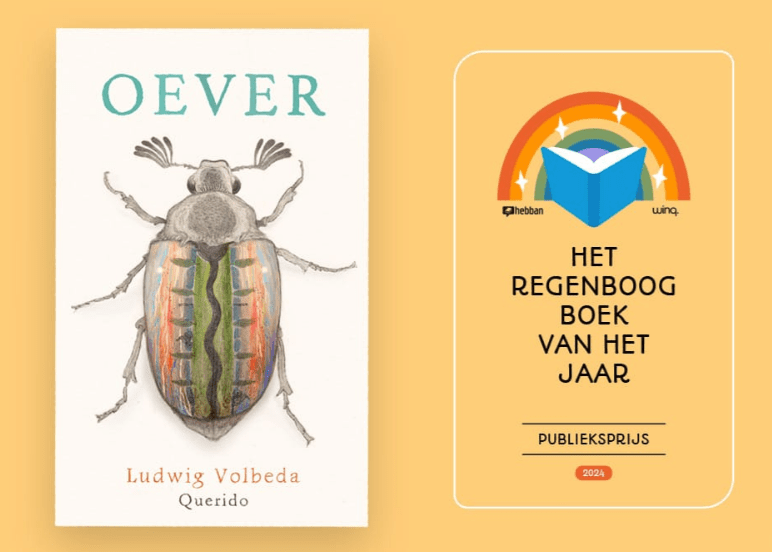
One of the most fascinating aspects of the book’s translation is the shift in nuance between its original Dutch title, Oever, and its English title, Self Portrait. Its original Dutch title is actually the name of Jip’s childhood best friend. As the two grew into adolescence, their relationship became deeply strained, leaving Jip to untangle why this friendship fractured.
However, the word oever carries a profound double meaning in Dutch that doesn’t map directly to English. Literally, an oever is a riverbank, a lakeshore, or an edge, the precise threshold where solid land transitions into water. Metaphorically, it symbolizes a state of limbo and transition, the fragile boundary between the solid, rigid ground of who society expects you to be and the fluid, unpredictable depths of who you actually are. For a transgender teen like Jip, standing on the oever means being caught between two worlds, waiting for the courage to leave the safe shore behind and step into their own fluid truth.
But the title of the English translation, Self Portrait, is also effective. Significantly, it lacks a hyphen. A hyphen serves to connect, to bridge two elements into a unified whole. Without it, “Self” and “Portrait” stand as separate, unlinked entities. This grammatical choice mirrors Jip’s internal state, as they are a self in pieces, unable to merge their inner identity with their outer image.
A Masterclass in Visual and Textual Poetics
“In children’s literature, we find it very natural for text and image to be close together,” says Volbeda. “In literature for adults, you hardly see any images. I find that strange. Apparently, you have to outgrow the image. But why? The combination can be so expressive. If you only see a drawing of the entrance to a cave, that doesn’t say much. But if you write underneath it: ‘Niels never came back,’ a story emerges. That is how you create a space of imagination that, as far as I am concerned, deserves to be explored a bit more in literature for adults” (Trouw, “Writer Ludwig Volbeda”).
Self Portrait reads with a swift, poetic urgency. The text is sparse, leaving plenty of white space on the page, between sentences and phrases, making it an incredibly gentle yet devastatingly fast read. For those looking to experience the book in a different format, the audiobook is under four hours long and features a breathtakingly believable voice actor. However, the GLLI committee’s recommendation is that the book is meant to be held and looked at, so having it to hand with the audiobook would be ideal, as Volbeda’s minuscule, finely detailed pencil illustrations are not merely decorations. They are active narrative features.
Indeed, in the book’s postscript, Volbeda reveals to the reader that these seemingly random, fragile drawings are not random at all. Each tiny sketch represents a stage in Jip’s emerging identity. In reality, Jip was drawing self-portraits the entire time, they just didn’t realize it yet. These images invite the reader to immediately flip back to the beginning of the book to re-examine the illustrations with fresh eyes.
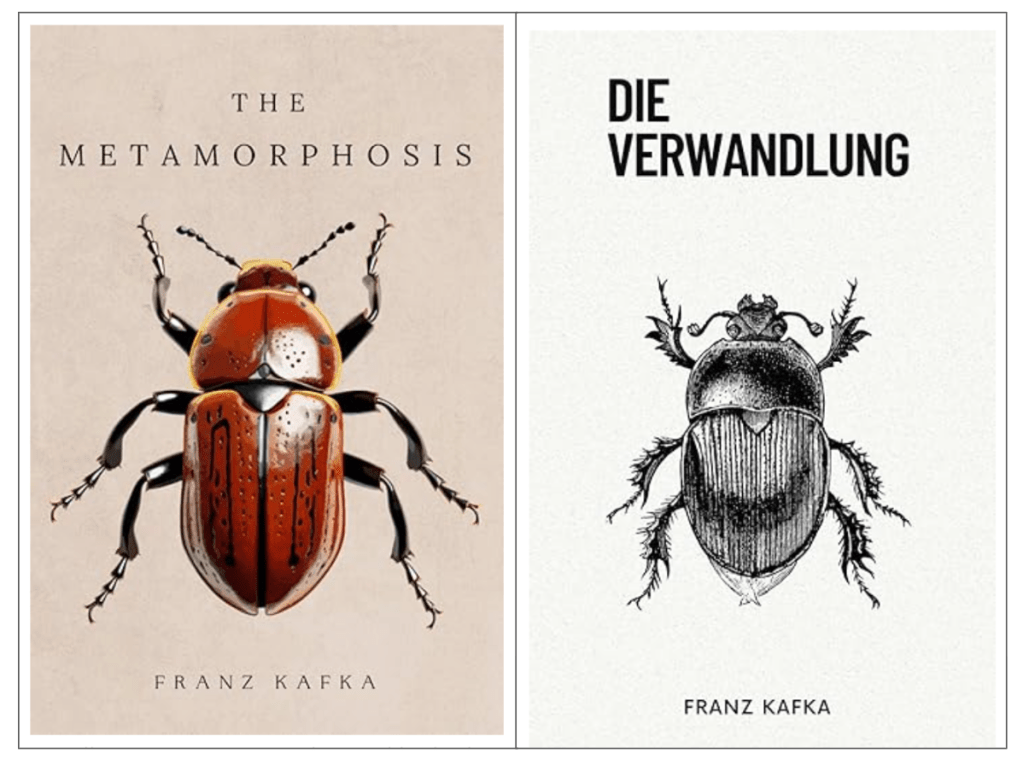
And Volbeda admits that Jip’s beloved beetles are references to another work in translation, Kafka’s Metamorphosis or Die Verwandlung (“21 questions”). Kafka’s story of transformation is sudden and brutal, with his character Gregor Samsa experiencing a harrowing, tragic disconnect between his mind and body. The ending of Gregor’s life happens at the beginning of the narrative. In life-affirming contrast, Jip’s metamorphosis is a slow process of discovery and self-actualization that leads to a reconnection of their inner and outer self by the end of the May vacation and heralds a hopeful return to their life at school.
Universal Appeal and GLLI Shortlist Selection
Ultimately, Self Portrait earned its spot on the 2026 GLLI Translated YA Book Prize shortlist because it is a beautifully illustrated, genre bending mirror for the LGBTQIA+ community, offering a lovingly specific exploration of gender identity. Yet, it is equally vital as a window for any sensitive reader.
At its core, Self Portrait is a profound meditation on teenage loneliness. It perfectly captures that universal adolescent ache, the feeling of being surrounded by a family and a school you’ve known your whole life, yet remaining utterly invisible and misunderstood. It is a painful, quiet, and, ultimately, triumphant story about the courage it takes to persevere and figure out who you are, even when the people in your life do not understand and the world around you feels unaccepting. Self Portrait rewards readers who finish the book and return to marvel at Volbeda’s illustrations, further unlocking other levels of meaning, and this complexity truly impressed our jury.
TITLE: Self Portrait
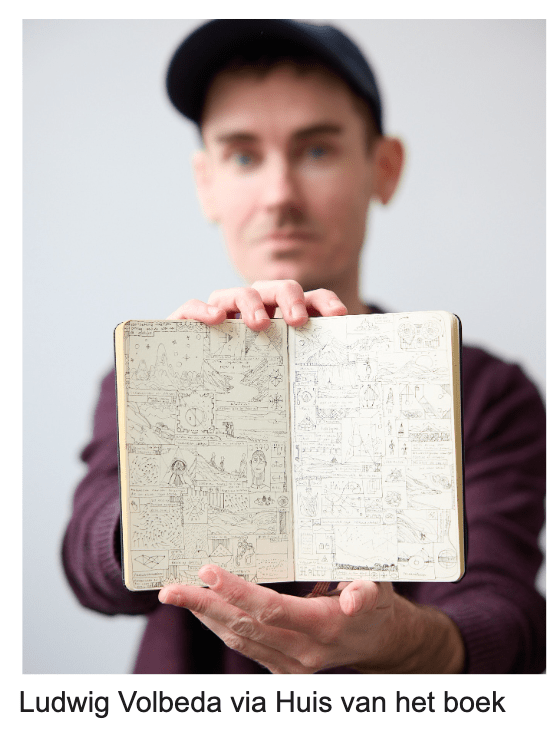
AUTHOR / ILLUSTRATOR: Ludwig Volbeda (1990) studied illustration at the Sint Joost Art Academy in Breda. He currently lives and works in Amsterdam, where he works on children’s books and autonomous work.
In 2018, he won the Golden Brush for the book Fabeldieren, written by Floortje Zwigtman. In 2021, he won the Golden Brush and the Woutertje Pieterse Prize for Hele verhalen voor een halve soldaat, written by Benny Lindelauf.
Ludwig prefers to fill his walls and sketchbooks with small notes, drawings, cartoons, and short stories. Ludwig has a fascination with everything small, such as buttons and beetles. Furthermore, he is interested in collections of all kinds, such as (photo) archives, abandoned shopping lists, or toolboxes. He draws inspiration from literature, history, landscapes, photography, poetry, and comics. Comics inspire him to experiment with the rhythm of images and the interplay between text and image.
In 2024, his debut as an author was published, the young adult novel Oever , which won the Woutertje Pieterse Prize as well as the Rainbow Book of the Year 2024 and was shortlisted for the De Boon Literature Prize (Woutertje Pieterse Prize).
TRANSLATOR: Lucy Scott is a translator of Dutch and French literature into English. Her translated novel excerpts have appeared in The Georgia Review and in Elektrik: Caribbean Writing. She has translated, solo or with co-translator David McKay, two full-length works of adult fiction from Astrid Roemer: On a Woman’s Madness, which was longlisted for the International Booker Prize 2025 and shortlisted for the National Book Award for Translated Literature; and Off-White.
PUBLISHER: Levine Querido, 2025. Originally published as Oever in 2024 by Querido.
ISBN: 9781646145775
REVIEWS:
- GLLI #WorldKidLit Wednesday Review – Feb. 4, 2026 – by Lyn Miller-Lachmann
- Kirkus Reviews, Starred Review, “Breathtakingly raw and fresh, just like adolescence itself.” Nov. 4, 2025
- School Library Journal, Starred Review – Nov. 1, 2025
- Foreword Reviews, Starred Review
AWARDS:
- Shortlisted, 2026 Global Literature in Libraries Initiative Translated Young Adult Book Prize
- A 2026 USBBY Outstanding International Book
- ︎Woutertje Pieterse Prize 2025
- ︎Zilveren Griffel 2025
- Rainbow Book of the Year 2024
INTERVIEWS:
- Kirkus Reviews, “Global Literature: Talking With Ludwig Volbeda” – Feb. 18, 2026
- Trouw (Dutch), “Writer Ludwig Volbeda: ‘My Book doesn’t stay with the youngest reader, but goes to the parents as well, and vice versa’” – Aug 7, 2024
- Tentoonstelling ‘Huis van Ludwig Volbeda’ / Exhibition “The House of Ludwig Volbeda”: “From March 8 to August 24, 2025, Rijksmuseum Huis van het boek held the exhibition ‘Huis van Ludwig Volbeda,’ which centered on the work and inner world of draftsman and writer Ludwig Volbeda. The exhibition offered a glimpse into his overflowing sketchbooks, which serve as a repository for his fascinations and ideas.”
RESOURCES:
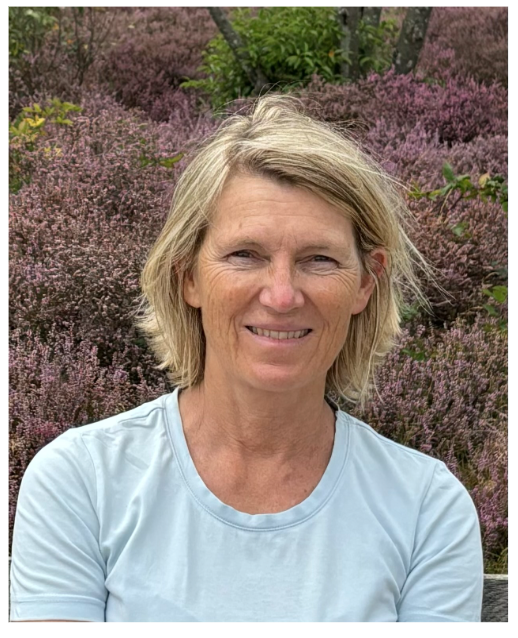
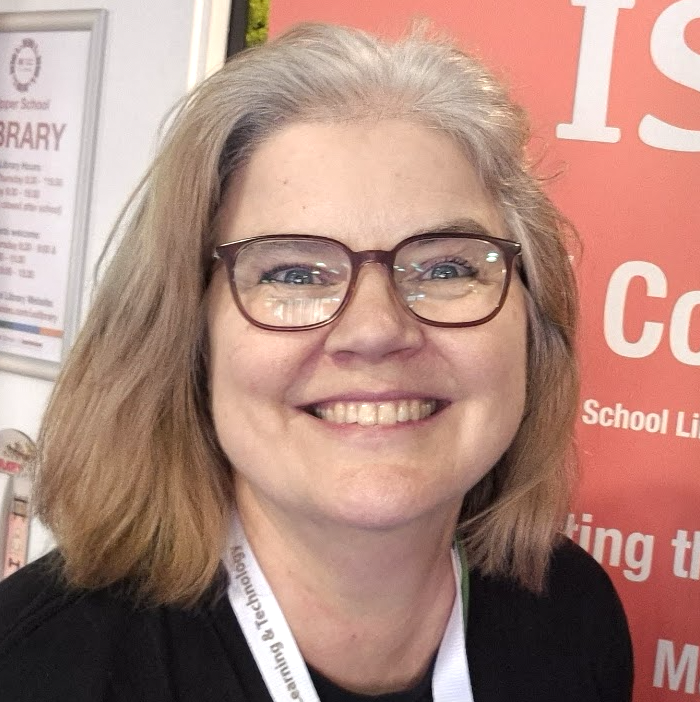
Helle Kirstein is a teacher librarian currently serving as the Lower School Librarian at the International School of Amsterdam. She holds a Master’s degree in Business, Language, and Culture from the University of Southern Denmark, a BA in Teaching from Blaagaards Seminarium, and a Master’s degree in Teacher Librarianship from Charles Sturt University. A polyglot who reads fluently in four languages, she focuses her professional work on encouraging students to read in their home languages, while also championing translated books and international stories as essential tools for building empathy and understanding across cultures. She hopes to bring to the committee the perspective of an educator who views global culture as a vital component of the modern school library.
Kim Tyo-Dickerson is the Head of Libraries and Upper School Librarian at the International School of Amsterdam, with over 25 years of experience across North America, Europe, and Africa. She holds an MLIS from Syracuse University and an MA in English from Miami University in Oxford, Ohio. Her practice is deeply informed by her Ethiopian American family and is centered on social justice, the freedom to read, and fostering environments of belonging. A passionate advocate for global literature, Kim’s professional and personal journey is rooted in the belief that language and literature are the essential tools for making sense of our world through the stories we share. You can connect with Kim on LinkedIn.
Disclaimer: The opinions and views expressed are the author’s and do not necessarily reflect those of GLLI.


One thought on “#IntYALitMonth: GLLI 2026 Shortlist: Self Portrait”