Today’s post comes to you from Erica Prenda
Magic, Memory, and the Aftermath of Dictatorship
Since I am an English teacher, it is probably unsurprising that visiting the world’s famous libraries, bookstores, and other literary haunts is my top priority when I arrive in a new country. Accordingly, my souvenir to take home is always a novel associated with the country or city I’m in.
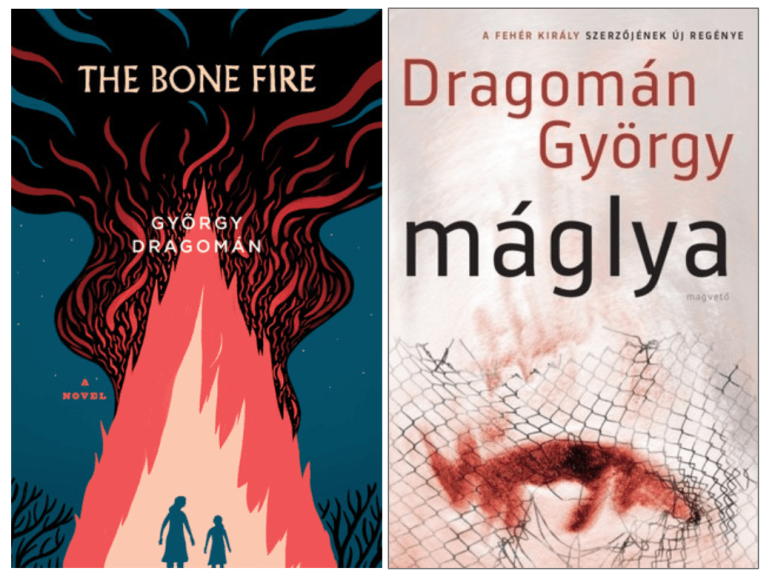
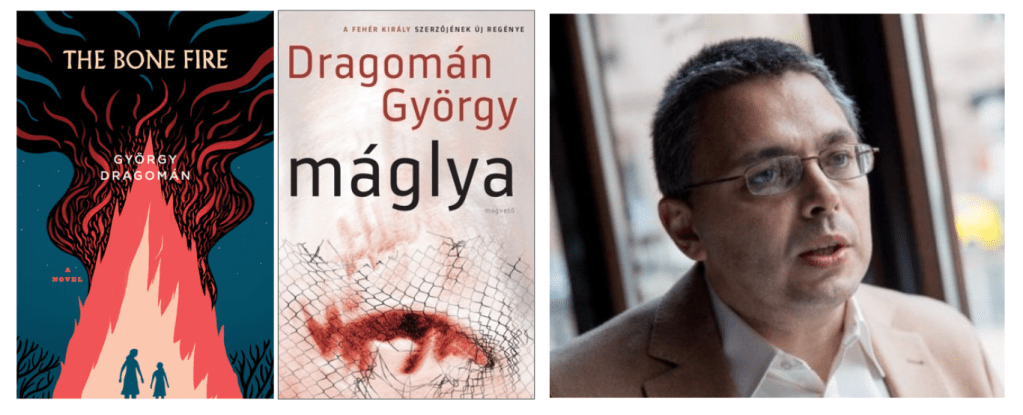
I recently traveled to Budapest, where I found Massolit Books and Café within the Jewish Quarter. Inside, the owner led me to their Hungarian literature section, where I picked up The Bone Fire by György Dragomán (translated into English by Ottilie Mulzet). Though first drawn to the graphic weight of a burning flame on the cover, I found the pages themselves filled with the same dark yet captivating appeal.
The Bone Fire, or in its original Hungarian Máglya, is a coming of age novel set in the wake of a totalitarian regime in an unnamed Eastern European country. With elements of magical realism and gothic historical fiction, the novel follows Emma, the thirteen-year-old protagonist, who finds herself orphaned when her parents, rumored informants to the old regime, die mysteriously in a car accident. Even more mysterious is the grandmother Emma never knew existed coming to collect her from the cruel, almost institutional orphanage she was forced to live in.
Upon arrival in her new home, Emma slowly unravels the troubled history of her family while also enduring the typical challenges of a growing teenage girl and trying to understand the townspeople’s overwhelming paranoia and fear that permeate each aspect of her life. Alongside learning from her grandmother how to make bread and read fortunes written in flour, Emma must also navigate the hostile and suspicious treatment from her new classmates and neighbors.
Although the dictatorship has been dismantled, the town is still reeling from not only years of betrayal and violence, but also from a massacre of regime protestors, the bodies of whom are still missing. The town has been left with painful memories, disparaging rumors, and ample distrust.
Emma is treated as a dangerous outcast, inheriting both her parents’ reputation as regime collaborators and the town’s mistrust of her grandmother. Her grandmother, a practitioner of ambiguous “folk” magic, possesses the real knowledge of the Secret Police and their informants, which the neighbors fear she will one day use as a weapon against them as they try to erase the past.
Though Emma is often attacked, both verbally and physically, by her peers who, in turn, inherited their parents’ fears and biases, she slowly adopts her grandmother’s magic through their domestic rituals to help her develop her own sense of intuition and supernatural awareness of the world around her.
The cyclical nature of history and weight of generational guilt come to full fruition at a bonfire in the town center. While her neighbors burn old documents and other remnants of the regime, Emma must learn how to bury the ghosts of her family without repeating their horrific mistakes, discovering her own agency to escape the history she must bear but did not create.
Dragomán’s mastery of subtlety draws readers into this world. Is her grandfather’s spirit truly present and almost corporeal within the household? Or is it merely a memory so painful it lingers? Can her grandmother really learn secrets and foresee events to come by drawing in the flour? Or is it more so a way for her to avoid facing the reality around her?
The realistic yet haunting history seeping throughout the novel stems from Dragomán’s own childhood. Though born in Romania under the Ceaușescu Regime, his family fled to Hungary when he was only 15, not too much older than our protagonist, Emma. His father was a political prisoner. His experiences with both living under totalitarian rule and experiencing the post-communist aftermath influence the traumatic, political tension of The Bone Fire. Dragomán is otherwise known for his work in translation, bringing the words of James Joyce and Samuel Beckett to the Hungarian language.
The Bone Fire is one of those novels that, though maybe too heavy to read all in one sitting, will stay with you long after the physical book is closed. I recommend this novel for upper level young adults, particularly those with some knowledge of the Communist rule in Eastern Europe.
TITLE: The Bone Fire (2021) / Máglya (2014)
AUTHOR: György Dragomán
TRANSLATOR: Ottilie Mulzet
See excerpts from her many translations here, including these from The Bone Fire:
- Excerpt from The Bone Fire on LitHub
- Opening pages of The Bone Fire on Hungarian Literature Online (HLO)
In an interview with the website Hungarian Literature Online (HLO) in March 2021, the translator explains the translation of the title itself:
HLO: Let’s begin at the beginning, with the title – it will be apparent to readers familiar with the original Hungarian novel, that the Hungarian title Máglya has become in English not merely “bonfire”, but The Bone Fire. So in translating the title, and adding bones, you’ve been able to take advantage of an opportunity in the English that was unavailable in the Hungarian – how does this small shift, from bonfire to bone fire reflect the themes of this novel?
Ottilie Mulzet: Dragomán’s novel had another translator before me; unfortunately, he couldn’t complete it, so I was asked to take it on. I started from scratch, but inherited the title, which I think is an inspired choice. Bones do play a pretty important role in the book, and, as Rebecca Makkai pointed out in her review, ‘bonfire’ originally denoted an open-air fire for burning bones. The original Hungarian title Máglya has the marvellous wordplay of sounding like “mágia” (it means the same thing in English), but, on the other hand, the English title adds a nuance which is very relevant to the book. The Hungarian word máglya itself has a fascinating etymology: it comes from southern/western Slavic mohyla/mogila ‘burial mound,’ which apparently is from *mogyla (‘sepulchral cairn’).
PUBLISHER: HarperCollins, 2021. Originally published in Hungarian by Magvető, 2014.
ISBN: 9780544527201

Emma Prenda is an English teacher at Marymount International School in Rome, Italy.
Disclaimer: The opinions and views expressed are the author’s and do not necessarily reflect those of GLLI.


It’s interesting that the original Hungarian title “Máglya” means bonfire, which could sound celebratory or cosy. “Bone Fire”, on the other hand, certainly sounds sinister and makes the English title intriguing. I look forward to reading this book soon!
LikeLike