Today’s post comes to you from Sally Cameron
The Gap on the Shelf
It is remarkable how stories entwine us, often in the most unexpected ways. Whether it’s a librarian looking at a gap on a shelf or a mother writing the very books she wants her daughter to see, books have an incredible power to bring us together and bridge the worlds we live in. My own collection began to change not because of a budget meeting or a new curriculum, but because of a single conversation that opened my eyes.
My library is one of two at our international school in Rome. Mine is for our pre-K–5 students. I have just over 7,500 books in the collection, and as the years have gone by, we have reduced our non-fiction as we move toward online encyclopedias and information providers. The most important non-fiction sections I’ve kept are history and geography, central to our Social Studies curriculum.
When there are parent conferences at the school, parents often drop into the library. Some have known me for many years and just want to say hello—there is one in particular who always brings me a bar of chocolate to get me through the afternoon! Parents come in to talk about what their children have been reading or studying, and for book recommendations. We don’t just sit at the desk; we tour the library together. I take them to the shelves, show them books, and leave them to browse. One of them even referred to me as the “book crack dealer” because of my refrain: “Here, try this, you’ll like it…”
One day, a new parent, Oluchi, came in. She began going through my geography and history books. After browsing for a while, she asked me a very good question: why did I not have more books in here about Africa and African cultures?
I was stuck for an answer, to be honest with you. I have boxes of books about ancient Rome, ancient Greece, ancient Egypt, ancient China, the Mayans, Mesopotamians, and Aztecs—but very little about African culture.
I try to make sure that I have a book about each country that we have a student from, so when a student goes to our shelves, they will find their country in our geography section. This gets built up every year with admissions, and I get a list from them to make sure everybody is represented, at least in that sense. but the history was missing.
Oluchi very kindly said to me, “Well, maybe it’s because you don’t have a lot of kids from African countries,” to which I replied, “That’s it,” because it was true. However, our student body is changing; we are having more families coming from Africa, and speaking with this mum made me realize that I had a huge hole in my collection.
In order to fix it, the first thing I did was turn to Instagram, where my “book people” are. I found an influencer named Zai Sylla, whose page is dedicated to books about African heritage and culture. She would recommend books about African mythology, books with black witches, and books with black mermaids. I have an elementary school library, so a lot of the books on her page couldn’t be used for the library, but it set me on the right path to educating myself.
Anyway, I’m getting sidetracked. Oluchi came back to me, and she kept coming back. We talked a lot about some of the books I had about ancient Rome or the Tiber River, and how those could be used as examples for books that could be written about Africa. Inspired by this, this mother went away and started writing and commissioning her own books about Africa! Her daughter has been helping, and they’re so excited every time a new book is coming out.
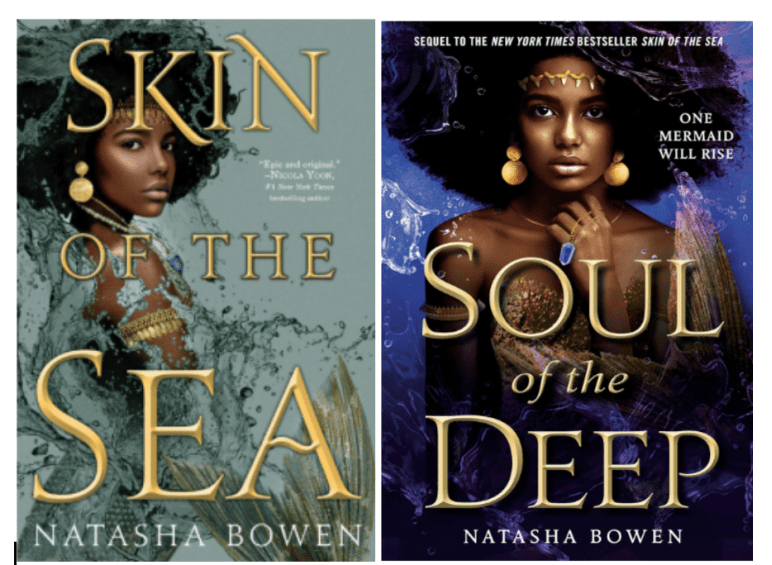
Thanks to that ongoing conversation with Oluchi, and recommendations from Zai Sylla’s page, I found an amazing YA book called Skin of the Sea (2022). I read it and then gave it to Oluchi, and she loved it. She recognized the characters, the mythology, it’s genuine.
I have learned a lot since Oluchi first stepped into my library, and I am extremely grateful to her for opening that conversation.
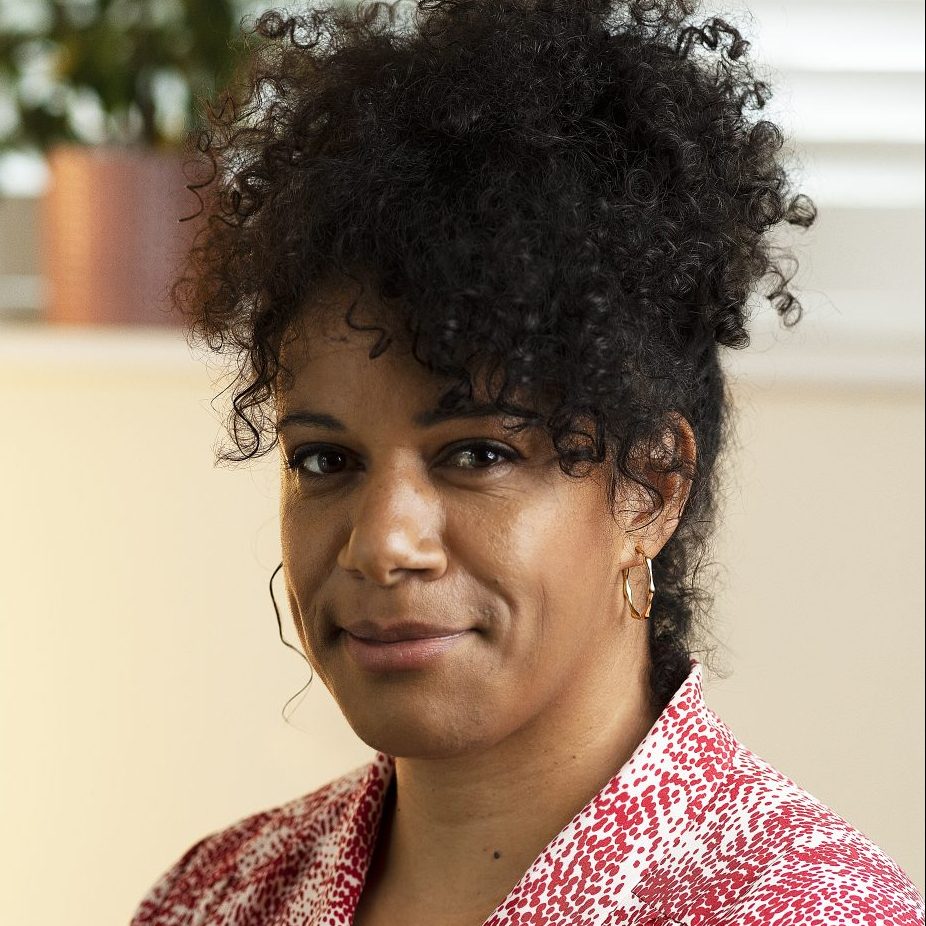
Skin of the Sea introduced me to the author, Natasha Bowen. She’s of Nigerian and Welsh descent and lives in the UK. She was inspired by a passion for mermaids and African history, which is why she started writing this story. It was fascinating because I discovered it around the time there was a lot of talk about the Disney remake of The Little Mermaid with a black mermaid. It was serendipitous that this was the book that came up for me in that moment.
So, Skin of the Sea is a book that follows the story of a Mami Wata. The Mami Wata, or mermaids, collect the souls of those who die at sea and bless them for their journey to Olodumare. The people drowning at sea, the souls they are blessing, are the slaves being transported across the ocean. Bowen takes the real horror of the transatlantic slave trade and places it within West African spiritual systems and mythology.
Simidele, or Simi, the mermaid, guides the spirits of the drowned into the afterlife, but as her memories of being a human haunt her, instead of waiting for a drowning boy to die, she saves his life, and thereby breaks the rules. In saving the drowning boy, she has neglected her role and put all the other mermaids in danger. Simi ends up back on land, sent on a quest to right her wrongs.
What I loved about this novel is that it reframes a history that is often told only through suffering. The slave trade is part of the story, but it doesn’t dominate it. The book does not soften the terrible things that happened, but by spinning the story through folklore and mythology, it reminds us that West African cultures existed long before colonialism and enslavement, with gods, cosmologies, knowledge systems, and spiritual traditions. The traditions and stories bound up in this book are far older than Hans Christian Andersen and his Little Mermaid, and while there are surface similarities, it would be very wrong to think of this as a reworking of that story. Instead, it feels more like a reclaiming of the mermaid myth through an African lens.
The idea of the black mermaids shepherding the souls of those stolen away from slave ships is a haunting image. Simi has become a water spirit after death, chosen to return as a mermaid, which creates an interesting tension between humanity and divinity throughout the story. She belongs to the spiritual world, but she is still emotionally tied to the human one.
Simi keeps returning to the Goddess’ island and transforming herself back into human form because she misses her mother and wants to relive those memories. When she’s in the sea, in Mami Wati form she doesn’t have her human memories as her work with the dead is an honour, and that she should do nothing more than pray for those souls. That conflict between memory and duty, between emotional attachment and spiritual responsibility, runs throughout the whole novel. Her compassion becomes both her strength and the thing that places everyone in danger.
The novel is very atmospheric and really well paced. There’s a lot of travelling, mythology, and information about how people became gods. The scenery, the clothes, the customs of villages and families and different groups are described so vividly that the world feels alive. The story constantly shifts between water and land, human and spirit, memory and duty, and that duality sits at the centre of Simi’s character.
Some of the smaller details are also really memorable, like the sacred necklaces the mermaids wear, which glow whenever another mermaid is nearby, which reinforces this sense of connection and sisterhood between them.
Simi is such a powerhouse of a main character that you can’t help but root for her as she navigates this wild world of romance, villains, and plot twists. Surrounded by other great characters, her quest really dives into how magic works, both on land and under the sea, while exploring the messiness of relationships between gods, spirits, and humans.
The stakes are raised when she saves the boy by taking him to the island, where he catches a glimpse of her transforming from mermaid to human. From that moment on, the story opens up into something much deeper than just an adventure; it becomes a moving look at identity, where we belong, and how to stay compassionate in a world that’s been shaped by so much loss.
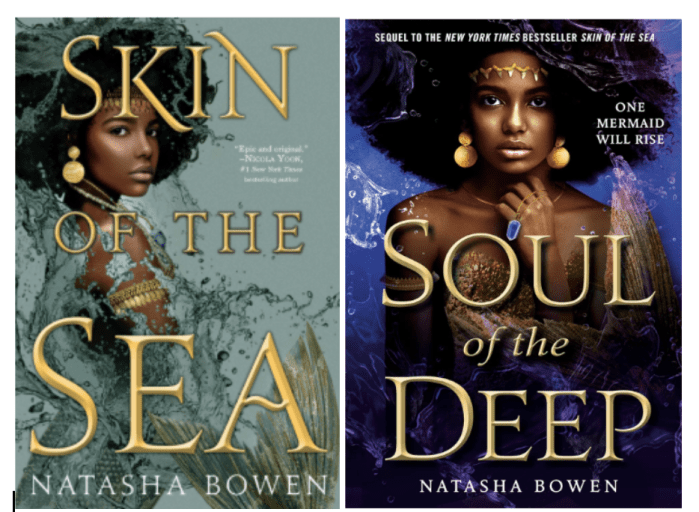
TITLE: Skin of the Sea (2022) / Soul of the Deep (2023) — the duology is known as “Of Mermaids and Orisa”
AUTHOR: Natasha Bowen — see this interview with her when she was shortlisted for the 2022 Branford Boase Award
PUBLISHER: Penguin
REVIEWS / AWARDS for Skin of the Sea:
- Kirkus — Starred review, Nov. 2, 2021
- One of the three winners of the UK’s YA Diverse Book Award in 2022
- One of the 2022 Honor Books for Older Readers for the Children’s Africana Book Award (CABA)
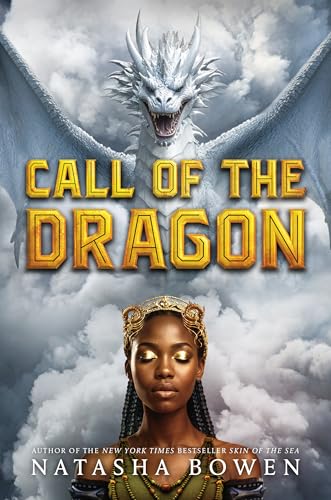
Note: Natasha Bowen has a new book out this year — Call of the Dragon (2026).
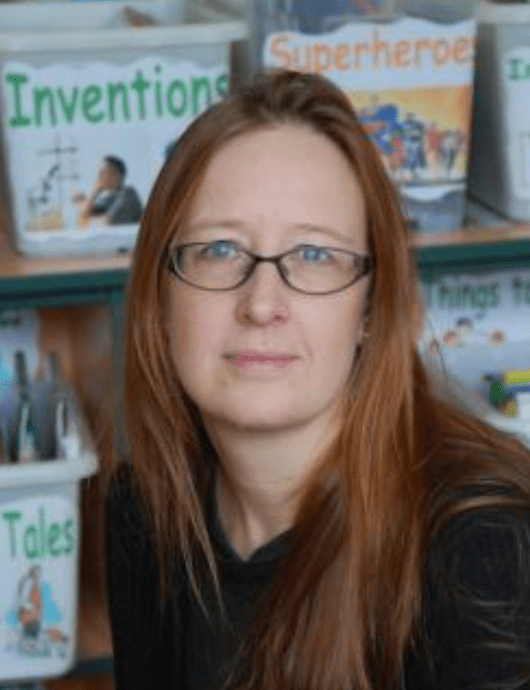
Sally Cameron, Elementary School Librarian, Marymount International School, Rome, Italy
- Classroom teacher turned Librarian
- Believes that Incentivizing reading does not work
- School Libraries Association Librarian of the Year Honors recipient 2013
- BEd Hons English & Drama, Kingston
- MSc Educational Leadership, Leicester
- MA Education (Lifelong Learning), Open Uni
Disclaimer: The opinions and views expressed are the author’s and do not necessarily reflect those of GLLI.


One thought on “#IntYALitMonth: West African Mythology”