It’s May – and time for the 6th annual International Young Adult Literature Month (#IntlYALitMonth) here on the Global Literature in Libraries (GLLI) blog.
Just in case you missed the previous ones, below are links to the end-of-month summary list of each year’s offerings.
- 2021 – wrap-up blog post by editor Elisa A. Garcia
- 2022 – wrap-up blog post by editor Linda Hoiseth
- 2023 – wrap-up blog post by editor Julia E. Torres
- 2024 – wrap-up blog post by editor Emily Corbett
- 2025 – wrap-up blog post by editor Katie Day
During this month, every day (except Wednesdays, which are devoted to #WORLDKIDLIT WEDNESDAY), teacher-librarians and YA literature enthusiasts from around the world will be sharing their thoughts and recommendations on some aspect of YA literature, whether books, authors, trends, genres, etc.
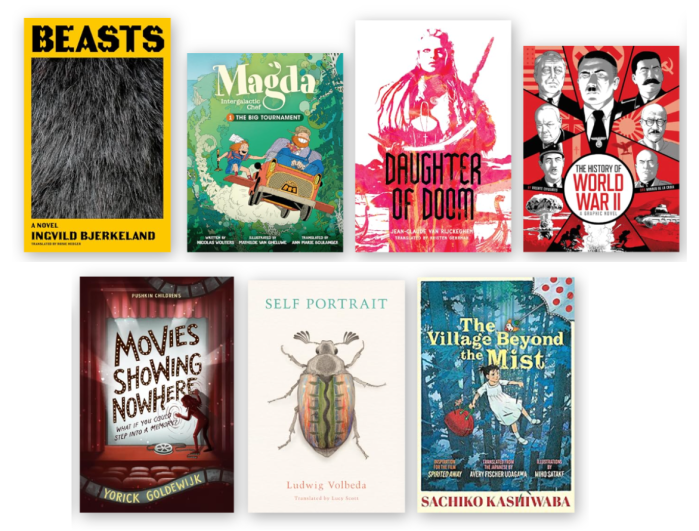
We’ll start by reminding you about the books on this year’s shortlist for the 8th annual Global Literature in Libraries Initiative (GLLI) Translated Young Adult Book Prize, announced on April 2nd. Note that each of these shortlisted titles will be given due attention in the last seven days of the month, before this year’s winner is announced on May 31st — here on this blog.
“Best of” Lists to Follow for Recommended Books
Last year in my opening blog post, I commented on the varying definitions of YA literature and wide range of age categories associated with different YA literature prizes.
This year I’d like to share a meta-resource, a list of lists which anyone can use to find recommended children’s & YA books from people and organizations around the world. It describes itself as: Where to track the best (primarily, but not exclusively, English-language) children’s and young adult books from around the world, especially the latest ones.
Angela Erickson, current chair of the GLLI Translated YA Book Prize, and I created a similar list back in 2015, and then Kim Beeman, who is co-organizing this year’s #IntYALitMonth with me, started a fresh one in 2023, which has been continually updated.
“The Best of the Best – Discovering Children’s and YA Reads” – https://bit.ly/best-of-kidlit.
For example, every year the International Literacy Association (ILA) in the US publishes their Notable Books for a Global Society list of 25 recommended titles.
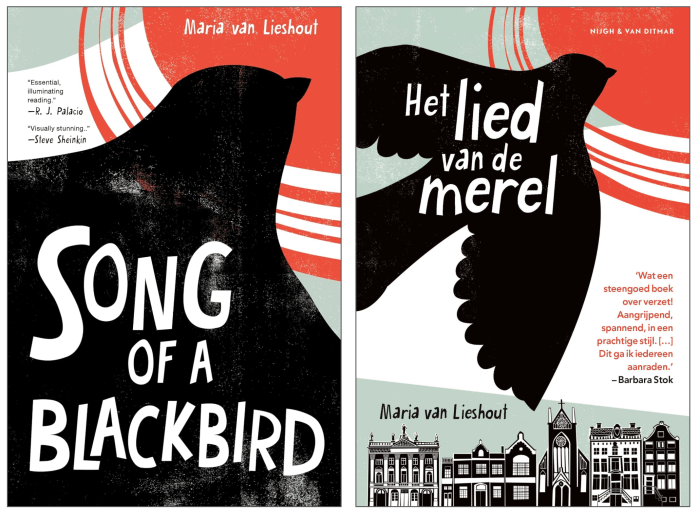
This year we are pleased to see they have included a book which has been reviewed twice on this blog (Feb. 2026 & Mar. 2025) — Song of a Blackbird.
A fascinating interview with the author about the background to the writing of the book was published here on the GLLI blog in May 2025. Note: it wasn’t eligible for our Translated YA Book Prize because the author is bilingual in Dutch & English and the two editions are technically not translations.
The cumulative list of all the past shortlists (including the winners/honor books) of the GLLI Translated YA Book Prize is another example of a list in our list-of-lists.
Volitional Reading, a.k.a., Reading for Pleasure
The decline of reading is a familiar refrain, whether framed as our descent into a post-literate society (a la James Marriott (UK)) or our emergence into digital orality (a la Andrey Mir (Canada) via Robert Logan, Marshall McLuhan, and Walter Ong).
That’s why this position paper written by five academic specialists in education and literacy from around the world — Chin Ee Loh (Singapore), Teresa Cremin (UK), Anežka Kuzmičová (Czechia), Sarah McGeown (UK), and Laura Scholes (Australia) — is worth reading. You can also watch them discussing the paper in a free online webinar (on YouTube), held on March 19, 2026.
Loh, Chin Ee, et al. The decline in volitional reading: Evidence-Informed ways forward. National Institute of Education, Nanyang Technological University, Singapore, 2025.
They cite research into the development of the will — the desire to read for pleasure — in young people, and challenge four common myths:
- Boys don’t read
- Young people should only read novels
- Reading is solitary
- Reading only matters in the primary years
Evidence-informed suggestions of ways to support volitional reading are provided.
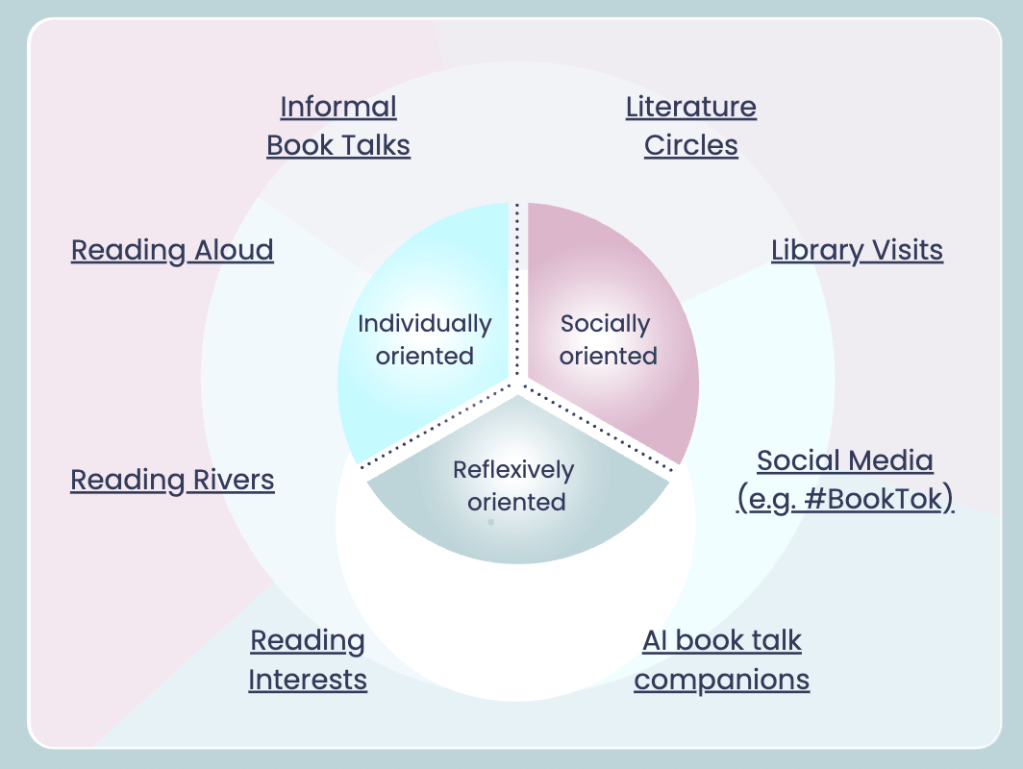
In the document itself there are linked articles behind each of those pedagogical and strategic points.
The authors are part of the Open University’s very admirable Reading for Pleasure (RfP) Research and Practice Coalition, led by Professor Teresa Cremin.
Also note that Professor Sarah McGeown is the lead author on a recent paper out of the Literacy Lab at the University of Edinburgh —
McGeown, S., Errington, P., et al. (2025). The Future of Books and Reading. Literacy Lab, University of Edinburgh, UK.
I love a good metaphor — and so I appreciated Cal Newport’s comment in the New York Times recently that “Perhaps consuming a few dozen book pages a day should become the new 10,000 daily steps — a basic foundation of activity to maintain cognitive fitness.” Interestingly, when he was interviewed in The Chronicle of Higher Education, he used writing as the example — “Don’t let AI write anything for you. Writing is to cognitive health what steps are to physical health.”
It makes me think about the rise of personal trainers, on top of gym memberships — as modern life doesn’t force us to exercise our bodies enough by default. In the near future will people have personal reading & writing coaches, in addition to old-fashioned book clubs, to help us maintain our cognitive health and counteract the distracting effects of social media, the internet, and especially AI?
Certainly keeping teens reading is something we should all be working on. So follow us this month and get some fresh recommendations of books from around the world for them.
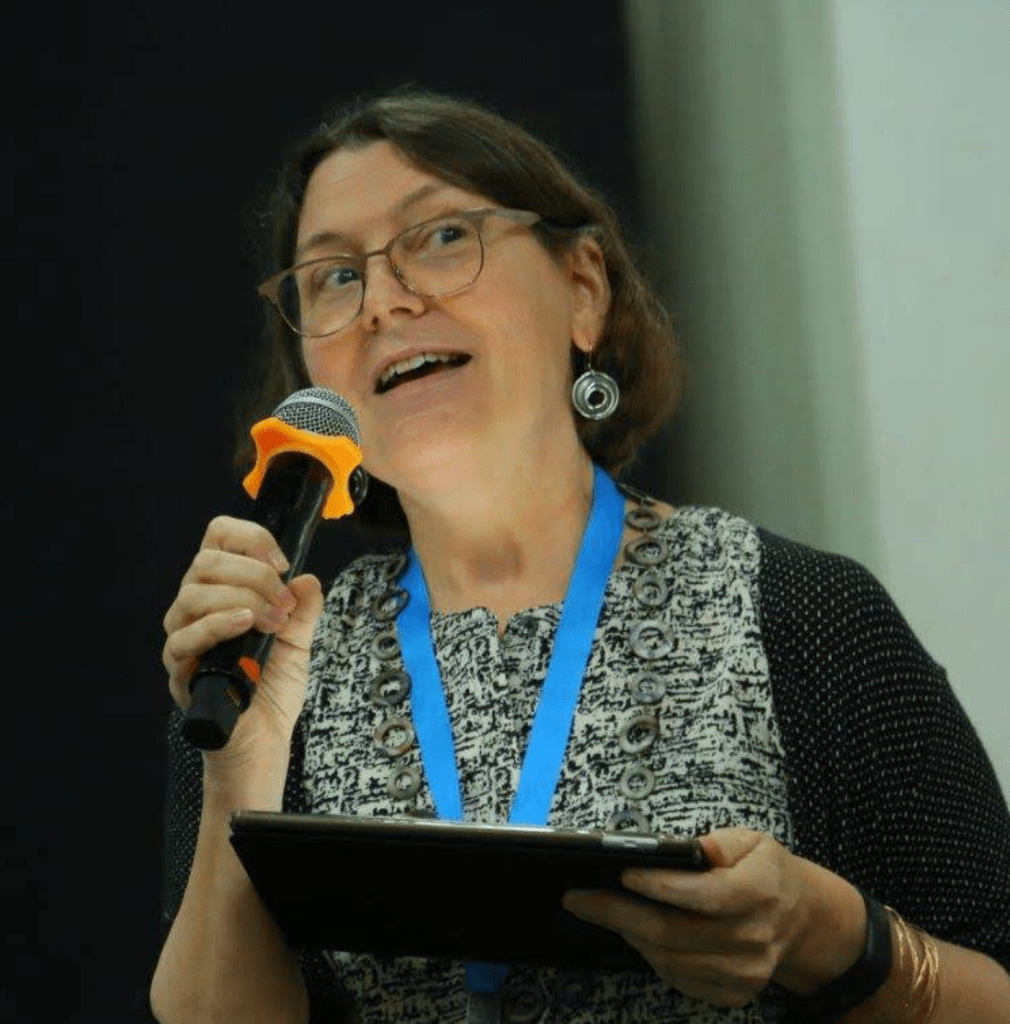
Katie Day is an international school teacher-librarian in Singapore and has been an American expatriate for almost 40 years. She is currently on the GLLI Board and has served as the chair of the GLLI Translated YA Book Prize and co-chair of the Neev Book Award in India — as well as being heavily involved in international school librarian initiatives such as the Red Dot Book Awards in Singapore and the Siam Book Awards in Thailand.
Disclaimer: The opinions and views expressed are the author’s and do not necessarily reflect those of GLLI.


Katie, what a great kick-off to #IntlYALitMonth!
LikeLike