When I’m asked for books that are great introductions to the genre of speculative fiction, I often turn to Parable of the Sower by Octavia Butler or The Dispossessed by Ursula K. Le Guin. Women have been writing – and continue to write – exceptional speculative fiction. Reading speculative fiction in translation is a fun experience; while specific cultural experiences shape a novel, so do universal emotions, problems, and hopes.
Here are two of my favorite translated speculative fiction titles from the past year.
The Book Censor’s Library, by Bothayna Al-Essa
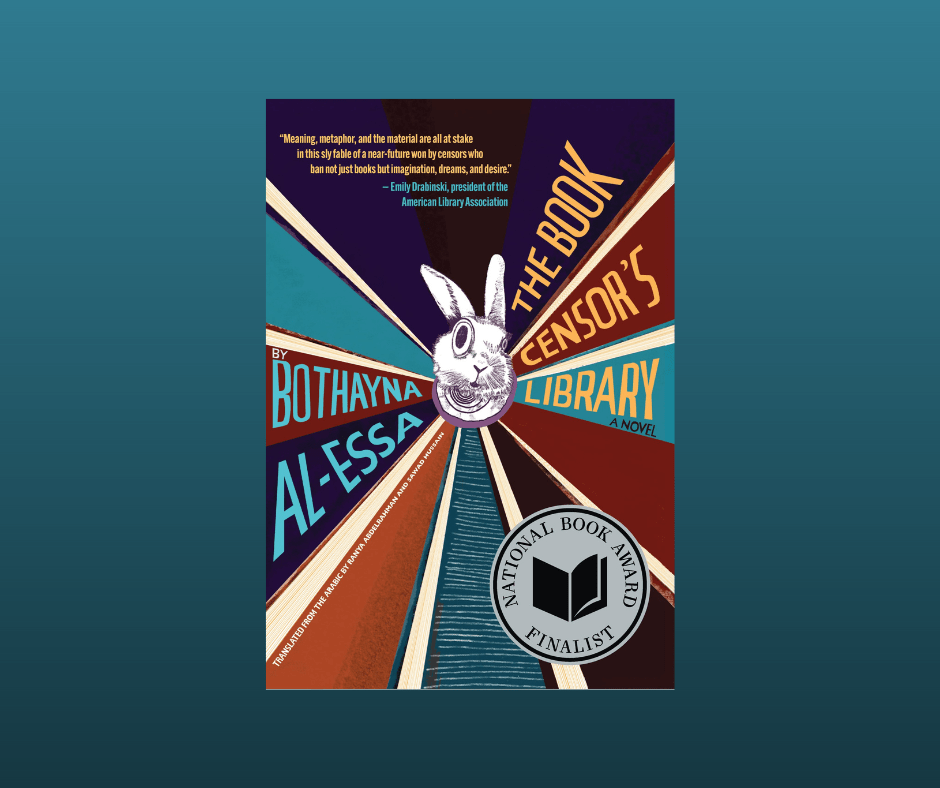
Originally published in Kuwait, 2021. / translated by by Ranya Abdelrahman and Sawad Hussain, 2024.
I first became aware of The Book Censor’s Library when it appeared as a National Book Award finalist in 2024. This fable-style tale follows a government book censor, whose job is censoring content in books that the government has deemed inappropriate. The problem is that the book censor loves books, keeping a large collection of illegal uncensored books in his home. As he attempts to reconcile these two positions, he begins to learn about an underground network of booksellers, librarians, and government officials who are working against the censorship system This creates a conundrum for our protagonist: should he fight for a deeply-held belief if it puts him and his family in danger?
As more speculative fiction about book banning is published, the more the subject feels overused. Many authors try to employ shock value to make the premise feel fresher. The main strength in The Book Censor’s Library is that it takes a different route, focusing on satire instead of violence (although there is some violence in the book). This gives it an amusing – and occasionally chuckle-worthy – tone. Some examples: rabbits begin to mysteriously appear in the censor’s office, and the books in our protagonist’s home will literally bite. The Book Censor’s Library showcases the importance of imagination within the self and an ideal society. Readers looking for books at the intersection of knowledge and oppression – like A Canticle for Leibowitz and The Library of Mount Char – would find much to love in this book.
I Who Have Never Known Men, by Jacqueline Harpman
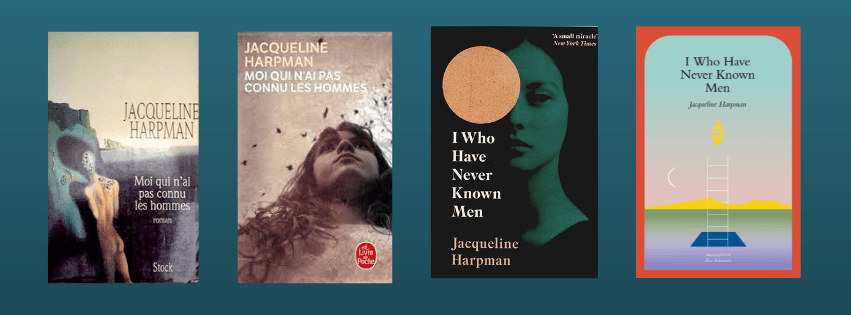
Originally published in France, 1995. / translated by Ros Schwartz, 1997.
Depending on who you ask, BookTok has either made our jobs easier or more difficult. I am grateful to the platform for introducing me to I Who Have Never Known Men, which is enjoying a long line of holds in my library.
A group of women are kept in a prison cell, where the time period and exact location are unknown. One day, the guards who normally monitor them leave and do not come back. The women open the door and step outside, where they must learn to navigate a new existence.
I don’t want to share too much plot, because the slow unveiling of our characters’ situation is where the book’s beauty lies. I Who Have Never Known Men is often billed as a read-alike for The Handmaid’s Tale, but beyond the first few pages, it diverts completely in tone and content. It’s bleak yet hopeful, sparse yet rich. I would suggest this book to readers who enjoy Ursula K. Le Guin’s books, where characters explore unfamiliar landscapes and societies. It is also a good fit for readers wanting a book that explores community dynamics, particularly those that center women.
In closing, I’d like to share a great resource on this topic. Speculative Fiction in Translation offers reviews, interviews, and roundups related to its namesake. Founder Rachel Cordasco does an excellent job demystifying this important part of the genre. Read her GLLI blog entry, which highlighted her favorite translations in 2021.
Rebecca Starr is the Literature & Language Librarian at Portland Public Library in Portland, Maine, USA, where they manage readers’ advisory services and collection development in fiction, graphic novels, world languages, and more. They also serve as Vice Chair for the Maine Library Association’s Legislative Advocacy Committee. They received their MLIS from Kent State University in 2011, and have been working in public libraries since 2013. Rebecca is also a storyteller, knitter, gull enthusiast, and proud member of their library’s union.
 Global Literature in Libraries Initiative
I’m adding the 2 books to my list! The first one reminds my of The Memory Police, by Yoko Ogawa – have your read that? It’s set in an island in which ordinary things start to be forbidden, even to be remembered.
LikeLike