Written by Susan K.S. Grigsby
Shortly after accepting my first overseas assignment in 2017, I went to Bali to visit a friend I hadn’t seen in years who happened to live in Ubud. When I discovered there was an annual Writers & Readers Festival within walking distance from where I was staying, I walked over and bought a 1-day pass to attend the events.
The theme was “Origins” or “Sangkan Paraning Dumadi.” I listened to Madeleine Thien, author of Do Not Say We Have Nothing, discussing her novel and how she incorporated “revolutionary idealism” into her work. I saw Ian Rankin and heard him speak about writing his famous Inspector Rebus novels and how it felt to know the book was being read in “22 languages around the world.” I visited a session about the news we read with journalists warning about (somewhat prophetically) the rise of readers without any clue as to how to navigate through clickbait and the pervasive data mining that leads to a more and more narrow focus of news feeds that we see (Ubud Writers & Readers Festival).
These sessions were powerful and enlightening and, for me (fresh out of a lifetime in the United States and just months into my first overseas librarian role) it was literally life-changing. Is this a safe space to admit I had no idea who Madeleine Thien or Ian Rankin were at the time? I was gently led to the realization that I was a product of Western gatekeeping in the realm of literature. I felt a veil lift as I confronted my own privilege as an American who (I thought) was widely read. Here I was amongst writers and readers from all over Southeast Asia and beyond, immersed in literature I never knew existed and it was exhilarating!
Yet the session that really hit home with me was a panel discussion with Shokoofeh Azar, Sanaz Fotouhi, Sholeh Wolpé, and moderated by Rosemary Sayer. The session was titled “One Thousand and One Writes.” These were Iranian women talking about the connection of their work to “a literary tradition spanning two-and-a-half millennia” (Ubud Writers & Readers Festival). They talked about the dangers of being a writer, of being a woman, and of speaking one’s truth to power. I don’t remember which it was (and I’m going to paraphrase here) but one of the women said that if you want to know the history of a people, don’t just read the historical accounts – read their literature. That idea has stuck with me ever since.
So, how do we “read brave” and make sure our collections speak that truth? How do we decide whose story to tell and from what perspective? How do we also make sure that these varied perspectives speak to our teen readers who have such a wide range of experiences, reading styles, and comfort levels with mature themes? Keeping all of this in mind as I think about global literature and the doors and windows it offers us, I also think of whose voice is being heard and whose voices are being silenced. Authors of color, authors who are women, authors who come from marginalized communities in dominant cultures all deserve a space on the stage of global literature. For me, that leads to authors who are women and who speak out in a world where men have the audacity (and the power) to demand access and feel empowered to regulate women’s bodies. It is their literature I want to read no matter where it’s from. Here are a few that resonate:
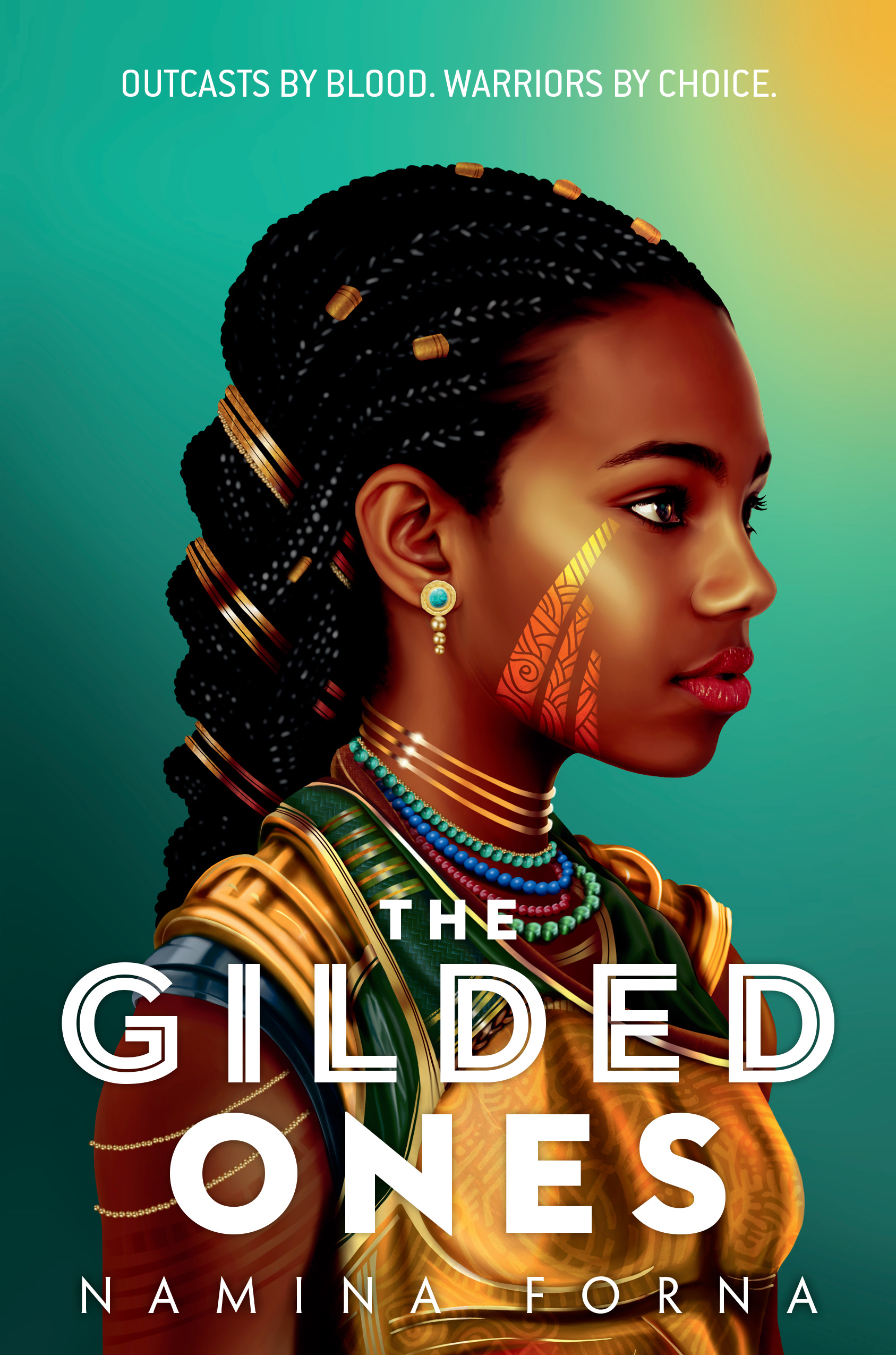
The Gilded Ones (2021) by Namina Forna
This is one of my favorite fantasy novels. Forna, who was born in Sierra Leone and emigrated to the US with her parents, is a Spelman College alumnus and currently working as a screenwriter in LA. Her bio says she “loves telling stories with fierce female leads” and this fits the bill. In this fully realized fantasy novel, girls of Otera participate in a ritual of purity when they reach puberty. The reader soon discovers that this is all a ruse to find girls who bleed golden blood and have the ability to defeat death by regenerating their damaged bodies. It turns out that Deka is just such a girl and after being abandoned by her father and the boy she thought she fancied, tortured in the basement room of the church, and praying for true death she is rescued and discovers she has a place among some of the most powerful women of her world. The parallels to the real world of diminishing women’s rights and increasing regulation of women’s bodies will be immediately apparent to teens who recognize this injustice. There are two subsequent books that continue Deka’s story and they are all well-written and paced. This is a hero’s journey being led by a strong woman leading other strong women to a satisfying conclusion. There are graphic depictions of violence and cruelty in this book so sensitive readers will want to be aware of this before reading.
See also a review of this book posted here on GLLI in 2022 by Sarah Ducharme.
You can buy a copy of The Gilded Ones here or find it in a library here. (Book purchases made via our affiliate link may earn GLLI a small commission.)

What the River Knows (2023) by Isabel Ibañez
Ibanez is an author of Bolivian descent who currently lives in Asheville, North Carolina (USA) and this work is an interesting take on historical fantasy. The story begins toward the end of the 19th Century when women were relegated to second class status and had to rely on men for their income, their safety, and their protection. Inez Olivera (18) discovers that her parents have died in Egypt under mysterious circumstances and decides to journey unaccompanied from her home in Buenos Aires to Cairo to get to the bottom of it. Inez is witty, wicked smart, and fiercely independent and makes her way to Egypt only to be told that she must turn around and go home. I think we can guess how she took that piece of news. Throw in an absentee guardian, his attractive assistant, and a golden ring with great significance and you have a story filled with mystery and adventure and a little bit of magic. While I wouldn’t go so far as to describe this title as feminist I would say that it’s a well-written story about a strong female character that can hold her own with the men around her in a time when women were not valued as equals.
See also the sequel: Where the Library Hides (2024).
You can buy a copy of What the River Knows here or find it in a library here. (Book purchases made via our affiliate link may earn GLLI a small commission.)
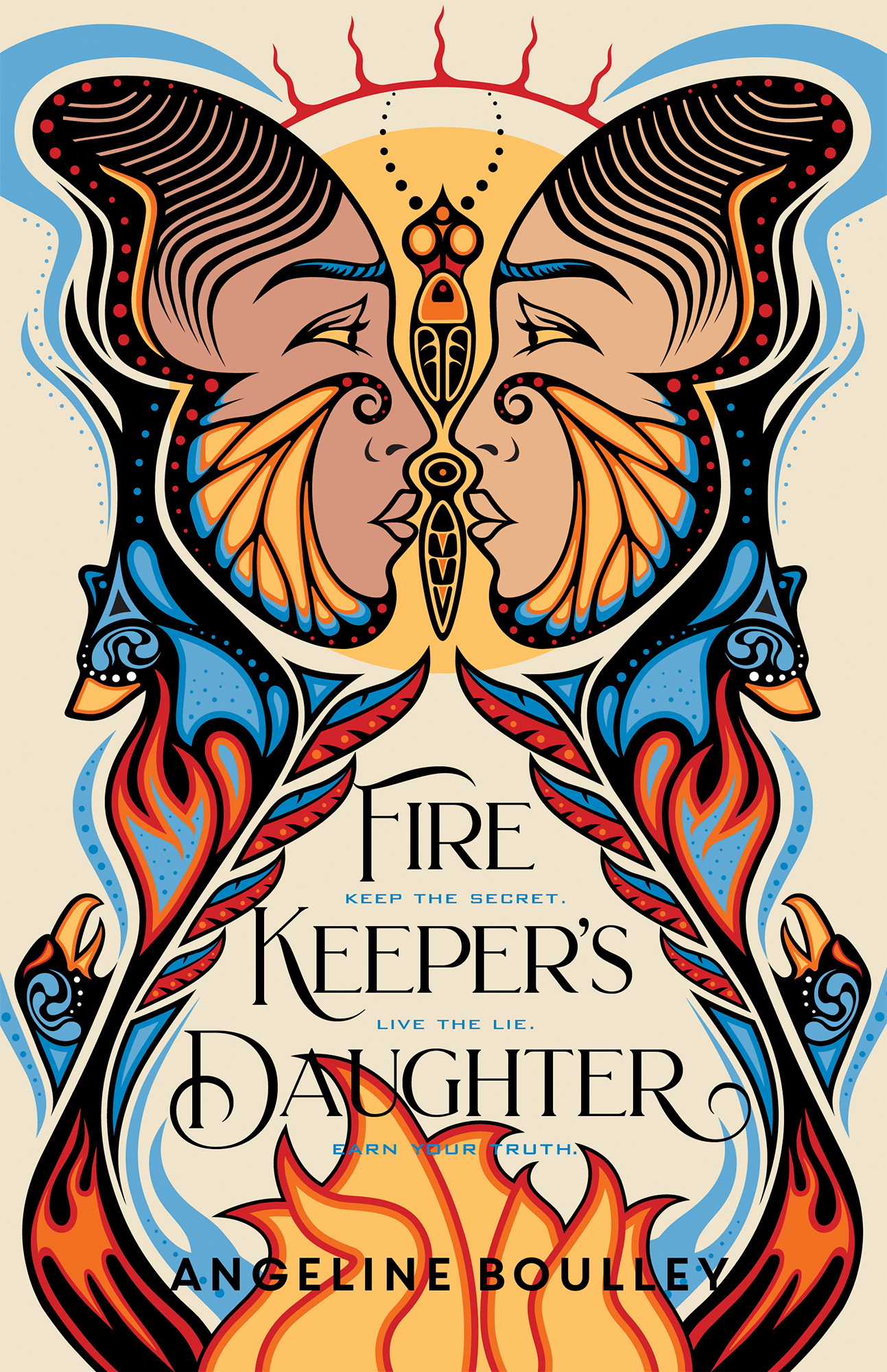
Firekeeper’s Daughter (2021) by Angeline Boulley
Boulley is an enrolled member of the Sault Ste. Marie Tribe of Chippewa Indians in Michigan. In keeping with the real-life phenomenon of missing native women and girls, this novel focuses on Daunis who is a mixed-heritage teen who doesn’t feel at home on the Ojibwe reservation nor at her home in town. Daunis is the witness to a murder and, as independent, headstrong girls tend to do, begins her own investigation into what happened. As she gets closer to the truth she finds herself entangled deeper into a darkness that may claim her as the next victim. There are descriptions of rape in this title and, while not graphic could still be triggering to some readers. This story gives us a window into the lives of indigenous women who are much more likely to experience murder, rape, and violence than their white counterparts in America. Daunis’ quest for belonging is palpable and will resonate with teens who feel othered in a myriad of ways. Even though this story takes place in the US, I think third culture children will resonate with Daunis’ feelings of not quite belonging anywhere and defining “home” differently.
You can buy a copy of Firekeeper’s Daughter here or find it in a library here. (Book purchases made via our affiliate link may earn GLLI a small commission.)

Smash the Patriarchy (2021) by Marta Breen and Jenny Jordhal.
Finally, I’d like to highlight this nonfiction graphic novel. Both Marta (writer) and Jenny (illustrator) are Norwegian creators and the book was translated by Siȃn Mackie. This is a frank and at times brutal account of the history of misogyny and the practice of forcing women into a lower status than men. From Aristotle’s assertion that being female was a handicap to Woody Allen’s assertion that only Soon-Yi was changed/improved by their union, Breen and Jordhal do not mince words (or pictures) pointing out the gross miscarriage of logic and justice when it comes to the rights of women. The reader learns about Germaine de Staël, Pharaoh Hatshepsut, Queen Christina of Sweden, Charlotte Corday, and Mary Wollstonecraft (among others) who flipped the script of what and who women are “supposed” to be. While there may be some that look at this work and deem it heavy-handed, I look at it and think this is a book every girl – and probably every boy – should read to understand the origins of slut-shaming, the concept of purity in virginity, women losing their names upon marriage (a form of erasure), and the plethora of folk tales in which female empowerment is punished as a negative and often fatal flaw. Readers will find satisfaction in how the men who got us here are handled in the end.
See also this review by Nanette McGuiness of Smash the Patriarchy here on the GLLI blog, July 17, 2024, as part of World Kid Lit Wednesday — as well as the announcement of it winning the 2024 GLLI Translated YA Book Prize in April 2024.
You can buy a copy of Smash the Patriarchy here or find it in a library here. (Book purchases made via our affiliate link may earn GLLI a small commission.)
We live in a world in which one of the world’s most famous authors of one of the world’s most famous pieces of children’s literature spews hate and loudly celebrates the loss of trans-women’s rights. We live in a world where male politicians invite misogynistic human traffickers credibly accused of violence against women to their podcasts to hear their point of view. It is in this world that women and girls need to know there is an alternative to the backwards thinking that exists in regards to the rights of women. They need to know that speaking truth to power is dangerous but it is also necessary.
Here’s to strong female characters, diverse female authors and illustrators, and more global literature that not only celebrates women but elevates them to equal standing. Happy reading!
Work Cited
Ubud Writers & Readers Festival. “Origins (Sangkan Paraning Dumadi).” 2017 Festival Program, Ubud Writers & Readers Festival, October 2017, https://vold-independent.s3.ap-southeast-1.amazonaws.com/pdf/program-books/1788e020-b287-4af0-96d8-70367a40d1da/uwrf17-program-bookpdf.pdf. Accessed 30 April 2025.
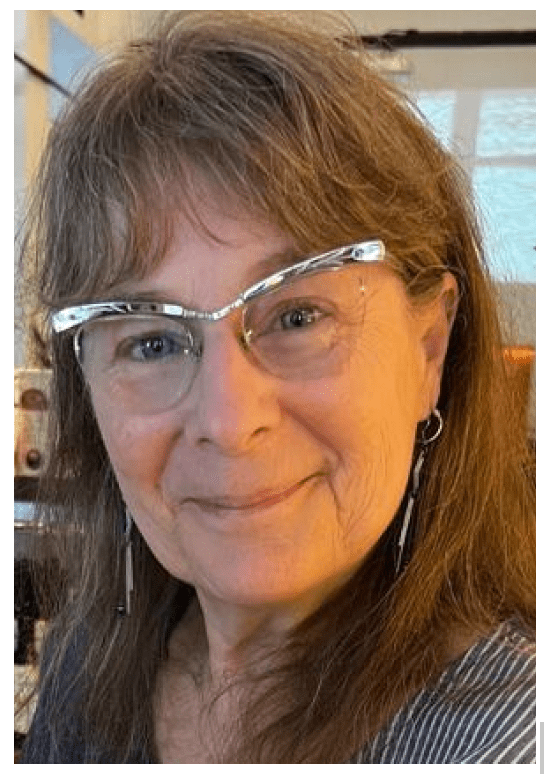
Susan K.S. Grigsby is an educator and librarian with over 25 years of experience in public, private, and international K–12 school libraries. Currently serving as the Director of Library Services and Secondary Teacher-Librarian at Stamford American International School in Singapore, she is dedicated to fostering innovation, inclusivity, and student empowerment within library spaces. Her international career includes leadership roles in Japan and Thailand, where she has championed diverse collections and integrated technology to enhance learning. Susan is also an accomplished writer with contributions to School Library Journal and EdTech Magazine, where she shares insights on global literature and educational practices.
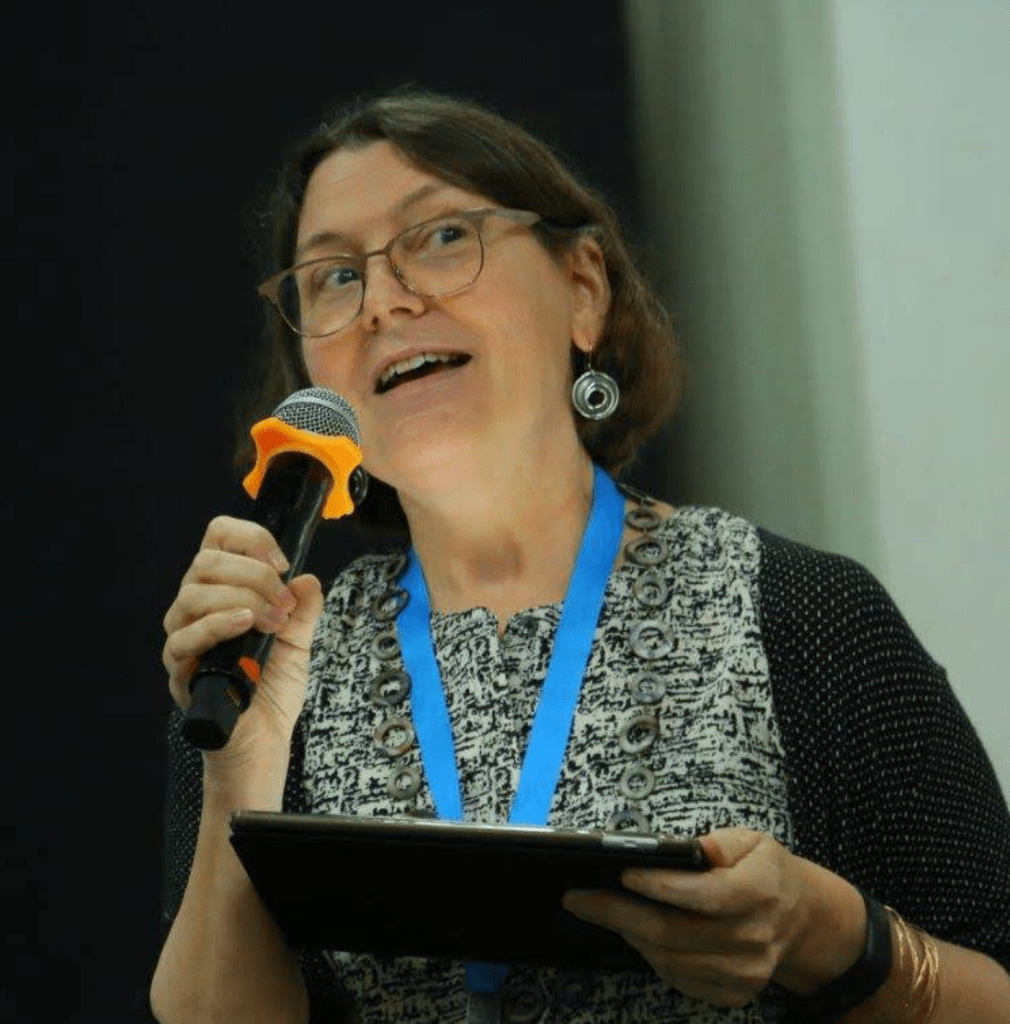
Katie Day is an international school teacher-librarian in Singapore and has been an American expatriate for almost 40 years (most of those in Asia). She is currently the chair of the 2025 GLLI Translated YA Book Prize and co-chair of the Neev Book Award in India, as well as heavily involved with the Singapore Red Dot Book Awards. Katie was the guest curator on the GLLI blog for the UN #SDGLitMonth in March 2021 and guest co-curator for #IndiaKidLitMonth in September 2022.
 Global Literature in Libraries Initiative
3 thoughts on “#INTYALITMONTH: Read Brave: Feminist Literature for Global Teens”