Written by Eleanor Surridge
Mongolia has a long history of storytelling but only a recent history of writing stories for younger readers. As I explore the literary landscape available to Mongolian teens, I’ve discovered an interesting paradox: there remains a significant gap in the market for YA books written in Mongolian. Much of what teens read in their mother tongue here is assigned by teachers of literature, while their pleasure reading often consists of translations from English. While I hope to one day write about more homegrown Mongolian YA literature in translation, today I’m delighted to share two interesting works that offer unique windows into Mongolian life, though neither was originally written in Mongolian.
These two books—one a semi-autobiographical novel written in German and translated into English, and the other a more recent English-language memoir—present Mongolia through distinct lenses. Both capture the beauty and challenges of life in this vast country, but they diverge significantly in time period, cultural context, and perspective. One looks back at a nomadic way of life for the Tuvan people during Communist times in the mid-20th century, while the other celebrates a young Kazakh girl breaking traditional gender barriers in the modern era. Together, they provide a fascinating glimpse into Mongolia’s historical and evolving cultural landscape.
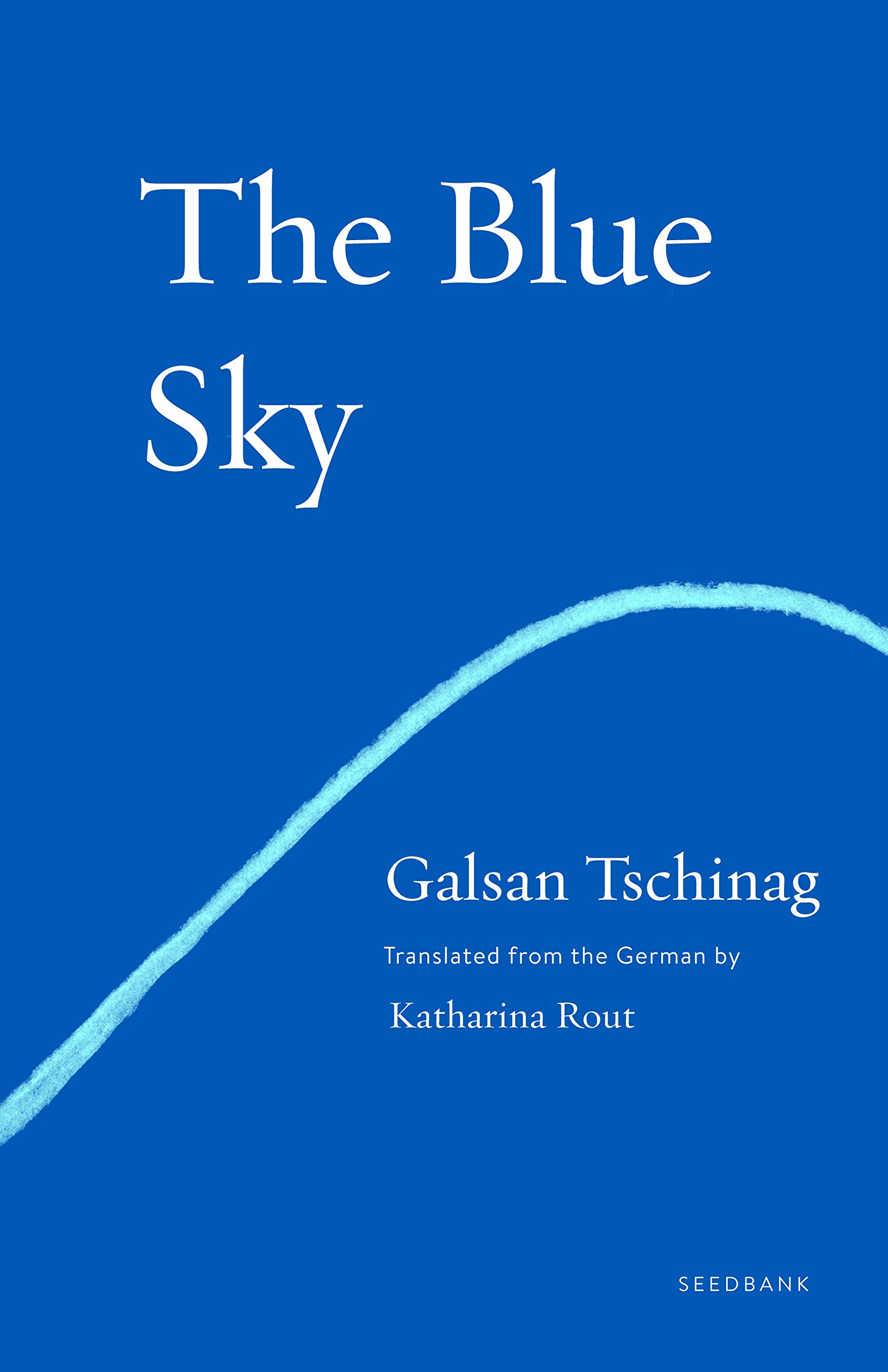
The Blue Sky by Galsan Tschinag, published in English in 2006 (translation from the German Der blaue Himmel, 1994 by Katharina Rout), is the first book in a trilogy and offers readers a rare opportunity to glimpse the world of a Tuvan child from a nomadic herding family in western Mongolia during the Communist period in the 1950s. This semi-autobiographical novel unfolds through the first-person narration of Dshurukuwaa (a fictionalized version of the author), revealing the complexity and dangers of life far removed from the modern world.
Rather than following a traditional plot structure, the novel moves episodically, allowing us to witness the encroaching influence of “the new era” on traditional Tuvan life. The prose often rises to poetic heights, as when the narrator describes his grandmother as “human silk” or compares himself after a terrible accident to “a fledgling living in a cage.” These lyrical passages echo the songs sung to cajole ewes into allowing their lambs to feed, embedding the storytelling style within the nomadic culture it portrays.
The novel doesn’t shy away from the harsh realities of nomadic existence. We see intimate family moments—the young protagonist peeing in his grandmother’s hands so she can rinse her aging eyes, and pre-chewing food for her when her last tooth is gone. We feel the longing and loneliness that follows his siblings’ departure for boarding school in the nearest town. Throughout the narrative, survival remains the central theme: the movement of people is dictated by lunar cycles and the survival of livestock is diminished by dry seasons followed by harsh winters.
The Blue Sky reads both as a poignant lament for what has been lost and as a powerful tribute to the incomparable challenges of nomadic life, captured in the mother’s wisdom: “Dogs hate to see you with a cane in your hand, and people hate to hear you with the truth in your mouth!”
You can buy a copy of The Blue Sky here or find it in a library here. (Book purchases made via our affiliate link may earn GLLI a small commission.)
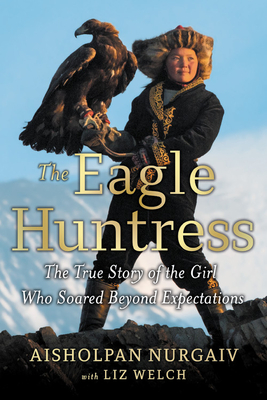
In striking contrast to the historical narrative of The Blue Sky, Aisholpan Nurgaiv‘s 2020 memoir, The Eagle Huntress: The True Story of the Girl Who Soared Beyond Expectations, written with Liz Welch, offers a plain-language and often light-hearted glimpse into Mongolian culture through the eyes of a remarkable young woman who challenged gender norms.
Aisholpan, from Altantsögts in western Mongolia, carved her place in history when, at just 13 years old, she became a champion eagle hunter—a traditionally male pursuit— in 2014. Her memoir details not just her record-breaking achievements (including calling her eagle in an astonishing five seconds), but also the challenges she faced in proving herself in this ancient tradition.
The book doesn’t shy away from the challenges Aisholpan faced in proving herself, culminating in the pivotal winter hunt where she had to successfully hunt a fox – an event captured by filmmaker Otto Bell in 2016. (See a 10-minute trailer here.) While the documentary of her life brought her international fame (briefly touched upon in the prologue and epilogue), the heart of the memoir lies in Aisholpan’s personal journey and her unwavering dedication to her craft. The anecdote about her tearful reaction to a tourist’s flash photo offers a poignant reminder of the cultural nuances and the intensity of her unique experience.
You can buy a copy of The Eagle Huntress here or find it in a library here. (Book purchases made via our affiliate link may earn GLLI a small commission.)
See discussion questions in a book club guide from the publisher here.
Transporting stories
Both of these books offer invaluable insights into Mongolia. For teen readers interested in history, cultural preservation, and poetic storytelling, The Blue Sky provides a window into a vanishing way of life with prose that challenges and rewards careful reading. For those inspired by stories of breaking barriers and finding one’s path against tradition, The Eagle Huntress (suitable for readers 13+ including advanced EAL students) delivers an authentic first-person account of determination and courage.
Together, these works demonstrate the unique quality of nomadic life across generations. While we wait for more YA literature written originally in Mongolian to emerge, these two books stand as worthy ambassadors of Mongolia’s cultural heritage and evolving story.

Eleanor Surridge has been teaching internationally for 27 years. She completed her undergraduate degree in Canada, her home country, and has a Masters in Library Science from a US university. She is currently the PreK-12 Teacher-Librarian at the International School of Ulaanbaatar, Mongolia where she has worked and loved the landscape for 7 years. Before that she worked as the Secondary Teacher-Librarian at the International School of Tianjin, China. She has also worked in international schools in Morocco, Latvia and Turkey.
Katie Day is an international school teacher-librarian in Singapore and has been an American expatriate for almost 40 years (most of those in Asia). She is currently the chair of the 2025 GLLI Translated YA Book Prize and co-chair of the Neev Book Award in India, as well as heavily involved with the Singapore Red Dot Book Awards. Katie was the guest curator on the GLLI blog for the UN #SDGLitMonth in March 2021 and guest co-curator for #IndiaKidLitMonth in September 2022.
 Global Literature in Libraries Initiative