Written by Angela Erickson
My Early Skepticism
I’ve been thinking a lot about graphic novels lately. As a former Head of Middle School English, the teachers in my department and I often struggled to get students to move from graphic novels to traditional novels. And to be fair, there’s research suggesting that graphic novels cultivate a different kind of literacy. The skills and interests built through reading them don’t always transfer neatly to prose.
That, combined with their high cost and their frequent tendency toward flimsy bindings, meant we rarely stocked graphic novels in our heavily used and abused classroom libraries. However, the few we had, including American Born Chinese, Smile, and El Deafo, were coveted — a fact I initially attributed to their scarcity but have since reconsidered.
When I moved into librarianship, despite the undeniable popularity of the format, I confess I remained a reluctant recommender of graphic novels. I had some favorites such as Maus, Persepolis, and Dragon Hoops, but I mostly saved them for students I thought of as “serious readers,” just to ensure the literary merit wouldn’t go unappreciated.
(And lest you think ill of me, yes, at that time I had read Scott McCloud’s mind-expanding Understanding Comics. Despite having read it, I still didn’t enjoy the graphic novel reading experience. I assumed most students would be better off sticking with more traditional linear texts.)
The Turning Point!
I suppose this situation would have continued indefinitely if it weren’t for my work on the GLLI Translated YA Book Prize committee, on which I was required to read graphic novels that I wouldn’t have picked up otherwise. Last year, I read not one, not two, but three outstanding graphic novels that genuinely stayed with me. This year, I’ve encountered two more.
At the GLLI committee meetings and in the group chats, I sometimes felt adrift, caught between waves of FOMO and bewilderment. Had I been missing out on an entire world of meaningful, complex, and deeply engaging graphic novels? Why were so many of the best ones coming from works in translation?
Curious and perhaps slightly panicked, I started browsing the graphic novel section more deliberately. I found myself reading them during lunch breaks. I began taking them home to finish at night.
For reasons I’ll explore more in these posts, nonfiction seems to be where the graphic novel format shines brightest. This month, I’ll be sharing some of the YA nonfiction graphic novels in translation that have won my heart over the past few months.
This week, I’m starting with two relatively recent graphic novels about science.
Both books seem to fit that lovely ALA Alex Award sweet spot: works written for adults but with special appeal to young adults. It’s also worth noting that in both cases, the author serves as a visible narrator, guiding readers through the scientific material — a narrative technique that works especially well in this format.
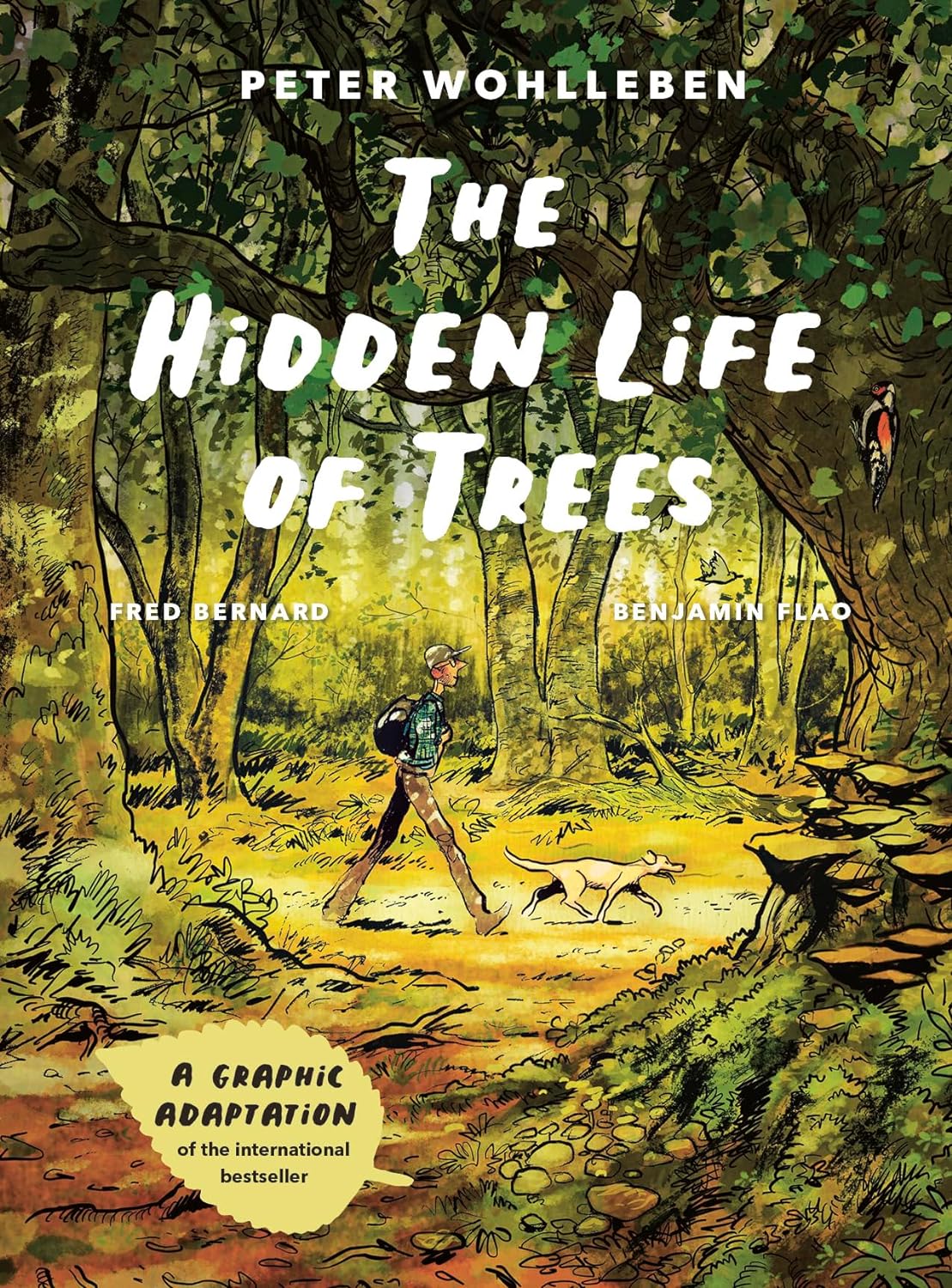
First up is The Hidden Life of Trees: a graphic adaptation (2023) by Peter Wohlleben, adapted by Fred Bernard, illustrated and colored by Benjamin Flao, and translated from the French edition into English by David Warriner. It’s simply wonderful.
In this graphic novel, readers walk through forests with Wohlleben, a conversational and charming guide. I learned so many things about trees: how they communicate, defend, and manage one another despite their relatively static nature. I found myself thinking about the book often, paying closer attention to the city-dwelling trees in Singapore. I paused more often in wonder. It is not an overstatement to say that I care more about trees, and the future of forests on our planet, than ever before.
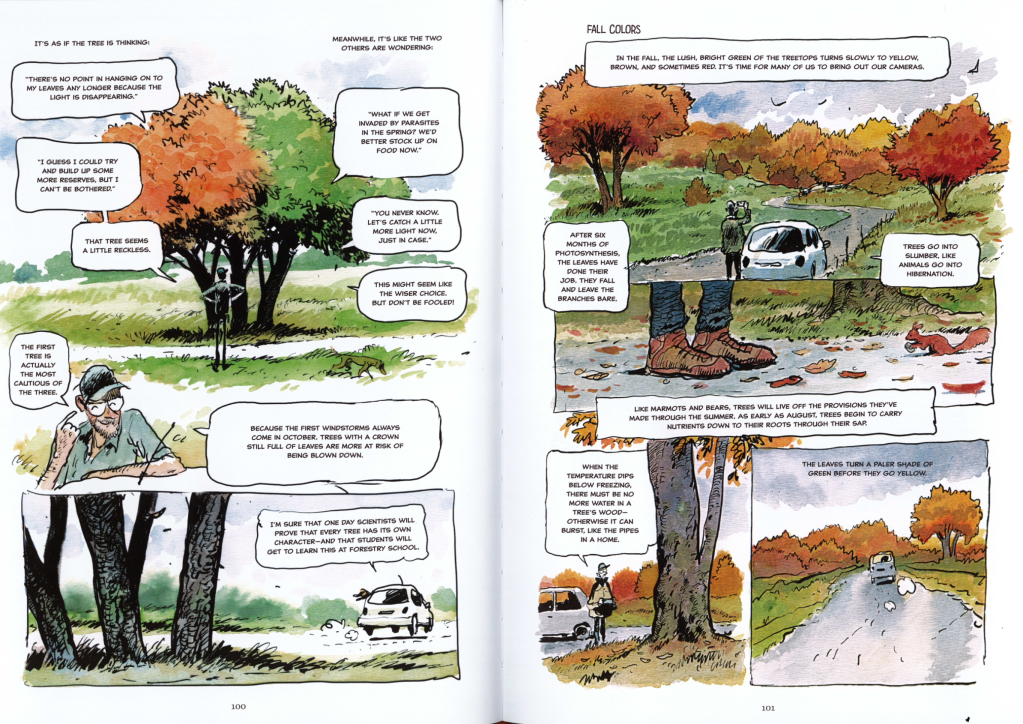
The images helped me conceptualize the information more vividly, and Wohlleben’s personal reflections created a surprising sense of kinship between the reader, the author, and the trees themselves.
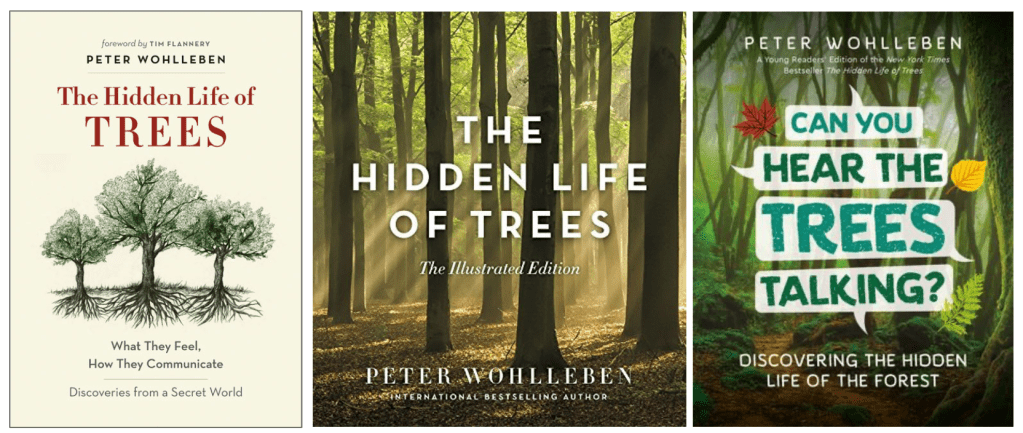
Note: This is a book that has truly taken root with versions available for readers of all ages. In addition to the graphic novel adaptation I’m recommending, the original prose edition of The Hidden Life of Trees (2015), translated from German by Jane Billinghurst, is excellent. There is also an illustrated edition (2018) featuring stunning forest photography. For younger readers, Can You Hear the Trees Talking?: Discovering the Hidden Life of the Forest (2017), translated by Shelley Tanaka, offers an engaging introduction to Wohlleben’s work.
You can buy a copy of the adult edition of The Hidden Life of Trees here or find it in a library here; you can buy a copy of The Hidden Life of Trees: The Illustrated Edition here or find it in a library here; and you can buy a copy of the picture book edition of Can You Hear the Trees Talking? here or find it in a library here. (Book purchases made via our affiliate link may earn GLLI a small commission.)
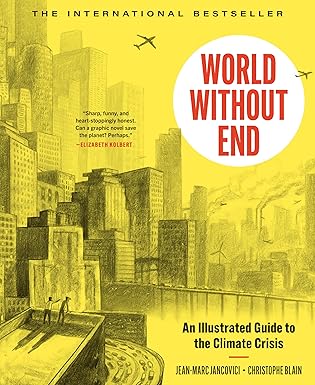
The second book is World Without End: An Illustrated Guide to the Climate Crisis (2024) by Jean-Marc Jancovici, a French engineer, climate expert, and founder of the think tank The Shift Project, and Christophe Blain, an award-winning comic book writer and artist. Edward Gauvin translated the text from French. Upon original publication in France in 2021, it became an immediate bestseller, even outselling the beloved Asterix, and in my opinion, deservedly so.
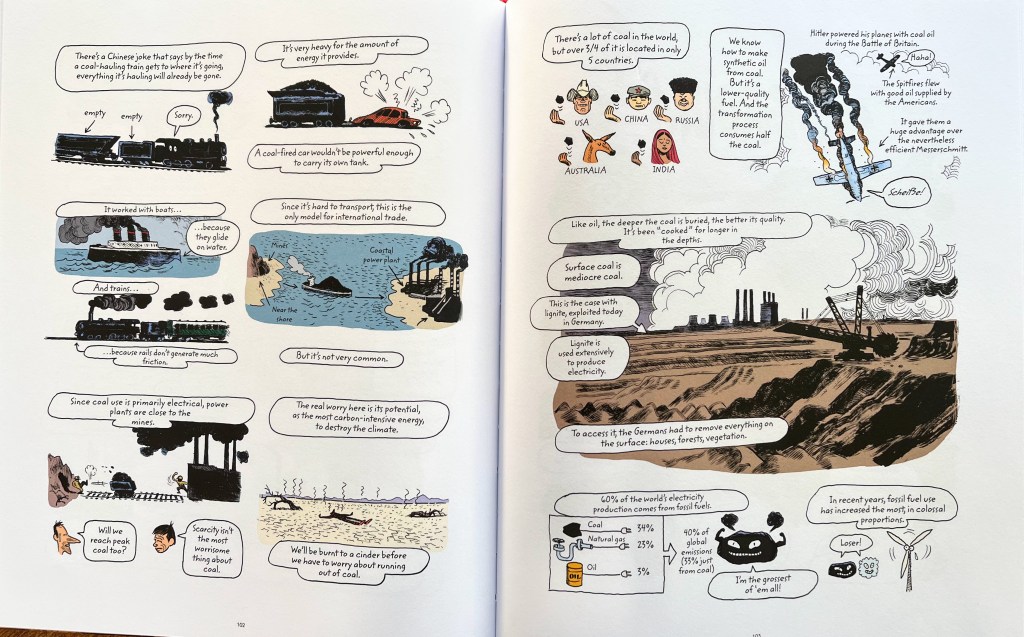
While it’s not an easy read for those of us who suffer from climate anxiety, the use of humor, visual metaphors, and the comfortable dialogue between the artist Blain and the climate expert Jancovici propels the reader through the text. Readers learn about our extravagant rise in energy consumption, its impact on the climate, and some possible solutions. It’s realistic but hopeful.
This book challenged many of my previously held misconceptions about the energy crisis. I found myself rethinking choices at the grocery store and recommitting to using public transportation whenever possible. Blain’s questions mirrored many of my own, and Jancovici’s answers were pithy, science-backed, and refreshingly clear. It’s a remarkable example of what graphic nonfiction can achieve.
You can buy a copy of World Without End here or find it in a library here. (Book purchases made via our affiliate link may earn GLLI a small commission.)
Further Reading
While this is not an exhaustive list, here are a couple of additional graphic novels that use the narrative technique of a visible narrator to guide readers through scientific concepts.
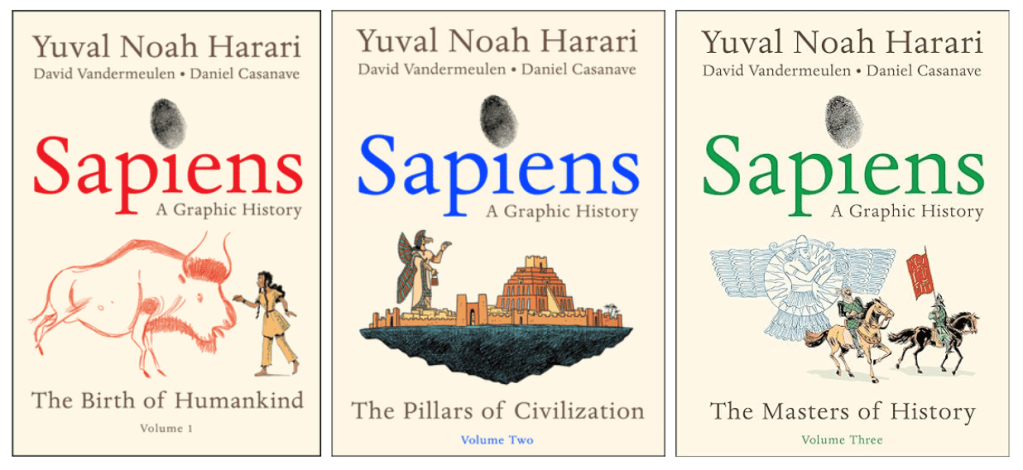
One adaptation from a popular prose text that you are likely already familiar with is Sapiens: A Graphic History, adapted from Yuval Noah Harari’s Sapiens: A Brief History of Humankind, co-adapted by Yuval Harari and David Vandermeulen, illustrated by Daniel Casanave, and translated from Hebrew by Adriana Hunter. Like World Without End, it uses a visible narrator to walk readers through complex ideas and manages to condense a sweeping and often abstract subject into an engaging and accessible format.
You can buy a copy of Sapiens: A Graphic History here or find it in a library here. (Book purchases made via our affiliate link may earn GLLI a small commission.)
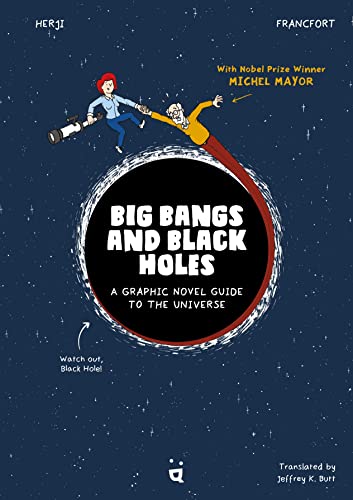
Another recent addition that has been steadily popular in my library is Big Bangs and Black Holes: A Graphic Novel Guide to the Universe by Jérémie Francfort and Herji, translated from French by Jeffrey K. Butt. This book also relies on a narrator-driven structure: two fictional characters, Dr. Celeste Aster and her niece Gabrielle, along with the real Nobel Laureate Dr. Michel Mayor, guide readers through the scientific material. The creators make effective use of fourth-wall breaks and wry humor to keep ambitious topics approachable for young adults without oversimplifying them.
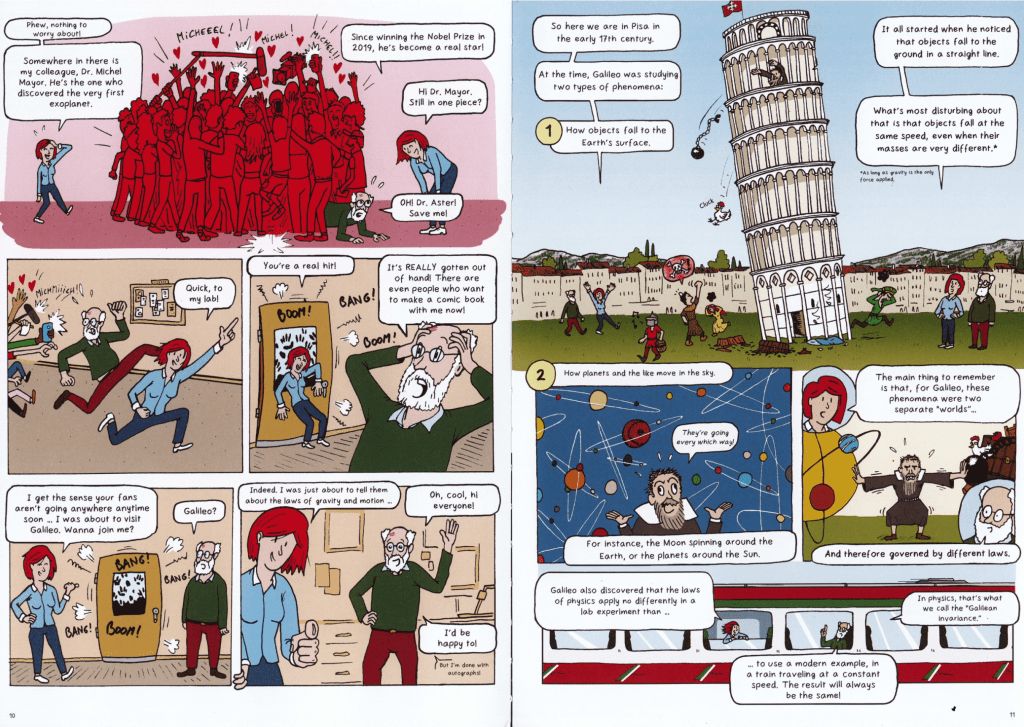
You can buy a copy of Big Bangs and Black Holes here or find it in a library here. (Book purchases made via our affiliate link may earn GLLI a small commission.)
A Note On Translation …
Before wrapping up, I want to raise a small point of awareness. In all of these graphic novels, with the exception of Big Bangs and Black Holes, the translator isn’t credited on the cover. Through my experience with the GLLI Prize committee, I’ve come to better understand how much skill and artistry translation requires. Translators deserve more prominent acknowledgment for their work.

Angela Erickson is a former head of Middle School English who currently works as the Head of Libraries at United World College in Singapore. She is interested in how educational leadership, curriculum design and workshop pedagogy can be integrated to create a school culture of reading, thinking and writing. For the past few years, she has been working to create systems to articulate classroom and departmental libraries with the central school libraries to support the needs of all readers. She currently teaches one section of “The Imperfect Art of Living” for the Innovation Academy Online. When she is not reading, Angie enjoys mountaineering and playing the cello badly (to the consternation of her next-door neighbors).
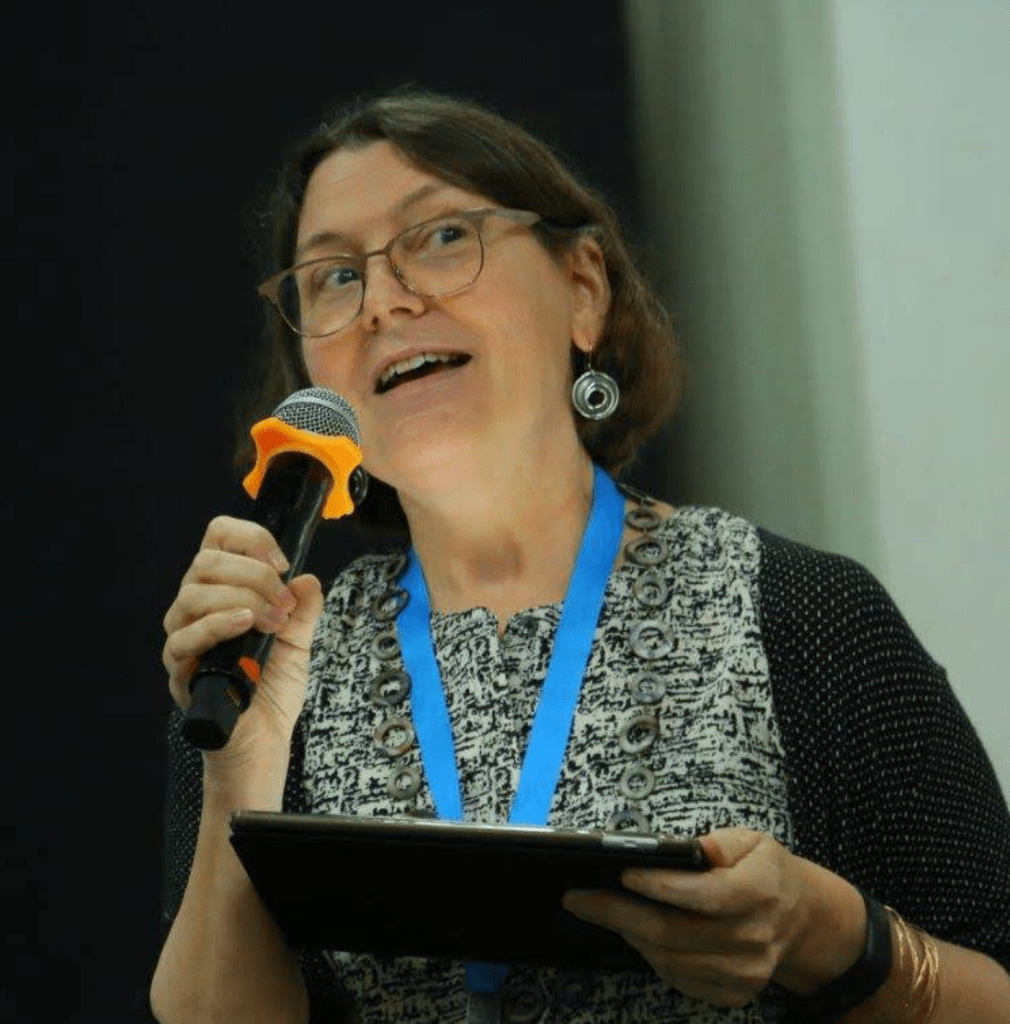
Katie Day is an international school teacher-librarian in Singapore and has been an American expatriate for almost 40 years (most of those in Asia). She is currently the chair of the 2025 GLLI Translated YA Book Prize and co-chair of the Neev Book Award in India, as well as heavily involved with the Singapore Red Dot Book Awards. Katie was the guest curator on the GLLI blog for the UN #SDGLitMonth in March 2021 and guest co-curator for #IndiaKidLitMonth in September 2022.


One thought on “#INTYALITMONTH: Seeing Science in Translation”