To close out Women in Translation Month 2025, I’m pleased to share educator Nadine Bailey‘s review of the work of beloved author and artist Tove Jansson. Currently, all of Jansson’s fiction is checked out of my library, which is a normal occurrence. Read on to learn more about her fascinating and timeless work for adults. Thank you for joining us on this WITMONTH journey! – Rebecca Starr
I will start this with a rather embarrassing confession – I first encountered Tove Jansson in 2014 by chance at the centenary exhibition celebrating her in Helsinki, 100 years after her birth and 13 years after her death. A child of the cultural boycott growing up in South Africa, I had no idea of the Moomins, and I entered the exhibition without any preconceived ideas. I fell in love.
As I moved from gallery to gallery, I was absolutely awestruck by this beautiful renaissance person who it appeared could — and had — done everything possible in the world of art and creativity and writing. There were newspaper articles, magazine covers, beautifully illustrated correspondence, set designs, large canvases, murals, and book illustrations (including for the Swedish translations of Alice in Wonderland and The Hobbit). There was a gorgeous 2.5m scale model of the Moomin House, created by Tove with her partner, Tuulikki Pietilä, and her brother. In all this splendour, the Moomins were to me, as it were, an important part of her life but not all encompassing.
Tove Jansson was part of the Swedish speaking minority living in Finland and wrote in Swedish, which makes her as a woman in translation rather unique. Her works have also been translated into so many languages!
I want to mention two women in translation here.

Boel Westin’s book Tove Jansson: Life, Art, Words provides such amazing insights into the life and works of Jansson, and has fortunately been translated into English by Silvester Mazzarella. Her relationship with Jansson began when she wrote her dissertation on the artist in 1988. This authorised biography, first published in 2007, shows her long involvement in researching and understanding the life and works of Jansson. It is an incredible resource in interpreting the depth of her writing.
In Moominpappa at Sea and Finn Family Moomintroll, islands form a central role, but I’d like to focus on two of her adult books featuring islands as she was — as explained in Life, Art, Words — “The woman who fell in love with an island.”

Notes From an Island, by Tove Jansson, illustrated by Tuulikki Pietilä, translated by Thomas Teal . Sort of Books (UK, 2014).
“I can’t afford it, I haven’t time to marry any of them! I’m no good at admiring and comforting. Of course I’m sorry for them and of course I like them, but I’ve no intention of devoting my whole life to a performance.” — Tove Jansson: Life, Art, Words
Jansson was a feminist who refused to be defined by societal feminine roles. Nowhere does this shine through more than in her book Notes From an Island, the most beautiful version of which is no doubt the Sort of Books edition illustrated by Tuulikki Pietilä. The cover illustration was drawn in 1964 by her mother, Signe “Ham” Hammarsten Jansson, who was a famous illustrator and graphic designer in her own right.
This book was created through assembling notes, diary entries, and illustrations over the 46 years during which Jansson and Pietilä visited and made Klovharun, an island off the coast of Finland, their summer home. “Made” is quite literal: according to Boel Westin, “She lived with the builders, carried stones, aligned boards, laid brick, made food, shot ducks and helped with nearly everything.”

The Summer Book, by Tove Jansson, originally published in 1972. Translated by Thomas Teal, Sort of Books (UK, 2003). The Summer Book is a beautiful meditation on youth and age, where the grandmother is based on Ham, the young girl on her niece Sophia (whose mother died when she was six), and the father on her brother Lars. In the book’s 22 short chapters, the unique egocentricity of the very young and very old are so beautifully depicted, with many vignettes recognisably true to life to anyone. The island itself is also a character, with its topography, weather, storms, shadows and light.
There are many editions and translations of the book, and Tove Jansson recorded it for Swedish Radio in 1973. Initially, she resisted any illustrations in the book, wishing to very strongly delineate it as a book for adults, but she finally created illustrations for the 1976 German edition.
In January 2025, The Summer Book movie was released, starring Glen Close.
In closing, during my research into the life and times of Tove Jansson, I came across this wonderful story of the only painting she ever made of the Moomins: the Källskär painting, created for the eccentric nobleman Göran Åkerhielm. Here is the short documentary about the painting.
Further Reading:
“Boel Westin on Tove Jansson.” LitHub, 2024.
“The complicated artist behind the Moomins.” The New York Times, 2024.
“A little piece of a life: Tove Jansson’s fiction for adults.” Los Angeles Review of Books, 2014.
“How Tove Jansson packed for the endless summers at Klovharun.” Moomin official website, 2024.
“Klovharun, Tove Jansson’s summer paradise inspired the Moomin stories.” Mooman official YouTube channel, 2022.
“Letters from Tove.” Books From Finland, 2014.
“Multilingual Moomins: Examining the translation of Tove Jansson’s nonsense character names from Swedish to English and Finnish.” Journal of Literary Onomastics, 2019.
“Muminalism: Tove Jansson’s art of the miniature.” Nordiques, 2023.
“On translating Boel Westin’s biography of Tove Jansson.” Shiny New Books, 2014.
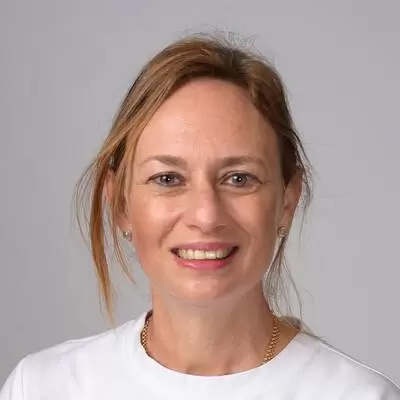
By Nadine Bailey – middle school teacher librarian, currently living and working in Dubai, formerly in Beijing China, Singapore and a bunch of other cities around the world. Passionate about our students seeing themselves and their worlds in literature and developing curiosity and a passion for reading and learning. You can read her previous GLLI posts here; see also her blog, “Informative Flights.”
The views, opinions, and thoughts expressed in this blog post are solely my own and do not reflect the positions, policies, or opinions of any current or former employer. Any references or examples provided are intended for informational purposes only and should not be construed as endorsements or official statements from any organization I have been associated with.
 Global Literature in Libraries Initiative