Written by Karthika Gopalakrishnan
Young adult fiction in India has been taking on new forms, pushing the envelope, and expanding the boundaries of all that this genre of homegrown fiction has to offer its readers. Here are three works that are contemporary examples of the path that this genre has journeyed:
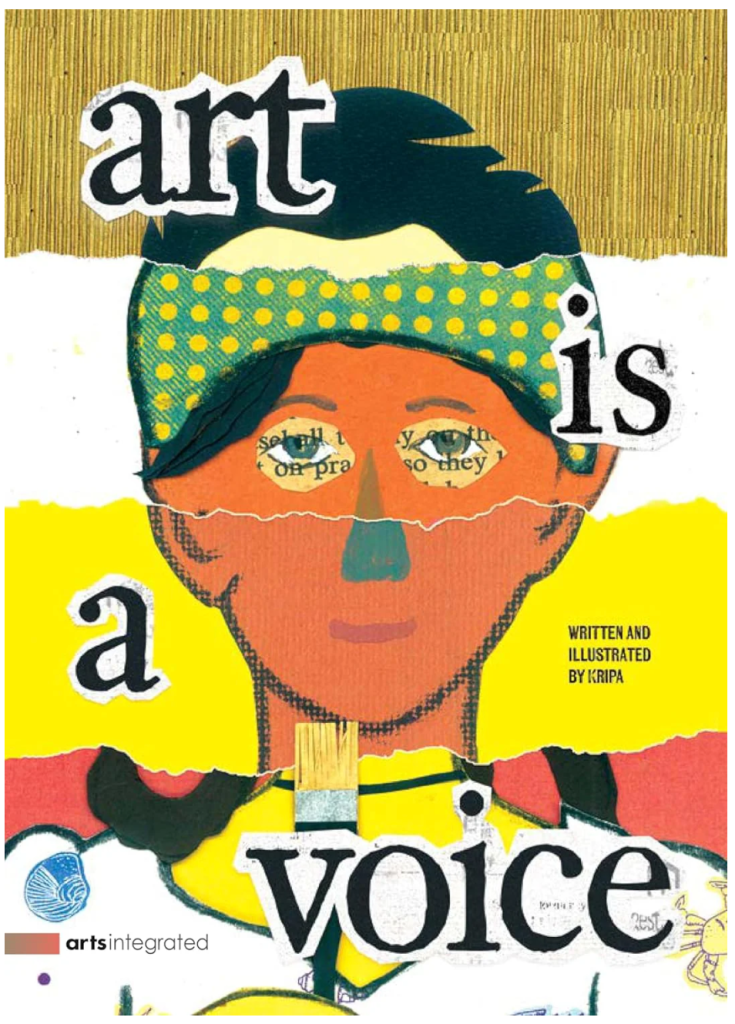
Art is a Voice (2024) – by Kripa (Art1st)
This is a book that had its seeds in a comment on a social media post on the creator Kripa’s feed, raising a question about all that an artist could do. Channeling her response as a poem, the author-illustrator then created art work to align with each couplet. She contextualised it further by linking it to a work of contemporary art created by a practitioner in the country today, about a social ill that continues to blot the national landscape. The book also invites the reader in by making room for a pledge to be signed, as to what one could do to contribute to the cause.
Art is a Voice has the distinction of being one of the few books from India to have won the prestigious Bologna Ragazzi Award in 2024, this time in the Sustainability category.
You can buy a copy here.

Scare Walk (2025) – written by Andaleeb Wajid, illustrated by Upamanyu Bhattacharyya (HarperCollins India)
This is a horror graphic novel that gives a reader genuine goosebumps as it tells the story of four friends—Dhruv, Ishaan, Angie, and Veera—who sign up for a “scare walk” at a dilapidated mansion. It starts off as a fun activity for the four of them to do together, but soon turns into a nightmare, with the lines blurring between what’s real, what’s in their minds, and what lies in between. Over the course of the walk, the four of them get separated, each spilling into their own version of what are possibly their worst fears magnified. They find out they’re all being drawn into this web by an entity know as the Collector, on the lookout for their soul, and that one of them is responsible for leading the group in. What of themselves do they carry forward with them, and what do they leave behind?
You can read an excerpt on the publisher’s website here.
Note: Andaleeb Wajid‘s YA novel – The Henna Start-Up – was the 2024 winner of the Neev Book Award in India. See my October 23, 2024, write-up about the book right after it won.
You can buy a copy of Scare Walk here.

The School for Bad Girls (2024) – by Madhurima Vidyarthi (Duckbill, an imprint of Penguin Random House India)
Set in 19th century pre-independent India, at a time when women’s freedom was severely curtailed to a point that young girls were married when they were between 9 and 11 years old, this is a work of historical fiction that details the obstacles a woman faced to get an education. Completing one’s schooling is the first step, next up are the hurdles to be cleared before getting a college degree, and then—to top it all—to overcome the larger-than-life obstacles that present themselves when a woman decides to use her education and step into the world of professional work.
Based on the life of Dr Kadambini Ganguly, the first female medical practitioner in India, this is a story that tells a tale of sisterhood, ambition, and the clear-headed determination that it takes to find one’s calling and stay true to it.
You can buy a copy here,

The Blaft Anthology of Anti-Caste SF (2024) – Edited by R.T. Samuel, Rakesh K. and Rashmi R.D. (Blaft Publications)
This is not a young adult book, but a completely inventive take on speculative fiction that was brought to life with a crowdsourced funding model. Diving deep into regional literature, the editors of the book commissioned writers both experienced and young to create stories for the collection, in each of which caste plays a role. The editors have deemed this the equivalent of “Afrofuturism” or “Indigenous futurism” and have worked to create a vision of speculative fiction that is diverse in its articulation of theme and format, representative, and strikes a chord with readers across a wide span of cultures and geographies in India.
You can buy a copy here* or find it at a library.
*Book purchases made via our affiliate link may earn GLLI a small commission at no cost to you.
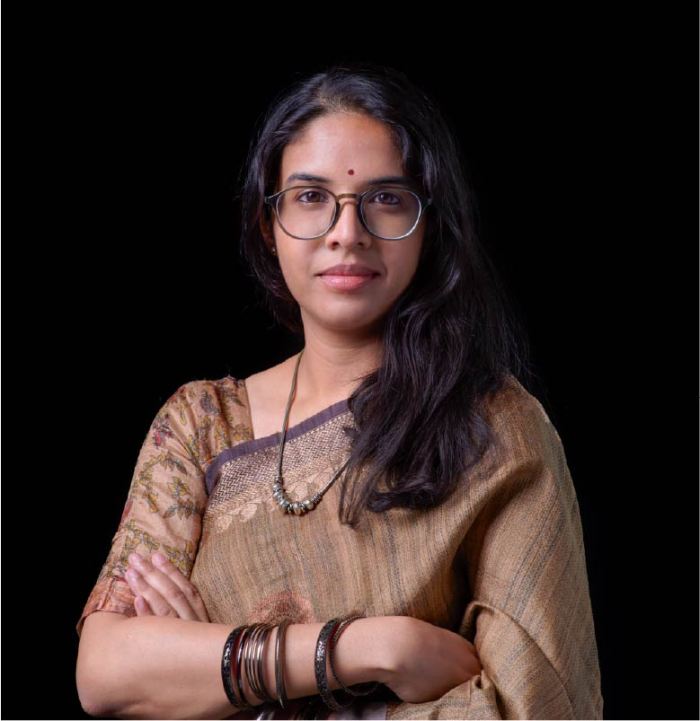
Karthika Gopalakrishnan is the Head of Reading at Neev Academy, Bangalore, and the Director of the Neev Literature Festival. In the past, she has worked as a children’s book writer, editor, and content curator at Multistory Learning which ran a reading program for schools across south India. Prior to this, Karthika was a full-time print journalist with two national dailies. Note: she is a regular contributor to #WorldKidLitWednesday for GLLI – see here. See Her Twitter handle is g_karthika.
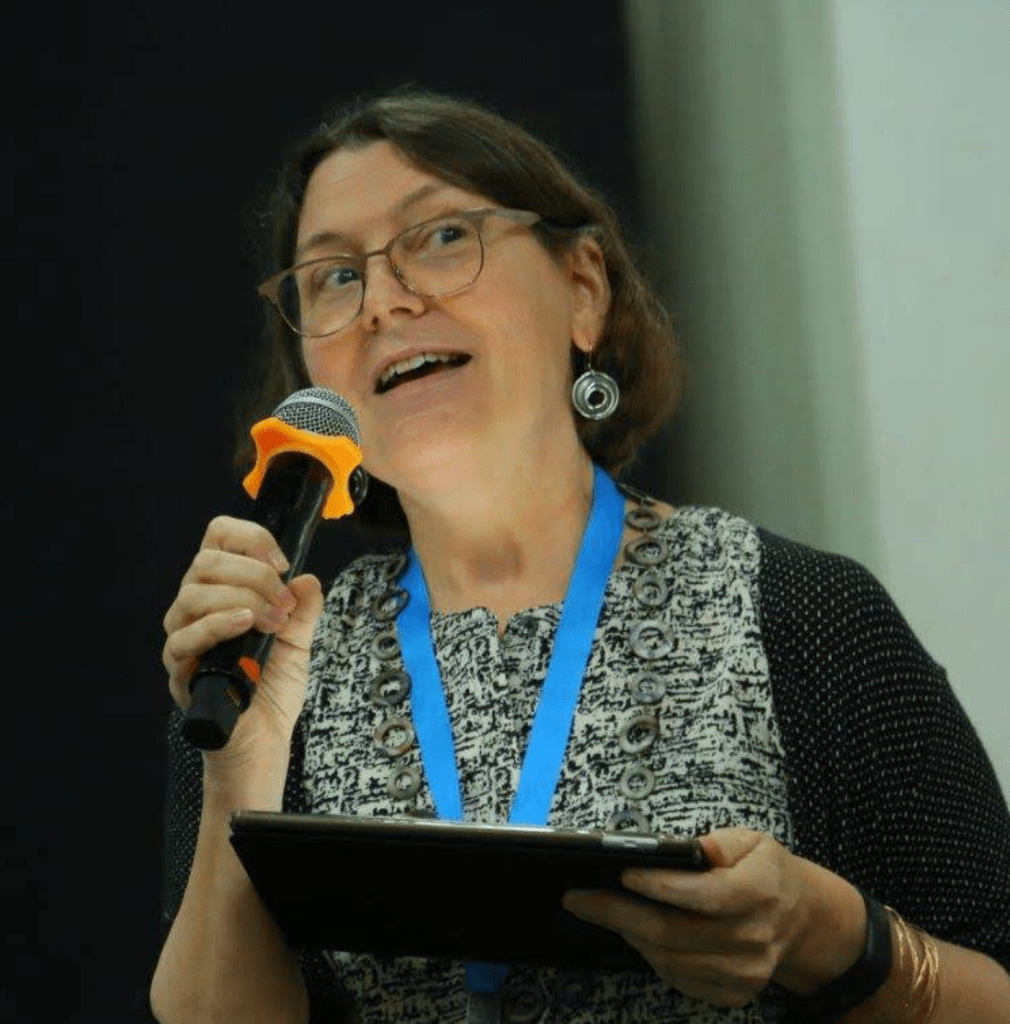
Katie Day is an international school teacher-librarian in Singapore and has been an American expatriate for almost 40 years (most of those in Asia). She is currently the chair of the 2025 GLLI Translated YA Book Prize and co-chair of the Neev Book Award in India, as well as heavily involved with the Singapore Red Dot Book Awards. Katie was the guest curator on the GLLI blog for the UN #SDGLitMonth in March 2021 and guest co-curator with Karthika Gopalakrishnan for #IndiaKidLitMonth in September 2022.
 Global Literature in Libraries Initiative
One thought on “#INTYALITMONTH: Indian YA”