Written by Erin Wilson
This is the latest list of books that I recommend for YA from Bangladeshi authors. I’ve recently read these in the past few months and how I got these books is important to share because it’s all about the literature community here in Dhaka that is so valuable to me as a school librarian.
Bookworm, a local bookshop, provides me with many recommendations. In fact one book was given as a gift during our Book Week celebration. I felt so lucky to have gotten this book and now I can share it with you all. Tanmoy is a friend, and I follow him on social media. In fact he has visited International School Dhaka this year as our guest author and illustrator. Students and teachers really enjoyed his talk and I even saw students get so excited to say hi to him like he’s a celebrity, well in fact he is. The relationships I have with the local literature community, authors, illustrators, publishers and bookshops are special to me and I hope you start to feel the connections too. The varieties of YA literature I’m sharing in this post are so varied and unique — and all with a Bangladeshi flavor.
So what are you in the mood for?
- A thriller in Dhaka city
- A graphic novel anthology of Bangladeshi women writers and artists sharing their journey with identity
- A reality baking competition in Dublin with Bangladeshi recipes you can almost taste, or lastly
- A historical fantasy that starts us off in Old Dacca and takes you on an adventure you won’t forget
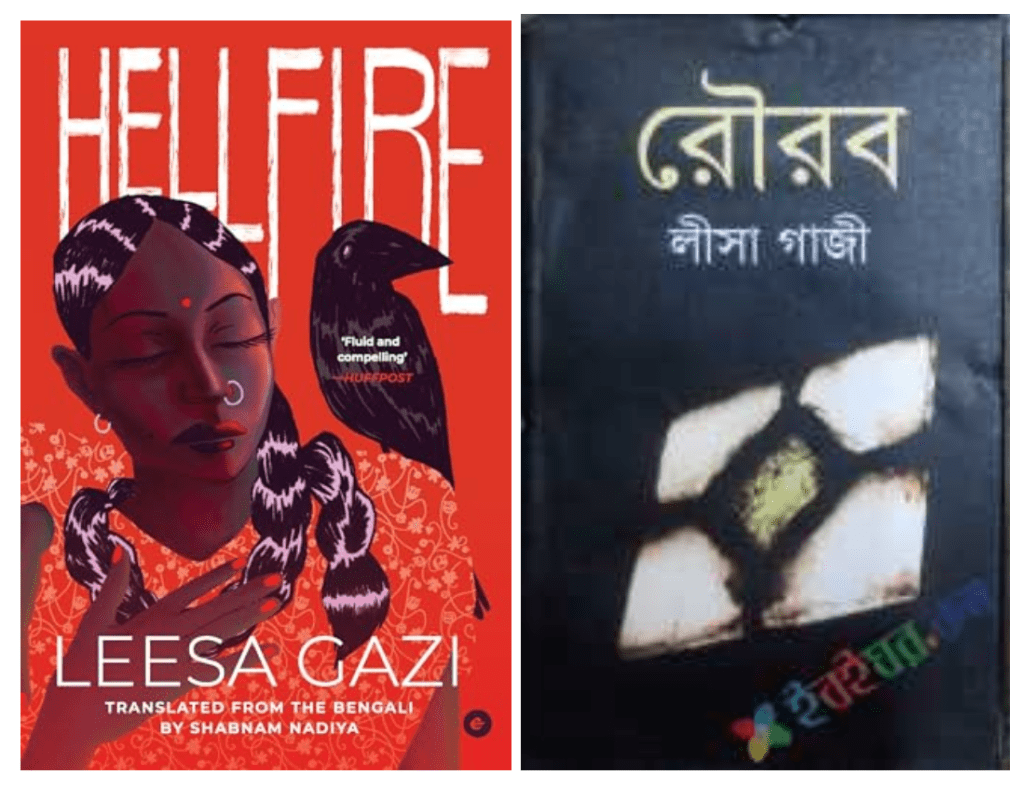
Hellfire (2o2o) by Leesa Gazi, translated from Bengali by Shabnam Nadiya, published 2024 by Eka, an imprint of Westland Books; ISBN: 9789360455828; original title: Rourob (2010), published by Sucheepatra.
Lovely, our main character, is out on her own for the first time in Dhaka. She’s an older woman who still lives with her family and is unmarried. Lovely goes to Chandni Chowk, a popular market in Dhaka, and buys some fabric. Afterwards, she visits another shop and buys a knife, which she carries in her purse—an odd purchase that causes her to dwell on it. The knife builds suspense and anticipation, yet it simply sits in her purse all day, being remembered and forgotten intermittently.
Her last stop is the lush, tree-filled Ramna Park. There, she watches people, sips some tea, and meets a strange man. They chat, flirt almost, and he invites her to his house. She considers going with him. Her curiosity and naïveté crave adventure, even as she fears what her choices might bring. Quickly, she suggests that she can’t be late—her mother will be upset—and rushes home.
This one-day outing draws the reader into a world of desire and internal dialogue, exploring what a woman—who has been confined to her home her whole life—might wonder or consider doing, as if in a dream. When the moment finally comes, the what ifs take over: What if she does? What if she doesn’t?
Lovely also hears a voice in her head—a guiding, criticizing, sometimes goading presence—that adds to the suspense of her choices throughout the day.
The story oscillates between this adventure and her life at home, illuminating the power struggles between her mother, sister, and father—all living together. It seems as though no one ever leaves the house, bound by four walls and the weight of secrets. Amma, with deep secrets of her own, controls the family, especially the two sisters, even locking them in their rooms for long periods. Their father remains passive, quietly reading his newspaper in the shadows. The family’s secrets slowly begin to unravel, revealing the eccentricities of everyone’s behavior.
On this particular day, Beauty, Lovely’s sister, finds out she went out alone into the city. She can’t fathom it.
“Beauty was stupefied at her audacity. First, this girl who had never stepped foot outside of the house by herself had gone out on her own; then, she had returned when she pleased, in the late evening; and now, was behaving as if she didn’t give a shit about anybody” (pp. 177–178).
Lovely’s innocent adventure marks a shift in her attitude—an awakening that threatens to disturb the carefully controlled world of secrets.
Shabnam Nadiya is the translator for this book. Here is a short video of her talking about translating the book.
She has also translated Beloved Rongomala by Shaheen Akter which I shared in a review in July 2024.
Website: https://shabnamnadiya.com/about-me/biocontact/
Where did I get this book?
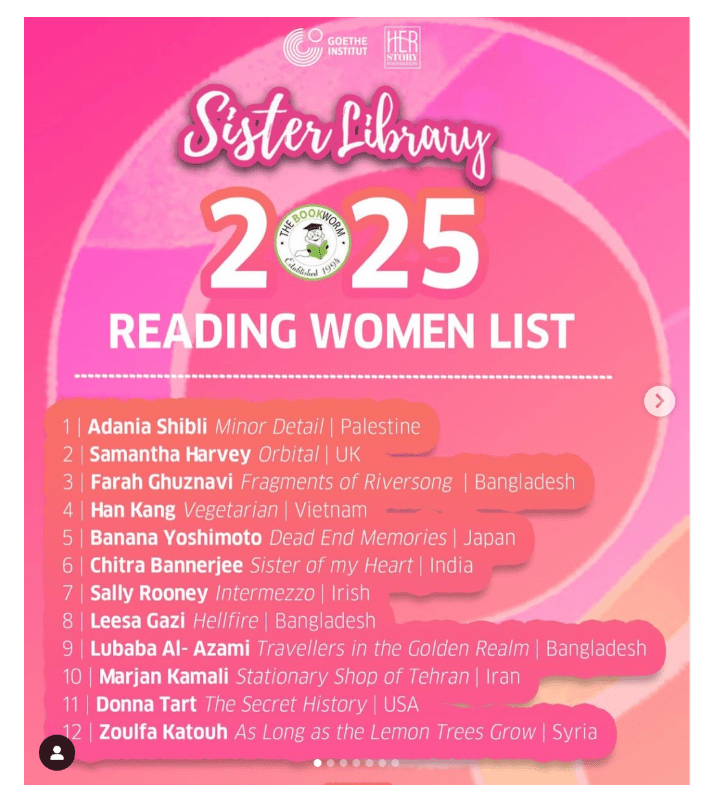
I came across this book from one of my favorite book shops, Bookworm. The Sister Library 2025 Reading Women List came out December 2024. I check the list for recommendations and also glean it for new Bangladeshi authors to read.
Who to follow for more Bangladeshi publications, booklists and more:
- Bookworm Bookstore @bookwormbangladesh
- HerStory Publisher @herstorybd
- Goethe Institut Bangladesh @goetheinstitue_bangladesh
You can find a copy of Hellfire in a library here.

Girls Do Comics Anthology: Lines & Dreams! (2o25) by Rashad Imam Tanmoy, published by Cartoon People Comics, ISBN: 9789849684367
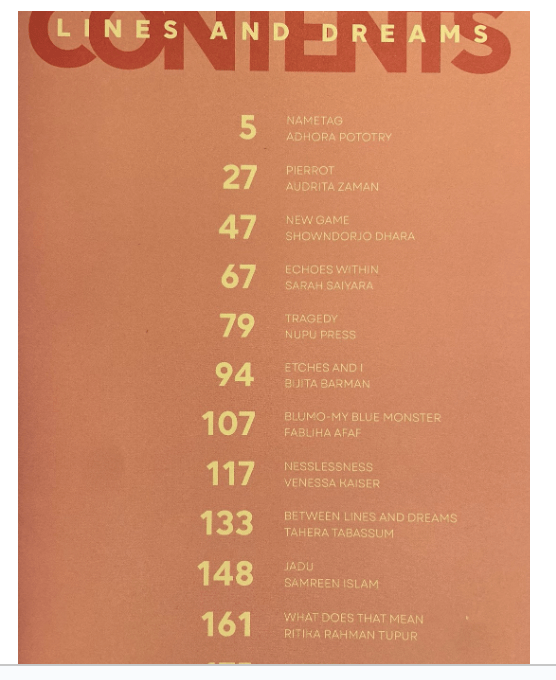
This 13-story anthology was created by female Bangladeshi authors and illustrators. Each story is unique, exploring themes of identity and the societal challenges faced by women, presented through a variety of illustration styles. The stories reflect on relationships with the world around them and how these connections can either support or hinder personal growth. Each piece is accompanied by a short biography of the author and illustrator, along with an explanation of their story.
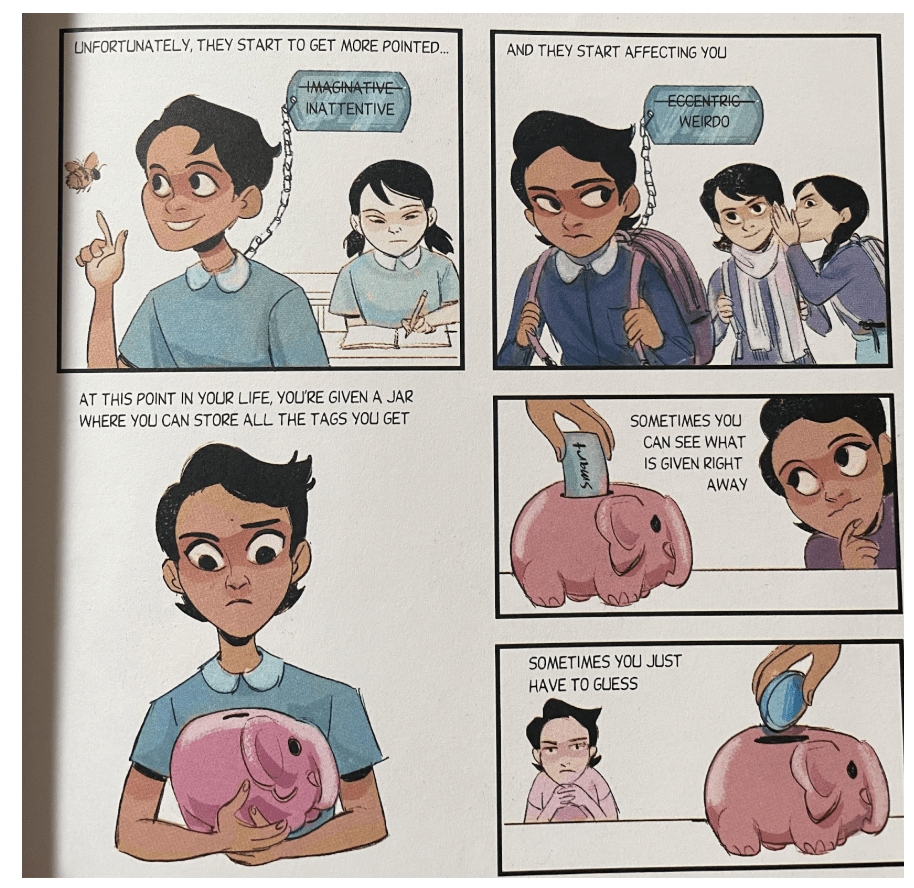
The first story, “Nametag” by Adhora Pototry, opens the anthology with a powerful exploration of identity and the labels we carry—from birth through every stage in between. Her illustrations complement the narrative seamlessly, with each panel capturing the character’s joy and frustration with the names she’s given. Some labels are arbitrary and fleeting, while others linger and define. The character collects these names in a piggy bank, observing how many are negative and how few are positive. Pototry also highlights how a single word can shift the perception of a person—for example, being called “inattentive” instead of “imaginative.” This coming-of-age story resonates deeply, reminding us how we are shaped by the names others give us, and how we continuously negotiate our own sense of identity throughout life.

“New Game” by Showndorjo Dhara
How many of us find ourselves stuck in dead-end jobs, searching for ways to escape after work? In this story, if you can reach level 13 or higher, you might just find a way out. The main character is caught between the thrill of late-night gaming and the reality of being late to work. In the end, she may—or may not—have discovered a way to break free from her mundane routine. “New Game” is told primarily through images, inviting the reader to interpret the narrative for themselves. It’s raw and relatable, capturing the inner thoughts of anyone who has struggled with the tension between personal enjoyment and professional obligation.

The last story, “The Pages Within” by Nusrat Laxme ends with another contemplation of the world we live in. Her character wanders the bustling loud Dhaka pondering the freedom she wishes to have like a leaf yet sees that everyone is boxed in. She looks for meaning in a park, green with grass and trees.
All of the stories by female Bangladeshi women share the reality of being a female not only in Bangladesh but any woman can connect to the struggles in this book. Some of the stories handle identity with cute illustrations while others take a stark dark realistic approach. The variety of stories reflects the variety of women’s experiences and yet the thread through them all is they are by women.
People to follow:
@tanmoycartoons
@tanmoy27
@cartoonpeplecomics – website / Girls Do Comics Exhibition
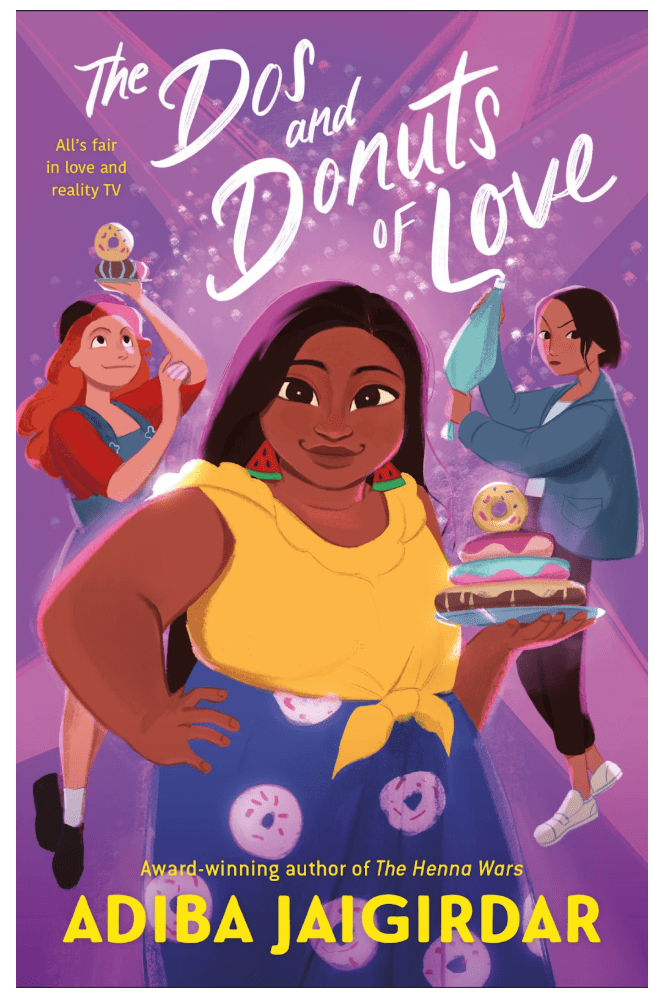
The Dos and Donuts of Love (2023) by Adiba Jaigirdar, published by Feiwel and Friends, ISBN: 9781250842114 / Author website: https://adibajaigirdar.com / Instagram: @dibs_j
Shireen Malik, an aspiring baker, joins the Junior Irish Baking Show in Dublin, Ireland. Her family already owns a donut shop in Dublin called You Drive Me Glazy, so she has plenty of experience baking and working with customers. She’s ambitious about winning the show, yet she has some complicated feelings from a recent breakup.
Shireen takes us through each episode of the baking contest, meeting different contestants and wondering if they are friends or foes. Through frantic calls to her best friend, Fatima—who is visiting family in Bangladesh—we learn all the gossip about her personal life and the show. Fatima is her biggest fan but occasionally sets boundaries when Shireen needs a friend the most.
The baking show is the perfect setting for this story. It’s as if a camera is moving around, capturing each character’s nuances while staying focused on Shireen. Her life feels like a roller coaster. Shireen has to deal with her ex, who is also a contestant. We get to know all the contestants—their weaknesses and strengths. Shireen also contends with negative social media posts about her ethnicity and body. She relies heavily on her friends and family to get through these challenges.
She’s lucky, too, because her idol, Padma Bollywood—who is of Indian heritage—is someone she can talk to. Padma relates to Shireen’s struggles and becomes a helpful mentor. The twists and turns in this book keep the reader hooked, between the baking contest, Shireen’s love interests, and her friendships. It’s hard to know who the actual winner is in the end, but it always feels like Shireen comes out on top because she tries hard and cares deeply about the people around her. She proudly brings her Bangladeshi heritage into the competition, featuring special recipes from specific regions of Bangladesh.
The author, Adiba, weaves in many important themes that any young person can relate to—racism, identity, body image, Bangladeshi culture, queerness, friendships, romantic relationships, and family. Adiba also does a wonderful job of integrating Bangla language and culture. Living in Bangladesh myself, I loved how naturally the Bangla was used—it felt just right. Fatima, the best friend, visits Bangladesh for a multitude of weddings, bringing in rich cultural detail while navigating the complex experience of being part of the diaspora. Shireen adds more Bangladeshi flavor to the book through her recipes, some passed down from her parents’ specific region.
Each chapter is charmingly titled with a baking or cooking term, setting the tone for the story. It’s a quick read, full of life, and made me hungry for everything from chocolate cake to donuts and more. My only suggestion for Adiba: please add a recipe or two at the back of the book so we can taste the delicious baked goods Shireen makes!
You can buy a copy of The Dos and Donuts of Love here or find it here in a library.
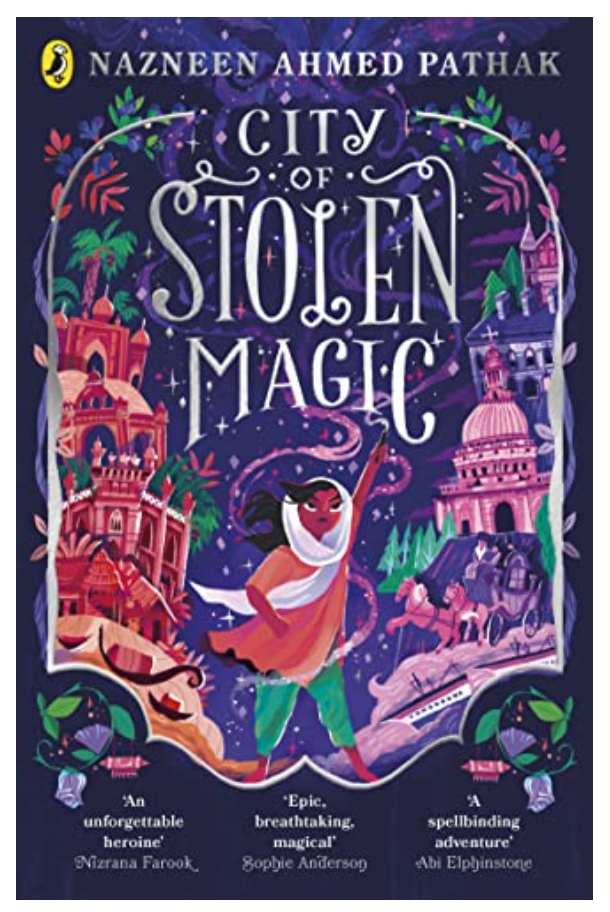
City of Stolen Magic (2024) by Nazneen Ahmed Patha, Publisher: Puffin Books, ISBN:9780241567487
India, 1855. Chompa, a young girl living with her mother outside of Dacca city, has magical powers—but she must not use them, per her mother’s request. Deep down, Chompa believes that if she could use her magic, she could help her mother around the house. Yet every time she does, it ends in a fiasco, reinforcing the idea that she must be patient and learn the basics from her mother first.

One day, Chompa’s mother is kidnapped from their home. Determined to find her, Chompa is soon joined by Mohsin, a friend of her mother’s, who arrives just in time. Mohsin, also djinnborn—those born with magic—helps Chompa begin to understand her magical abilities and sets her on a journey to find the ship that has taken her mother away.
They board the Kohinoor, a ship traveling from Dacca to London, filled with children who use their magic to help move the ship along. Chompa is surprised to discover there are others like her and forms bonds with them. As the journey continues, the tensions between the British and the magical people grow increasingly clear. Chompa learns that the British are banning magic and notices the cold stares from some of the other guests on board. Through conversations, she finds out that many of the magical children on the ship are in servitude, threatened into longer terms if they do not comply with the captain. She also begins to notice how she’s being asked to perform magic like a circus act, while deep down she knows her powers hold more meaning.
When they arrive in London, the disturbing reality of their journey comes into focus. Some children run away, while Chompa and Mohsin stay at the posh mansion of Sir Clive—a place that feels more like a prison to Chompa. Though she has the magic to escape, she endures the discomfort, hoping it will lead her to her mother.
Chompa starts snooping around the mansion and discovers a document detailing the different types of djinnspeakers and their abilities. This shocking find raises her suspicions even further. Venturing into the city, she investigates what happens to the magical children after their arrival. What she uncovers is deeply disturbing: a colonial system of exploitation where magical children from around the world are kidnapped and prepared for auction by Sir Clive and his network.
With fierce determination and growing magical strength, Chompa exposes the dark underbelly of imperialism operating in the heart of London. The ending will keep readers on edge, full of twists and surprises.
Chompa’s adventures are thrilling and thought-provoking, offering not just magical escapism but a powerful lens through which to explore colonialism, stolen children, identity, culture, and exploitation.
You can find a copy of City of Stolen Magic in a library here.

Pictured is myself at a school event where I invited my author friends. With Tanmoy on the left, editor of Lines and Dreams, and Kashfy on the right. Kashfy has written a new book in Bangla and I’m impatiently waiting for it to be written in English.
Erin Wilson currently works as a Teacher Librarian at International School Dhaka, Bangladesh and has worked internationally for 10 years in the following countries; China, India, and currently Bangladesh. It’s her personal mission to read as many contemporary Bangladeshi authors as possible. She has vast experience working in diverse cultures from Native American students to inner-city students and the international community. Her other passion lies in studying Asian dances. Currently she is focused on Odissi classical dance, and uses this dance vocabulary for storytelling in the library to actively engage children. It’s never boring in the library. Note: she curated a month of Bangladeshi literature on the GLLI blog in July 2024.
You can follow the school where she works, International School Dhaka Instagram: @ isd_library
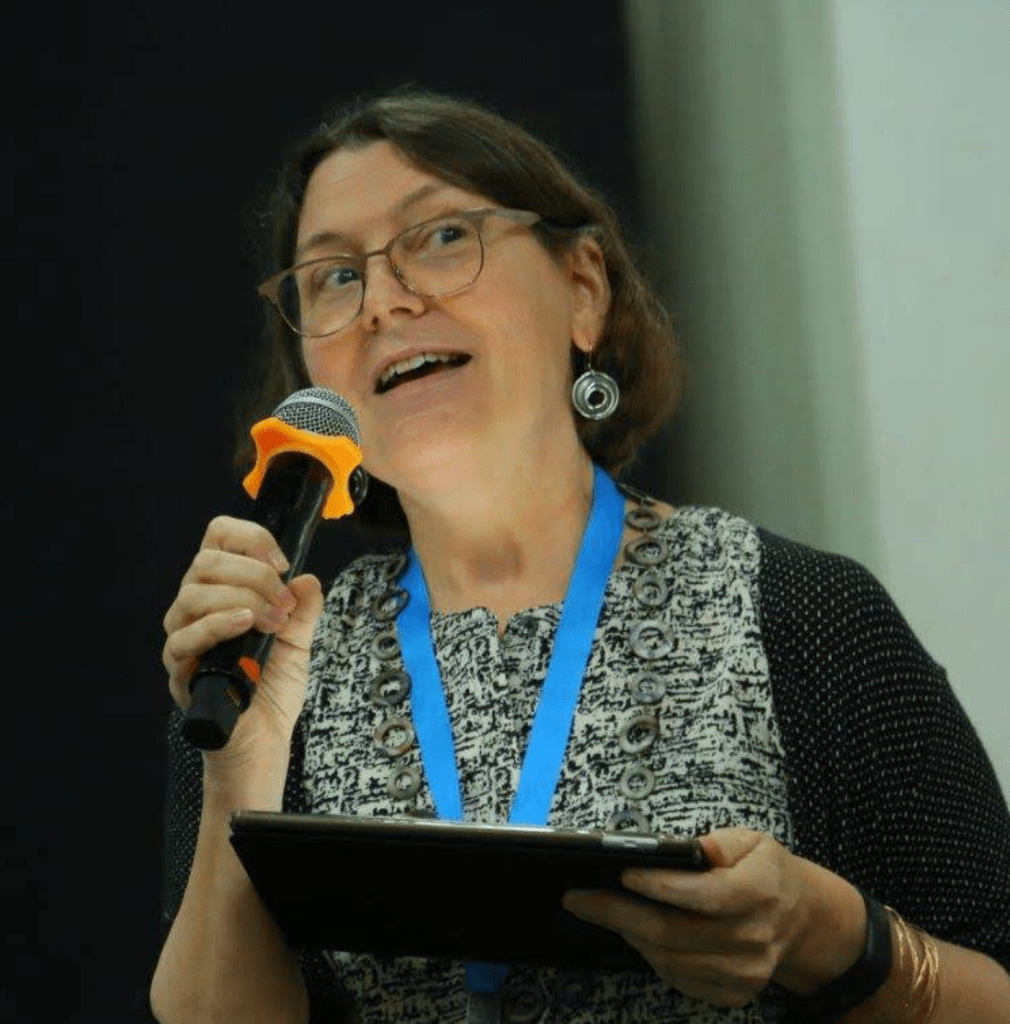
Katie Day is an international school teacher-librarian in Singapore and has been an American expatriate for almost 40 years (most of those in Asia). She is currently the chair of the 2025 GLLI Translated YA Book Prize and co-chair of the Neev Book Award in India, as well as heavily involved with the Singapore Red Dot Book Awards. Katie was the guest curator on the GLLI blog for the UN #SDGLitMonth in March 2021 and guest co-curator for #IndiaKidLitMonth in September 2022.
 Global Literature in Libraries Initiative
One thought on “#INTYALITMONTH: Bangladesh”