Written by Vicky Smith
My library is located in the small city of Portland, Maine, in the northeastern United States; it’s just steps from the North Atlantic. But most days after school, a visitor to our teen room will hear more Portuguese and Lingala than English, as Portland has become a destination for Angolan asylum seekers. Here, over 6,000 miles from the South Atlantic coast where Angola’s capital city, Luanda, sits, these teens and their families are making a new home.
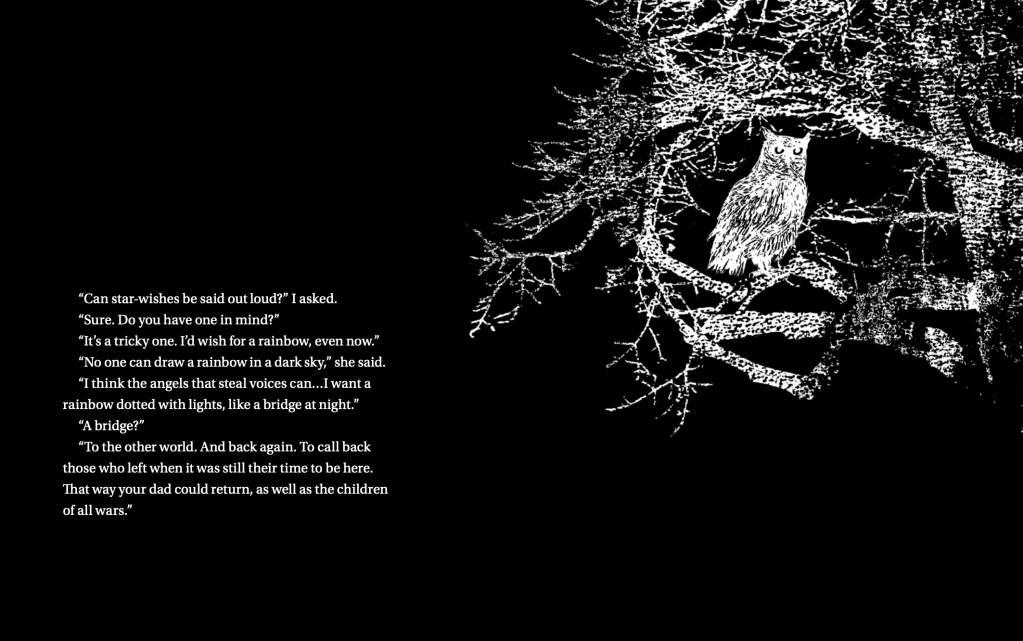
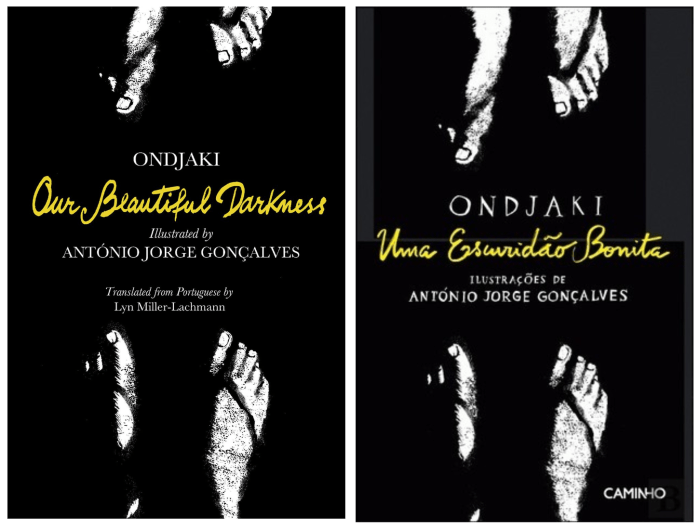
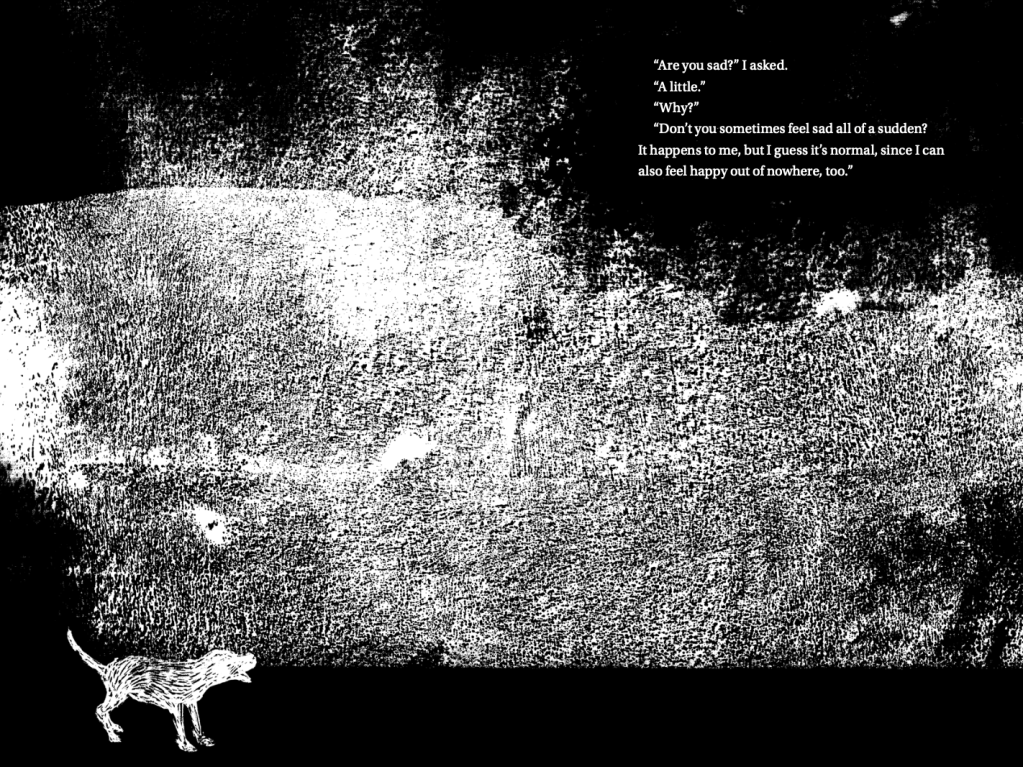
That’s why I was thrilled to discover Our Beautiful Darkness (Uma escuridão bonita) by Ondjaki, illustrated by António Jorge Gonçalves, translated by Lyn Miller-Lachmann, and published by Unruly/Enchanted Lion, among the submissions for the 2025 GLLI Translated YA Book Prize. It did not give me the keen insight into my young patrons’ pasts I’d hoped for, but it did give me an incredibly immersive experience. The titular darkness is caused by a power outage, which creates a singular, protective space for two young people to reveal themselves to each other. It’s a rich and sensory text: “In this darkness of sweet melody or warm silence, between the buzz of mosquitoes and the whiff of a match lighting the first candle inside my house, I found the courage to speak,” says the unnamed narrator. Later: “I passed my tongue slowly over my lips. They told me they felt lonely”; and later still: “Here outside in our shared darkness, between the hum of a cricket and the buzz of a firefly, she found the courage to speak.” The intensity of these two teens’ attraction to each other is palpable. Gonçalves’s white-on-black illustrations offer up glimpses of the characters, amplifying the intimacy of their experience within the enveloping darkness.
Alas, it’s the only Ondjaki book published in the United States, and the only one in my library. But Ondjaki has a considerable oeuvre, and thanks to interlibrary loan, I’ve been happily paddling around in some of it for the past several weeks. In them I’ve found the same richness of language but also a sense of fun that’s just hinted at in Our Beautiful Darkness.
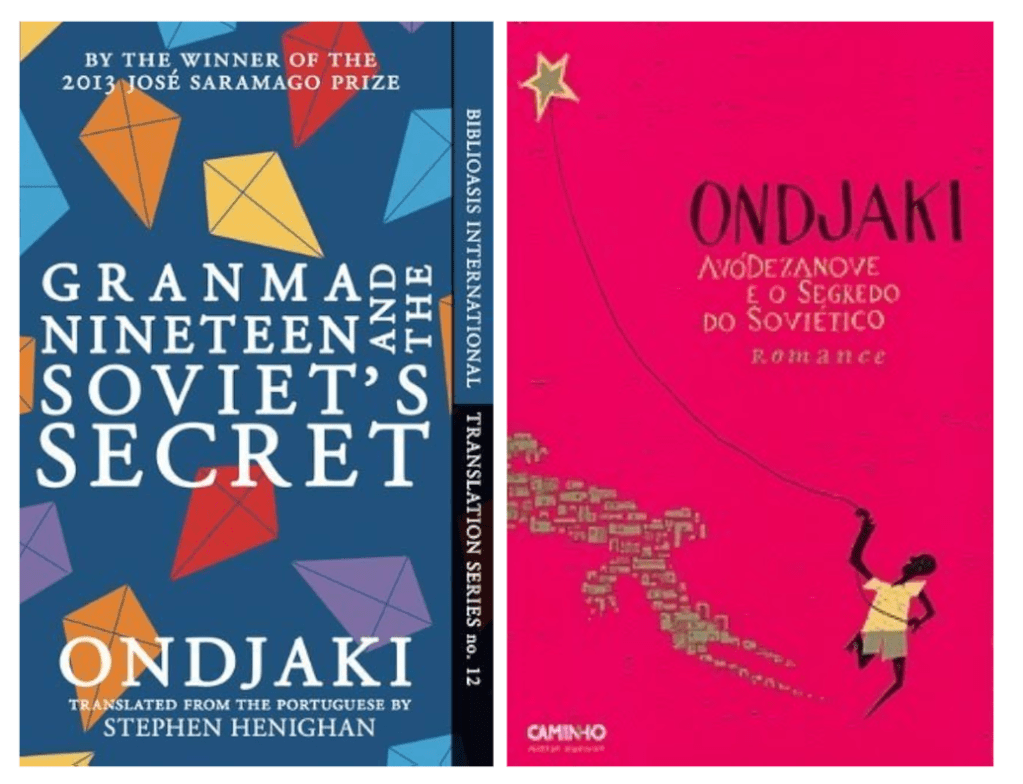
Granma Nineteen and the Soviet’s Secret (2013) (AvóDezanove e o segredo do soviético (2008)) translated by Stephen Henighan and published in Canada by Biblioasis, features the same unnamed narrator a few years younger and takes readers to the Luanda neighborhood around Bishop’s Beach. Two plots unfold: in one, the narrator’s grandmother is wooed by both a Cuban doctor and a Soviet apparatchik, and in the other, the narrator and his best friend Pi, or 3.14, work to thwart the planned “dexplosion” of their neighborhood by the Soviets. Embedded in the texture of the story is Angola’s civil war, a Cold War proxy conflict, but despite the presence of AK-47s and Soviet soldiers the kids call “blue lobsters,” the tone is light, and frequently very funny.
See this 2014 review of the English edition on the Words Without Borders website, and note a movie based on the novel came out in 2021 — watch trailer here.
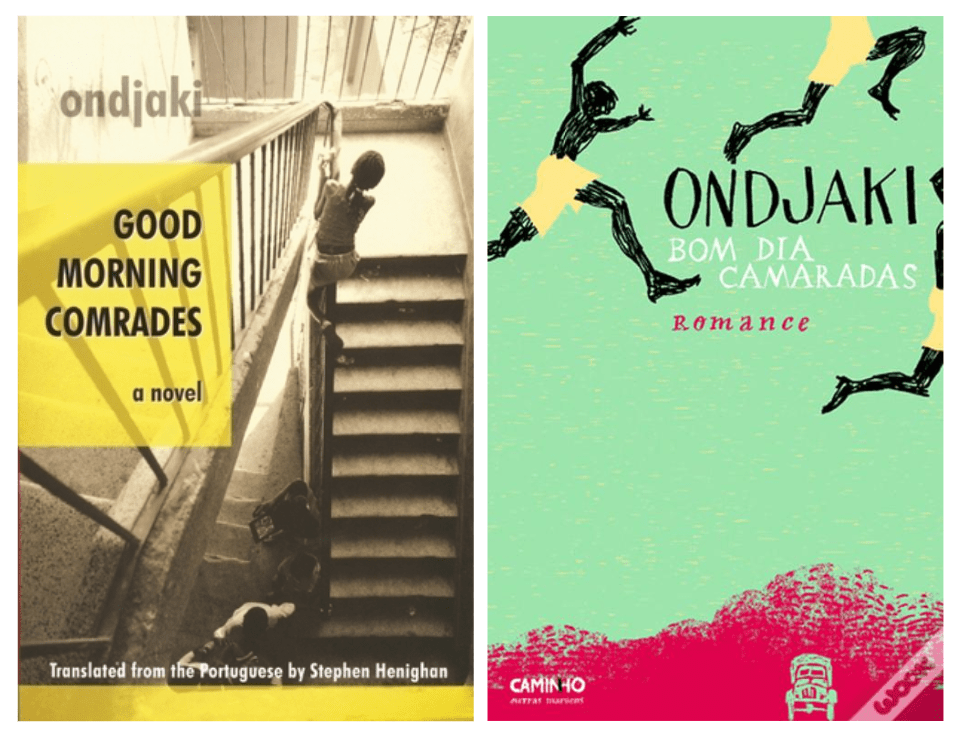
Also translated by Stephen Henighan and published by Biblioasis, Good Morning, Comrades (2008) (Bom dìa camaradas (2003)), Ondjaki’s first novel, introduces readers to first-person narrator Ndalu. As in Granma Nineteen, the twelve-year-old’s hijinks play out in Cold War–era Luanda, but here Angola’s complicated nationhood is very much in the foreground. At home, Ndalu’s family’s servant longs for the days of Portuguese rule and at school Cuban teachers school their pupils in “la causa revolucionaria.” Ondjaki may here explicitly explore the theme of post-colonial struggle, but his touch is light, and his construction of his young characters impeccable.
This is a mere handful of Ondjaki’s oeuvre, which spans audiences from children to adults, and taken together they do deepen my understanding of the place so many of my patrons have come from. If those I have been unable to get my hands on in English offer the same richness and playfulness of language, then readers of the author’s original Portuguese are in luck. And we readers of English must ply our interlibrary-loan systems and hope for more translations to come.
Read Stephen Henighan’s interview with Ondjaki for The White Review in March 2017.

See this May 15, 2024, GLLI interview with translator Lyn Miller-Lachmann by Nanette McGuinness, which touches upon Our Beautiful Darkness. See also the 2025 GLLI Translated YA Book Prize winner & honor book & shortlist announcement, as Our Beautiful Darkness was on the shortlist.
Ondjaki is the pen name of Ndalu de Almeida, a writer from Angola, born in 1977. (Photo source: CBC Radio, 2014.)
You can buy a copy of Our Beautiful Darkness here or find it in a library here.

Vicky Smith was the young readers’ editor of Kirkus Reviews for 13 years, where covering books in translation was one of her priorities, before becoming access services director at Portland (Maine) Public Library three years ago. She has recently served as chair of USBBY’s Astrid Lindgren Memorial Award nominating committee and is looking forward to continuing her engagement with international children’s and YA literature with GLLI.
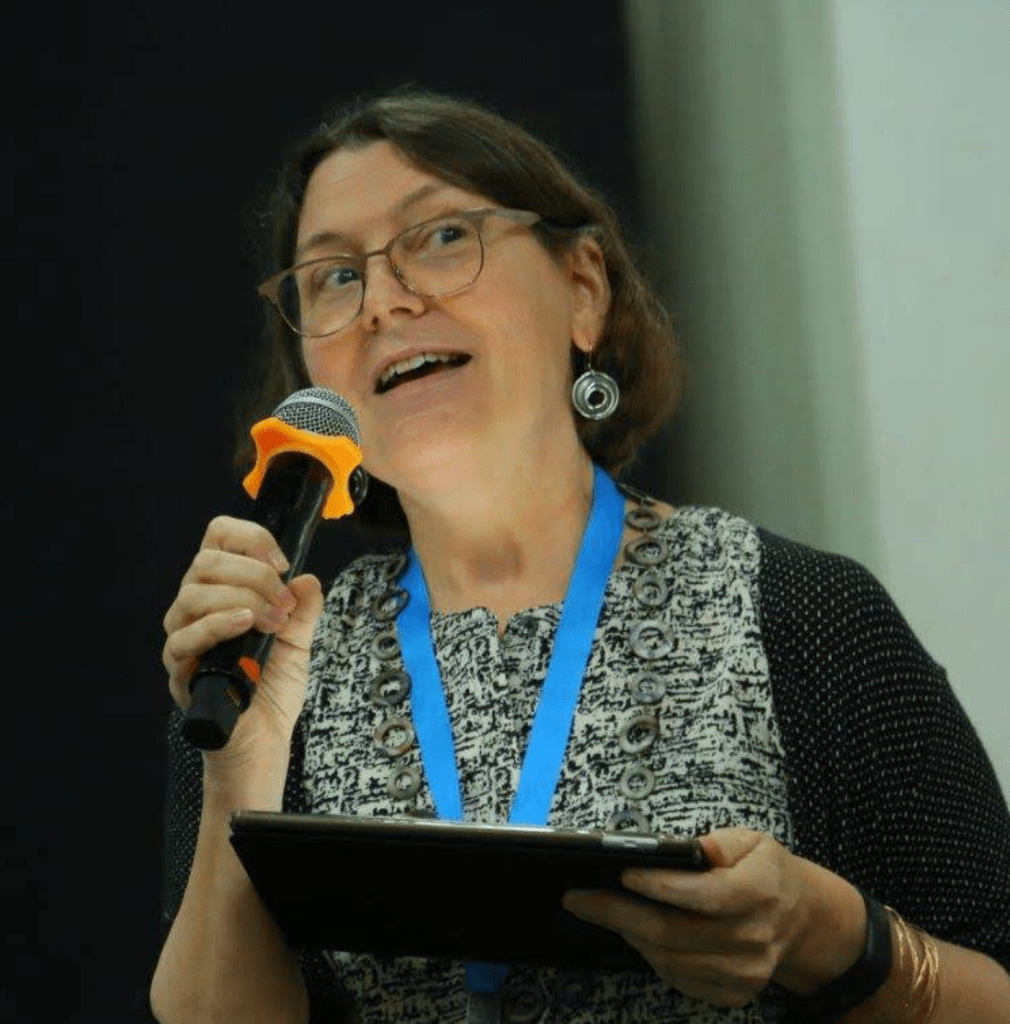
Katie Day is an international school teacher-librarian in Singapore and has been an American expatriate for almost 40 years (most of those in Asia). She is currently the chair of the 2025 GLLI Translated YA Book Prize and co-chair of the Neev Book Award in India, as well as heavily involved with the Singapore Red Dot Book Awards. Katie was the guest curator on the GLLI blog for the UN #SDGLitMonth in March 2021 and guest co-curator for #IndiaKidLitMonth in September 2022.
 Global Literature in Libraries Initiative
One thought on “#INTYALITMONTH: Ondjaki”