Written by Annie Harris
I’ve spent most of my career exploring children’s literature and finding ways to connect my students to stories. However, over the last ten years, I’ve had a shift in my overall understanding of how and why students connect. Growing as both an educator and a person, I’ve realized the importance of people “seeing themselves” in the books they read.
While the first fourteen years of my teaching career took place in the US and England, where popular “Western Literature” is the norm, the last ten have been in Asia and Africa. Living and working outside of my culture has made me see the true value of people finding a way to connect to the books they’re reading. Kids need to see themselves represented in literature. This can be through reading a book about third culture kids who don’t necessarily have an easy answer to the very common question, “Where are you from?” It can be finding books with kids who deal with abuse, questioning identity, bullying, friendship issues, relocation, etc. But as a librarian in South Korea and in Ethiopia, I have found my students drawn to books that represent those cultures to which they’re connected.
To be honest, I’ve spent a lot of time with a focus on elementary school and children’s literature in my career, but with my current position as an all-school Head of Library, I’m working to build my knowledge of Young Adult and New Adult books, as well. While, as a librarian, I am aware of the offerings in literature for younger children, I am working to increase my knowledge of YA titles. I was somewhat surprised at the difficulty I had in finding high-quality books representing the African continent.
A few well-known YA titles have been reviewed here on the Global Literature in Libraries Initiative blog, e.g., books like The Gilded Ones trilogy by Namina Forna and Born a Crime by Trevor Noah. However, I found I needed to dig deeper to find authentic YA novels written by African authors and set on the African continent. In doing so, I discovered two YA books coming out of West Africa in the last few years: Loss is an Aftertaste of Memories by Michael Chiedoziem Chukwudera and Even When Your Voice Shakes by Ruby Yayra Goka.
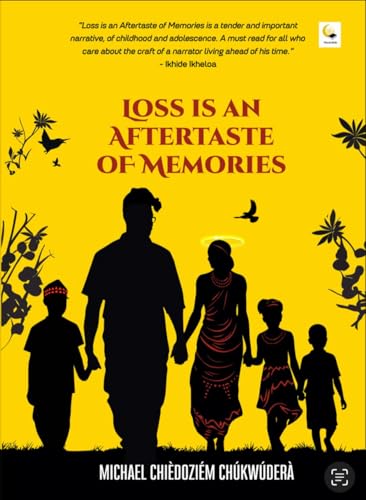
Loss is an Aftertaste of Memories by Michael Chiedoziem Chukwudera (2024)
Loss is an Aftertaste of Memories is set in Nigeria in the 2000’s to the 2010’s in the country’s Edo state. Written from the perspective of the protagonist, a boy named Nosike, the book catalogues the events that characterized his childhood days, from taking an entrance exam into Primary 5 all the way through his early teen years.
Nosike has an authentic voice, one that stays true to the age level it represents. Chukwudera allows the reader to experience the world through the eyes of a growing boy; he takes Nosike through the follies of childhood mishaps, complicated relationships with family members, physical traumas, first loves, school trials, grapples with piety, and devastating loss, and he does this through the narration perspective of a youthful innocence that grows into a more mature, self-reflective young adult. Nosike demonstrates all the emotions of youth–happiness, sadness, passion, jealousy, rebellion, infatuation, and anger, to name a few. He is also relatable as a “typical” youth who dreams of being a professional footballer (despite no apparent gifts that would make this a viable option). The reader finds him/herself making easy connections to these childhood experiences. While it’s easy to connect with the youthful antics of this story, Chukwudera makes his novel relatable to Nigerians, who can associate based on the cultural representations of childhood play, the challenges of poverty, the school atmosphere, and the family expectation. Moreover, he uses local vernacular to make his story more authentic. Loss is an Aftertaste of Memories is also educational to others, helping to give readers a better understanding of cultural Nigerian norms.
No matter where we come from, we can all connect to Nosike’s self-reflection, and we can be inspired to look back on our own personal experiences.

Even When Your Voice Shakes by Ruby Yayra Goka (2022)
The plot in Even When Your Voice Shakes unfolds in three distinct sections. A girl named Amerley, the main character, is growing up in a small village in Ghana. She is the eldest daughter in her family, her father has left the family after being disappointed that his wife can’t give him sons, and her mother has descended into a bedridden hopelessness, leaving her daughters to fend for themselves. Amerley spends her days leading the family–scrounging for clothing, school fees, food, and rent. She has a kind boyfriend, but she refuses to let herself be like her female friends, getting pregnant and married in her early teenage years. She dreams of becoming a seamstress, but her day to day life is surviving the realities of her broken, impoverished family.
In the second part of the story, Amerley is forced to take a job in Accra, working for her mother’s old school friend. This sacrifice of her hopes of personal improvement allows her to feed her family and give her sisters the opportunity to stay in school. While she comes to appreciate the benefits of her new life, she also gains a new understanding of the discrepancies between rich and poor in Ghana. From the moment Amerley arrives in her new situation, the mention of a wayward stepson leads the reader to believe that some type of sexual abuse will occur. She ends up being attacked and raped by this boy. Growing up in a very misogynistic culture and fearing for the well-being of her family, Amerley initially doesn’t know how to speak the truth and get justice for herself. While this plot is somewhat cliche, it serves a greater purpose: to educate those who don’t know how to advocate for themselves, how to get the help they need, how to stand up for what’s right.
The third part of this book shows Amerley doing just that. While she is initially silenced out of fear and lack of knowledge, those around her help Amerley to fight back and make herself heard…even when her voice shakes.
These two stories, at their heart, are coming-of-age novels. Both main characters live in rural Africa in impoverished settings with challenging family dynamics. They both experience hardship and loss. They both turn to God and religion to help them through hard times. Eventually, both characters grow into stronger human beings who reflect on their lives and circumstances and want to do better for themselves, their families, and others. Nosike and Amerley are forced to grow up early, but they turn into upstanding adults. Reflecting on these characters and the lives they lead helps us, as readers, to look at our own lives and circumstances. How do we make the best of hardships? How do we connect with and value our loved ones? What sacrifices will we make for others? Where do we draw the line and stand up for the people we want to be?
These universal questions permeate both books. We see that, regardless of setting, humans everywhere face similar challenges. However, the specificity of the African cultures in which the actions occur allows African readers not only to see that their problems are not unlike those of youth in other parts of the world, but also to identify particularly with the protagonists.
You can buy a copy of Loss is an Aftertaste of Memories here or find it in a library here — and buy a copy of Even When Your Voice Shakes here or find it in a library here. (Book purchases made via our affiliate link may earn GLLI a small commission.
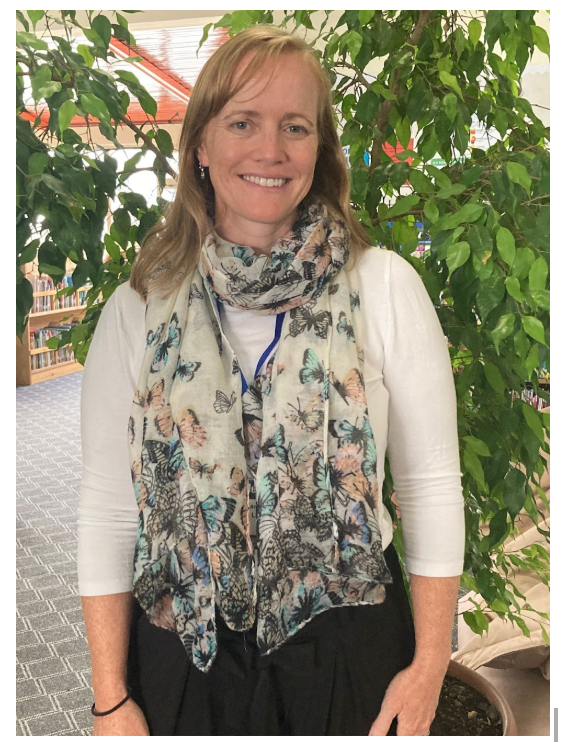
Annie Harris is an international school teacher-librarian and literacy specialist with over 20 years experience working in the United States, England, South Korea, and now Ethiopia. She has a Masters Degree in Reading, Language, and Literacy from the College of William and Mary. Annie is a member of Africa’s Nile Book Award Committee, Zambezi Book Award Committee, and Battle of the Books Leadership Team. She prides herself on creating a warm atmosphere and an authentic culture of reading in each classroom or school library where she has worked. When she’s not working to support IB programs and teachers or encouraging students to become prolific readers, she can be found hanging with her family, coaching soccer/football, swimming, hiking, or naturally, reading a book!
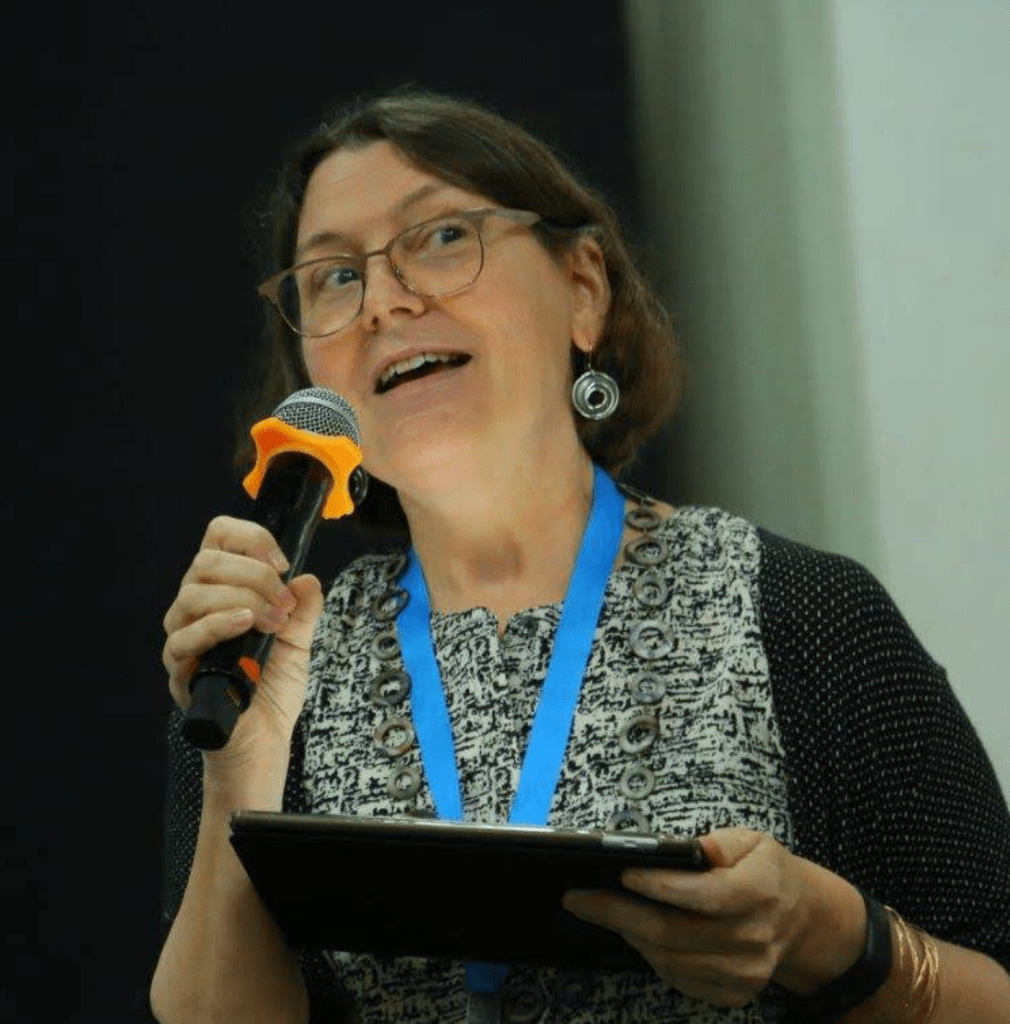
Katie Day is an international school teacher-librarian in Singapore and has been an American expatriate for almost 40 years (most of those in Asia). She is currently the chair of the 2025 GLLI Translated YA Book Prize and co-chair of the Neev Book Award in India, as well as heavily involved with the Singapore Red Dot Book Awards. Katie was the guest curator on the GLLI blog for the UN #SDGLitMonth in March 2021 and guest co-curator for #IndiaKidLitMonth in September 2022.
 Global Literature in Libraries Initiative
One thought on “#INTYALITMONTH: West African YA – Two Coming-of-Age Stories”