It’s May – and time for the 5th annual International Young Adult Literature Month (#IntlYALitMonth) here on the Global Literature in Libraries (GLLI) blog. (Thank you, Karen Van Drie, for starting this tradition!)
Just in case you missed the previous ones, below are links to the end-of-month summary list of each year’s offerings.
- 2021 – wrap-up blog post by editor Elisa A. Garcia
- 2022 – wrap-up blog post by editor Linda Hoiseth
- 2023 – wrap-up blog post by editor Julia E. Torres
- 2024 – wrap-up blog post by editor Emily Corbett
During this month, every day (except Wednesdays, which are devoted to #WORLDKIDLIT WEDNESDAY), teacher-librarians from around the world will be sharing their thoughts and recommendations about international YA literature. The remit was to feature “one or more books for young adults, each ideally produced by a non-US or non-UK author, i.e., think GLOBAL. (Translations would be ideal.) Alternatively, you can just write on a particular topic related to some aspect of YA literature in the international realm. Perhaps a genre or a trend or an author you want to celebrate.”
As Chair of the 2025 Global Literature in Libraries Initiative (GLLI) Translated Young Adult Book Prize, the first recommendation is easy: read about this year’s shortlist as well as the winner & honor books announced on April 16th.
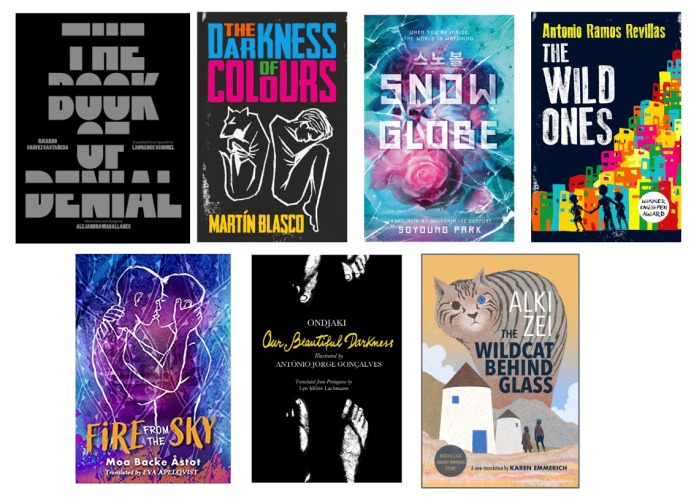
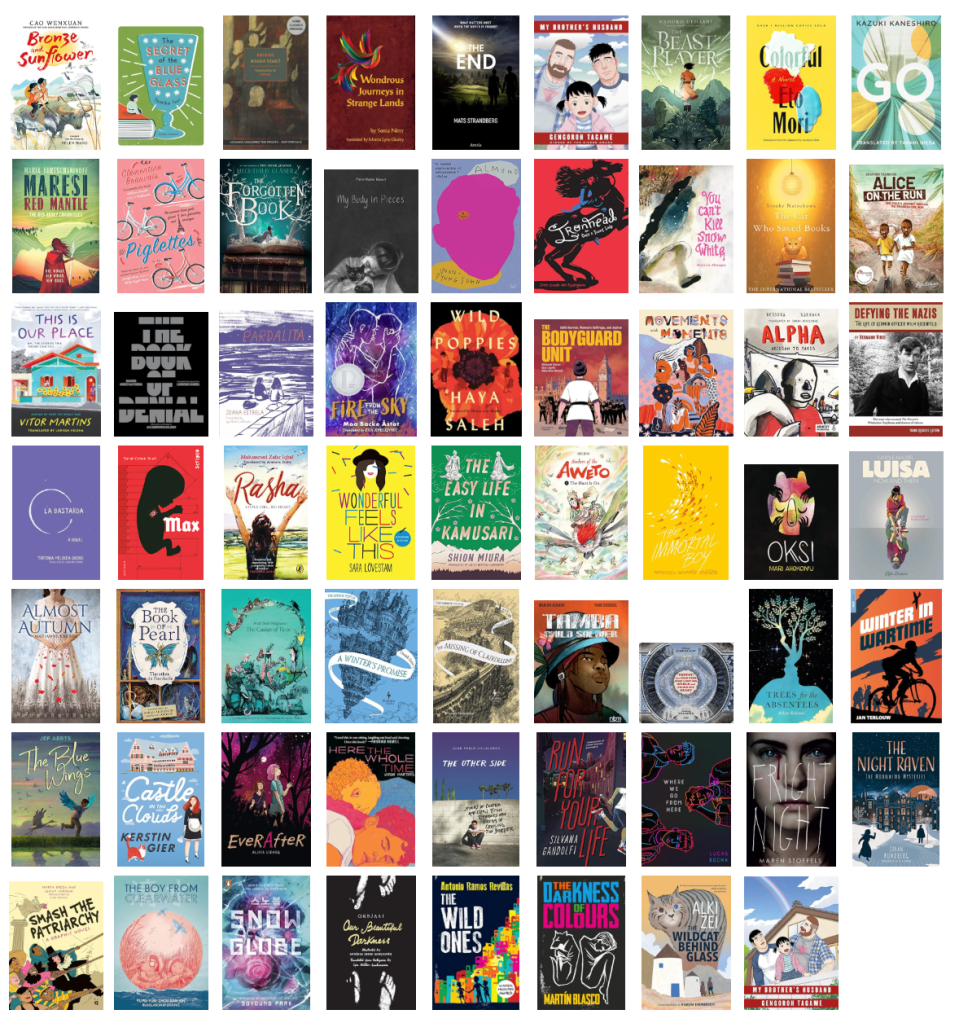
This is the 7th year of the prize, so all the past shortlists (including the winners/honor books) are definitely worth checking out for your reading pleasure (and collection development).
Other prizes?
Most other young adult book awards have criteria based on publication within a country and/or the nationality of the author.
The Bookseller magazine’s YA Book Award, started in 2014 and run in partnership with the Edinburgh International Book Festival, honors books published in the UK and Ireland.
The Amy Mathers Teen Book Award must be written by a Canadian citizen or a permanent resident of Canada.
For books published in New Zealand, there is the Young Adult Fiction Award.
The CBCA (Children’s Book Council of Australia) Book of the Year for Older Readers must be published and available for purchase in Australia.
In the US, the Printz Award, now 25 years old, is unique among the American Library Association (ALA) prizes in that the book has to be published in the US, but the creator can be from anywhere in the world (though most of the winners so far seem to be from the US).
Note: IBBY (the International Board on Books for Young People) has awards for authors and illustrators, as well as biennial “honour lists” of books nominated by country sections for either writing, illustration, or translation, but without any identification of a particular age audience of readers.
Names and ages?
For GLLI, “young adult” means books “intended for readers between the ages of 12 and 18 inclusive.” Canada and Australia make that ages 13-18, though note that the Australia award simply uses the relative term “Older” for their award rather than “teen” or “young adult.” For the New Zealand award “young adult” means books “suitable for secondary school children” – nice and open-ended. The UK award for “teenagers and young adults” (an equivalence?) doesn’t specify an age range, at least as far as I can tell.
YALSA, the Young Adult Library Services Association of the ALA, which administers the Printz Award, defines “young adult” as 12 through 18 and specifies that “adult books are not eligible” — though in compensation they have the Alex Awards, identifying ten books each year “written for adults that have special appeal to young adults, ages 12 through 18.”
No other country seems to annually recognize outstanding examples of those kinds of books, though one could argue that in the old days (before the concept of YA — pre-1960s?) so many titles were automatically in that category — and the audience just found them on their own (or rather, on their libraries’ and parents’ bookshelves).
Since about 2009 the publishing industry, especially in the US & UK, has pushed the boundaries of the young adult market higher with the concept of “New Adult” books. For a thorough discussion of the evolution of this phenomenon, I recommend this 2017 article from the Children’s Literature Association Quarterly by Amy Pattee on “Between Youth and Adulthood: Young Adult and New Adult Literature.” Note: this year The Bookseller in the UK is starting a “New Adult” Book Prize, which will be administered in conjunction with the Cheltenham Literature Festival.
See also this 2023 Publishers Weekly article on “Who is YA For?”.
According to January 2023 WordsRated statistics, 51% of YA books are purchased by people between the ages of 30 and 44, and 78% of those buyers said that they intended to read the books themselves. In recent years, librarians report that more middle grade readers (traditionally eight- to 12-year-olds) are “reading up” to YA books.
What about that lower end of “young adult”?
This is a constant discussion on my various book award committees. I really appreciated it when Vicky Smith, who is on the current GLLI Translated YA Book Prize Committee, expressed it like this:
Young teens are constantly flipping back and forth between their child selves and their adolescent selves, often from moment to moment. Collections serving 12- to 14-year-olds need to serve both modes.
Interestingly, there is a recent movement to promote “young teen lit” — developmentally appropriate for ages 12 to 15, falling between middle grade and young adult books.
International School Library Book Award categories?
Many international school librarian networks have annual awards where the librarians come up with shortlists in various reader categories — which they are always looking to make as international as possible, while also honoring local and regional connections, so those booklists are worth following each year.
What terminology do they use for their YA equivalent reader categories?
- Sakura Medal (Japan) – High School
- Panda Book Awards (China) –
- Older Readers (11 to 14 years)
- Mature Readers (15 to 18 years)
- Red Dot Book Awards (Singapore) – Mature
- Siam Book Awards (Thailand) – Young Adult
- Morning Calm Medal (Korea) – High School
- Iris Awards (Europe) – High School/Adult
- Golden Cowbell Awards (Switzerland) – Older Readers (15+)
- (apologies to others I have forgotten to include…)
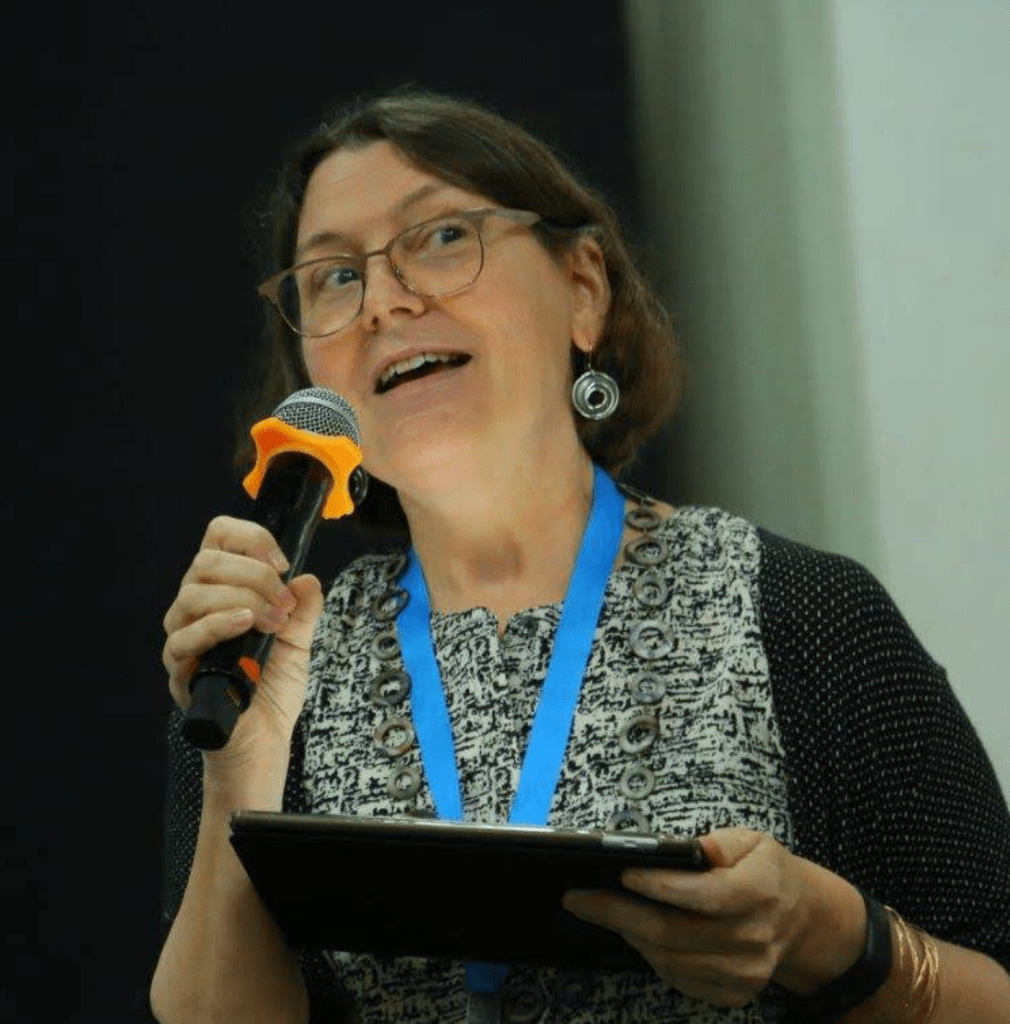
Katie Day is an international school teacher-librarian in Singapore and has been an American expatriate for almost 40 years (most of those in Asia). She is currently the chair of the 2025 GLLI Translated YA Book Prize and co-chair of the Neev Book Award in India, as well as heavily involved with the Singapore Red Dot Book Awards. Katie was the guest curator on the GLLI blog for the UN #SDGLitMonth in March 2021 and guest co-curator for #IndiaKidLitMonth in September 2022.
 Global Literature in Libraries Initiative
One thought on “Welcome to GLLI’s 2025 #IntlYALitMonth”