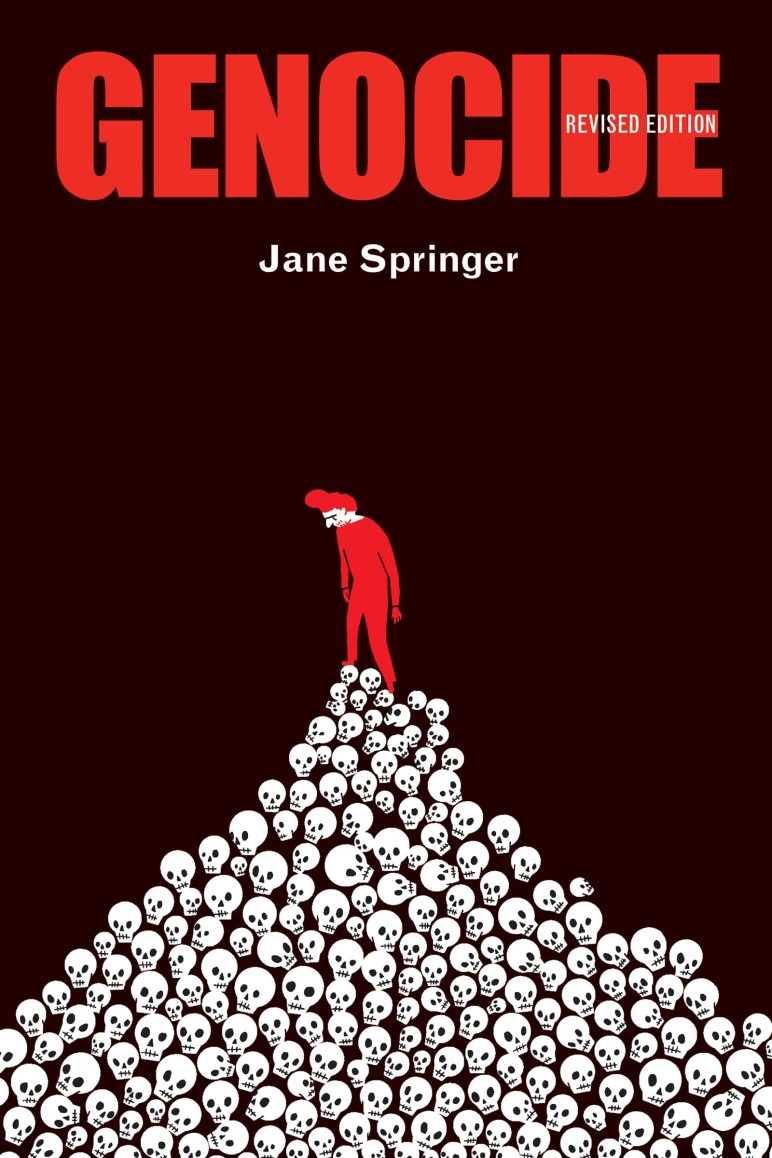
First published in 2006, this revised and expanded edition of Genocide updates information and case studies through the beginning of 2024. This allows the author to address both the brutal October 7, 2023 attack by Hamas on Israeli communities and a music festival, and the Israeli Defense Force’s bombardment of and withholding of humanitarian supplies from Palestinian civilians in Gaza. The book also recognizes the persistence of genocide in regions where it had taken place before and peace had been negotiated, for instance, the rebranding of the Janjaweed paramilitary army in Sudan as the Rapid Support Forces, which continues its campaign of murder and sexual violence today.
Springer, who also translated Brazilian author Ana Maria Machado’s historical novel Until the Day Arrives from Portuguese to English, takes a global and historical approach. She begins by addressing slavery and the genocide of the indigenous peoples of the Americas—events that took place long before the present-day definition of this crime against humanity. She explores the evolution of the term as part of a broader awareness of human rights that grew out of Nazi and other World War II atrocities, and how post-war political leaders have narrowed it to protect racial, ethnic, and religious groups but excluded social and political groups such as women, LGBTQ+ individuals, and people with disabilities. Other discussions center on classifying sexual violence as genocide, defining cultural genocide, and addressing the removal children from their families for boarding schools or adoption out of the community. The author refers to the targets of genocide as Survivors rather than “victims,” addressing the long-term trauma while emphasizing the strength of individuals and communities that have faced these horrors.
One wishes for a more optimistic conclusion, or at least a more forceful call to action, at a time in which political violence and genocide are on the rise. The book does serve as a starting point for researching these crimes, past and present, and understanding what gave rise to them. Along with these “early warning systems” the book urges young readers to become aware of their own biases and privilege as well as to look at media critically so they aren’t taken in by the siren song of violence and power.
Includes timeline, chart, map, and references.
Genocide, revised and expanded edition
Written and edited by Jane Springer
Illustrated by Santiago Solís
2024, Groundwood Books
ISBN 978-1-77306-760-5
Awards: New York Public Library Books for the Teen Age (first edition)
You can buy a copy here* or find it at a library.
*Book purchases made via our affiliate link may earn GLLI a small commission at no cost to you. Advance reader copy provided by publisher.
Lyn Miller-Lachmann is the author of the YA historical novel Torch (Carolrhoda Lab, 2022), winner of the 2023 Los Angeles Times Book Prize for Young Adult Literature and a 2022 Booklist Editors’ Choice, and the YA verse novel Eyes Open (Carolrhoda Lab 2024), chosen by Booklist as a Top 10 Historical Fiction for Youth, 2024. She wrote the picture book Ways to Play (Levine Querido, 2023), illustrated by Gabriel Alborozo, and co-authored with Zetta Elliott the middle grade verse novel Moonwalking (FSG, 2022). Her nonfiction includes a biography of Temple Grandin in the She Persisted chapter book series from Philomel and Film Makers: 15 Groundbreaking Women Directors (co-authored with Tanisia “Tee” Moore) from Chicago Review Press. She translates books for youth from Portuguese to English, including the 2023 YA graphic novel Pardalita by Joana Estrela, published by Levine Querido, which was named a Batchelder Honor Book in 2024 and the forthcoming graphic novel Our Beautiful Darkness (Enchanted Lion), by the Angolan author Ondjaki, illustrated by António Jorge Gonçalves.
 Global Literature in Libraries Initiative