by Lori Hetherington
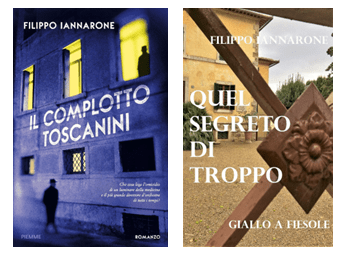
Italian author Filippo Iannarone began investing in his writing ten years ago. His first book, a historical mystery entitled Il Complotto Toscanini, was published traditionally in 2018 by Piemme and republished in paperback the following year. It was well received by critics and identified as “among the five best books with potential for film development” during the Frankfurt Buchmesse and was also awarded an international literary prize.
Filippo can be considered an ‘authorpreneur’, a well-known term in the independent publishing world that refers to authors who approach their writing from a business perspective, with an eye toward product development, marketing, and long-term planning. As translation offers the opportunity to reach new markets, authorpreneurs are drawn to the range of possibilities which, ultimately, benefit their customers: readers.
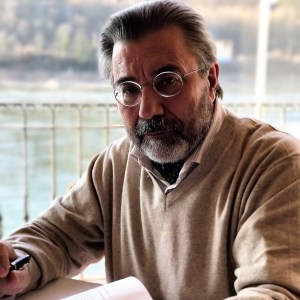
I asked Filippo, who lives in Germany, about his experience as an entrepreneurial author.
Lori Hetherington (LH): Your historical mystery Il Complotto Toscanini got a strong start. What motivated you to independently seek professional translators for English and German for your book?
Filippo Iannarone (FI): In my professional and entrepreneurial experiences before becoming an author, I always chose my own collaborators and thus I applied the same approach in this case. In particular, I wanted to be sure translations of my debut novel mirrored my narrative style, faithfully interpreted my vision of the historic period of the story, and represented the distinctive personal, temperamental, and psychological features of my characters.
LH: How did you go about finding qualified translators? Why, in your opinion, should authorpreneurs choose human translators over artificial intelligence options?
FI: The Italian Ministry of Culture has been promoting translation of literary texts for a number of years, in part by making available a list of qualified translators. Also the Italian Cultural Institute in London offered direction. From those starting points, I did my research, pursued contacts, and refined my selection. I was aware that the rapport between author and translator is fundamental and that the latter’s grasp of both the text and especially the author’s intent and inspiration is essential. My confidence in having selected the right translators for my project grew over the months of close collaboration as we compared notes and perspectives and reflected on solutions.
Honestly, I don’t know nor can I imagine how all this could be replaced by AI, even if it reaches a certain technical sophistication and complexity. It’s my hope that the human component is never jettisoned.
LH: What did you discover during the translation process that you, as an author and reader, didn’t know before? What was it like to read your book in a new language?
FI: It was fascinating to discover paragraph after paragraph, and chapter after chapter, the lexical and syntactical solutions proposed in the translation. The accents, tones, nuances, and peculiarities selected to best present the text and author to the reader rendered the result fulfilling and exciting. Also, thanks to the translation work and my subsequent in-depth reading of the English version, I’ve decided to revisit and revise some passages of the original text for a new edition in Italian.
LH: The timeline of your novel deals with two different timeframes: the 1930s and the post-war years. These were delicate periods in Italian history. What do you think non-Italian readers can learn about your country by reading your book, and other translated books in general?
FI: History can be told by what I like to call “memory stories” which are important within the context of the contemporary socio-cultural fabric and provide answers to fundamental human questions. Our past makes us what we are today and without it we cannot build our future. In an age of algorithm ethics, I prefer to hold as my guide the immortal words of Cicero, “historia vero testis temporum, lux veritatis, vita memoriae, magistra vitae, nuntia vetustatis”, which we can understand to mean “history is the witness of time, the light of truth, the lifeblood of memory, the teacher of life, the messenger of antiquity.” I believe this universal principle is valid in any culture, expressed in any language, immortal to all humanity and the values of humanism.
In any case, I find the two historical periods in my novel extremely interesting: the 1930s for its portrayal of the absolute evil of dictatorial regimes, restriction of freedom, repression of principles, values, and ideas; and the postwar revival period for the bravery to start over again, to repair the evils suffered, to build a better world with courage and a commitment to liberty.
LH: The Toscanini Conspiracy is the first in a series: now that it has been translated, what comes next?
FI: For me, writing is a continuous task, an unending craft, a duty. I have two more currently untranslated novels that continue the series begun by The Toscanini Conspiracy in which the same protagonists—Colonel Mari, his wife Iolanda and Lieutenant Barbetti—are engaged in complex investigations and complicated missions in Italy, Switzerland, Austria, France and Germany. As in the first book, these stories are inspired by true events which took place in the second half of the 1940s involving historical characters. I’m presently working on a fourth novel and have other stories ready and waiting for the right moment.
My immediate aim is to find a publisher that is a good fit for my books, while on a grander scale my end goal is for readers to find both pleasure and keys of hope for a better world in my stories.
LH: Thank you, Filippo, for this interview. Working with you on the translation of your first book was stimulating and I wish you all the best in your career.
The Toscanini Conspiracy
- Translated into English by Lori Hetherington
- Original title: Il complotto Toscanini
- Author: Filippo Iannarone
- Published in Italy by Piemme (2018)
- German title: Die Toscanini-Verschwörung
- Translated into German by Barbara Neeb and Katharina Schmidt
- English and German editions represented by Roberto Toso of the Cabrata UG Literary Agency
- More at filippoiannarone.com/en/home
As we await publication of The Toscanini Conspiracy, here are two nonfiction titles translated from Italian that provide background information about the historical figures and times:

The Letters of Arturo Toscanini
- Edited and translated from the Italian by Harvey Sachs
- 496 pages
- Publisher: Knopf (2002)
- ISBN 9780226733401
- Treat your bookshelf to a taste of Italy! Order a copy of the book here.

M: Son of the Century: A Novel
- by Antonio Scurati
- Translated from the Italian by Anne Milano Appel
- Original title: M. Il figlio del secolo
- 784 pages
- Publisher: Harper (2022)
- ISBN 9780062956118
- Treat your bookshelf to a taste of Italy! Order a copy of the book here.
Lori Hetherington holds a Bachelor of Arts degree from the University of California Berkeley and is a freelance Italian>English translator living in Florence Italy. Her early years as a translator were spent working on scientific texts while her primary efforts have more recently been with entrepreneurial authors of fiction and narrative nonfiction as well as ghostwriting memoir. She is a founding member of the Florence Literary Society and organizes and facilitates regular brainstorming sessions for writers at the British Institute in Florence.
More at lhetheringtontranslation.com

“Every translation is a journey, and translators are inveterate travelers in the marvelous world of words and emotions.” —Lori Hetherington

Italian Lit Month’s guest curator, Leah Janeczko, has been an Italian-to-English literary translator for over 25 years. From Chicago, she has lived in Milan since 1991. Follow her on social media @fromtheitalian and read more about her at leahjaneczko.com.
 Global Literature in Libraries Initiative
One thought on “#ItalianLitMonth n.42: An Interview with Italian ‘Authorpreneur’ Filippo Iannarone”