by Ruth Clarke
From Another World is primarily the story of Khaled, a child migrant who has decided to retrace his journey back home, away from a Europe that he fails to understand.
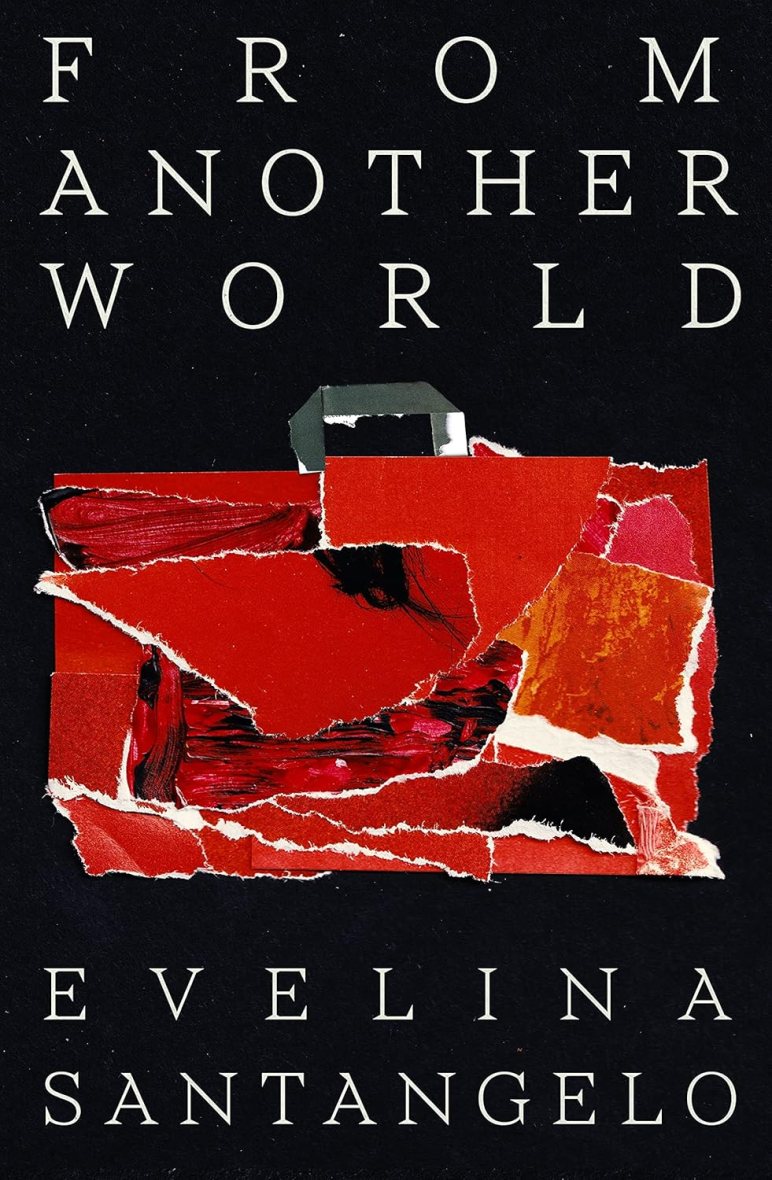
At the same time, it is the story of Karolina, a single mother in Brussels searching for her missing teenage son. She crosses paths with Khaled in a supermarket and buys him a bright red suitcase – an object that will accompany him wherever he goes and make him a target for people on both sides of the law.
The boy with the red suitcase unwittingly becomes the centre of a media storm about an influx of unaccompanied child migrants. Caught up in the hysteria simply by purchasing the suitcase, Karolina suffers vilification, the loss of her job and her best friend, as well as a police investigation on two fronts. Not only is she associated with ‘illegal migrants’, there are growing suspicions that her missing son might have been involved in far-right extremism.
Meanwhile, in the rural north of Italy, the curmudgeonly Orso finds himself with an unexpected houseguest and becoming the sole defender of the town’s Roma community. And in Palermo, Inspector Vitale is trying to piece all these things together.
The various strands of the story never fully overlap, but there is a very plausible butterfly effect between events in different parts of a troubled continent.
Before I started translating From Another World, I was unsure how to represent this fictional version of 2020: a future that, as I translated, was becoming the present, and by the time the book was published would be the past. Little did we know what the real 2020 had in store for Italy at the heart of the Covid-19 crisis, a turn of events that helped me to separate the real world from the world of the novel in my mind (though simultaneously inhabiting the two was a rather surreal experience). Yet the exploration of what might happen if immigration policies and media tactics were taken to extremes did not prove as far removed from reality as we might have expected, and in this, the novel has joined something of a trend, across the arts, for outrageous parody to become prophecy. For me, finishing work on the book came with the unusual hope that it would resonate less over time, but scenes from the recent riots in the UK could have been lifted directly from its pages. I am still saddened by how often a news story will remind me of these characters and their struggles.
The novel has much to say about the media and its role in manufacturing the public response to the migrant crisis. Khaled’s focus is on getting home. It doesn’t matter where that is geographically, what’s important is the complex but universal notion of home, which can be distilled down to the sources of Khaled’s nostalgia: family and familiarity. Translating this book in a London basement flat during lockdown, I was reassessing my own concept of home, and grateful to have a much easier route back to my own family once travel became possible again.
Khaled’s intentionally vague identity – reminding us that he could be any boy, of any age, from any country affected by the migrant crisis – highlights depersonalisation strategies used by the media to drive hysteria about an anonymous invading ‘mass’. In the first drafts of my translation I wanted to call these mysterious presences ‘ghost children’, until Evelina explained that they were quite the opposite, something more fearsome than ghosts. In “bambini viventi” she had invented the sort of nonsensical, derogatory phrase that might be coined by the tabloid press – and I could well imagine certain broadcasters referring to “boatloads of live children”.
Translation is often considered an act of ventriloquism, and, much like acting, it can be at its most challenging when the characters and voices you’re trying to inhabit embrace a world view that contradicts your own. The process of learning to speak or write like someone else always involves a lot of research and reading unexpected material, but this case – specifically looking into the treatment of children who are trafficked or coerced within Europe, researching true crimes and visiting far-right forums – meant confronting issues and ideologies that, as a society, and certainly within the media, we tend to look away from.
It’s fair to say that every translation project involves a questionable internet search history. My starting point for this one was the appendix to Da Un Altro Mondo where Evelina cites the references for her own research into right wing terror attacks and real-life groups, rallies and forums. I was extremely grateful for this short cut, but shocked to find myself plunged into a world I hadn’t realised existed.
Translating non-fictional accounts of traumatic events is often acknowledged and worked through as a form of ‘second-hand trauma’. Delving into a disturbing underworld in order to accurately recreate it in a fictional context is one step removed. Despite the very aim of writing being to affect the reader, we somehow expect to be immune ourselves; we forget that the fiction flowing through our bodies and onto the laptop screen can affect us just as deeply.
From Another World
- by Evelina Santangelo
- Translated from the Italian by Ruth Clarke
- Original title: Da un altro mondo (2019)
- 256 pages
- Publisher: Granta (2021)
- ISBN 10: 1783786663
- ISBN 13: 978-1783786664
- Treat your bookshelf to a taste of Italy! Order a copy here.
Reviews:
- The TLS
- The Irish Times
This book has been translated thanks to a contribution awarded by the Italian Ministry of Foreign Affairs and International Cooperation.
Ruth Clarke is a translator from Italian, French and Spanish. She has translated an eclectic range of work by authors from Benin to Venezuela. Ruth teaches on the MA in Translation Studies at Durham University and has been a mentor for the British Council’s Translation Fellowship. She promotes translation through New Spanish Books and Translate Swiss Books, and she is a founding member of The Starling Bureau, a collective of literary translators. In 2022/23 Ruth was Translator in Residence at New Writing North and Durham University.

More at www.thestarlingbureau.com
Follow Ruth on Twitter/X at @Ruth_etta and Instagram at @translationbyruth
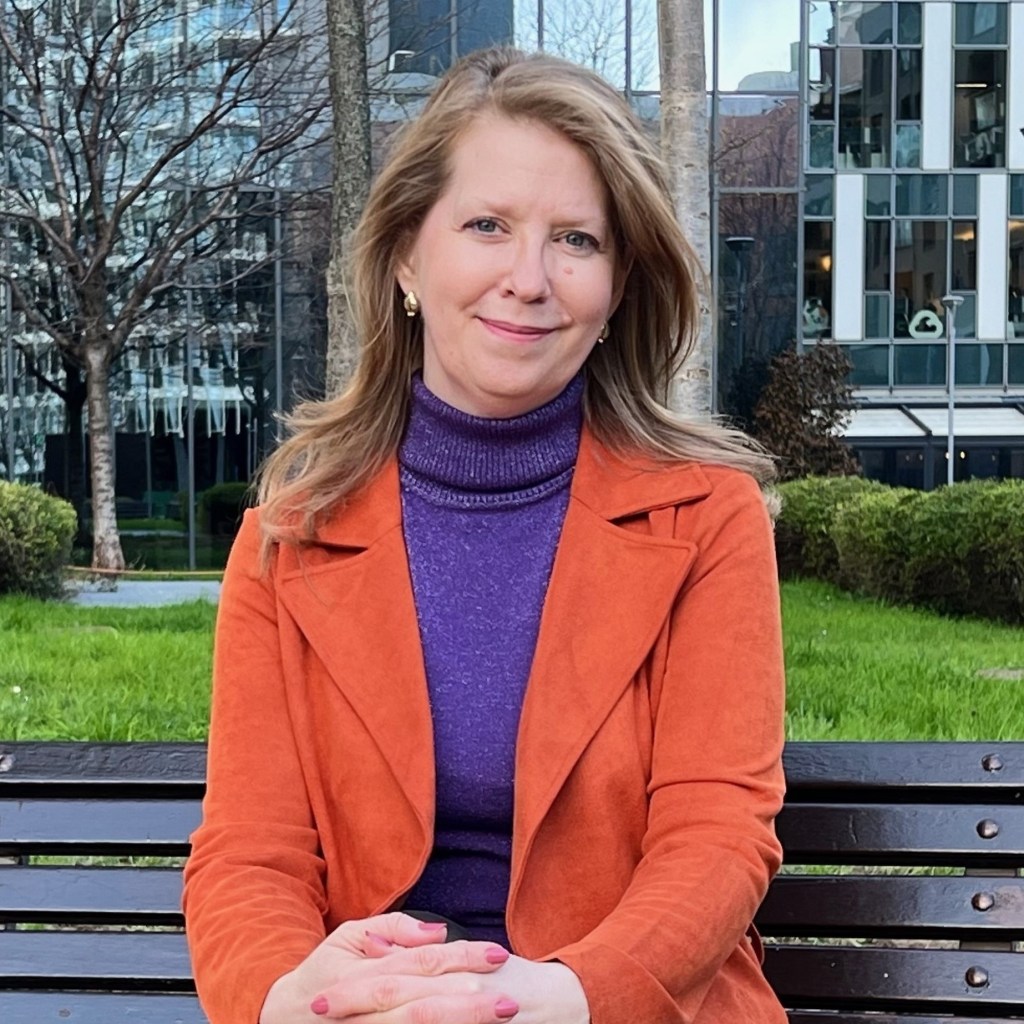
Italian Lit Month’s guest curator, Leah Janeczko, has been an Italian-to-English literary translator for over 25 years. From Chicago, she has lived in Milan since 1991. Follow her on social media @fromtheitalian and read more about her at leahjaneczko.com.
 Global Literature in Libraries Initiative
2 thoughts on “#ItalianLitMonth n.39: Translating Sensitive Content in From Another World by Evelina Santangelo”