
by Karen Whittle
Translating philosophy is no easy task. It is a balancing act in which the translator has to weigh up every single word in order to convey precisely what the author means to say. Take the title of one of the first books I translated: La Cura del Mondo (author, Elena Pulcini), which became Care of the World, to all appearances a literal translation, but actually the result of much mulling over the subtle differences between “taking care of” and “caring for”. Not only that, while conveying the precise meaning, the resulting text must nevertheless flow and be comprehensible to the end reader which is not always easy when dealing with such different mindsets and languages as Italian and English.
Translating philosophy is also a work of immense research, of hours spent poring over texts to find quotations and terminology, of consulting the author when in doubt over what it is exactly that they want to get across. It is very much my mantra that there must be a close working relationship between author and translator, to get into their head, to faithfully convey their thought.
So, where has my balancing act taken me? Here are some of the titles that I have translated over the past years:
First, the aforementioned Care of the World. Dating back to 2013, this book remains highly topical to this day, perhaps becoming ever more so as time goes by and the climate crisis becomes ever more pressing. Discussing the pathologies produced by globalization, the author advocates the metamorphosis of one – fear – to restore an awareness of vulnerability in the subject which can lead to moral action, and, therefore, care of the world.
A more recent translation – Sovereign Excess – exudes an imbalance right from its title. A work by philosopher Francescomaria Tedesco, it discusses the fragility of power, starting from the character of Barnardine, sentenced to death in Shakespeare’s Measure for Measure, whose refusal to accept the fact releases him from power’s grip and, to some extent, makes him sovereign. Indeed, for its existence, power requires recognition from its victims. (My translation of a second work by Tedesco, Mediterraneanism, will come out with Palgrave Macmillan in 2025.)
A beautiful book in every sense, Periagoge: Theory of Singularity as an Exercise of Transformation by Guido Cusinato, sets out to shed light on the conditions in which the meaning of existence can emerge. Describing us as “glowworms” hovering around neon advertising signs, it suggests that not only have we unlearnt to illuminate, we have also forgotten that our affective structure contains a precious source – the “fragment of truth” – for our existential orientation. In this case, in addition to my co-translator, Rie Shibuya, grateful thanks go to series editor Mike Chase for his philosophical insight and attention in sewing the translation together.
Friendship and the scholarly bond between the intellectual figures of Max Horkheimer and Friedrich Pollock are explored in For Nonconformism by Swiss scholar Nicola Emery. In an original take on the vicissitudes of the Frankfurt Institute for Social Research, drawing on texts and letters translated into English here for the first time, the book reconstructs the two friends and intellectuals’ “nonconformism” and search for an alternative life-form that led to the birth of the Frankfurt critical theory.
To cite the back matter of my current project, Italian thought is “alive and kicking”, arousing great interest abroad, particularly in the United States. Corrado Claverini’s Italian Thought: Four Philosophical Paradigms retraces the interpretations of four of the main interpreters of the Italian tradition of philosophical thought, Bertrando Spaventa, Giovanni Gentile, Eugenio Garin and Roberto Esposito, treading the tightrope between philosophy and history, while dealing with the highly topical matters of the danger of nationalism, as well as globalization and its challenges. In sum, the message the author wants to transmit is that “we need to keep hold of the respective national differences, not to build walls and barriers, but to promote intercultural dialogue and reaffirm a solid unity that can only come from culture”.

Care of the World: Fear, Responsibility and Justice in the Global Age
- by Elena Pulcini
- Translated from the Italian by Karen Whittle
- Original title: La Cura del Mondo (2009)
- 272 pages
- Publisher: Springer (2013)
- ISBN: 9789400744813
- Treat your bookshelf to a taste of Italy! Order the book here.
Elena Pulcini (1950–2021) was professor of social philosophy at the Università degli studi di Firenze.

Sovereign Excess, Legitimacy and Resistance
- by Francescomaria Tedesco
- Translated from the Italian by Karen Whittle
- Original title: Eccedenza sovrana (2012)
- 166 pages
- Publisher: Routledge (2019)
- ISBN: 9781138549852
- Treat your bookshelf to a taste of Italy! Order the book here.
Francescomaria Tedesco is professor of political philosophy at the Università di Camerino.

Periagoge: Theory of Singularity and Philosophy as an Exercise of Transformation
- by Guido Cusinato
- Translated from the Italian by Rie Shibuya and Karen Whittle
- Original title: Periagoge – Teoria della singolarità e filosofia come cura del desiderio (2nd ed., 2017)
- 369 pages
- Publisher: Brill (2023)
- ISBN: 9789004515635
- Treat your bookshelf to a taste of Italy! Order the book here.
Guido Cusinato is professor of philosophy at the Università degli studi di Verona.

For Nonconformism – Max Horkheimer and Friedrich Pollock: The Other Frankfurt School
- by Nicola Emery
- Translated from the Italian by Karen Whittle
- Original title: Per il non conformismo. Max Horkheimer e Friedrich Pollock: l’altra Scuola di Francoforte (2015)
- 264 pages
- Publisher: Haymarket (2023)
- ISBN: 9781642599978
- Treat your bookshelf to a taste of Italy! Order the book here.
Nicola Emery is former professor of philosophy and aesthetics at the Università della Svizzera italiana.
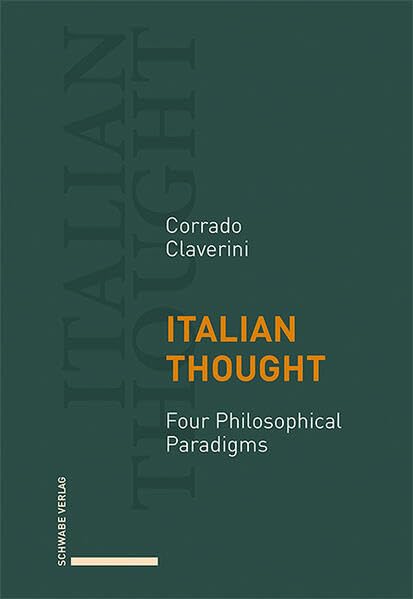
Italian Thought: Four Philosophical Paradigms
- by Corrado Claverini
- Translated from the Italian by Karen Whittle
- Original title: La tradizione filosofica italiana. Quattro paradigmi interpretativi (2021)
- 220 pages
- Publisher: Schwabe Verlag
- ISBN: 9783796548024
- Forthcoming: 13 January 2025
- Treat your bookshelf to a taste of Italy! Pre-order the book here.
Corrado Claverini is postdoctoral researcher of philosophy at the Università del Salento.
Born and bred in the north of England, Karen Whittle has lived in the centre of Italy since the late 1990s, translating philosophy for the past quarter century or so. She is a member of AITI (Italian Association of Translators and Interpreters) as a qualified literary translator of non-fiction in the language combination Italian>English. She is currently the chair of the Tuscan branch and representative of CoNTE, the National Commission of Literary Translators. See her website: www.whittletranslations.com
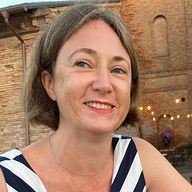

Italian Lit Month’s guest curator, Leah Janeczko, has been an Italian-to-English literary translator for over 25 years. From Chicago, she has lived in Milan since 1991. Follow her on social media @fromtheitalian and read more about her at leahjaneczko.com.
 Global Literature in Libraries Initiative
One thought on “#ItalianLitMonth n.36: Walking the Philosophical Tightrope”