by Jeanne Bonner
One of the most memorable scenes I’ve ever read about the Holocaust comes from a memoir by Giuliana Tedeschi that recounts the birth of a baby boy in a Nazi concentration camp who shortly after he was born was put “in a cardboard box in the cellar.” Tedeschi was born in Milan in 1914 and worked as a teacher, and the quote comes from her book There Is a Place on Earth, which was translated by Tim Parks and published by Pantheon in 1992. The scene is heartbreaking. And it’s one of a series of books originally written in Italian by women about the Holocaust.
There has been less of a historical focus in studies about World War II on the plight of Italian Jews compared to Jews from other European countries, due in part to the smaller population. But thousands of Italian Jews suffered the same fate as their counterparts elsewhere in Europe, and one of the best-known accounts of surviving the Holocaust came from Italian writer Primo Levi. What are less-known are accounts by women writing in Italian. Books by women survivors reflect that they had to contend with the same inhumane treatment by the Nazis facing men, as well as clandestine pregnancies, fear of sexual predation and separation from children.
Among the most illuminating are books by Tedeschi, Liana Millu and Edith Bruck. Luckily, some of their works have been translated into English.
As the Tedeschi work attests, one of the most intriguing and heart-wrenching topics covered by women authors writing about the Holocaust is the incidence of hidden pregnancies in concentration camps. Millu, who was born in Pisa in 1914, also wrote about a clandestine pregnancy at Birkenau, the women’s camp at Auschwitz. In her nonfiction book Smoke Over Birkenau, Millu recounts the story of women helping a fellow prisoner give birth and then hide the baby.
One woman tried to conceal the newborn child “next to his mother in the darkest corner of the bunk, then piled on blankets every which way to hide them both,” reads a line of the English translation by Lynne Sharon Schwartz, which was published by Northwestern University in 1998. While the number of babies born in concentration camps was low, these scenes give evidence that women sometimes had something extra to contend with.
Edith Bruck is considered by many critics the most prolific author of Holocaust narrative writing in Italian today. Yet she’s largely unknown in the US. Born in Hungary in 1931, Bruck settled in Italy after the war, and began writing in Italian. Her work Lost Bread was published in 2023 by Paul Dry Books in an English translation by Gabriella Romani and David Yanoff. While it’s only the third book of hers to be translated into English, Bruck is the author of nearly two dozen works of fiction, nonfiction and poetry, many of which touch on her experience of being deported at age 12 and surviving Auschwitz but losing both of her parents and a brother to the camps. In 2025, Paul Dry Books will publish my English translation of Bruck’s first short story collection, This Darkness Will Never End. It, too, touches on her experiences of deportation and survival and, as Bruck said in a bonus interview for Lost Bread, “there will never be enough writing about Auschwitz. One can never say it all, even with a hundred or a thousand books.” Bruck, who is 93, continues to write and bear witness; in a recent email to me, she said she was working on two new books.
This notion is especially true of works by women authors who in the past 30 years or so have published many accounts of their experiences because as scholar Sara Horowitz pointed out in the 1998 anthology Women in the Holocaust, works by women survivors are cited less frequently in scholarly studies and women’s experiences are rarely central to the presentation of a ‘typical’ Holocaust story.
Yet, these works are compelling if for no other reason than they cover atrocities that were often not experienced by male deportees, and they deserve more attention from the reading public.
As we await the release of This Darkness Will Never End, you can read my translations of Edith Bruck’s poems “Pretty Soon” and “There Were Eight of Us” in The Common and listen to my readings of several of Bruck’s poems on the Translators Aloud channel.
BOOKS MENTIONED
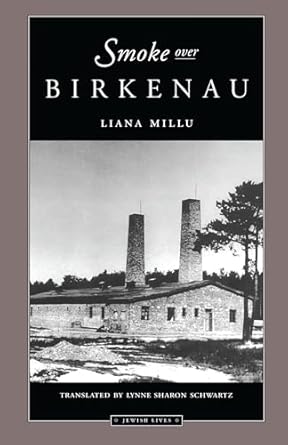
Smoke Over Birkenau
- by Liana Millu
- Translated from the Italian by Lynne Sharon Schwartz
- Original title: Il fumo di Birkenau (1947)
- 200 pages
- Publisher: Northwestern University Press (1998)
- ISBN 9780810115699
- Treat your bookshelf to a taste of Italy! Order a copy of the book here.
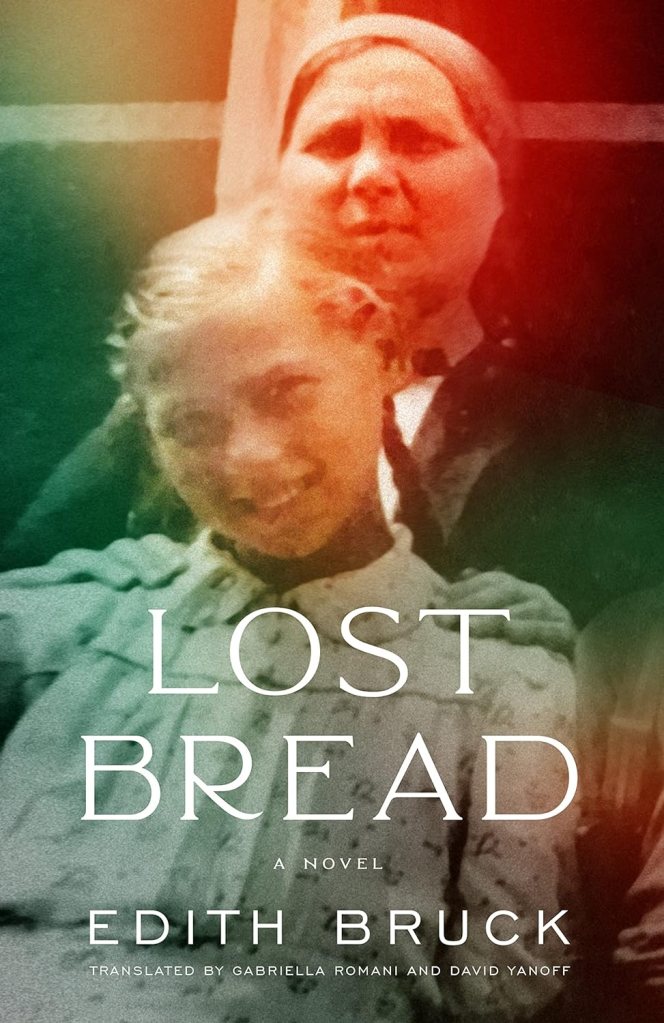
Lost Bread
- by Edith Bruck
- Translated from the Italian by Gabriella Romani and David Yanoff
- Original title: Il pane perduto (2021)
- 142 pages
- Publisher: Paul Dry Books (2023)
- ISBN 9781589881785
- Treat your bookshelf to a taste of Italy! Order a copy of the book here.

There Is a Place on Earth: A Woman in Birkenau
- by Giuliana Tedeschi
- Translated from the Italian by Tim Parks
- Original title: C’è un punto della terra… Una donna nel lager di Birkenau (1988)
- 224 pages
- Publisher: Lime Tree (1993)
- ISBN 978-0413457110
Jeanne Bonner is a writer, editor and literary translator. Her translation of Edith Bruck’s first short story collection, This Darkness Will Never End, will be published in 2025 by Paul Dry Books. She won an NEA literature grant in translation in 2022. A published essayist, she occasionally teaches writing at Wesleyan University in Connecticut. She is a former newspaper reporter and NPR station producer.
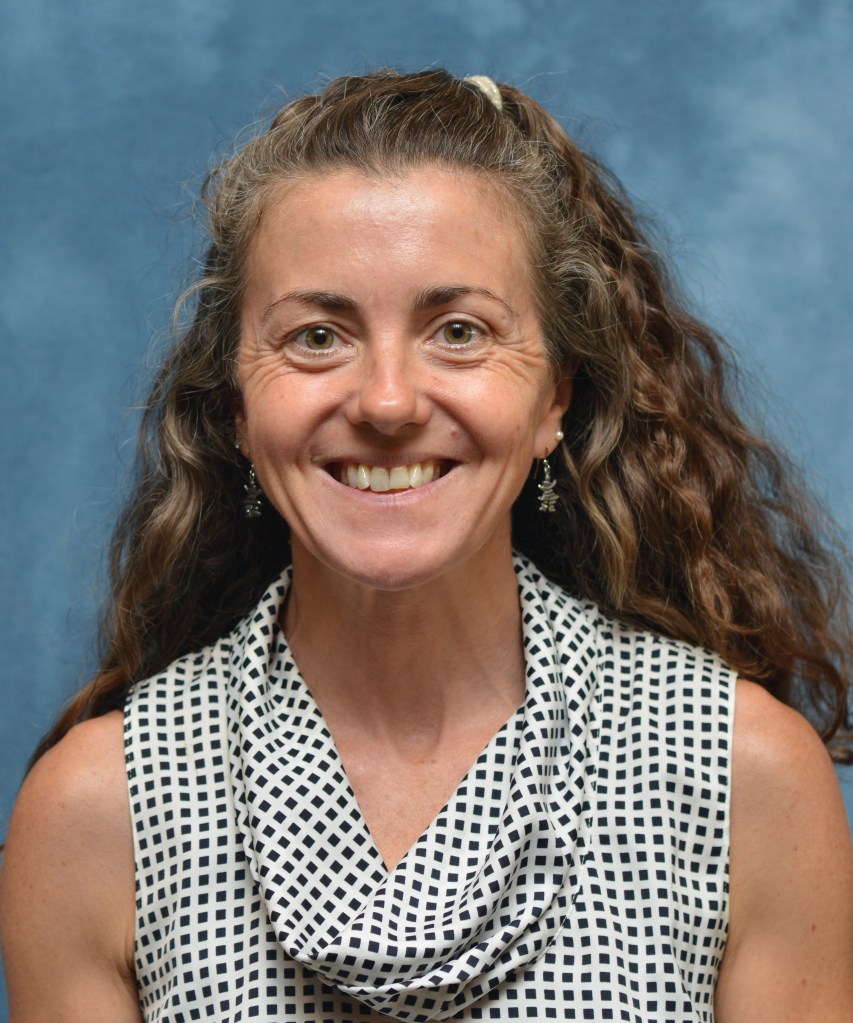
“When I think about translation of Italian works, I’m especially interested in women authors who have been overlooked. That alone would provide me with a certain urgency – to rectify by translating. But in the case of work by Edith Bruck, the author I’m translating, there is an urgency to bring more attention to it while this 93-year-old Holocaust survivor is still alive.” —Jeanne Bonner
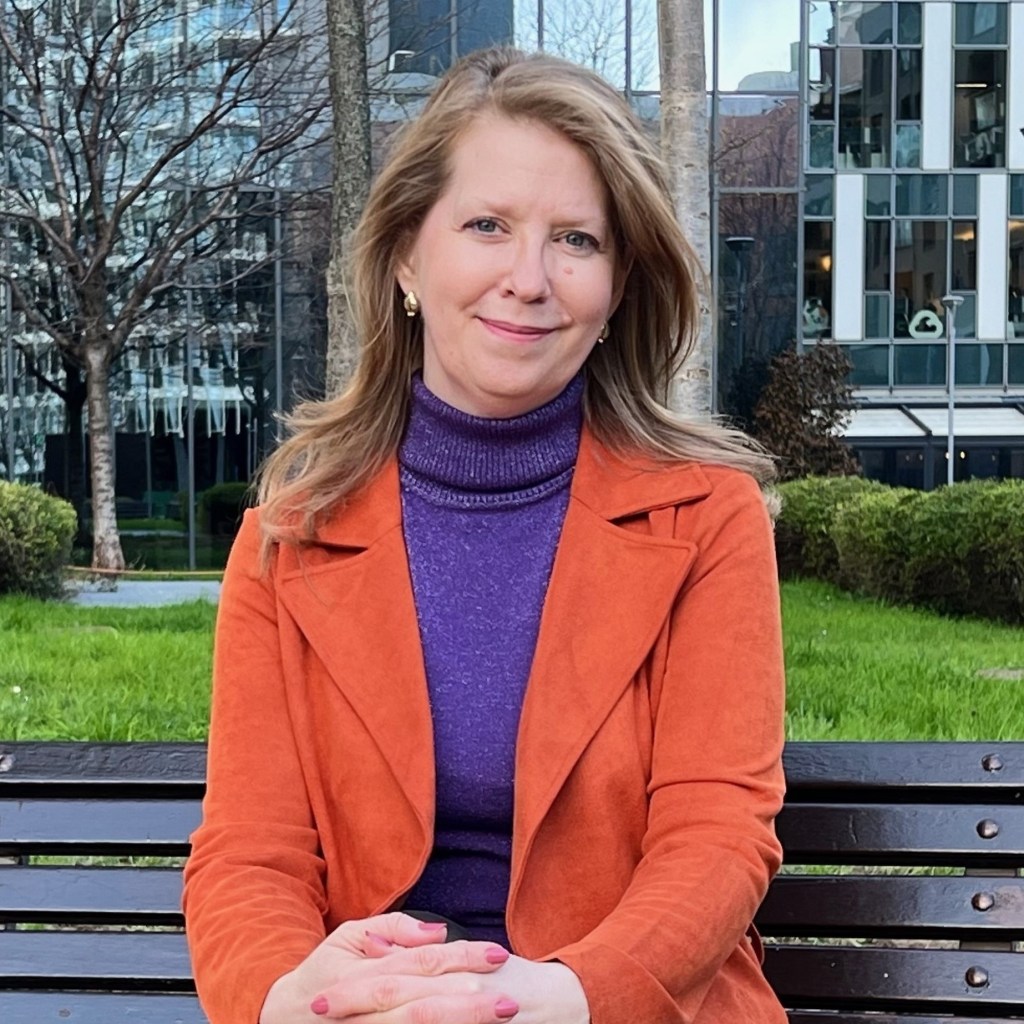
Italian Lit Month’s guest curator, Leah Janeczko, has been an Italian-to-English literary translator for over 25 years. From Chicago, she has lived in Milan since 1991. Follow her on social media @fromtheitalian and read more about her at leahjaneczko.com.
 Global Literature in Libraries Initiative
This is so true about women’s experiences being heard less often. Over the course of a long reading life, I have read quite a few Holocaust memoirs (including Levi) but it was not until 2016 that I read one by a woman. It is called Sister, Sister and it’s by Melbourne author Anna Rosner Blay, whose mother and aunt survived the Holocaust, Hela through the mercy of Oskar Schindler, and Janka just barely alive at the end of a death march from Auschwitz.
LikeLike
Thank you for reading this post and for your thoughtful reply! That title is new to me — thank you!
LikeLike