
by Karen Whittle
Putting on her second skin, in performances consisting of photography, drawing, sculpture, video and installation, Italian artist Zoè Gruni seeks to experience/experiment life through art. Her artistic research has always stemmed from the need to exorcise the fear of what is different. Her body, clothed/shielded/protected/filtered, acts as a catalyst to reach out to others, interacting with them in acts of anthropological and sociocultural investigation.
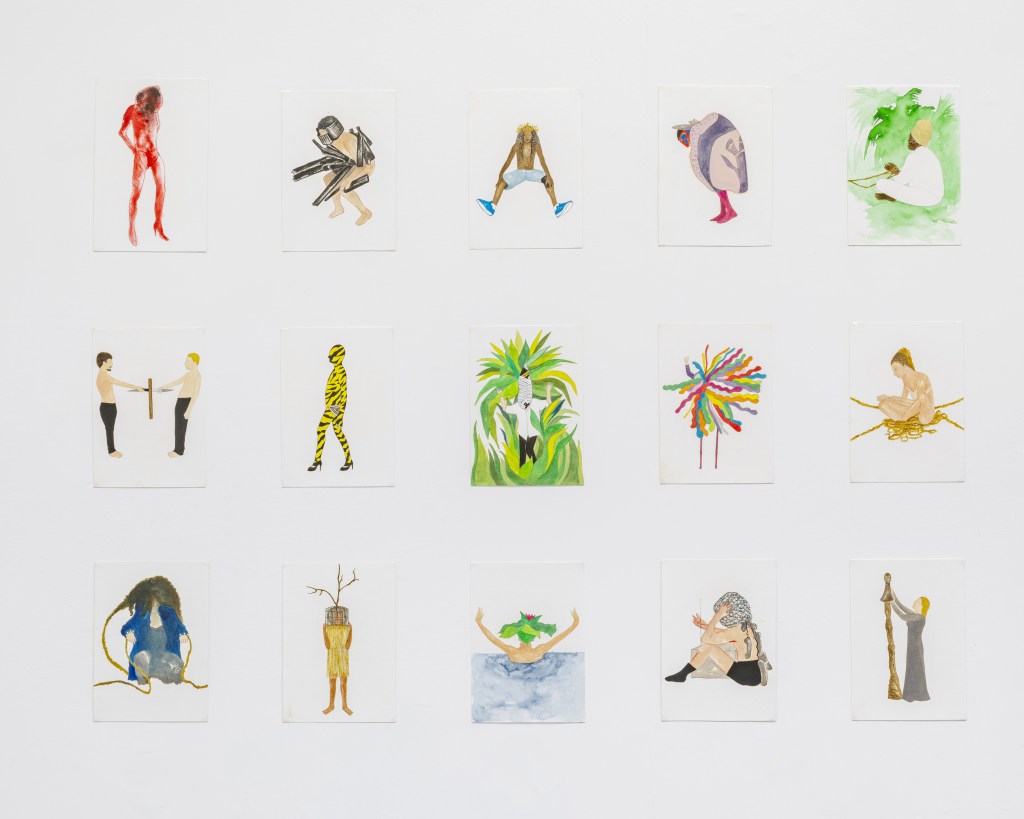
The book Segunda Pele takes us through Gruni’s “Brazilian Period”. In an experience/experiment that ended up lasting a decade, she became artist/mother/teacher. As a teacher, she took in budding artists from all backgrounds, in particular from the marginalized communities of the favelas. The “Grito e Raizes” street art project staged their cry (grito) of rage as they reclaimed their roots (raizes) in the squares, gardens and abandoned houses of Rio de Janeiro.
Gruni’s Brazilian Period played out between São Paulo and Rio de Janeiro, through people’s revolts, violent police repression, the murder of human rights activist Marielle Franco, and the consequent feminist and LGBTQIA+ community protests. Swept up by this wave and involved in the ensuing debate, Gruni began to question what role artists could play in raising public awareness on these topics.
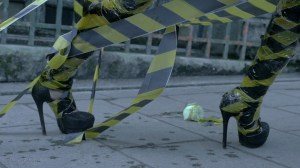
The artist’s own fragility-as-nomad led her to works on migration – La Merica, Taupe – and the continent-bridging boto rosa sculpture of the mythical seductive, pink-skinned dolphin. Her subsequent discovery of concepts such as anthropophagia – which gained artistic form in a carnival float graveyard – and religious syncretism went to further dislodge narrow-minded certainties on the visible reality.
The two-year research project at the EAV School of Visual Art in Rio de Janeiro which gave the book its name expanded Gruni’s individual work to a collective dimension. Comprising three parts – Memory, Recycling and Hybrid – it broached sensitive subjects, decolonization of thought, environmental issues, gender. Gruni became teacher/learner/friend. With her pupils she experienced/experimented intolerance, frustration and end elation.
I make people afraid and I am afraid. …
I cry and smile. …
Man and woman.
No one and someone. …
I’m more than one. I’m us.
Anis Yaguar
Segunda Pele
- by Zoè Gruni
- Translated from the Italian by Karen Whittle
- Original title: Segunda Pele (2023)
- 76 pages
- Publisher: Metilene (2023)
- EAN: 9791281348080
- Treat your bookshelf to a taste of Italy! Order the book here.
Interview with Zoè Gruni
Zoè Gruni is a visual artist from Pistoia in Tuscany. Born in 1982, she graduated in painting from the Academy of Fine Arts in Florence, beginning her artistic career in 2001. She has spent long periods in California and, most recently, in Brazil. Her multimedia works have been shown in exhibitions in Italy, Switzerland, France, Spain, the UK, Bulgaria, Belgium, Germany, Brazil and the United States. Her work is represented in Italy by Florentine Galleria Il Ponte and some of her works are part of private and museum collections. See her website: http://www.zoegruni.net.
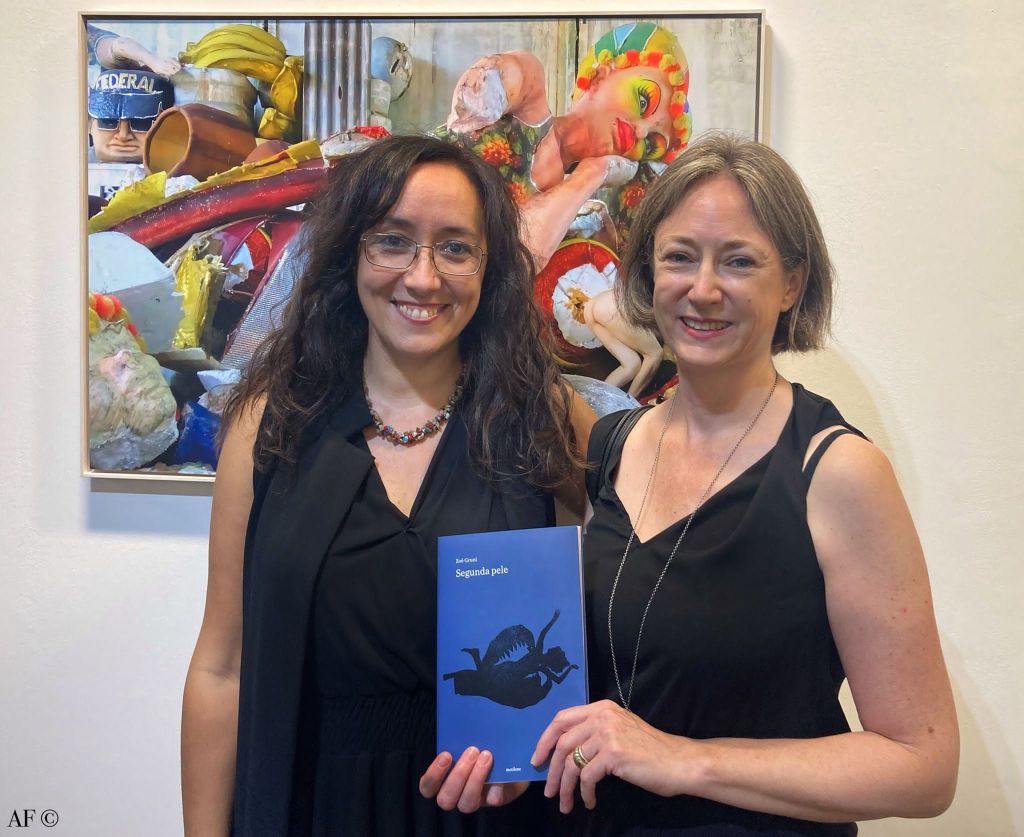
Born and bred in the north of England, Karen Whittle has lived in the centre of Italy since the late 1990s. Specializing in translating art, philosophy, the humanities and travel writing in the language combination Italian>English, she has been a qualified member of AITI (Italian Association of Translators and Interpreters) since 2013. She is currently the chair of the Tuscan branch of AITI and representative of CoNTE, the National Commission of Literary Translators. See her website: www.whittletranslations.com


Italian Lit Month’s guest curator, Leah Janeczko, has been an Italian-to-English literary translator for over 25 years. From Chicago, she has lived in Milan since 1991. Follow her on social media @fromtheitalian and read more about her at leahjaneczko.com.
 Global Literature in Libraries Initiative
One thought on “#ItalianLitMonth n.21: Exorcising the Fear of What Is Different: The Art Book Segunda Pele by Zoè Gruni”