
While growing up, did you enjoy search-and-find books like “Where’s Waldo?” (aka Where’s Wally?)? If yes, then you will love Where are the Chonchols?. The premise is the same as those classic children’s books: you’re presented with a complex scene, and the goal is to find specific people or objects within it. And like “Where’s Waldo?” it can be a bit challenging. Trying to pick out a particular person in a sea of people amidst chaos often takes time and careful concentration and definitely gets your brain in gear for adventure.
The book Where are the Chonchols? introduces readers to the Chonchol family. They travel to all the big festivals of Bangladesh – such as Pohela Phalgun, Nouka Baich and Nobanno Utshob to name a few. The book mainly features 12 detailed 2-page illustrated spreads of different festivals. Amidst the crowded scenes, readers are asked to scour the detailed illustrations to locate the lost characters and other objects.

Here’s a sneak peek inside the book. FYI, Puchki (literally meaning tiny) is the infant of the Chonchol family. Also, head wreaths are usually worn during Pohela Falgun. Can you find how many girls/ladies are wearing them?
Now, let’s get into the characters. Tuku, a 7 year old boy, is the main protagonist of this book. He is always the one who needs to find his forgetful family members and keep them together. The Chonchol family comprises of Tuku, along with his older brother Biko, his parents, his 2 sets of grandparents, maternal & paternal uncles and aunts and their spouses and child and their 2 pets. And there are also the other 5 different animals that are labelled as the Tagalongs. Each of these characters are found in every festival spread. Detailed attributes of each of the family members are found at the beginning of the book.
At the end of the book, a more comprehensive description of the 12 festivals of Bangladesh can be found to inform the reader.
Some notable features of the illustration style include:
⁃ Display of vibrant colours that brings out the liveliness of the festivities
⁃ Exaggerated facial expressions and body language, adding to the comedic and dramatic moments
⁃ Intricate details in the backgrounds, showcasing the different landscape and architecture of Bangladesh
⁃ Incorporation of Bengali cultural elements, such as traditional clothing and architecture, adding to the story’s authenticity and cultural richness.
⁃ Use of Bangla “onomatopoeia” words that phonetically imitate, resemble, or suggest the sound that they describe
We absolutely loved this Bangladeshi-festival-themed book which is not only educational and fun but it also takes us down memory lane with all the intricate details. The numerous famous Bangladeshi authors found in the Ekushey Boi Mela festival is like finding an Easter egg (hidden treasures buried within the illustrations, waiting to be unearthed by the keenest of observers) amongst the eye-boggling extras. Our personal favorite was the Boisabi, mostly because we think it was amusing to see the fun amongst the hilly landscape and also maybe because we never attended one ourselves. Our most challenging part of the book was looking for Lebu(the dog) in the festival of Jatio Brikkho Mela, which was a particular struggle for us.
Where are the Chonchols? inspires children and adults alike to open their minds to explore subjects more, to be aware of what’s going on around them and to see wonder in places that may not have occurred to them. It is also an interactive book for parents and their children to read and have fun together which we definitely did.
Title Information: Where are the Chonchols?
Author: Inshra Kishwar Sakhawat Russell
Illustrator: Syed Rashad Imam Tanmoy (or Tanmoy)
Date: 2022
ISBN: 978-1-946747-23-5
Publisher: Guba Publishing LLC
Language: English

About the Author:
Inshra Kishwar Sakhawat Russell is a content creator in illustration, design, photography and filmmaking, and content is children’s books, flashcards and posters, music videos, stop motion animations and short films. Her background is in fashion photography and advertising, which she has been doing for Bangladesh’s biggest fashion & retail brand Aarong, making their seasonal fashion photography and film campaigns. Currently, she works in creative visual communication through her company studio Inku across Dhaka and London.
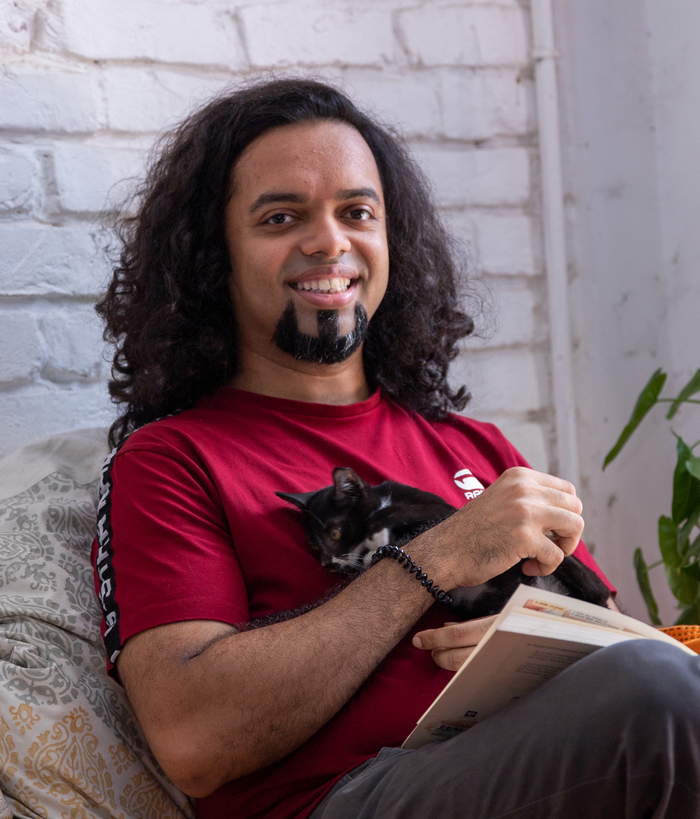
About the Illustrator:
Syed Rashad Imam Tanmoy (or Tanmoy) is an editorial cartoonist and comic book artist from Bangladesh. Currently he is working for Dhaka Tribune, one of the English dailies of the country. Alongside, he is also an associate editor for “Unmad”, the longest running South Asian satire magazine. He is also the founder of “Cartoon People Comics”. For more: www.facebook.com/tanmoycartoons (http://www.facebook.com/tanmoycartoons)
Reviewer(s) bio:
Muneeba Chowdhury and Taqbiir Al-Mu’izz Yousuf are a mother-son duo of voracious readers.
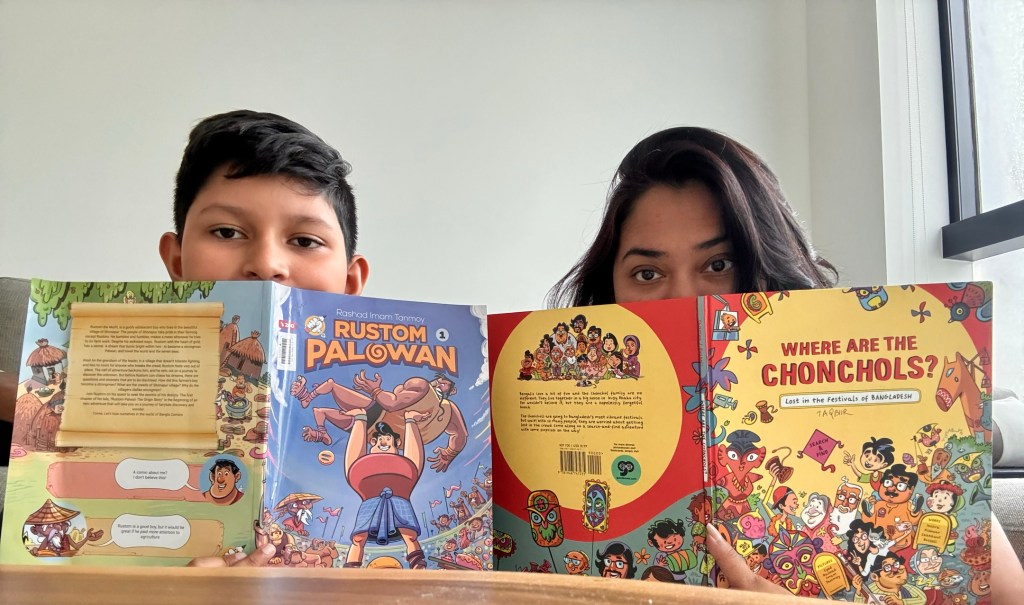
Other than being bibliophiles, Muneeba spends her time doing everything math-related (Actuary by profession, puzzle solver by avocation) & Taqbiir spends his time drawing comics and staying away from anything math-related (Mom is equally concerned and happy about this future 4th grader).


Curator of the #BangladeshiLitMonth at Global Literature in Libraries Initiative:

Erin Wilson currently works as a Teacher Librarian at International School Dhaka, Bangladesh and has worked internationally for 10 years in the following countries; China, India, and now Bangladesh. She has vast experience working in diverse cultures from Native American students to inner-city students and the international community. Her other passion lies in studying Asian dances. Currently she is focused on Odissi classical dance, and uses this dance vocabulary for storytelling in the library to actively engage children. It’s never boring in the library.
You can follow the school where she works, International School Dhaka Instagram: @ isd_library
Opinions expressed in posts on this site are the individual author’s and are not indicative of the views of Global Literature in Libraries Initiative.
 Global Literature in Libraries Initiative