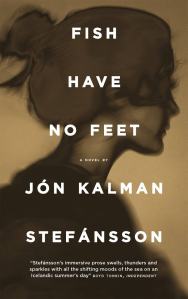
When I was invited to do these posts for this month I had a number of writers I wanted to highlight. Today’s post is a perfect example, few people write better about his homeland of Iceland than Jon Kalman Stefansson.
This is also the first time Jon Kalman Stefansson has tackled a more modern-day Iceland than before in his books. The earlier two books of his I reviewed were from his trilogy, Heaven and Hell, and The Sorrow of Angels. Like his earlier book, it also involves family but in a more personal way than before.
This is a journey into the heart of modern Iceland told through two generations of the same Icelandic family. The first is Ari in the present and his childhood years in the seventies and eighties. He has arrived home from Copenhagen and is remembering his childhood in the town of Keflavik, a city that is home to the huge US airbase NASKEF that was in use til 2005, This also had, like many airbases, a ripple effect seen through Ari memories of his childhood of trying to grow up in the Iceland of the day which wasn’t the one we know but on the way and being tinged by America. Then Nordfjordur is the setting for the second tale, a small fishing village clinging to the land, and the story of Ari’s grandparents is a tragic love story. This is juxtaposed with the modern marriage of their grandson. This is a story of a nation that has changed so much in two generations.
Now it is hard not to see Ari in some part as being a veiled version of the writer himself, there are points when he talks about the eighties and, growing up, the music he listened to, you feel him looking at his own collection of music and life. Like Ari, Jon Kalman spent time in Denmark and also grew up in Keflavik. He has managed to write a semi-biographical novel using Ari, but not as Ari, but more as a friend of his who is the narrator of the story, I was reminded of tv shows of recent years that use a detached voice as the narrator for the series, especially the recent Netflix series, Thirteen Reasons Why, which like this recounts past events in the present. Also Desperate Housewives where the whole series was told by a woman who was dead at the beginning of the book. Is this unnamed narrator an actual person or a lost friend of Ari that is long gone? In some ways, this is maybe his answer to the likes of Knausgaard, writing less of rooting in one’s own past and pouring it on the page for everyone to read. No, this is a carefully picked version of his history and how it feels to return home and remember what you like because the black side is there, but it isn’t what we remember. This is the sense of drawing what was best in some way in your childhood. This is more personnel than his earlier books, which means it is may be a more complicated read, but more accessible than you think.


Philip Roughton was born in the US in 1965 and now lives in Iceland. He is a scholar of Old Norse and medieval literature and an award-winning translator of modern Icelandic literature. He has translated works by numerous Icelandic writers, including the Nobel Prize-winning author, Halldór Laxness. His translation of The Islander: A Biography of Halldór Laxness by Halldór Guõmundsson was published by MacLehose Press in 2008.

 Global Literature in Libraries Initiative