
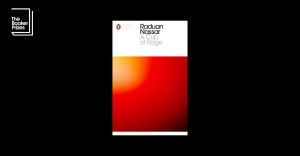
I now move to the first year of the Booker International Book Prize, as it is now called, starting with its current format. I have chosen a particular unique little book that happened to be translated by a publisher in his own right, Stefan Tobler. This powerful little book was a different book, a piece of modernist fiction.
This may be the oddest title on the First Man Booker international longlist in 2016 as it is hard to place. Is it a long short story, a short novella, or something else? This book is under fifty pages long. Just the week before the longlist was announced, I looked for this title in my local library system, but only found the other book Penguin had brought out by the Brazilian writer Raduan Nassar. He wrote the two books mentioned and worked as an editor in newspapers. Then in 1984 he gave up the writing, as he had become bored with it, to become a farmer. Now, it is strange he chose to be a farmer, as this is the setting for this most unusual story told in a classic stream of consciousness. It is told from the point of view of an older man as he awakens and starts his day making love to his younger wife. He then is sidetracked by some ants and other things in the house, leading to an argument between the two. The wife then heads out . Now that is it a lot to fit in in under fifty pages. I think this is one I will read and reread over the next few years, and I still wonder every time I do so..
I was already looking into reading Nassar, which means I felt he was a writer I would enjoy. Nick Lezzard also whetted my appetite in his review mentioning Thomas Bernhard, but for me, the only real connection to him was the fact that he, like Bernhard, isn’t very keen on a full stop. The whole story is like one long thought in the older man’s mind. No, I was reminded of the classic modernist piece like Joyce’s Ulysses, which, in the sex here, you can see in the later passages of Joyce’s piece. A relationship not working or problems reminded me of Woolf’s Mrs Dallowway, and of course, like both these works, the action is set over one day. Now, that isn’t to say this hasn’t a connection to other writers in Latin America. Of course, Lispector is a fellow Brazilian writer who uses modernist ticks in her writing. I was also reminded of one of my favourite Cuban writers and titles, Infante’s Three Trapped Tigers. This is set over a day and has a similar rhythmic feel to the prose. Now, that is enough praise. My main problem was, what is this? It is like a clip from a great novel or a long-lost short story from a great collection. I wanted more than this. As wonderful as it is, it is like going for a meal and leaving after a beautiful starter, if you know what I mean. Stefan’s piece in the Independent about meeting him is fascinating.
Format
Published
ISBN

Raduan Nassar is a Brazilian writer, son of Lebanese immigrants. He moved to São Paulo when he was a teenager and studied Law and Philosophy at one of the most important universities in Brazil, the University of São Paulo. In 1970, he wrote A Cup of Rage, published in 1978. His literature debut happened in 1975 when Ancient Tillage was released. The Brazilian cinema adapted both of his books. In 1997, Menina a Caminho, a book of short stories written during the 60’s and 70’s, was released, although Raduan stopped writing in 1984. There’s plenty of strength and lyricism in his literature style
Born in Belém, Brazil, Stefan Tobler is the publisher of And Other Stories and, whenever time permits, a translator from Portuguese and German. His translation of Arno Geiger’s The Old King in His Exile was shortlisted for both the Helen and Kurt Wolff Prize and Schlegel-Tieck Prize, and his other translations include the Oxford-Weidenfeld Translation Prize-shortlisted Água Viva by Clarice Lispector and the Man Booker International Prize finalist A Cup of Rage by Raduan Nassar.

This post is by Stuart Allen, the blogger behind the blog, Winstonsdad. Stuart is a lover of translated literature and world cinema. He started the #translationthurs hashtag on Twitter and his blog is rated the #1 translated literature blog in the world by Feedspot
 Global Literature in Libraries Initiative
It seems like more of a short story, and what I find frustrating about short stories is that I always want more, I want them turned into novels.
LikeLiked by 1 person