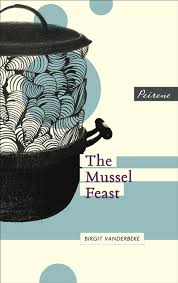
I move to 2014 and a book from the Independent Foreign Fiction Prize. It is also from a publisher I love dearly. Peirene Press was set up to publish great novellas from around Europe. As the original publisher, Meike, said, the books are like a two-hour film that can be sat and read in an evening. Every year, the books had a theme, and the theme in 2013 was turning points. The turning point in this book is the fall of the Berlin Wall.
So the mussel feast is set on one evening, a family sits down for a special mussels meal. There is a mother, son, and daughter. The story is being told by the daughter. All that is missing is the father. As the evening unfolds, we see why they are having this meal, as it is the father’s favourite meal. The mother isn’t keen on this meal but happily spends hours scrubbing the mussels to the point that her hands start bleeding. This family, now in the west, had managed to escape from East Germany. The family is a strange one; the mother is a teacher, a nervous women who seeks solace in playing Schubert on the piano. The father has grown up embarrassed of his origins as an illegitimate child. He make the family feel as he tries to mould them into an imagined image of them. The daughter is the most level-headed of the family. The son now gets a lot of dressing down and abuse from the father. So when they sit at 6.00 p.m. there is a eerie silence as the father should and always is there, the bowl of mussels is laying there, cooling there, and they are too afraid to eat them. The story is virtually poured out as the daughter, as she lets the history of the family and even the bowl the meal is cooked in that came with them from the East to West Germany pour out of her. Four hours later, a phone rings. What’s happened?
Now I love Peirene, well Meike’s choices. This is a classic choice. What is impressive is that it has taken 23 years for this book to reach us in English. This still has an impact, but at the time, it would have been electrifying and timely, yet again showing the importance of people like Meike who champion the smaller books from around Europe; even though it is late, we still get the glimpse behind the Iron Curtain.
The book itself, well, I know that this is one of those books with two levels. The first is to see it as a family story, a family in fear of a father and coping and surviving from East to West, but in some ways regretting things from the East, which may be an early example of nostalgia? .The other level is what is the father? Is he more than he seems? Is he a simple example of a broader figure in old East Germany? The Stasi man (or woman), given the way the family is all in fear. It is a more expansive view of what life was like in East Germany. Yes, the father seems like a repressive regime at times, making the whole family bow and bend to his will. Now style this is in the classic vein of central European writing that feels of being full-on comma after comma, giving an almost breathless feel to the narrative, and adding to the feel of the book, making you feel the tension at the table. The shadow of this father falls off the page over you as the reader. To the point you worry is he coming back?
Writer Brigit Vanderbeke:
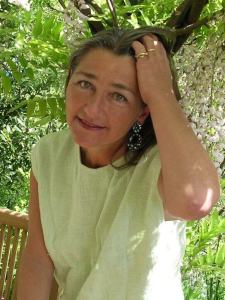
One of Germany’s most successful authors, Birgit Vanderbeke (1956 – 2021) was born in Dahme, East Germany. When she was six her family fled to the West and she grew up in Frankfurt. She wrote twenty-one novels and won five prestigious literary awards, including the Ingeborg Bachmann Prize and the Kranichstein Literary Prize.
Translator Jamie Bulloch:

Jamie Bulloch is a historian who has been working as a professional translator from German since 2001. His most recent works include Paulus Hochgatter’s The Sweetness of Life and Ruth Maier’s Diary and the translation of Portrait of the Mother as a Young Woman by F. C. Delius. Jamie Bulloch lives in London.
#TranslationThurs guest curator:

This post is by Stuart Allen, the blogger behind the blog, Winstonsdad. Stuart is a lover of translated literature and world cinema. He started the #translationthurs hashtag on Twitter and his blog is rated the #1 translated literature blog in the world by Feedspot
 Global Literature in Libraries Initiative
Sad that she died so young.
LikeLike