Meghry Vasken Nazarian here.
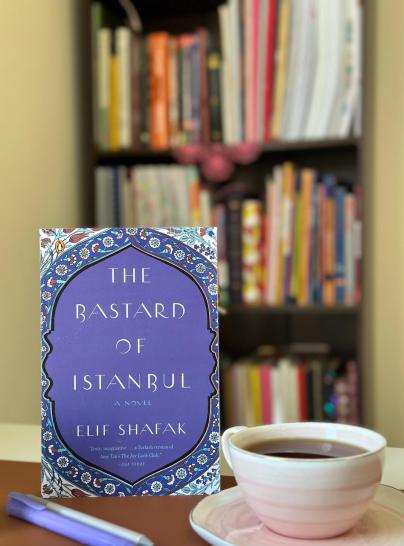
The Bastard Of Istanbul
Author: Elif Shafak Publication Language: English Published by: Penguin Books Publication Year: 2007 (originally published 2006 in English) Translated from: Turkish to English by the author (and translated to 19 languages including Armenian) Translated Title: Baba ve Piç Theatre Adaptation: Italy ISBN: 9780143112716 Literary Award: Orange Prize (2008). Bought a copy of the book. Book photos taken by me. Book quotes and layout by Canva.
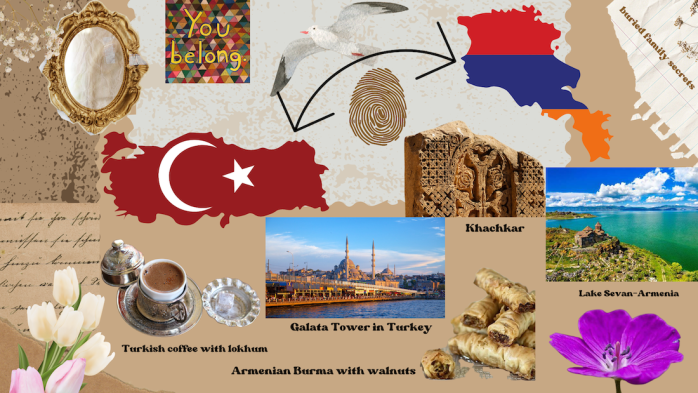
The Bastard of Istanbul is a powerful, captivating, multi-layered novel that brings together two far-flung families in a story of love, lost identity, and redemption. This work delves into buried family secrets, political and cultural identity complexities, social acceptance, and historical narratives, bridging the gaps between the Armenian and Turkish communities. A narrative that triggered my feelings and raised so many difficult questions about cultural belonging, rooted and yet dominant epistemologies.
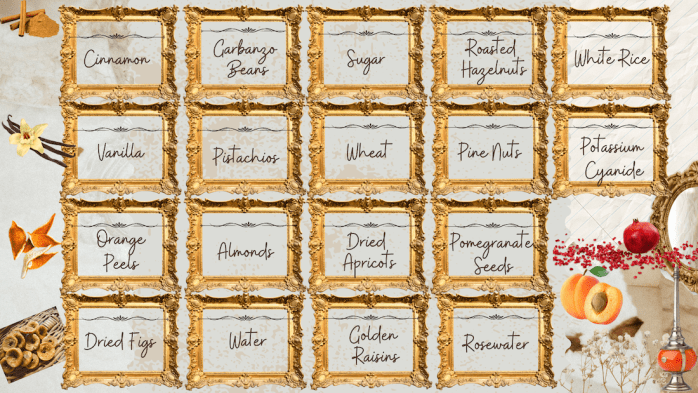
Opening the book and reading the novel felt like smelling several beautiful scents such as cinnamon, vanilla, rosewater. I found myself relating to the unique chapter titles of this novel. The amalgamation of several elements such as pomegranate seeds, almonds, dried apricots, and golden raisins, moved me as an Armenian reader. One of the reasons for this is that the pomegranate is seen as a symbol of fertility, abundance, and prosperity. It is also a symbol of the Armenian people and their history, with its deep red color representing the blood of their ancestors who died in the Armenian Genocide in 1915.
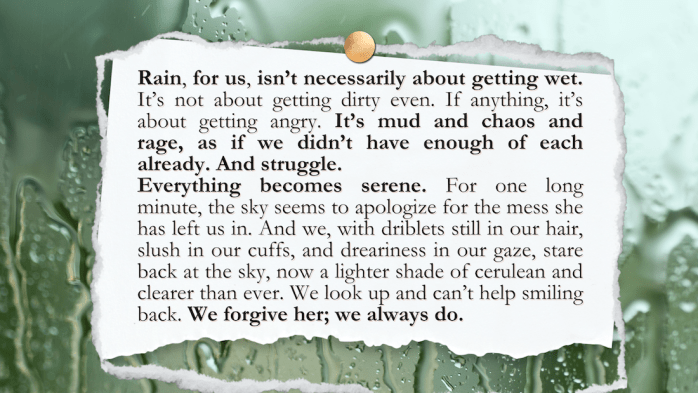
Elif’s beautiful description of the sky resembles a person whom we forgive after having enough of struggle, anger, hatred, or rage. This genuine simile reminds me of the literary works of the renowned Syrian Poet Nizar Kabbani. Similar to Elif’s simile, Nizar often portrays life and beauty in his poetry. It is evident that nature and rain deeply influence Elif’s views on love, belonging, identity, marriage, and women’s rights.
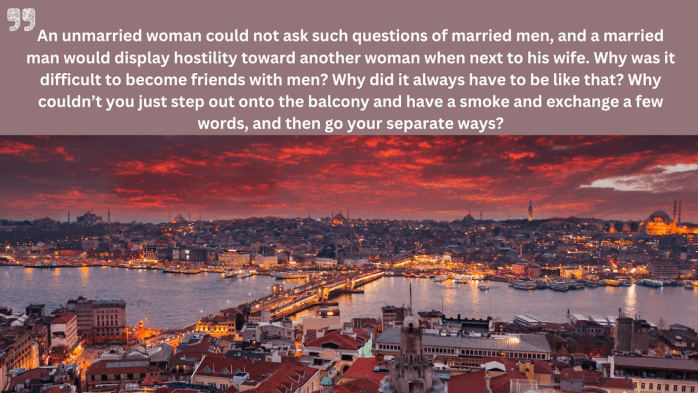
It intrigues me that the author has put politics into her writing on the belief that she can make a difference and lead to change. By turning the pages, I noticed that she likes to ask controversial and gender-related questions. I think she believes that it’s the writer’s job to ask difficult questions to see things closely and from a critical perspective.
Reading Elif’s biography was uplifting. She ultimately refuses to belong to a collectivistic identity or a tribe. She is rational and critical of the inequalities that are rooted in society.
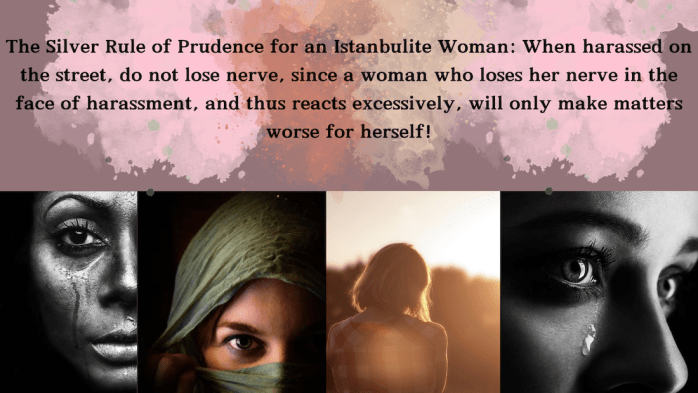
Through the eyes of an Armenian, the different colored rules of prudence of Istanbulite women were quite similar to most Armenian women. We were raised and told to carefully care about the unwritten rules of conservative women. We were told not to lose our nerves in the face of harassment and instead keep those morally unacceptable reactions in our hearts. Just inside…
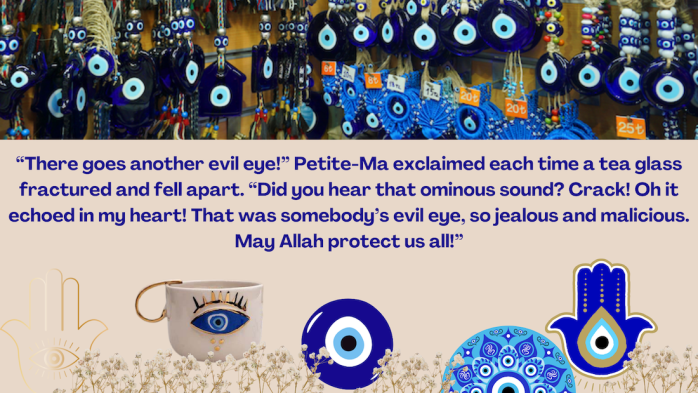
The author kept surprising me with her detailed portrayal of similar affinities between the Armenians and Turks. Historically, there were cultural exchanges between the Armenians and Turks. Living side by side, they took each other’s beliefs, food, language, and folklore. The tangled history between these two old nations made them have shared values, beliefs, culture, and even stereotypical approaches to life.
Regardless of this cultural partnership, Armenians today ask for the recognition of their loss and inherited pain. They wholeheartedly demand the recognition of their past.
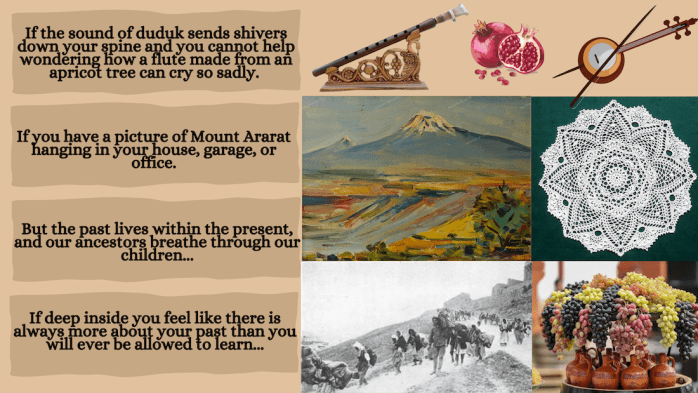
This is the first Turkish novel I have read that addresses the Armenian Genocide powerfully. The vibrant language of the author and particularly the Armenian words such as odar (stranger), Lorke (traditional Armenian dance), Mount Ararat (one of the most recognizeable symbols of Armenians) , Martiros Saryan (Armenian painter), duduk (apricot-made wind instrument), Amot! (shame in English), Haydeh! (yalla in Arabic) used by the author resonated with me so deeply and stayed with me long after finishing the book. With these words, Elif awakened Armenia in each reader’s soul.
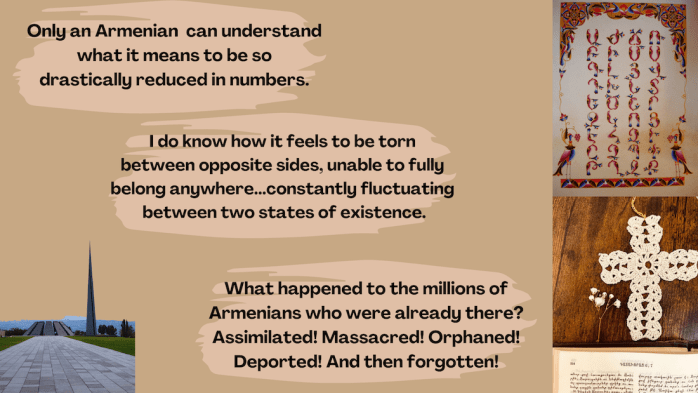
I was profoundly moved by Elif’s strong belief in inherited pain. This belief mirrored her characters’ pain, sense of injustice, sorrow, loss, and demand the recognition of the past. I found myself relating to the characters and their expressions in a way that felt incredibly personal.
This gripping novel is a beautiful treasure of diversity, solidarity, identity, and one’s belonging. This book left a lasting imprint on my personal and political thoughts as an Armenian.
In the end, I think that the past is never finished and some parts of it are untold. The past is within the present. Yet, the present is never ours…
 About the Author:
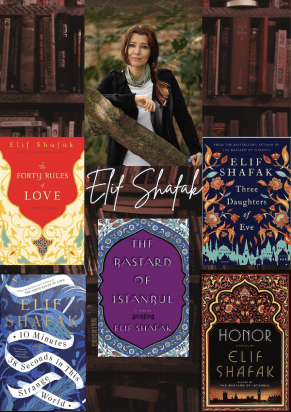
Elif Shafak is an award-winning novelist and the most widely read female writer in Turkey. She writes in Turkish and English, and has published 19 books. She is best known for her novels, which include The Bastard of Istanbul, The Forty Rules of Love, Three Daughters of Eve and 10 Minutes and 38 Seconds in This Strange World.
Her works have been translated to 55 languages and have been nominated for many literary awards. She has been described as “Turkey’s leading female novelist”, with many of her works having been bestsellers in Turkey and internationally. Here is an Interview with the Author you can find on Youtube.
Nazlan Ertan has done a feature of Elif Shafak here for GLLI, a review of Elif Shafak’s The Forty Rules Of Love had been written by Nuri Al-Khalaf here, as well as a wondrous GLLI curation of Turkish Literature by Karen Van Drie can be found here. Dr. Myra has also done a GatheringBooks review of The Bastard Of Istanbul which you can find here.
 About the Guest Contributor for #UAEReads:
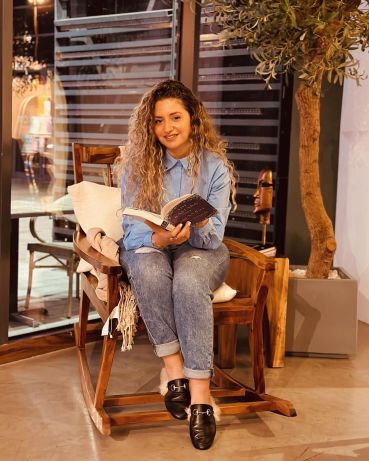
Dr. Meghry Vasken Nazarian is an English language teacher and a published educator with more than 10 years of teaching experience. She was a recipient of a graduate fellowship to pursue her PhD studies at UAE University. She gained her 4-year Ph.D. in Leadership & Policy Studies in Education, at the College of Education (CEDU), UAE University. She completed her 2-year Master’s degree in Teaching English for Foreign Language Learners (TEFL) at Aleppo University, Syria. She worked as an assistant to the department chair for Foundations of Education (FOED), UAE University for 6 months. She has delivered several academic workshops for undergraduate and Master students and acted as a panellist for many interdisciplinary events held in CEDU. Meghry has interests in studies related to organizational behaviour, cultural intelligence, and cultural leadership. She actively participated in National and International conferences such as IGSW in Nanyang Technological University in Singapore, SSHSRC in Sorbonne University in Abu Dhabi, WELS in Switzerland, MSERA (online) in Little Rock, USA, ALLT 2023 Zayed University, ECER 2023 in Glasgow, Scotland. Meghry loves reading diverse books and picture books and she is an active member in GatheringReaders book club since 2021. She published her work internationally in peer-reviewed SCOPUS-indexed journals and books. She shares her works and achievements on her ORCID platform.


#UAEReads strives to be reflective of the diverse demographic population that makes up the country of the United Arab Emirates (see Global Media Insight source of demographics as of 2024). Hence, we will be featuring literature coming from the major nationalities comprising the entire country: Emiratis, Pakistanis, Indians, Filipinos, Egyptians – and other nationalities including people coming from Turkey (with Other nationalities making up 38.55% of the country’s population as can be seen in the image above) who have made UAE their home.
About the Guest Editor/Curator for March 2024 [#UAEReads]:
 Myra Garces-Bacsal has served as a teacher educator for 15 years and has led several research projects on reading and social emotional learning, diverse picturebooks and teacher practices, psychology of high creatives and exceptional people, culturally responsive and inclusive education. She is a quintessential lover and creator of booklists (see her Social and Emotional Learning bookshelf here and other publications below). Myra serves as the Assistant Dean for Research and Graduate Studies with the College of Education, UAE University. She is a self-proclaimed nerd who lives and breathes books and enjoys organizing events and festivals where fellow nerds converge and attempt to joyfully change the world.
Publications on booklists:
Garces-Bacsal, R. M., Alhosani, N. M., Elhoweris, H., Tupas, R. (2023). A diverse social and emotional learning booklist for gifted learners and advanced readers. Roeper Review, 45(1), 25-36. https://doi.org/10.1080/02783193.2022.2145397
Garces-Bacsal, R. M., Alhosani, N. M., Elhoweris, H., Al Ghufli, H. T., AlOwais, N. M., Baja, E. S., & Tupas, R. (2022). Using diverse picturebooks for inclusive practices and transformative pedagogies. In M. Efstratopoulou (Ed.), Rethinking Inclusion and Transformation in Special Education (pp. 72-92). IGI Global. https://doi.org/10.4018/978-1-6684-4680-5.ch005
Garces-Bacsal, R. M. (2021). Of grit and gumption, sass and verve: What gifted students can learn from multicultural picture book biographies. In S. R. Smith’s Handbook of giftedness and talent development in Australasian Pacific (pp. 431-453). Singapore: Springer International Handbooks of Education. https://link.springer.com/referenceworkentry/10.1007/978-981-13-3041-4_18
Garces-Bacsal, R. M. (2020). Diverse books for diverse children: Building an early childhood diverse booklist for social and emotional learning. Journal of Early Childhood Literacy, 22(1), 66-95. https://doi.org/10.1177/1468798420901856
 Global Literature in Libraries Initiative
3 thoughts on “#UAEReads: An Armenian-Syrian Reader’s Musings on Elif Shafak’s “The Bastard Of Istanbul””