Fajer M. Bin Rashed here.
When you finish a book, where does the longing go? I often feel guilty of getting attached to book characters. That is, characters from books I fall in love with. I see myself longing to read more about their experiences. I long for moments where (especially) round characters exemplify their depth, fluidity, and complexity. Yet, I dread seeing how their stories end. I dread bidding them farewell.

Mama Hissa’s Mice
Author: Saud Alsanousi Publication Language: Arabic translated into English Translator: Sawad Hussain Published by: Amazon Crossing Publication Year: 2019 (originally published 2015 in Arabic) Original Title: فئران أمي حصة ISBN: 9781542042154 (ISBN10: 1542042151) Bought a copy of the book.
One of the experiences that I still vividly remember is crying after finishing Saud Al Sanousi’s Mama Hissa’s Mice. The novel was initially published in Arabic, but readers of English can pick up its translated version in regional bookstores, like Magrudy’s and Kinokuniya in the UAE. The novel explores day-to-day familial and friendship experiences within the context of Kuwait in the 1980’s but extends to a fictional account of future Kuwait. While I am not going to delve into the details of the story, I want to note Al Sanousi’s intricate crafting of a plot that, albeit largely portrayed as dystopian, exudes a sense of a nostalgic past, relevant present, and a scary future.

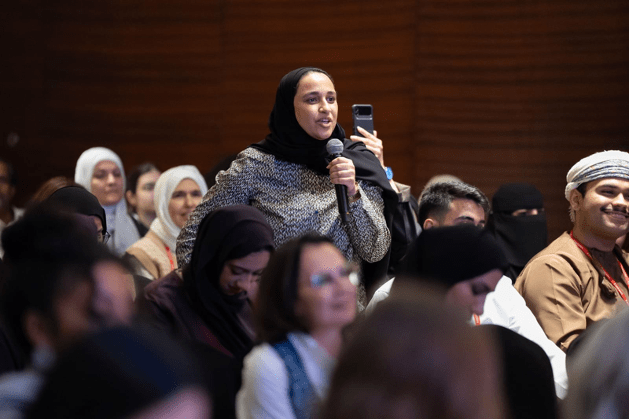
Saud Al Sanousi was a guest speaker at Emirates Literature Festival (ELF) this year, held at the InterContinental Hotel Festival City from 31 January – 6 February 2024. At the festival, Al Sanousi delivered a keynote, presented a talk, and participated in conversations with other writers. In the Q&A section of his talk about his latest Arabic book series أسفار مدينة الطين [ Translated to Travels of the City of Clay], I had the opportunity to ask him a question, similar to the one with which I prefaced this post:
When you finish writing a book, do you miss the characters?
I have to mention that I first shamelessly shared, in a room packed with attendees, that I cried saying goodbye to the characters in Mama Hissa’s Mice, and that it took me a while for this painful longing to go away. Al Sanousi, in his answer to my question, shared that it is in fact harder for authors to forget about their characters. In the case of his writing, he spends on average around two to three years crafting the world of these characters. He also shared that writing the death of Mama Hissa particularly, a character whom I personally deem as pivotally symbolic in the novel, was the hardest in his experience of writing Mama Hissa’s Mice.

He finally concluded his answer to my question saying,
“We feel for our characters many times more than a reader might feel because we live with them for years.”
If anything, his answer stayed with me. It made me think about authors in a light different to perceiving them as detached birthers of their characters.
Whether I feel empty, sad, or giddy with happiness after finishing a book, a book that reaches out to me in such a way is always a book that stays with me long after I turn the last page. For me, one of those books was Mama Hissa’s Mice, and I know I will always see reflections of Mama Hissa echoed in my life – turning a corner, enjoying dates and Arabic coffee, or talking in her recognizable way.
About the Author:
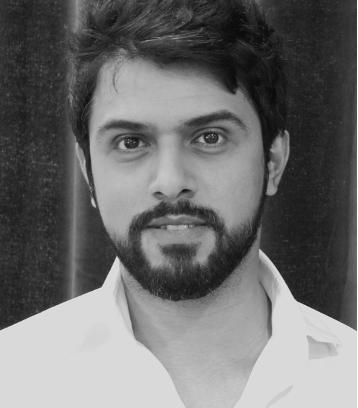 Saud Al Sanousi is a Kuwaiti novelist who has published a number of novels, one which is The Bamboo Stalk, which won the State Encouragement Award in Kuwait in 2012 and the International Prize for Arabic Fiction (Arabic Booker Award) in 2013. In addition to English, The Bamboo Stalk was translated into Italian, Persian, Turkish, Chinese, Korean, Romanian, Kurdish, Macedonian, Filipino, Somali, Croatian, Malayalam and Indonesian, making his novel internationally available. Like The Bamboo Stalk, Mama Hissa’s Mice was translated into English. In addition to writing novels, Al Sanousi serves as a journalist for a notable Kuwaiti local newspaper named Al Qabas.
About the Guest Contributor for #UAEReads: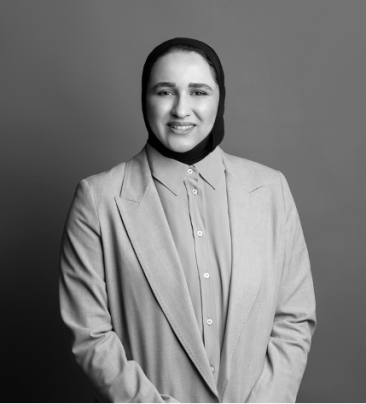
Fajer M. Bin Rashed is an avid reader and listener of books. One of the earliest childhood memories she has is of going to a bookstore with her mother and siblings in Kuwait. Fajer has a 13-year experience teaching English as a second language at the tertiary level in Kuwait. Her previous teaching posts include Australian University (formerly known as Australian College of Kuwait), Gulf University for Science and Technology (GUST), Arab Open University (AOU), and The Public Authority for Applied Education and Training (PAAET). She has a bachelor’s degree in English Language and Literature and a master’s degree in Comparative Literature and Cultural Studies from Kuwait University and currently serves as a PhD candidate at United Arab Emirates University, specialized in Language and Literacy Studies. She is a published researcher and is an active reviewer for a multi- and interdisciplinary peer-reviewed journal based on her expertise. Her research interests include (early) literacy education, language acquisition, language teacher and learner identity, bilingualism, multiculturalism, and social-emotional learning (SEL) in education.


#UAEReads strives to be reflective of the diverse demographic population that makes up the country of the United Arab Emirates (see Global Media Insight source of demographics as of 2024). Hence, we will be featuring literature coming from the major nationalities comprising the entire country: Emiratis, Pakistanis, Indians, Filipinos, Egyptians – and other nationalities including people coming from Turkey (with Other nationalities making up 38.55% of the country’s population as can be seen in the image above) who have made UAE their home.
About the Guest Editor/Curator for March 2024 [#UAEReads]:
 Myra Garces-Bacsal has served as a teacher educator for 15 years and has led several research projects on reading and social emotional learning, diverse picturebooks and teacher practices, psychology of high creatives and exceptional people, culturally responsive and inclusive education. She is a quintessential lover and creator of booklists (see her Social and Emotional Learning bookshelf here and other publications below). Myra serves as the Assistant Dean for Research and Graduate Studies with the College of Education, UAE University. She is a self-proclaimed nerd who lives and breathes books and enjoys organizing events and festivals where fellow nerds converge and attempt to joyfully change the world.
Publications on booklists:
Garces-Bacsal, R. M., Alhosani, N. M., Elhoweris, H., Tupas, R. (2023). A diverse social and emotional learning booklist for gifted learners and advanced readers. Roeper Review, 45(1), 25-36. https://doi.org/10.1080/02783193.2022.2145397
Garces-Bacsal, R. M., Alhosani, N. M., Elhoweris, H., Al Ghufli, H. T., AlOwais, N. M., Baja, E. S., & Tupas, R. (2022). Using diverse picturebooks for inclusive practices and transformative pedagogies. In M. Efstratopoulou (Ed.), Rethinking Inclusion and Transformation in Special Education (pp. 72-92). IGI Global. https://doi.org/10.4018/978-1-6684-4680-5.ch005
Garces-Bacsal, R. M. (2021). Of grit and gumption, sass and verve: What gifted students can learn from multicultural picture book biographies. In S. R. Smith’s Handbook of giftedness and talent development in Australasian Pacific (pp. 431-453). Singapore: Springer International Handbooks of Education. https://link.springer.com/referenceworkentry/10.1007/978-981-13-3041-4_18
Garces-Bacsal, R. M. (2020). Diverse books for diverse children: Building an early childhood diverse booklist for social and emotional learning. Journal of Early Childhood Literacy, 22(1), 66-95. https://doi.org/10.1177/1468798420901856
 Global Literature in Libraries Initiative
3 thoughts on “#UAEReads: Feeling Empty after Finishing a Good Book – A Saud Al Sanousi Special”