Mark Baildon here.
This review essay shares personal impressions of COP28 in Dubai the United Arab Emirates and draws on the lens of stories to examine the event, climate change, and potential solutions to the climate crisis. My experiences and perceptions of COP28 are limited, based on three visits and two presentations in the Green Zone, a space open to the public and dedicated to engaging, educating, and inspiring people for climate action. I did not have access to the Blue Zone, where formal negotiations and the World Climate Summit took place among accredited delegates. After sketching my impressions, I will draw on other sources to highlight some of the stories that emerged from COP28.
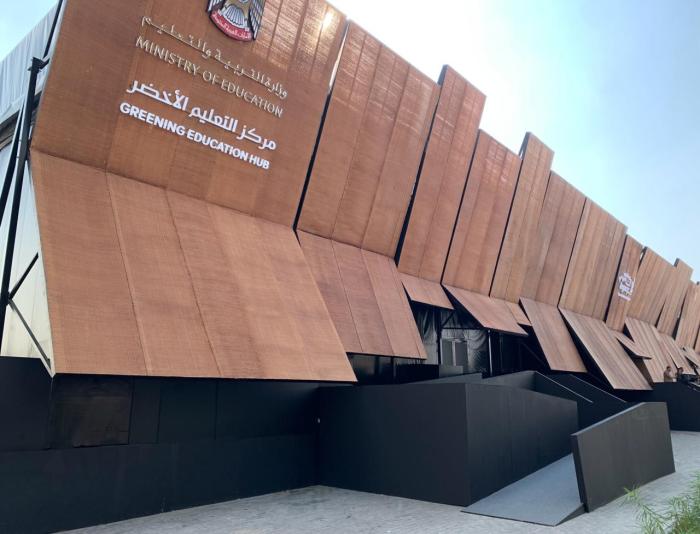
The 28th United Nations Climate Change Conference (COP28) took place from November 30 to December 12, 2023 in Dubai, United Arab Emirates (UAE). Held annually, climate change conferences provide a multilateral forum to do several things: assess progress in dealing with climate change; negotiate solutions to reduce carbon emissions; and help vulnerable communities adapt to climate change effects. The main goal is to update plans to meet the COP21 Paris Agreement goals set in 2015 to limit global warming to 1.5 degrees Celsius by 2030 and achieve net-zero emissions (when emissions no longer exceed the amount the atmosphere can absorb) by 2050. Like past conferences, the event in Dubai included political figures from most of the world’s nations, business leaders, climate scientists, young people, Indigenous Peoples, climate activists, educators, journalists and other participants.
The story of the UAE is one of unabated economic and social progress. COP 28 was held at Expo City Dubai, and one cannot imagine a more fantastical built environment and vision of the future. During my visits to Expo 2020 and during COP28, Expo City never fails to impress with its human-centric, innovative, and breathtaking architecture, pavilions, and vistas. It is a testament to the UAE’s visionary leadership, rapid economic growth, innovation, and development as a highly diverse and tolerant society. Expo City was built to convey a story of “Connecting Minds, Creating the Future” with themes of sustainability, mobility, and opportunity. It also held the Programme for People and Planet as a platform to address humanity’s most pressing challenges. Hosting COP28 is further aligned with UAE’s drive to share its story with the rest of the world and gain greater international prestige and influence as an open, tolerant and innovation-friendly environment.
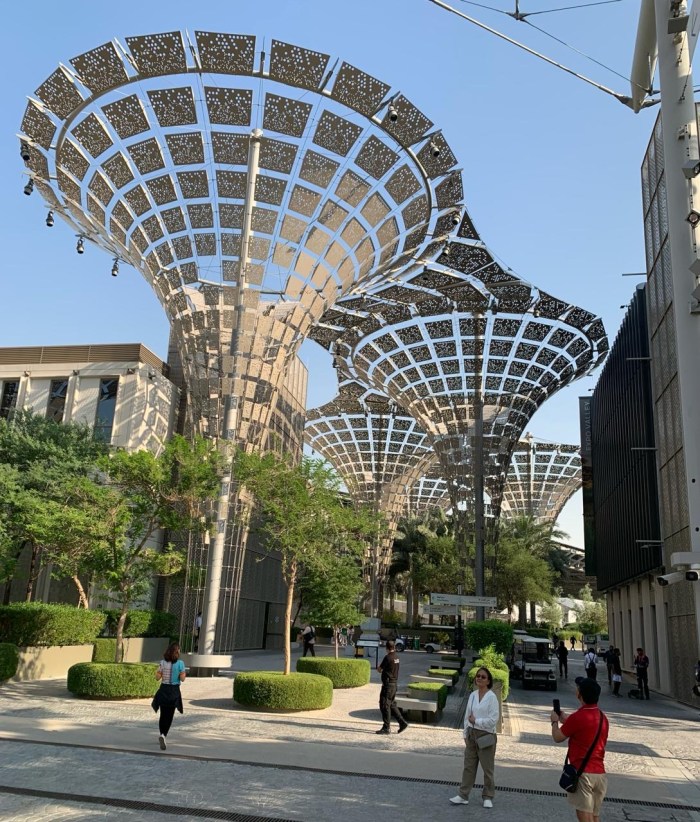
Entering Expo City generally evokes the same tensions I experienced visiting Gardens by the Bay when I lived in Singapore. For me, these spaces are both awe-inspiring and slightly disturbing, utopic while conjuring feelings of dystopia as well, representing everywhere and nowhere at the same time. They call us into a visionary, futuristic story of continuous economic growth accompanied by a sense of ‘transworldment’, where state and private interests, multiple lifeworlds, nature and culture are all fused together to attract as many people as possible. These are spaces that people experience in multiple ways while making the global cities of Singapore and Dubai attractive to global tourists, talents, and investments.
When I first entered the Green Zone, I was greeted with “Welcome to the World of #Actionism” on the side of a building.
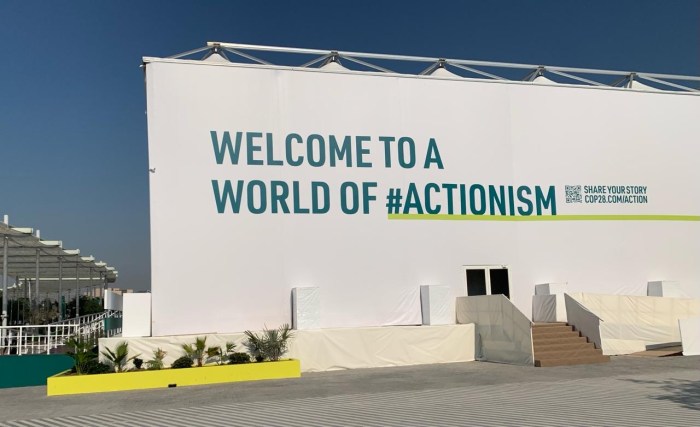
This was not a word I was familiar with and led me to wonder what it meant and why it was used. ‘Actionism’ seems to steer away from notions of ‘activism’ witnessed in many parts of the world where citizens are engaged in more direct advocacy for social, political, and economic change to address climate change. Actionism connotes environmental actions aligned with UAE’s political and cultural norms, which emphasize social stability and restrict activities that might encourage social unrest or criticism of the political order.
Three or four times I walked past an empty Indigenous Peoples Ceremonial Circle (although Indigenous People had platforms in the Blue Zone) as I made my way into the many different pavilions housing innovative climate solutions, cutting-edge technologies, interactive exhibits, and presentations.


The several hubs in the Green Zone focused on climate solutions in the areas of energy transition, climate finance, technology and innovation, humanitarian awareness, youth events, and education. To me, the Green Zone was a ‘green trade show’ with various industry and business representatives, tech entrepreneurs and innovators, government agencies and NGOs, and public relations and marketing managers showcasing their ideas, projects, and interests to attract investment, propose transition pathways and sustainability projects, and connect with potential partners and investors.
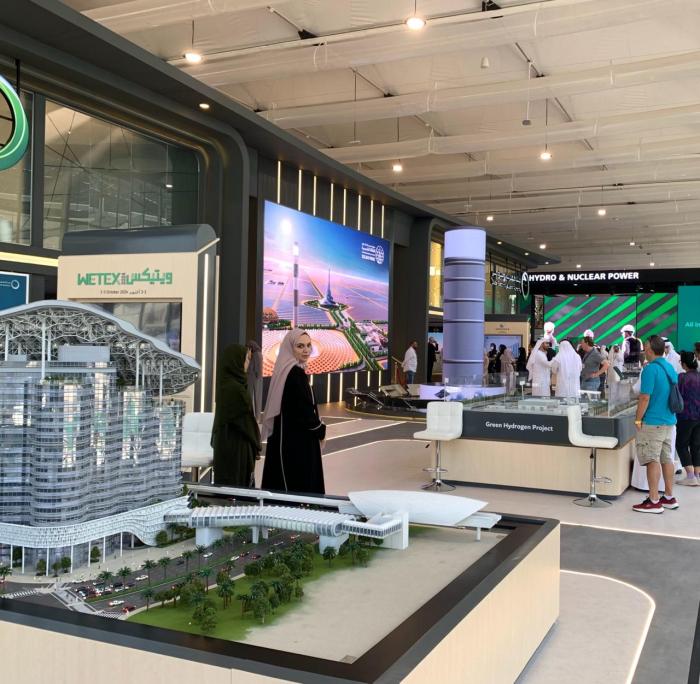
While I attended far too many exhibits and talks to do justice to them fully, the Green Zone presented a story of pro-growth green capitalism featuring the power of capitalist entrepreneurialism, global finance and investment, technological innovation, and free markets to maximize profit and save the planet. Green capitalism is a story of human ingenuity and innovative technological solutions to override the emissions and environmental destruction caused by human activity. An illustrative example of this human inventiveness and technological solutionism was presented at an impressive exhibit by a South Korean company seeking investment for a planned city somewhere on UAE’s coast near the Saudi Arabian border. The city would draw on hybrid energy sources – water, solar, wind, nuclear, and petroleum. Its large, multiple digital dioramas (populated by digital human figures) illustrated a world of business opportunities, housing options, abundant technology and lifestyle choices, free of any discord or strife. One diorama on a large digital wall presented a control center where 3-4 digital humans were shown managing the energy mix at high-tech instrument panels. Other exhibits and talks highlighted various technological fixes, such as carbon capture technologies to capture emissions from burning fossil fuels and other industrial processes for underground storage. Many of the exhibits presented compelling stories created by marketing and public relations firms to showcase various assemblages of multi-disciplinary expertise creating pioneering climate solutions.


Stories structure our language and shape the ways we think about ourselves and our relationships to others and the environment. Often, we are not aware of these stories and the ways they operate in our lives. One story on full display at COP28 was one of human ingenuity, imagination, and adaptive creativity – the capacity of humans to make and do things, to continually shape, re-shape and use their environment to satisfy human needs and desires. However, during a time of climate crisis, this story merits closer scrutiny. Many stories also represent a human-centric worldview, one of human mastery and domination in which nature is viewed as something to be conquered or exploited for human material interests.
Through the lens of this overarching human-centric story, we might consider three other stories that were also evident at COP28, in many of the Green Zone pavilions, exhibits and presentations:
- Humans are the center of existence and separate from nature. Nature is primarily a resource to be exploited for human purposes.
- The primary goal of society is unlimited economic growth and development.
- Consumerism is the main pathway to happiness.
These ‘stories-we-live-by’ are well-established in many minds and within and across cultures, and increasingly viewed as destructive, since they promote or lead to ecological harm.
These stories are as old as human history, and can be traced to most civilizations’ origin stories. For example, the Epic of Gilgamesh from ancient Mesopotamia (and a basis for several Biblical stories) clearly draws the line between humans and nature, celebrates deforestation (of a cedar forest) to support the urban development of Uruk, and creates an environmental wasteland to satisfy the needs of a sedentary, newly established urban population. As Martin Puchner points out, the environmental destruction caused by Gilgamesh and his followers leads to a larger calamity, the Flood wrought by the Gods. The conflict between humanity and nature is a core theme in much of literature. Puchner asks, “How should we humans narrate our self-made climate disaster?” and suggests the need for ecocriticism as well as new or re-purposed stories for a sustainable future.
Three ‘stories-To-live-by’ suggest how we might confront our climate crisis and create more just and sustainable futures for humanity and the planet. These include:
- All life should be treated with respect and care, especially for our most vulnerable populations and species.
- The primary goal of society is human and ecological well-being with a recognition of limits.
- Civic engagement for the common good is necessary to create more just and meaningful futures for everyone.
These stories are grounded in an ecocentric ethical vision of care and responsibility for all living things and of ecological justice to link issues of social justice, equity, human rights, and empowerment with climate action and sustainability. These are stories of hope and rebirth, where we collectively create change for a more just and sustainable world.
Were these stories evident at COP28? Many commentators were critical of COP28 in Dubai due to the dominant presence of fossil fuel and industry lobbyists crowding out other voices, and the chair being Sultan Al Jabar, head of UAE’s state-owned Abu Dhabi National Oil Company (ADNOC). However, the “UAE Consensus” agreement included unprecedented reference to “transitioning away from all fossil fuels in energy systems, in a just, orderly and equitable manner,” and encouraged parties to accelerate “ambitious, economy-wide emission reduction targets” while tripling renewables and doubling energy efficiency by 2030. It seems that the world’s nations are agreeing to transition away from fossil fuels in a just manner, and it remains to be seen how this story will unfold. Fossil fuel companies around the world have contributed the most to global climate change, expanded production in recent years, and netted record-breaking profits as the world suffers record losses due to extreme weather events. It is now time for wealthy nations and major fossil fuel companies to create a new story.
While the science has been clear for decades about the causes and effects of climate change, humanity and our planet are now in uncharted territory. We can decide whether our story will be one of tragedy or one of the hero with a thousand faces, a heroic collective venture in which we dare to face the dangers posed by climate change. The leading world authority on climate, the Intergovernmental Panel on Climate Change (IPCC) has reported that the “there is a rapidly closing window of opportunity to secure a livable and sustainable future for all.” Climate and earth system scientists now suggest that “Earth is now well outside of the safe operating space for humanity,” while other scientists note that various entrenched forms of power held by powerful elites and guided by narrow techno-economic mindsets and developmental paradigms are barriers to effective mitigation and rapid system-level changes (e.g., sociocultural and political-economic norms, policies, institutions and governance) needed for more sustainable and just futures.
We know what we are up against and we need to act before it is too late. As Donella Meadows highlights, stories have the power to guide our actions and create change. We need to understand how stories operate in our minds and societies, point to the destructiveness of some of our most cherished myths, highlight the power of new paradigms, mindsets, and stories, and embrace new ways of seeing and being in the world to collectively address our climate crisis.
About the Guest Contributor for #UAEReads:
 Mark Baildon is an Associate Professor of Foundations of Education in the College of Education at United Arab Emirates University. Mark was a professor of Humanities and Social Studies Education for 16 years with the National Institute of Education in Singapore, where he also served as Associate Dean of Partnerships and Analytics and the Head of the Humanities and Social Studies Education Academic Group. Mark has taught social studies in the U.S., Israel, Singapore, Saudi Arabia, and Taiwan. His latest book is How to Confront Climate Denial: Literacy, Social Studies, and Climate Change. Mark is a new grandparent and more committed than ever to build a better tomorrow, today. Check out his website here.


#UAEReads strives to be reflective of the diverse demographic population that makes up the country of the United Arab Emirates (see Global Media Insight source of demographics as of 2024). Hence, we will be featuring literature coming from the major nationalities comprising the entire country: Emiratis, Pakistanis, Indians, Filipinos, Egyptians – and other nationalities who have made UAE their home.
About the Guest Editor/Curator for March 2024 [#UAEReads]:
 Myra Garces-Bacsal has served as a teacher educator for 15 years and has led several research projects on reading and social emotional learning, diverse picturebooks and teacher practices, psychology of high creatives and exceptional people, culturally responsive and inclusive education. She is a quintessential lover and creator of booklists (see her Social and Emotional Learning bookshelf here and other publications below). Myra serves as the Assistant Dean for Research and Graduate Studies with the College of Education, UAE University. She is a self-proclaimed nerd who lives and breathes books and enjoys organizing events and festivals where fellow nerds converge and attempt to joyfully change the world.
Publications on booklists:
Garces-Bacsal, R. M., Alhosani, N. M., Elhoweris, H., Tupas, R. (2023). A diverse social and emotional learning booklist for gifted learners and advanced readers. Roeper Review, 45(1), 25-36. https://doi.org/10.1080/02783193.2022.2145397
Garces-Bacsal, R. M., Alhosani, N. M., Elhoweris, H., Al Ghufli, H. T., AlOwais, N. M., Baja, E. S., & Tupas, R. (2022). Using diverse picturebooks for inclusive practices and transformative pedagogies. In M. Efstratopoulou (Ed.), Rethinking Inclusion and Transformation in Special Education (pp. 72-92). IGI Global. https://doi.org/10.4018/978-1-6684-4680-5.ch005
Garces-Bacsal, R. M. (2021). Of grit and gumption, sass and verve: What gifted students can learn from multicultural picture book biographies. In S. R. Smith’s Handbook of giftedness and talent development in Australasian Pacific (pp. 431-453). Singapore: Springer International Handbooks of Education. https://link.springer.com/referenceworkentry/10.1007/978-981-13-3041-4_18
Garces-Bacsal, R. M. (2020). Diverse books for diverse children: Building an early childhood diverse booklist for social and emotional learning. Journal of Early Childhood Literacy, 22(1), 66-95. https://doi.org/10.1177/1468798420901856
 Global Literature in Libraries Initiative
2 thoughts on “#UAEReads: COP28 and the Stories-We-Live-By”