My month here is almost over, and I’ve taken you all to so many places around the world, and brought up so many ideas about the nature and purpose of writing that it’s not easy to wrap everything up.
So I’m going to steal from myself, and offer you the wrap-up I created for our recent inaugural World Endangered Writing Day on January 23rd.
Then, too, we had been on a lightning global trip of ideas and places and people and above all writing. We’d heard from people studying and saving endangered scripts in the Himalayas, rediscovering the amazing khipu of the Andes with their multidimensional forms of meaning, teaching one of the world’s last pictographic scripts, designing typefaces that fit in with the traditions and aesthetics of endangered cultures, and a whole lot more.
As all this planning was coming together, I knew I wanted to have final wrap-up conversation with Amalia Gnanadesikan, whose book was the first and most valuable reading I did when I started the Endangered Alphabets Project more than a decade ago.
She was coming back from illness, I was exhausted after being on screen hosting event after event for ten hours straight, but the conversation ignited both of us, a panorama of the entire story of writing from its fascinating multifold origins to the strange and in many ways conflicted situation it faces today and in the future.
At this point I can’t suggest anything better than this video, which I hope you’ll watch and send the link to your friends. It’s not the last word on the subject, of course, but it’ll do until the last word comes along.
All the best!
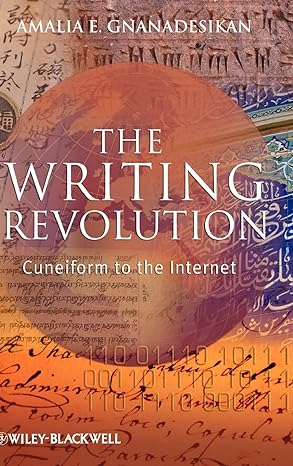
Title: The Writing Revolution: Cuneiform to the Internet
Author: Amalia Gnanadesikan
Series: The Language Library
Publisher: Wiley-Blackwell
ISBN: 978-1405154062

Tim Brookes is the founder and president of the non-profit Endangered Alphabets Project (endangeredalphabets.com). His new book, Writing Beyond Writing: Lessons from Endangered Alphabets, can be found at https://www.endangeredalphabets.com/writing-beyond-writing/.
 Global Literature in Libraries Initiative