
Simple Living in History: Pioneers of the Deep Future, edited by Samuel Alexander and Amanda McLeod
- Simplicity Institute Publishing
- 268 pages
- July 16, 2024
- ISBN: 0987588494
Melbourne-based degrowth scholar, Samuel Alexander, believes that we won’t achieve a politics of sufficiency without a culture of sufficiency, and so he has dedicated himself to showing others how rewarding a simple life can be. He has written dozens of books and articles on the topic, but this one in particular takes my fancy because I believe there is so much we can learn from other cultures and ways of living. I love the thought that we might incorporate wisdom from people before us and use it to make the future better. The book is an edited collection of 26 essays written by experts on the topic, covering a diverse range of other simpler ways of living (beyond industrial civilization), including Buddha, The Amish, Henry Thoreau, Permaculture, Voluntary Simplicity, Degrowth and more.
The opening quote gives you a taste for some of the insights to come:
“Lately in the wreck of a Californian ship, one of the passengers fastened a belt about him with 200 pounds of gold in it with which he was found afterwards at the bottom. Now, as he was sinking, had he the gold? Or had the gold him?”
– John Ruskin
This book is available as an e-book for Au $4.99 and at this link for a paperback.
Here is a 15-minute YouTube video showing how Samuel and his family have incorporated degrowth into their lives: Sustainable City Living on 1/10th of an Acre | Degrowth in the Suburbs
About the authors of Simple Living in History:

“Over the last ten years Dr Samuel Alexander has been a lecturer and researcher at the University of Melbourne, Australia, teaching a course called ‘Consumerism and the Growth Economy: Critical Interdisciplinary Perspectives’ as part of the Master of Environment. He has also been a Research Fellow with the Melbourne Sustainable Society Institute and is currently co-Director of the Simplicity Institute. In 2024 he begins his role as Academic Director with the School for International Training, coordinating and lecturing into a university course called Sustainability and Environmental Action.
Alexander’s interdisciplinary research focuses on degrowth, permaculture, voluntary simplicity, ‘grassroots’ theories of transition, and the relationship between culture and political economy. His current research is exploring the aesthetics of degrowth and energy descent futures. “
“Amanda McLeod is a freelance writer. She received her doctorate from Monash University. Her first book, Abundance: Mass Consumption in Postwar Australia, was published in 2007. Between 2007 and 2009 she was Williamson Postdoctoral Research Fellow at the University of Melbourne. She has many publications that have appeared in a diverse range of sources including History Australia, Journal of Historical Research in Marketing, Australian Book Review, Australian Policy and History, Business History, Circa: the Journal for Professional Historians, Consumer Australia and, most recently, Independent Australia. Her second book Simple Living in History: Pioneers of the Deep Future was published to critical acclaim in 2014.”
About Erin Remblance, your host during #DegrowthLitMonth:
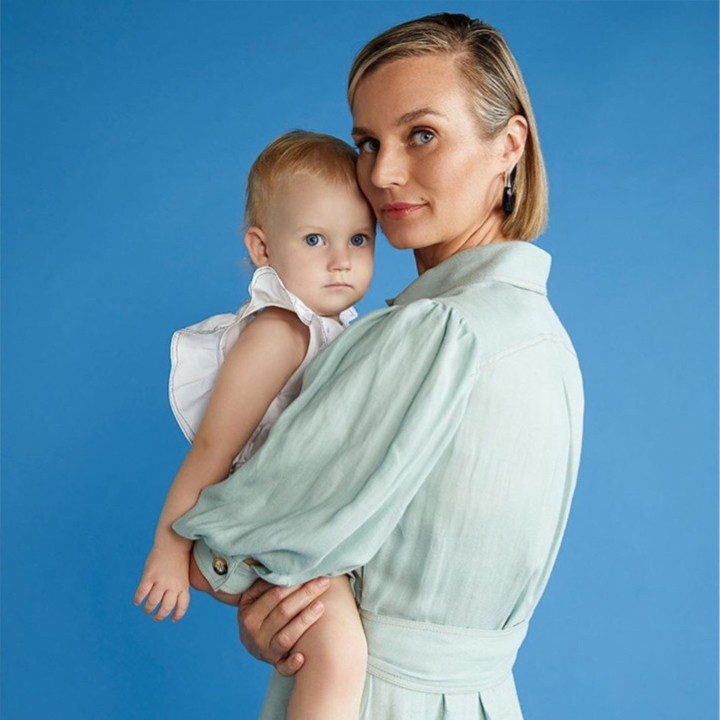
Erin Remblance established her early career in blue-chip fast-moving consumer goods companies in Sydney & London, but always sensed there was more important work to be done. Having children gave her the space to explore the environmental and cultural crises on the planet that need to be urgently addressed. She shifted her focus to dedicate her life towards educating people on climate change, degrowth, planetary boundaries, modern monetary theory and more. Erin is a writer, researcher, co-creator of (re)Biz, wife, and mother of three children. She lives north of Sydney, Australia with her family, on the occupied ancestral country of the Gayemagal people.
Follow Erin on Substack, LinkedIn, (re)Biz and X (formerly Twitter).
#DegrowthLitMonth
 Global Literature in Libraries Initiative