by David Stromberg

Writings on Yiddish and Yiddishkayt, Vol. I: The War Years, 1939-1945
By Isaac Bashevis Singer
Translated and edited by David Stromberg
Published by White Goat Press
ISBN 9798987707890
Purchase the book
Isaac Bashevis Singer, the only Yiddish writer to receive the Nobel Prize for Literature, is one of the few Yiddish writers well known in English for his novels and short stories. This volume—selected from writings on Yiddish culture and Jewish life that first appeared in the daily Forverts from 1939–1945—is the first major effort to translate and publish Isaac Bashevis Singer’s cultural criticism from the Yiddish press. The twenty-five pieces included in this volume were selected from a pool of over one hundred and fifty potential articles. This volume greatly expands English readers’ access to Singer’s broader body of work beyond the fiction whose translation into English he oversaw. Each article appears with an accompanying editorial note, and for the GLLI blog I wanted to share a few of these as a sneak peek into some of the material found in the first volume.
One of the early highlights of the collection is Singer’s article “What is a Dybbuk?” appearing in two installments on July 30 and August 6, 1939. The article emphasizes Singer’s interest in the problematic meeting points between religious tradition and individual fates while foregrounding one of Singer’s long-standing thematic interests: demonology and its place in Ashkenazi Jewish society throughout its history. Singer’s article reveals his unique approach to the demonic in Jewish culture: balancing what may be called its social and psychological elements alongside its interplay with faith and superstition. The article, as presented in the volume, focuses on how Singer conceptualized the dybbuk in Jewish society as well as how dybbuk tales reflect questions of mental health in his time. It is the only article in this collection that appeared before the outbreak of World War II.
Later in the collection, we have “Is Being Powerless a Jewish Ideal?”—appearing on May 8, 1944, and representing Singer’s treatment of contemporary political debates about a Jewish national home, which had raged before, during, and after World War II. It was Singer’s second article on the topic in a matter of weeks, the first being “All Jews in Palestine Support a Jewish State” (March 20, 1944), which talked about the difference between a Jewish commonwealth and a binational state—one of the major questions being debated. Singer’s article addresses not only the issue of a Jewish national home, but also the history of Jews as a disenfranchised nation that has internalized powerlessness as an existential condition—which sets the stage for a drive for power.
In “Jews and Jewish Life Not Yet Portrayed in Yiddish Literature,” appearing on July 15, 1945, and written just two months after the Nazi surrender, Singer shifts from the urgency of recollecting the past to finding a path toward portraying that past in literary fiction. As in other similar articles, Singer continues placing Yiddish and Hebrew literature in related categories, yet his discussion of Yiddish puts additional emphasis on the locale in which it grew and developed: the shtetl. Ultimately, Singer puts forth a paradox, both critiquing Yiddish literature’s focus on the shtetl and noting that it has no choice but to portray the shtetl from which it came. The resolution to this paradox is to look deeper into the spiritual riches that propped up the shtetl, not only its material poverty—to portray not its appearance from the outside, but the internal fire that kept it alive for centuries.
These three examples are just a sampling of the different kinds of topics that preoccupied Singer during WWII, making this volume special not only for the newness of the material but also for the specific period in which it was written.
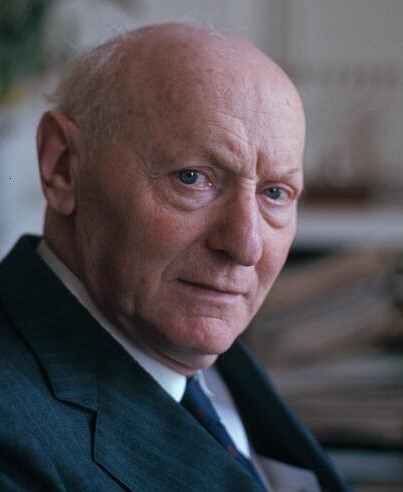
Isaac Bashevis Singer (1903–1991) was a Polish-born Jewish American writer of stories, novels, memoirs, essays, and children’s books. He was awarded the Nobel Prize in Literature in 1978.

David Stromberg is a writer and translator. His recent publications include the speculative essays “The Eternal Hope of the Wandering Jew” and “To Kill an Intellectual.”
#YiddishLitMonth is curated by Madeleine Cohen. Mindl is academic director of the Yiddish Book Center in Amherst, MA, where she directs the Yiddish translation fellowship and is translation editor of the Center’s online translation series. Mindl has a PhD in comparative literature from UC Berkeley. She is a visiting lecturer in Jewish Studies at Mount Holyoke College and president of the board of directors of In geveb: A Journal of Yiddish Studies.

 Global Literature in Libraries Initiative
Is Being Powerless a Jewish Ideal?… sadly relevant today…
LikeLiked by 1 person
Here is the resource guide created to go along with the book:
https://www.yiddishbookcenter.org/language-literature-culture/great-jewish-books-club/writings-yiddish-and-yiddishkayt-war-years-1939
LikeLike