by Maia Evrona
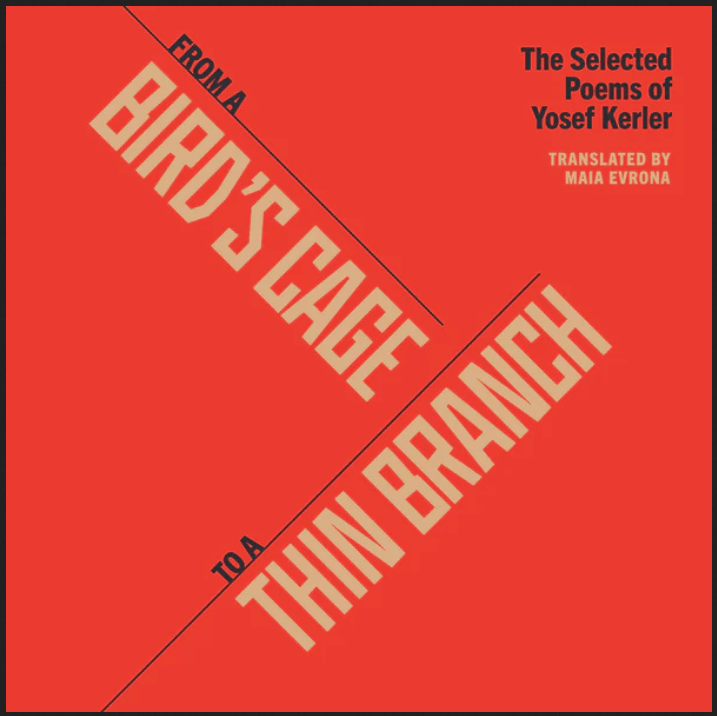
From a Bird’s Cage to a Thin Branch: The Selected Poems of Yosef Kerler
By Yosef Kerler
Translated and selected by Maia Evrona
Introduction by Dov-Ber Kerler
Book and Cover design by Michael Grinley
Yiddish typography design by Yankl Salant
ISBN 979-8-9852069-3-7
White Goat Press
***
“Ukraine, Ukraine, oh, sweet singing,
may my children’s children never know this longing.”
From “Ukraine”
I became interested in the Yiddish poet Yosef Kerler over a decade ago, while studying Yiddish with his son, Professor Dov-Ber Kerler. All Dov-Ber’s bios mentioned his father, so I understood that he must have been an important Yiddish writer. Upon reading about him, I learned that Yosef Kerler was considered the only Yiddish poet to have published poetry written in the gulag—the Vorkuta Gulag, to be precise—but that little of his poetry had been translated into English.
As I became more invested in translating Kerler’s work myself over the last five years, I have been continually struck by how timely his poetry has proven. Kerler was born in 1918, in Haysin, Ukraine. He grew up on a Jewish collective farm in Crimea, studied at the Moscow State Yiddish Theatre, and then served with the Red Army during the Second World War. The years following the war were difficult for Yiddish writers in the Soviet Union, however, with the publication of Yiddish literature banned. Between roughly 1950 and 1955, Kerler spent five years in the gulag. Following his release, he became an early refusenik, a Jew who had been refused the right to leave the Soviet Union.
I began translating this book prior to Russia’s invasion of Ukraine. As I was selecting poems to include, from a large body of work, I was particularly drawn to poems about Kerler’s complicated relationship to both Ukraine and to Russia. The book features poems about complicated Ukrainian folk heroes, poems about Haysin, and poems about Babi Yar, the infamous mass killing site where between 100,000 and 150,000 people were murdered by Nazi forces—and which was bombed by the Russian army last year. The American Civil Rights movement makes an appearance, with Kerler expressing a solidarity that feels particularly modern in its view of racism as a matter of stark life and death, of lives that matter.
Still, these poems are most noteworthy for their lyric merit. As a reader, I am particularly haunted by a poem in which Kerler draws strength from the beauty of the northern lights, while a prisoner in the gulag. Around the time of the publication of From a Bird’s Cage to a Thin Branch, I received a message over Facebook from the granddaughter of a man who had known Kerler in the gulag. The message included a photograph of dried wildflowers that her grandfather had picked in Vorkuta. She felt that this book was long overdue.
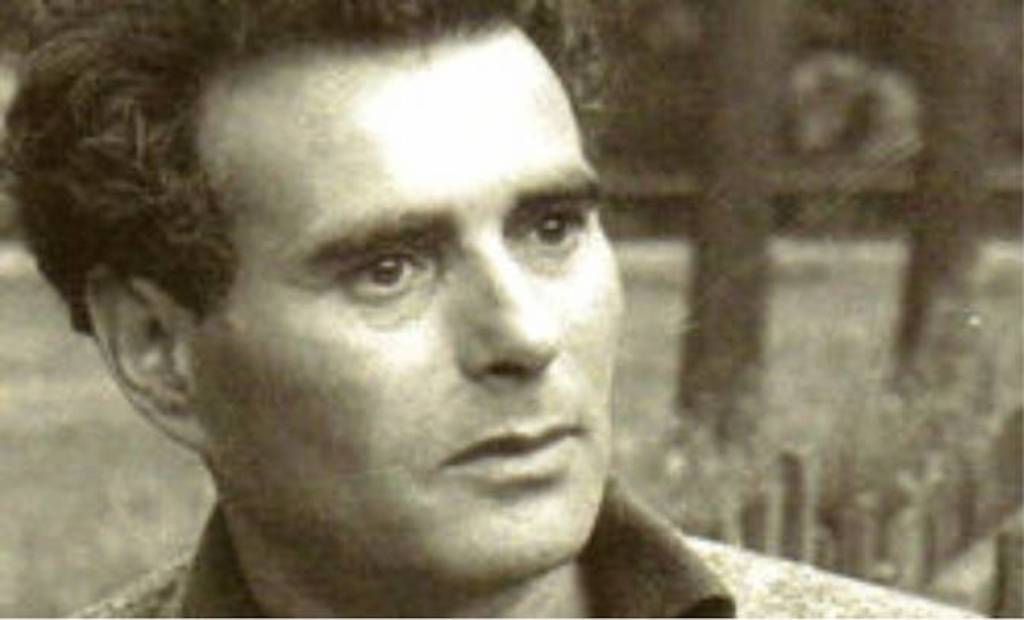
Yosef Kerler was one of Yiddish literature’s most vital post-war poets. Born in Ukraine in 1918, he grew up on a Jewish collective farm in Crimea and served with the Red Army during WWII. He later spent five years in the Vorkuta Gulag. Following his release, he became an early refusenik.

Maia Evrona is a poet, prose writer, and translator of Yiddish (and occasionally Spanish) poetry. In 2019, she was the inaugural recipient of the joint Spain-Greece Fulbright Scholar Award. Her translations of Yiddish poetry have received fellowships from the NEA, the Yiddish Book Center, and elsewhere.
LINKS
Translator’s website: http://www.maiaevrona.com/
Excerpts from the book: https://lunchticket.org/excerpts-from-singing-through-clenched-teeth/
Maia’s work in the Yiddish Book Center’s Pakn Treger Digital Translation Issue: https://www.yiddishbookcenter.org/language-literature-culture/pakn-treger/2020-pakn-treger-digital-translation-issue/if-i-were-alabama
AWARDS
The book received a Yiddish Book Center Translation Fellowship.
My other work has received fellowships from the Fulbright Scholar Program, the National Endowment for the Arts, the American Literary Translator’s Association, and the Massachusetts Cultural Council.
#YiddishLitMonth is curated by Madeleine Cohen. Mindl is academic director of the Yiddish Book Center in Amherst, MA, where she directs the Yiddish translation fellowship and is translation editor of the Center’s online translation series. Mindl has a PhD in comparative literature from UC Berkeley. She is a visiting lecturer in Jewish Studies at Mount Holyoke College and president of the board of directors of In geveb: A Journal of Yiddish Studies.

 Global Literature in Libraries Initiative