In a Nutshell:
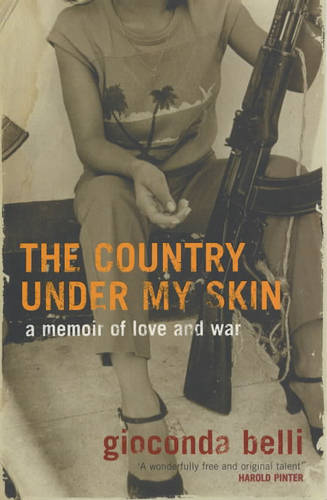
This book is Belli’s account of the Nicaraguan revolution, of meetings with Fidel Castro and Gabriel García Marquez and exile in Costa Rica and of her own political and romantic awakenings. A brilliant book, I was gripped from the very first page. I have now thought to myself of all the people I can buy this book for this Christmas!
Themes:
Love, identity, politics, exile, desexilio and the colonialist mentality of countries like the USA towards countries like Nicaragua.
An Observation:
The translator of this book is someone I know, through email, from the world of translation. I hadn’t realised this until I bought the book. Read my interview with Kristina below.
A Quote:
“In February the National Crusade for Literacy began; it was the most amazing and moving patriotic enterprise I was fortunate to witness. Thousands of teenagers, between twelve and eighteen years old, left the comfort of their homes, their beds, and the security of their families, and scattered out all over the country to teach Nicaraguans, 70 percent of whom were illiterate, how to read.”
Details:
Book: The Country Under My Skin: a memoir of love and war
Author: Gioconda Belli
Translator: Kristina Cordero
Publisher: Bloomsbury Publishing PLC
Publishing Date: 04/08/2003
Stockists:
Want to read The Country under My Skin: a memoir of love and war ? Buy it here.
Author: Gioconda Belli

Gioconda Belli is a Nicaraguan poet, writer and political activist. She’s written four novels, six poetry books, a memoir and a children’s book, aside from essays and political commentary.
Translator: Kristina Cordero

Kristina’s bio in her own words:
“My bio is a little different. So – I started out as a translator a long time ago – I studied Spanish literature in college and began working in book publishing. I quickly realized that I wanted to be involved with books in a different way and became a translator. I quit my job at a publishing house and began doing reader’s reports on books in Spanish that, for whatever reason, had arrived at a non-Spanish speaking editor’s desk. And some of those reader’s reports turned into translation gigs! In 2012, after translating for many years, I embarked on a PhD in engineering for which I took a children’s book I wrote and adapted it into several different reading and writing apps. Now I work more in that field, doing research and development of software for reading and writing. I love translation though.”
Interview with the translator: Kristina Cordero
JAT: How do you find new works to translate, and how do you choose which publishers to work with? In particular, what drew you to translating this book by Gioconda Belli?
KC: At first it was meeting writers and then meeting their friends, reading books that they would pass on to me. And then after having translated some things myself, my name started circulating and people would come to me to do translations. That’s what happened with Belli. I didn’t know her before -I had heard of her and read her work- but an editor called me up and I got to work. It was really interesting to translate her because she has a great command of English, her husband is American so they were very involved in the editing process. I think it was very weird for her to have someone else rendering her voice in English.
JAT: What are the greatest challenges regarding gender bias in translated literature, and in your opinion, how does this impact who gets published and who gets translated?
KC: Well… that’s a big question. At the time when I was translating literature, in the late 90s and early 2000s, it was so much more of a man’s game in Latin America. Sure, there were breakthrough female writers, but the literary scene was totally masculine. I lived in Spain -Madrid and Barcelona- in the early 2000s, and the writers’ social scene was pretty heavily dominated by the guys – and publishing is known for being a more female-friendly industry! I think things have changed a lot. My friend Megan McDowell translates a lot of women writers, its far less male dominated. Mara Lethem, too, she’s done a fair number of women.
JAT: What can be done to respond to and overcome such biases in your opinion?
It’s hard to answer this question without making a generalization. I think there are a lot of female translators and writers -so many more than when I got started- and so I feel actually very positive about this. The industry as a whole is way more balanced than it was before. The rise of the little publishing houses has made possible all sorts of new kinds of work agreements and situations, and I think that women have benefitted from that. But in terms of how we think about women writers, women translators… I’m also a college professor -I teach translation at a university in New York- and there is a big move there to make the curriculum more diverse – racially, ethnically, gender-wise. Now – I don’t really agree with, for example, requiring 50/50 male/female reading lists – that just feels forced and unnatural. But these conversations are important to have because there is a lot of un-doing that needs to be done in terms of what we kind of automatically consider to be valuable and consider to be part of the canon. For example, I am a huge Dorothy Parker fan. But I feel that next to her contemporaries she isn’t quite as valued, she’s not included in as many course lists, etc. But then, on the other hand, at the other end of the spectrum, I think there are female writers who are overrated because they fit into a neat category of “diversity”. So this is a super hard question to answer.
JAT: Do you think that Spanish-language women writers are well represented in translated literature? Who would you like to see gain greater recognition?
I think there is a really long way to go in terms of projecting Latin American women writers. There are women writers in every single Latin American country who haven’t received the attention they deserve.
JAT: What is your next translation project?
I actually don’t do a lot of literary translation anymore. I moved into other areas of translation and work with literature, reading and writing.
A bit about me!
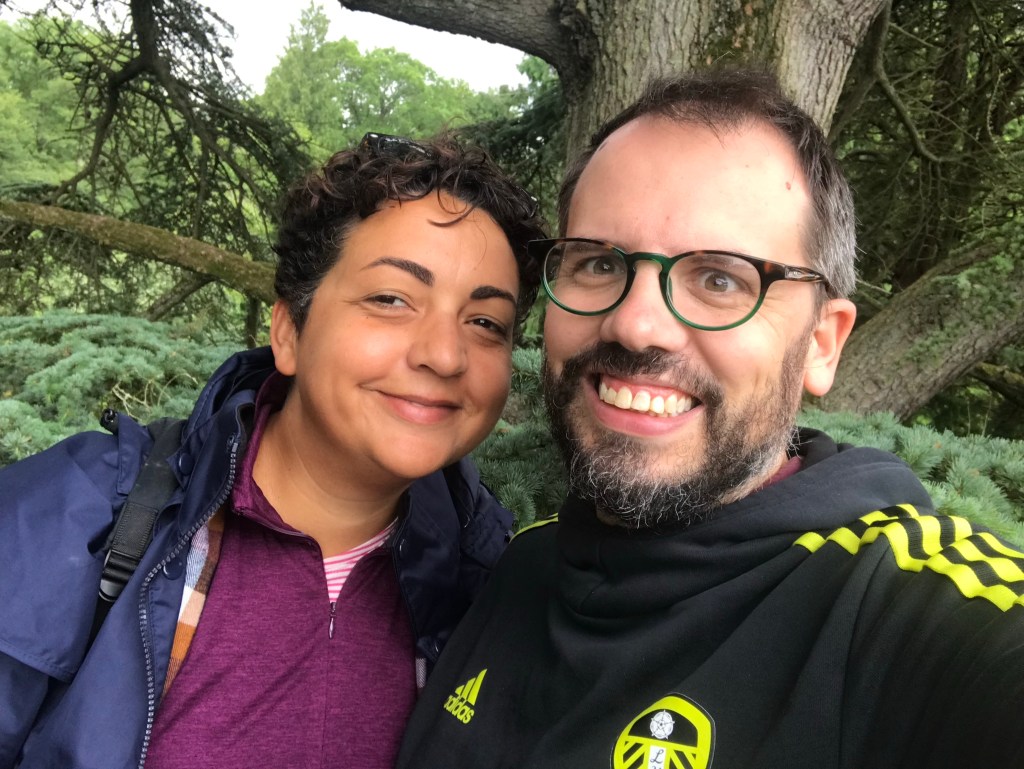
Here I am with my husband visiting one of our favourite places in the world, the Westonbirt Arboretum!
A bit about me, my name is Jess Andoh-Thayre. I am from Brixton, South London. I currently live in Cambodia. Before living here in Cambodia, I lived in Tanzania with my husband, who is a diplomat. I have also lived in Chile and Spain. I am a French, Spanish and English as an Additional Language (EAL) teacher. I recently qualified as a SENCo (Special Educational Needs Coordinator). After taking three years off to have a baby in a pandemic and also retrain, I have just returned to work as an Elementary Learning Support Teacher.
 Global Literature in Libraries Initiative