Today’s post comes to you from Angie Erickson
This month took us from corporate offices in Seoul and the Canary Islands to Sámi boarding schools in Sweden, dinner tables in Paris, forests in Scandinavia, seventeenth-century Delft, contemporary Tokyo, and dystopian worlds where memory, language, and autonomy are under threat.
Alongside our #WITMonth posts, #WorldKidLit introduced us to Southeast Asian wildlife, a house searching for a witch, and the conversations happening at the 40th IBBY Congress in Ottawa.
This month’s posts
- August 1 — Welcome to Women in Translation Month — Angie Erickson on what we mean by “women’s writing” and whose voices reach English-language readers.
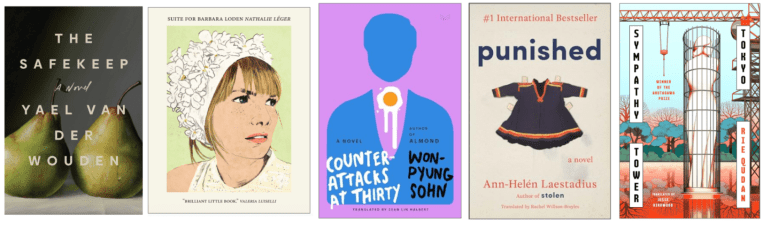
- August 2 — Suite for Barbara Loden — Beth Gourley on biography, film, memory, preservation, and translation.
- August 3 — Counterattacks at Thirty — Nadine Bailey on workplace precarity, solidarity, and quiet resistance.
- August 6 — Marvellous Mammals — Lyn Miller-Lachmann on the extraordinary wildlife of Southeast Asia.
- August 9 — Punished — Nadine Bailey on Sámi history, forced assimilation, language, and intergenerational trauma.
- August 11 — Sympathy Tower Tokyo — Erin えりん on language, AI, punishment, and the words societies choose to use.
- August 12 — IBBY & GLLI — Katie Day reports from the 40th IBBY Congress.
- August 13 — Sayaka Murata — Anisha Wilmink asks what exactly we mean by “normal.”
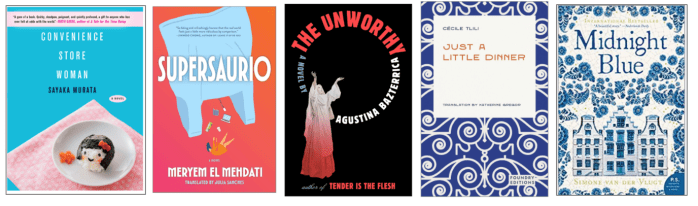
- August 14 — Supersaurio — Kimberly Wong on corporate absurdity, precarious work, identity, and overtourism.
- August 15 — The Unworthy — DiAnna Pantano on survival, complicity, and private acts of rebellion.
- August 18 — Just a Little Dinner — Angie Erickson on coupledom, gender, invisible labour, race, and class.
- August 19 — The Little House That Needed a Witch — Nanette McGuinness on a wonderfully illustrated story of belonging.
- August 20 — Midnight Blue — Brenda Rupp on survival, reinvention, art, and seventeenth-century Delft.
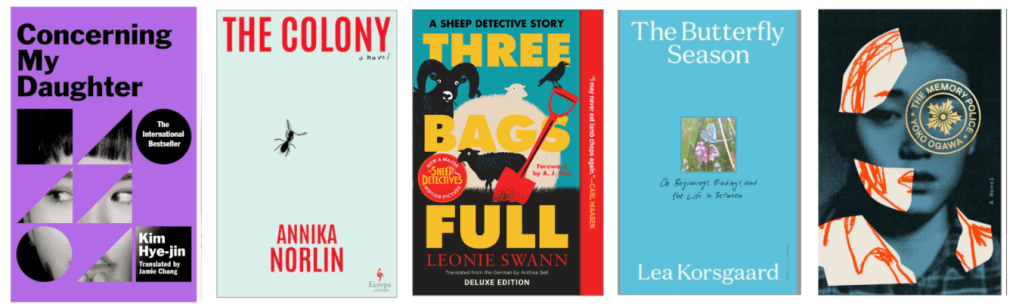
- August 21 — Concerning My Daughter — Hwee on family, queer identity, ageing, caregiving, and social expectation.
- August 23 — The Colony — Katie Day on community, solitude, charisma, and belonging.
- August 26 — Three Bags Full / The Sheep Detectives — Kim Tyo-Dickerson on adaptation, justice, mortality, community, and sheep as philosophers.
- August 28 — The Butterfly Season — Helle Kirstein on biodiversity, mortality, wonder, and the discipline of paying attention.
- August 29 — The Memory Police — Veronica Jansen on authoritarianism, memory, agency, and human connection.
Looking back, several themes appeared again and again.
The individual versus the system
Characters found themselves inside systems they did not create: workplaces, families, religious institutions, governments, cultural traditions, and relationships.
Few were uncomplicated revolutionaries. Their resistance was often small, compromised, or private. They threw eggs, hid people, wrote secretly, refused expectations, or simply began to imagine another way of living.
Who decides what is “normal”?
Sayaka Murata asks this explicitly, but the question runs throughout the month.
What counts as a successful life? A proper family? A good woman? A useful worker? A respectable citizen? A healthy relationship?
Translated literature can make these supposedly natural assumptions newly visible by allowing us to encounter them from another angle.
Language, memory, and power
In Punished, suppressing language becomes a tool of assimilation. In Sympathy Tower Tokyo, word choice alters how reality is understood. In The Memory Police, losing words accompanies losing the things themselves.
And Suite for Barbara Loden reminds us that translation can also be an act of preservation: stories survive because somebody notices them, carries them forward, and tells them again.
Community can constrain us and save us
Community demands conformity in several of these books, but it is also repeatedly what makes survival possible.
The importance of community is counterbalanced by the question: How can we belong to one another without losing ourselves inside the group?
What Women in Translation Month makes visible
Perhaps the strongest argument for reading translated literature that emerged this month is that it makes unfamiliar places specific and, in doing so, allows us to re-examine familiar structures.
A Korean office can illuminate our own workplace. A French dinner can make us reconsider our own domestic relationships. A novel can destabilise what we think of as normal. A Sámi family history can remind us what assimilation does across generations. A Danish butterfly hunt can alter the way we look at the patch of grass outside our own door.
Translation allows difference to remain while giving us the opportunity to recognise ourselves alongside it. That is why Women in Translation Month matters.
There are more languages, translators, writers, stories, and ways of understanding the world than any of us could encounter in a lifetime. And it is with this overwhelming and joyous thought that I wish to end the month: may we all find a few more books that crack open the world a little wider and allow us to see our own lives anew.
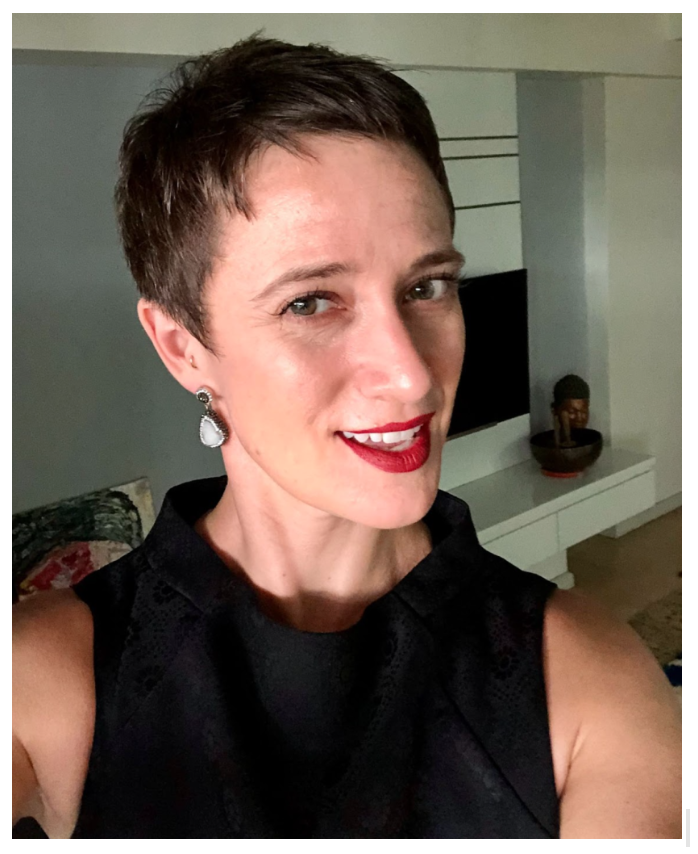
Angela Erickson is a former Head of Middle School English and current Head of Libraries at United World College of South East Asia in Singapore. Her work focuses on how curriculum design, research instruction, and library systems can be aligned to support reading, thinking, and writing across a school. Outside of work, she is an aspiring mountaineer and a terrible cellist. She is also the current Chair of the GLLI Translated YA Book Prize.
Declaration of Generative AI and AI-assisted technologies in the writing process
During the preparation of this post, the author used ChatGPT to assist with summarizing and linking the posts. All AI-assisted content was reviewed, revised, and edited by the author, who takes full responsibility for the final published text.
Disclaimer: The opinions and views expressed are the author’s and do not necessarily reflect those of GLLI.

