Today’s post comes to you from Kimberly Wong
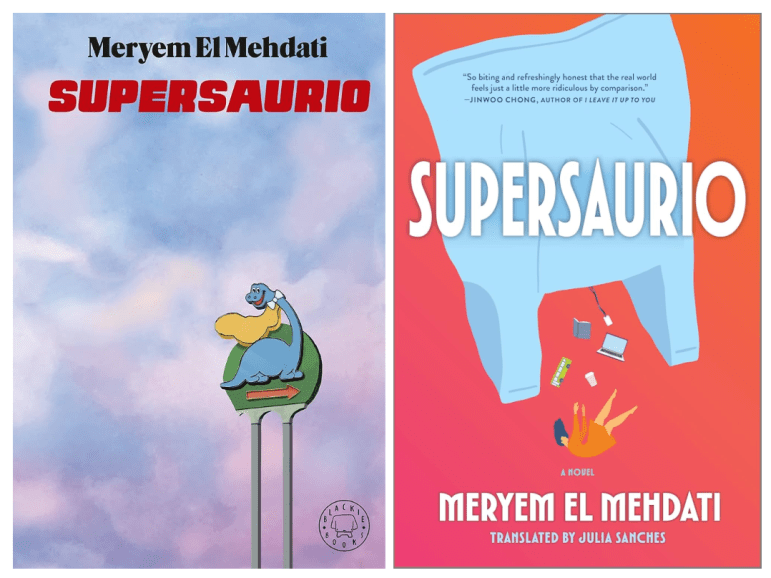
Supersaurio by Meryem El Mehdati is a smart, searing, and painfully relatable workplace satire. Originally published in Spanish in 2022, its English edition was translated by Julia Sanches and released in November 2025. The novel, categorized as autofiction, follows Meryem through her internship in the corporate offices of Supersaurio, a supermarket chain in the Canary Islands.
Moroccan by ethnicity, Muslim by religion, and Canarian by residency, Meryem is twenty-five years old and already beaten down by the working world. She spends her work hours crying in storage rooms, writing fanfiction about her coworkers, and flirting with a man she knows she shouldn’t want. Her outlook on life is summed up in the book’s opening chapter: “You’re a burden on your family, because time is running out, because you’re part of the most educated generation in history, the worst paid, the most overcaffeinated, the most insecure, the most depressed, the one with the most hang-ups.”
El Mehdati’s voice is fresh and distinct, and her writing is littered with the terminology of the chronically online. This is perhaps unsurprising considering that El Mehdati’s popular Twitter posts were the impetus for her writing a novel. Throughout the book, she alternates between dropping truth bombs and making fun of herself; punctuation becomes a mere suggestion in the run-on sentences that comprise her inner monologue.
At the heart of the novel is Meryem’s disillusionment with the working world, always expressed with a mixture of humor and raw despair.
“Convene dozens of people from various backgrounds and force them to spend several hours a day together in a closed environment. Assign each one a role according to their education, age, and experience. Arrange them into a hierarchy. Then lock the door and let the magic happen. The Stanford prison experiment has nothing on what actually happens in a regular office setting.”
As an intern, Meryem’s on the bottom rung of the office ladder, with coworkers who are decades older and can’t be bothered to learn how to pronounce her name. Of Meryem’s work enemy Yolanda, she writes, “I’m not sure what her job is because I never see her do anything.” In response to her boss saying he has everything under control, she internally rages: “You don’t even know how to print things. You’re a functional deadweight … You make five times what I do and yet somehow still can’t convert a stupid Excel spreadsheet into a PDF.” Supersaurio is workplace satire at its best—its characters and situations are only absurd if the reader has never worked in a corporate setting before. El Mehdati describes personalities that feel real even as they venture into caricature territory, and there’s a universality to her experiences that will make you sit up and go, “Yes, exactly!” as you read.

A photo of Puerto Rico in Gran Canaria, Meryem’s home.
While Meryem’s experiences at work are relatable, the novel has a geographical specificity that provides readers with important context. In particular, it emphasizes the effects of overtourism on hometowns like Meryem’s. Overtourism has increasingly affected the world’s most popular tourist destinations—Hawai’i has been begging tourists to leave their islands alone for years while residents of Venice have been forced to relocate because the city’s residential buildings have all been turned into vacation rentals. Anti-tourism protests have been happening all across Spain, including in the Canary Islands where Meryem is from.
“I guess this must be what [tourists] come here for. To lose themselves on a cheap island where they can afford to live like kings, where everything is catered to them despite the adverse effects on full-time residents, where people are willing to plunder nature itself for the tourists’ satisfaction. The beaches are receding, the mountains shrinking. We’re eternally bent over, hands held out like nice, friendly beggars—do come again and don’t forget to throw some coins at our feet.”
Meryem never hides her resentment for how her home has been exploited to be more palatable for tourists, whether that’s through rising rents or endless rows of hotels. Her commentary had me thinking about the places I’ve travelled to and the impact my presence might have had on the locals. Was my delight at cheaper rideshare fares at the expense of an exploited driver? Were the crowds of people I waded through at night markets responsible for the litter and pollution across the city? Did my stay at a cozy AirBnb mean pricing someone out of their own neighborhood?
El Mehdati writes with a frankness that holds a mirror up to her readers, whether in their dissatisfaction with their jobs or their lack of consideration for the communities they interact with. Supersaurio is as important as it is entertaining, as informative as it is familiar. Whether or not you, like Meryem, are a young millennial stuck in a job you hate, this novel will have you laughing, crying, and raging along with her. Meanwhile, I’ll be on the lookout for anything else El Mehdati publishes and praying it gets translated to English.
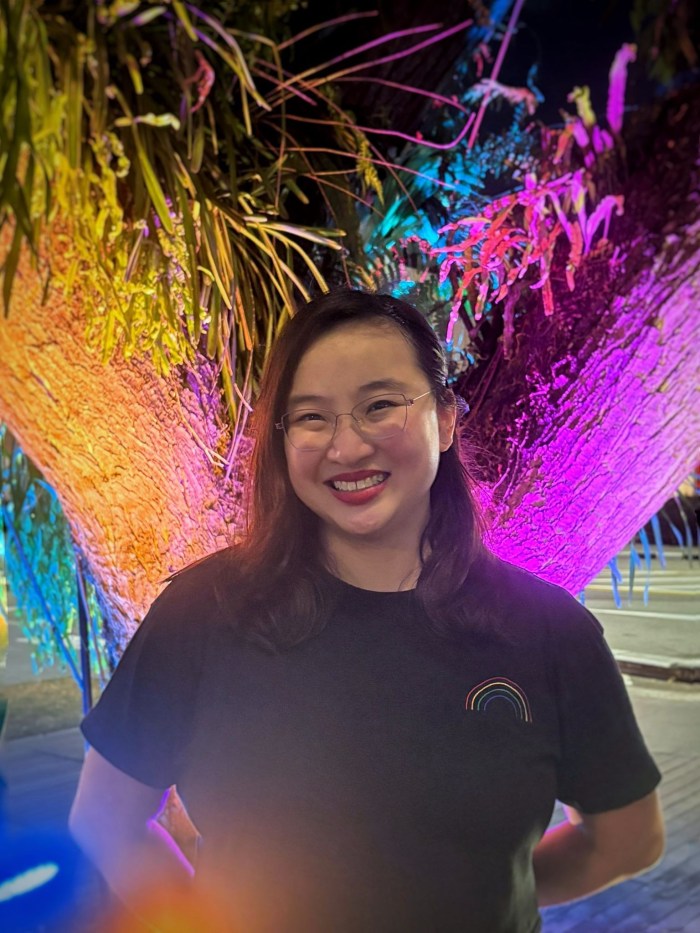
Kimberly Wong (she/her/hers) is a school library outreach lead, a library science graduate student, and a queer romance bookseller. She believes libraries should be inclusive and welcoming spaces for people of all demographics, but especially for those from underrepresented and marginalized communities. When she’s not working, studying, or reading, she’s probably tap dancing, trying to find inner peace, or reminding her dog Beanie that she’s the best in the world.
Disclaimer: The opinions and views expressed are the author’s and do not necessarily reflect those of GLLI.


One thought on “#WITMonth: Supersaurio by Meryem El Mehdati”