

Today’s post comes to you from Beth Gourley
Suite for Barbara Loden by Nathalie Léger. Translated from French by Natasha Lehrer and Cécile Menon. Cover illustration by Ruth Gwily. Originally published in France in 2012 as Supplément à la vie de Barbara Loden (P.O.L); English translation published by Les Fugitives (UK) and Dorothy, a publishing project (US), 2015/2016. Winner of the Prix du Livre Inter 2012.
In brief, Suite for Barbara Loden by Nathalie Léger, part of a triptych, is about a woman who sets out to write a brief encyclopedia entry on filmmaker Barbara Loden and instead spends a book discovering herself, her mother, and Loden’s own drifting screen character Wanda, who are all enfolded into one another, focused through research, memory, and speculation.

I did not come to Suite for Barbara Loden by any method I could describe as rigorous. It found me the way most of the books I love find me: sideways. During the shut-in months of COVID, starved for cultural companionship, I built myself a private film series of women directors, one a week. A Criterion subscription made this possible, and it was there that I first met Wanda, Barbara Loden’s sole feature, a film so nearly lost that its own restoration story provides an insight into the very neglect it documents.
That restoration story is itself worth telling briefly. As film preservationist Ross Lipman tells it, in 2007, the UCLA Film & Television Archive learned that a closing Hollywood lab was about to discard whatever remained in its water-damaged basement vaults. Lipman joined a small team to salvage what they could and discovered unlabeled 16mm reels marked only “WANDA. Harry Shuster,” which turned out to be the film’s original camera negative—rescued just a day before it would have been sent to a landfill.
I watched the film, not knowing yet that watching it would lead anywhere. It was only later, working my way through the New York Review Books’ catalog—a habit of mine, since their taste has rarely steered me wrong—that I came across Suite for Barbara Loden under their Dorothy imprint. That the book had landed through Dorothy, a small feminist press now carried by the larger arm of NYRB, felt less like a coincidence than a continuation of exactly the kind of curation that had brought me to Wanda in the first place.
The coincidence deepened when I registered where Wanda was set. Loden had filmed in the anthracite country of eastern Pennsylvania—a landscape I knew not from a screen but from a haunting memory of a road trip in that region of bleak, hollowed-out communities. I also thought immediately of Julia Wolfe’s Anthracite Fields, a piece I’d been visually and auditorily mesmerized by years earlier at Big Ears, the experimental music festival in Knoxville, with no idea then that it would resurface for me later, unbidden, while reading about a film set in the same landscape. Wolfe’s presentation of the oratorio, built from the region’s mining records and children’s rhymes and the plain testimony of survivors, is a very different kind of preservation project than Loden’s or Léger’s, but a preservation project all the same, insisting that this ground and the people who worked it not be allowed to disappear into a footnote. Loden’s Wanda drifts through that same terrain like something already half-erased, a woman whom the film refuses to fully explain or redeem. I found myself reading Léger’s book with Wolfe’s music and visuals somewhere in the back of my mind, attended by two very different women artists independently deciding that the anthracite region and the people worn down by it deserved a telling.
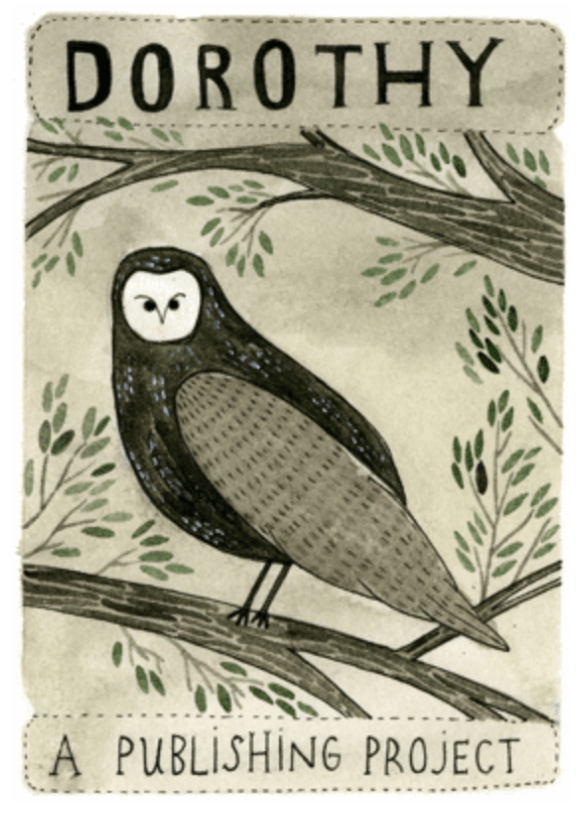
It’s worth saying more about the press that conveyed this book to me, since its own history corresponds with everything else here. Dorothy, a publishing project was founded in 2009 by Danielle Dutton and Martin Riker in St. Louis, and named for Dutton’s great-aunt, Dorothy Traver, a librarian and bookmobile driver who used to gift her niece owl-stamped children’s books. The description of the mission was to publish fiction, near-fiction, and writing about fiction, mostly by women, pairing two titles each fall chosen to sit in conversation with each other.
As a side note, Dutton is a writer herself. “Sixty-Six Dresses I Have Read,” from her collection Prairie, Dresses, Art, Other, is constructed entirely of quoted descriptions of dresses gathered from across the literary canon. That loving act of citation isn’t so far from what she and Riker do at Dorothy itself. They find, gather, and arrange other women’s words on a shelf worth keeping. In 2021, Dorothy entered a distribution partnership with New York Review Books while retaining full editorial independence. Their story echoes the same rescue-and-recirculation story this review keeps bumping into: small, nearly-overlooked work by women, carried forward by someone willing to do the carrying.
Given how much of this book’s history turns out to be a chain of rescues and recognitions, it’s worth pausing on what kind of writing Léger is actually performing, because it isn’t the kind most readers expect. Linda Hutcheon’s A Theory of Adaptation argues that adaptation across media is never a faithful carrying-over but a genuine transformation. The moment a work crosses from one sign system to another, something is necessarily lost and something else is necessarily gained. In particular, I think of Cy Twombly’s Fifty Days at Iliam, his ten-canvas response to Alexander Pope’s translation of the Iliad. Homer’s already-translated epic dissolves further into scrawl, smear, and color-cloud in Twombly’s translation of the work. Hutcheon calls it an intersemiotic translation.

Léger is doing something structurally similar with Loden, except her chain of translation runs even longer. It begins with Alma Malone, a real woman sentenced to twenty years at the Ohio Reformatory for Women for her part in a botched bank robbery, who reportedly thanked the judge for her sentence. Malone’s story became a newspaper account, which Loden translated into a screenplay and then a film, casting herself as Wanda and folding in her own history alongside Malone’s. Léger then translates the film and Loden, and by extension her own mother into a prose text that is neither biography nor criticism nor memoir but something built, like Twombly’s canvases, from the residue of everything that came before it. And then the book undergoes one further translation, in the more literal sense: written originally in French, it was carried into English for its Dorothy edition, so that what reaches most of us is already a translation of a translation of a translation. Léger’s prose is rendered into another language, describing a film’s rendering of a woman, itself adapted from a newspaper account of an actual, imprisoned woman’s disappearance. Each layer loses something and gains something else, exactly as Hutcheon would predict.
Set against all this translation-as-rescue is a counter-shadow text. Director Elia Kazan and Barbara Loden were in a rocky marital relationship. In 1967, he published The Arrangement during one of the periods when he and Loden had separated. It is barely-disguised autofiction with Eddie Anderson, a successful, emotionally unraveling advertising executive, and Gwen, his young mistress, modeled openly on Loden. By the time the novel became a bestseller, the two had reconciled, and Kazan adapted it into a film in 1969. With a cruelty almost too neat to invent, Loden was meant to play a version of herself opposite Brando, but when Brando dropped out, the studio balked at pairing Kirk Douglas with Loden and cast Faye Dunaway in her place. She was written out of her own likeness twice. In Kazan’s pages, Gwen has almost no interior life and exists through Eddie’s gaze as he presents his own self-justifying monologue. And again on screen, where the role modeled on her own life was handed to someone else. It’s worth holding this up next to Léger’s book, because it clarifies by contrast what Léger is actually doing. Kazan’s translation of Loden flattens her into an object of someone else’s crisis. Léger’s translation multiplies her. Loden, Malone, Wanda, Léger’s own mother, and herself are all superimposed rather than fixed into a single legible woman. One man’s arrangement of Barbara Loden looked like erasure disguised as intimacy. Léger’s suite looks like the opposite. There is an admission that a woman can’t be fully translated, only approached, again and again, from different angles and perspectives, none of them final.
A film salvaged from a lab basement days before demolition, a small press salvaged from a St. Louis kitchen and distributed by a larger imprint, a woman salvaged from a newspaper clipping by another woman’s camera, salvaged again by a third woman’s prose, and again by two more women’s translation into English emphasizes that the presentation and preservation of a story is never a single or clean act. It’s an accumulation of people who happened to notice something worth keeping and did something about it, perhaps imperfectly, in whatever form was available to them. Léger’s book doesn’t pretend to be the last word on the story of Barbara Loden, or on Wanda, or on Alma Malone, or even on Léger’s own mother, who haunts the margins of her text. It offers itself instead as one more layer in a translation that will never be finished. The woman at the center of it will never be fully seen. Suite for Barbara Loden insists that the layering itself is the point.
I came to this book by accident, through a press I trusted and a film I’d stumbled into during a strange, shut-in year of my own, and I suspect that’s exactly how Léger would want a reader to arrive: sideways, carrying whatever anthracite dust and half-remembered oratorios we happen to bring with us, ready to add one more translation to the pile.
DIGGING DEEPER
Films
Wanda. Directed by Barbara Loden, performances by Barbara Loden and Michael Higgins, Foundation for Filmmakers, 1970. The Criterion Collection, criterion.com/films/29450-wanda.
I Am Wanda. Directed by Katja Raganelli, featuring Barbara Loden, 1980. The Criterion Channel, criterionchannel.com/i-am-wanda.
The Arrangement. Directed by Elia Kazan, performances by Kirk Douglas and Faye Dunaway, Warner Bros., 1969.
Anthracite Fields by Julia Wolfe: Full Documentary. Tolsma Productions, 21 Apr. 2015, YouTube, youtu.be/T1xmS4stS3o?si=Fpb2smxGG26MdCBN.

Books
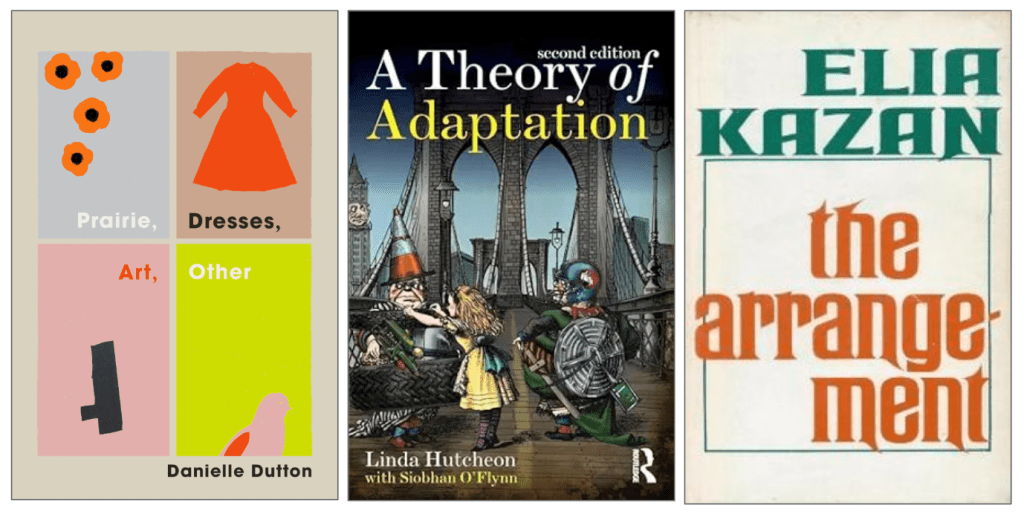
Dutton, Danielle. Prairie, Dresses, Art, Other. Wave Books, 2018.
Hutcheon, Linda, and Siobhan O’Flynn. A Theory of Adaptation. Second edition, Routledge, 2013.
Kazan, Elia. The Arrangement. Stein and Day, 1967.
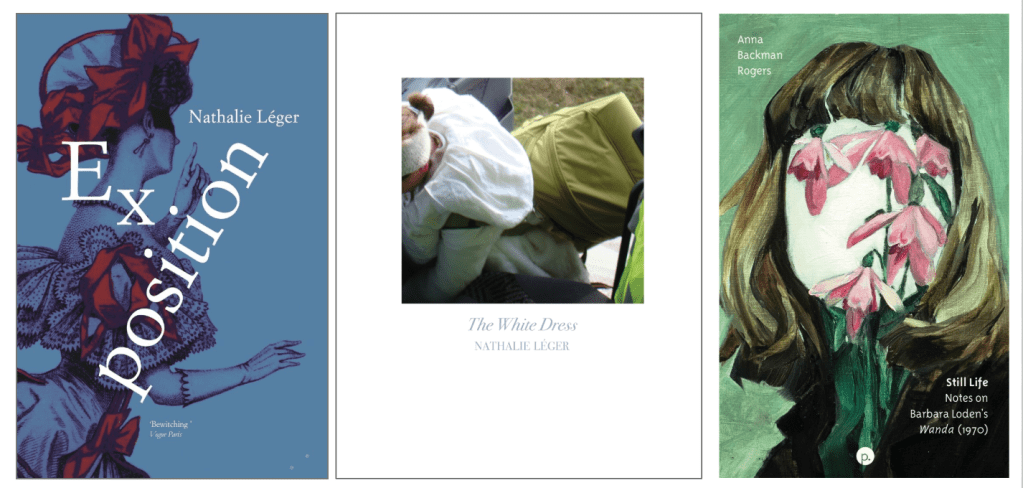
Léger, Nathalie. Exposition. Translated by Amanda DeMarco, Dorothy, a publishing project, 2016.
—. Suite for Barbara Loden. Translated by Natasha Lehrer and Cécile Menon, Dorothy, a publishing project, 2016.
—. The White Dress. Translated by Natasha Lehrer, Dorothy, a publishing project, 2020.
Rogers, Anna Backman. Still Life: Notes on Barbara Loden’s “Wanda” (1970). Punctum Books, 2021.
Music
Wolfe, Julia. “Anthracite Fields.” Julia Wolfe, 2021, https://juliawolfemusic.com/music/anthracite-fields/.
Web sources
Lipman, Ross. “Defogging Wanda.” The Criterion Collection, 25 Mar. 2019, www.criterion.com/current/posts/6237-defogging-wanda.
Rotella, Valeria. “Getting to Know Barbara Loden.” The Criterion Collection, 27 Mar. 2019, www.criterion.com/current/posts/6264-getting-to-know-barbara-loden.
“Dorothy, a Publishing Project.” Dorothy, a Publishing Project, dorothyproject.com.
“NYRB Classics.” New York Review Books, www.nyrb.com.

Beth Gourley has spent her career in libraries and classrooms as a high school English teacher, public reference librarian, and teacher-librarian at international schools in Tianjin (IST) and Beijing (WAB). She later served as head librarian at the Arkansas School for Mathematics, Sciences, and the Arts, and as Director of Libraries at Interlochen Center for the Arts. She now serves on the board of the Friends of the Interlochen Public Library. Her garden in northern Michigan is her current playground.
Disclaimer: The opinions and views expressed are the author’s and do not necessarily reflect those of GLLI.


One thought on “#WITMonth: In Conversation with “SUITE FOR BARBARA LODEN””