
Today’s post comes to you from Hwee
Concerning My Daughter is a South Korean novel written by Kim Hye-jin, translated by Jamie Chang, who has also translated popular novels like Kim Ji Young : Born 1982. The book has also won the prestigious Shin Dong-yup Literary Award in 2018.
The book is about an ageing mother who is struggling with the fact that her daughter, Green, and her same-sex lover have moved in with her and is part of protests against the unfair dismissal of her gay colleagues. At the same time, she struggles in her role as a caretaker for a dementia patient, and the nursing home she works at insists she lower her standard of care for her.
At the core of this novel, it talks about the way people are entrenched in tradition and conforming to social norms, and the sort of contradictory parental love that arises. As difficult as it was for me to be in the mind of a mother who is homophobic and stuck in her ways, it remained in my mind for being a story that confronts what a community looks like. The struggles the mother and her daughter face also felt reminiscent of my own struggles.
The mother essentially lives in an ouroboros of fears and worries, where society feeds them into her, which she projects onto her daughter, because she views and loves her daughter as an extension of herself. She says, “You think a person’s life belongs to just that one person? No life is like that.” Her coworker says, “It takes work, but they’re your assets and insurance.” Because she does not view people as their own individual being, her fears and worries about her life are magnified, for it means that for her, her daughter’s behaviour affects the way she is seen and treated. It was also reminiscent of various arguments I’ve had with my own mother, who’s reasoning for a lot of things basically hinged on “what if other people thought we were _____ ?”
What also intrigued me was her attitude towards non-familial relations. She says at some point, “But these people are good friends and colleagues only for now. People who could turn their backs on you at any moment. What I need in my home now isn’t people who can leave at any time, but family. That’s the only thing that will protect my daughter. Where do I even begin explaining something so obvious and irrefutable to her?”
It is a sentiment that she repeats several times in the book, and also something I had heard from my parents before. When I asked several other friends if the elders in their family have echoed similar sentiments, the general answer was also yes. It has been something I’ve been stewing over lately, as it felt incredibly contradictory to the spirit of community I was always told about and heralded by my elders.
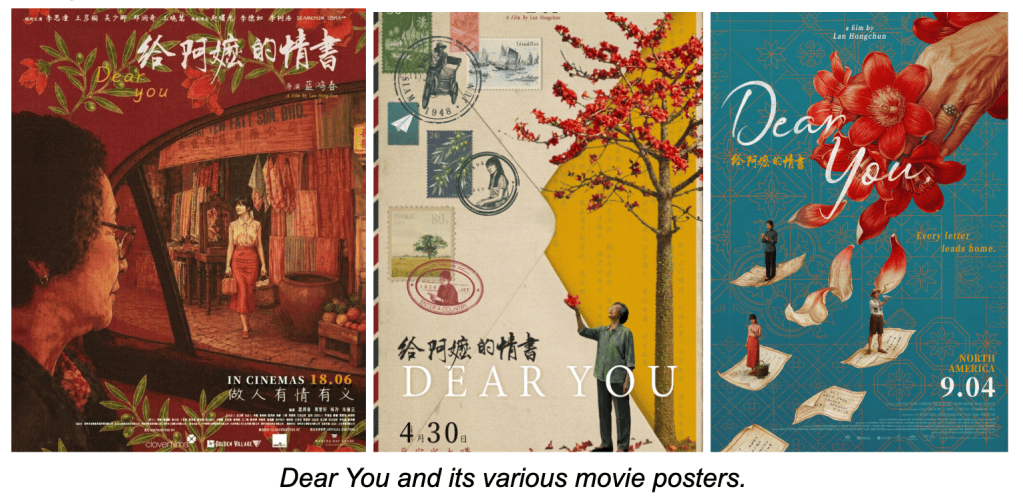
At the time of writing this post, I had just seen a movie called Dear You, a Teochew-speaking movie about the migration of the southern Chinese towards other countries to eke out a living in the mid 1900s. The core of the movie is a Teochew concept that idealises living for your community, to help each other because we are “ka ki nang” (one of our own). It emphasizes living as a person who has a sense of justice and loyalty for their community, a person who has compassion and keeps in mind the good people in the community do for each other. I was so touched by the spirit of community displayed in the movie, and yet to also be cognizant of that contradiction is confusing, to say the least. Where did it all go wrong?
Of course a Chinese community and a South Korean community are not interchangeable with each other, but it fascinates me the different ways the community behaves in different cultures, and the way people function in them.
According to the mother, she is :
“a good person. I tried all my life to be good. A good child. A good sibling. A good wife. A good parent. A good neighbour. And another life ago, a good teacher.”
The society she lives in tells her how to be a good person, how to be a part of the community, in order to be treated with respect and dignity. Yet, she is starting to be mistreated because she is old, and watching Jen’s deterioration and her subsequent mistreatment worsens that fear. She is afraid that one day, she and her daughter will be treated the same as Jen. She fears for Jen’s wellbeing, so much to the point that she is willing to bring Jen home at the end of the story and accompany her to the day she dies. Yet at the same time, she laments, like everyone else, the fact that Jen chose not to have a family, and attributes that to having resulted in her current state.
Here, you see how the mother chafes against society’s demands, yet also pushes the demand to conform onto others. This is also the reason she clings tightly to the idea of family, as she thinks that Green will be her only support, and thus she cannot stand the idea of Green being out of her control. Her love is so contradictory, it’s like a tug of war between her deep love for her daughter and her deep set belief in the traditions of her community. Ironically, the world she rejects so much has shown her much more grace and care than the one she believes to be right.
You might have also noticed that I have never once mentioned the mother by name in this post. That’s because she was never given one. She is tied into her role as a mother, a caretaker, the bottom rung in a society that no longer values her. Green and her lover Lane are only made known by the monikers they made for each other, which highlights the emotional disconnect between her and her daughter. Anybody else who has been deemed of important status have proper names. Only she and her coworkers at the nursing home are marked by their status in life and never referred to by name.
In the end, despite finding it difficult to read sometimes because her thoughts felt so circular and suffocating, I found myself trying to give her so much grace and understanding where she was coming from. It is so important that this book was written through her eyes instead, rather than the daughter. There is no satisfying end to this story, as the mother still rejects even the small desire she is starting to nurse about changing. But it is a realistic portrait of how familial relationships look like, and how difficult and slow it can be to try and pull yourself out of the bog you’ve been standing in. Not an easy read, but I will be thinking about this a lot.
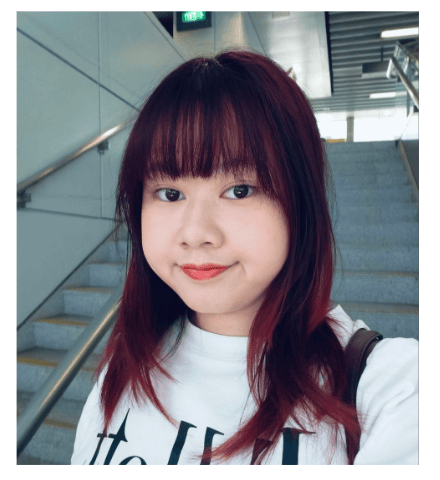
Hwee is a library assistant at the United World College Southeast Asia in Singapore and is currently in her second year studying for her BA in Translation and Interpretation (Mandarin – English pair) at the Singapore University of Social Sciences. A true lover of languages, she taught herself some Korean and Japanese, and eventually wants to learn how to speak Teochew. She spends the rest of her time playing games and making journal spreads.
Disclaimer: The opinions and views expressed are the author’s and do not necessarily reflect those of GLLI.


One thought on “#WITMonth: “Concerning My Daughter” by Kim Hye-jin”