
Today’s post comes to you from Kim Tyo-Dickerson
Why You Should Watch “The Sheep Detectives” and Read “Three Bags Full”… in Any Order
“Justice!” bleated Othello.
“Justice!” bleated the other sheep. And so it was decided that George Glenn’s sheep themselves would solve the wicked murder of their shepherd” – Three Bags Full
During the summer 2026, like many families we curled up on the sofa to selectively ignore my husband’s boycott of all things Amazon and watch the Amazon Prime film The Sheep Detectives starring Hugh Jackman, Julia Louis-Dreyfus, Emma Thompson, Patrick Stewart, and a host of other A-list actors. This tale of a handsome, lonely shepherd named George Hardy, played by Hugh Jackman, living in a caravan in the lush green of the English countryside tending his flock and reading murder mysteries out loud to his sheep every night, promised a good old-fashioned animal-centered fantasy. We were thinking of a watch-alike like Babe or Charlotte’s Web. Even knowing that the vegetarian shepherd dies straightaway, likely murdered, we were eager to watch a field of intelligent sheep remove the wool pulled over all George’s neighbors’ eyes by a killer to investigate their human’s death.
The eccentric inhabitants in the nearby village of Denbrook provided red herrings galore. There is the out of town reporter looking for his first big story and George’s death fits the bill perfectly. There is the local butcher who is conniving with George’s competitor shepherd to buy George’s land and herd for slaughter. There is the bed and breakfast owner, in love with George and ruthless in her jealousy. There is the vicar who George blames for his pain and solitude. And ultimately there is the young, slightly buffoonish local policeman who refuses at first to see George’s death as homicide. The arrival of George’s long-lost adopted daughter right after George’s death sends the entire community into an uproar of intrigue.
For each of these people in and out of George’s life, the members of his kind, intelligent flock of sheep, led by the lovely and most intelligent sheep of all, Lily, have their suspicions and become surprisingly good at spotting clues. The murderer is eventually exposed through a mix of sheep teamwork and sharp instincts, bringing the investigation to a resolution that is deeply felt and has a happy ending despite George’s passing.
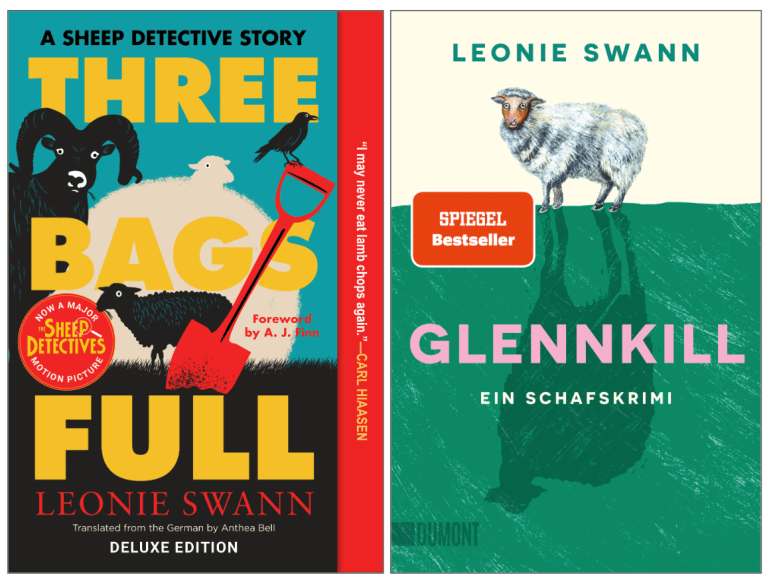
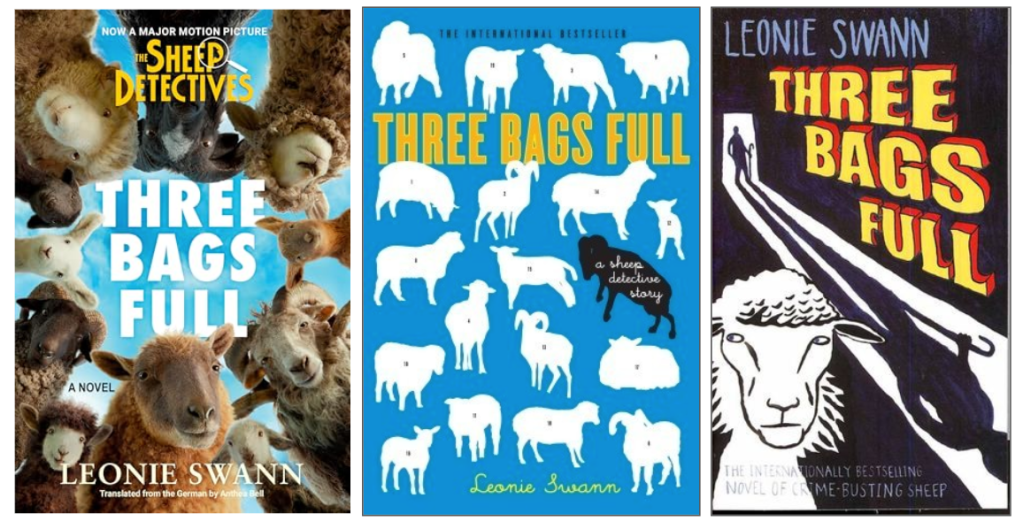
So, after a five star rating from my family and a pile of tissues from the many tears shed at the poignant bits, we watched the credits as we always do and I discovered that the film was actually an adaptation of a German murder mystery from 2005 called Glenkill, and was originally set in Ireland. It was translated into English as Three Bags Full by the award-winning translator Anthea Bell. That meant I had to read the original story and compare.
The film adaptation of Three Bags Full took almost 20 years to make it to the screen. This is understandable as the original story explores the existential and psychological priorities found in much of German literature. Swann’s murder mystery has complicated characters that move between light and dark, struggling between right and wrong actions. The Sheep Detectives has a simplicity in characterization that is in pursuit of a well-paced visual story. Three Bags Full has more of a grazing pace that is focused on the human condition from the outside, as it is mostly told through the eyes, ears, and noses of George’s philosophical sheep.
In fact, the world of scent is a primary way that the sheep discover lies and truth, detection skills that human sleuths are barely able to use. The book is a murder mystery, but it is also a philosophical exploration of other ways of knowing, as well as life and death, justice and community.
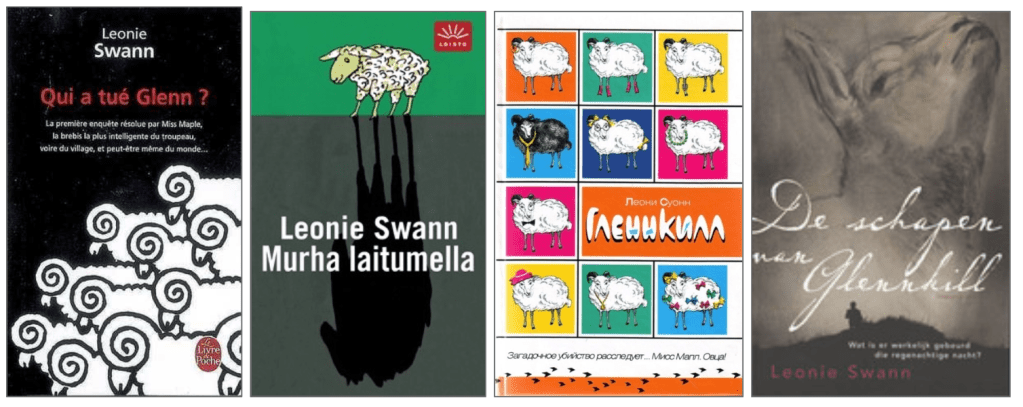
George Glenn, his name in Three Bags Full, is equally misanthropic towards his neighbors but with more troubling secrets. He is a good shepherd, but he has ulterior motives that cast doubt on his sincerity. There is a more complex and conflicted character here than in the movie where George has almost heroic qualities. In the book, George is struggling and depressed, estranged from his friends, wife, and daughter, and it is unclear whether there will be redemption or not. There is a criminal underworld operating somewhere and hinted at from the beginning. George has made good and bad choices that come back to haunt him rather than heal him. His death allows his flock and community to think deeper about the man George was and why he died and most of those thoughts and insights are revealed through the voices of his herd in the bucolic meadow outside the village. The humans are the last ones to know.
The voices of the sheep are the most compelling and, indeed, the center of the novel, and dominate over action. Thus, there were many changes in pacing and plot needed to create the film The Sheep Detectives. In the book, the natural world that the sheep know best is described in poetic, contemplative language beautifully translated by the legendary Anthea Bell and arresting enough to stop a reader in their tracks to appreciate the moment:
“The sea looked as if it had been licked clean, blue and clear and smooth, and there were a few woolly little clouds in the sky. Legend said that these clouds were sheep who had simply wandered over the cliff tops one day, special sheep who now went on grazing in the sky and were never shorn. In any case, they were a good sign” – Three Bags Full
Here is the evidence of the flock’s own mythologies, namely that sheep turn into fluffy white clouds when they die, and also the realm of their meadow and cliffs by the sea that define their own habits, fears, and prejudices. As sheep, there is always the tension between individual action and initiative and the pull of the flock or whole, a meditation on the ways in which humans isolate themselves and then are drawn back to their communities…or not, ““No sheep may leave the flock” according to the sheep “unless he comes back again.”
The religious imagery reads as very intentional in Three Bags Full. Religion has a prominent role in both the bewilderment and skepticism the sheep feel about the concept of God and souls. Mopple the Whale, the sheep that is always hungry and has a photographic memory so he never forgets anything, “This God sounds rather suspicious to me.” Through Mopple’s eyes, human preoccupations with justice and judgment are given a hefty dose of humor. The Christian parable and symbolism of The Good Shepherd is turned completely on its head. While George is literally their shepherd, he is a deeply flawed, secretive mortal rather than an infallible divine savior. By subverting the classic biblical metaphor of humans as passive, mindless sheep blindly following a master, Swann endows the flock with moral agency and sharp critical thought. In doing so, she transforms a familiar religious allegory into a warm-hearted exploration of free will, community, and what it truly means to watch over one another.
Ultimately, it is this charming tension that makes Swann’s mystery so special. She has created a world where sheep interrogate heavy philosophical questions about faith, mortality, and human nature with the same earnest seriousness they apply to finding the best patch of clover. In the end, however, they are sheep and the flock is led by a ram, a reality that is quietly in the background and becomes more and more present as the novel progresses.
While The Sheep Detectives delivers a cozy, star-studded mystery that will leave your whole family reaching for the tissue box marveling at the way the flock evolves and grows, picking up Anthea Bell’s rich translation of the darker and more morally complex world of Three Bags Full offers something different and more unsettling. The film captures the charm and the Agatha Christie-style mystery elements, but the book delivers the often troubled nights of the soul that will simultaneously have you looking in the sky at clouds and counting sheep as you reach out to call your friends and family. Whether you start with the film on Amazon Prime or at the library or bookshop with the novel, George’s flock will capture your heart and will likely leave you looking at every grazing sheep in the countryside with a little more suspicion and a lot more respect for both their gentle naturesand animal intelligence.
Tree Bags Full – by Leonie Swann / Originally published as Glennkill: Ein Schafskrimi on May 2, 2007 by Goldmann / Translated from German by Anthea Bell (Penguin / Soho Crime, 2025).
Extras
10 Major Differences Between The Sheep Detectives Movie and The Novel – Explored
Find out how Agatha Christie influenced the writing of The Sheep Detectives.
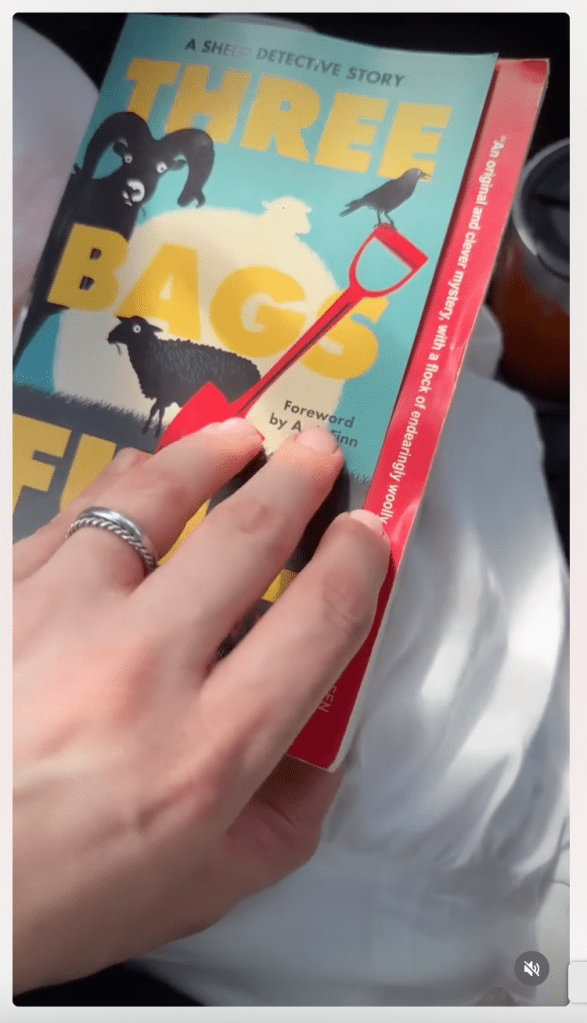
The Three Bags Full (Deluxe Edition) via Soho Crime has a whimsical addition to the paperback, as well as a foreword by thriller author A.J. Finn: https://www.instagram.com/reel/DWPyjAmxjxe/
Kim Tyo-Dickerson is the Head of Libraries and Upper School Librarian at the International School of Amsterdam, with over 25 years of experience across North America, Europe, and Africa. She holds an MLIS from Syracuse University and an MA in English from Miami University in Oxford, Ohio. Her practice is deeply informed by her Ethiopian American family and is centered on social justice, the freedom to read, and fostering environments of belonging. A passionate advocate for global literature, Kim’s professional and personal journey is rooted in the belief that language and literature are the essential tools for making sense of our world through the stories we share. You can connect with Kim on LinkedIn.

Disclaimer: The opinions and views expressed are the author’s and do not necessarily reflect those of GLLI.


One thought on “#WITMonth: Cozy Movie Night with a Classic German Murder Mystery”