Today’s post comes to you from Sandra Tamele.
Founder of Editora Trinta Zero Nove, an independent publishing house based in Maputo, Mozambique, Sandra Tamele affirms that librarians have an important role to play in broadening readers’ world since a book “doesn’t truly cross a border simply because it appears in an international catalog. It crosses a border when it reaches a reader who might never have encountered it otherwise. That is the journey we are trying to make possible, one book at a time.”
GLLI: Could you share a little about yourself and the history of Editora Trinta Zero Nove?
I have been an avid reader since childhood, though my professional journey into publishing has been quite unconventional. I initially trained as an architect and urban planner, but after an unsuccessful career in architecture, I found my calling in literary translation, which I have been practicing professionally since 2007.
In 2015, I established a literary translation competition to encourage emerging translators and to introduce contemporary international literature to Mozambican readers. What began as a personal initiative gradually evolved into something much larger. In 2018, I founded Editora Trinta Zero Nove, Mozambique’s first independent publishing house dedicated to literature in translation. I became a publisher almost by accident, but certainly out of necessity; I wanted Mozambicans to have access to stories, and no publisher was making them available.
Publishing soon revealed another challenge: distribution. Books cannot transform lives if readers cannot find or afford them. This realization led me to establish Livroteca, a bookshop and community library in Marracuene, a historically underserved district on the outskirts of Maputo.
Today, my journey has taken another turn with the creation of the Maputo International Book Fair (MIBF), which we will launch in November 2026. I often describe this journey as a series of solutions to problems I hadn’t anticipated. Translation led to publishing; publishing led to bookselling and community literacy; and these experiences highlighted the need for a professional international marketplace for books and rights.
GLLI: What is the philosophy behind Editora Trinta Zero Nove, and who are your readers?
Our philosophy is based on one conviction: literature should not be a privilege determined by geography, language, purchasing power, or disability. Because we specialize in literature in translation, crossing borders is central to our business model. We introduce Mozambican readers to stories from around the world while increasingly translating Mozambican literature for international audiences. Initially, I envisioned a very specific readership: young women, particularly aspiring writers, who deserve access to inspiring contemporary literature. I acquired stories by female writers shortlisted for the Caine Prize for African Writing, translated them, and published affordable editions retailing for about the price of a cup of coffee. I wanted those books to be beautiful; I have always believed that books should be objects of desire, regardless of their price.
Over time, our editorial vision expanded to include queer literature, children’s books, bilingual editions, and stories that challenge conventional expectations. Today, inclusivity defines our publishing model. We work in Portuguese, English, and various Mozambican languages, including ciChangana, eMakhuwa, and ciSena, while also exploring audiobooks, Braille, and other accessible formats. Our readers are not simply those who already buy books; they also include people the traditional publishing industry has overlooked: children growing up without access to bookstores, readers who prefer their mother tongues, people with print disabilities, and families for whom purchasing a book represents a significant financial decision.
Livroteca embodies this philosophy. It is more than a bookshop; it’s a welcoming space where children discover books, families participate in reading activities, and a community gradually develops a relationship with literature. Our ambition is not merely to sell books to existing readers but to create the conditions for more people to become readers.
GLLI: Please share with our readers some titles that you have published, and where can librariansgt acquire your books?
Our catalogue has grown to over 60 titles, featuring literary fiction, short stories, children’s literature, and works in translation from various languages and literary traditions. We have published internationally recognized writers alongside emerging voices, including Bora Chung, Conceição Evaristo, Niccolò Ammaniti, Kirsty Logan, and Mozambican authors whose work deserves wider recognition.
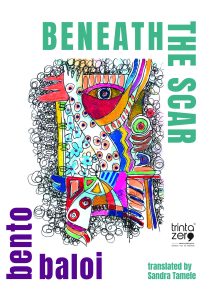
One title I am particularly proud of is Beneath the Scar, by Mozambican writer Bento Baloi. The original novel won the inaugural Mia Couto Literary Award. I translated it into English, despite the longstanding debate about translating into a language other than one’s mother tongue. I felt strongly that this story deserved an international readership and kept asking myself, “If I didn’t translate it, who would?”
The response exceeded my expectations. Beneath the Scar was selected as one of Brittle Paper’s 100 Notable African Books of 2025 and was subsequently recognized in the Shortlist of the 2026 CANEX Prize for Publishing.
For librarians in the United States, the United Kingdom, and elsewhere, our international catalogue is distributed through African Books Collective, which collaborates with library suppliers and international book distribution networks. Libraries can explore our available titles through:
Our distribution arrangements include print-on-demand options in international markets, which help to mitigate some of the logistical challenges of shipping books from Mozambique. We particularly welcome inquiries from university libraries, African studies collections, comparative literature departments, translation studies programs, and public libraries that aim to diversify their international collections.
Acquiring books directly from African independent publishers is not just an act of cultural representation; it is also an investment in the publishing ecosystems that discover, nurture, and sustain African literary talent.
GLLI: What should readers look forward to over the next couple of years?
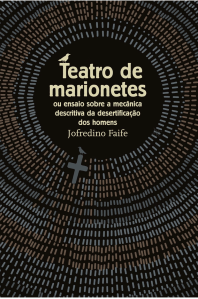

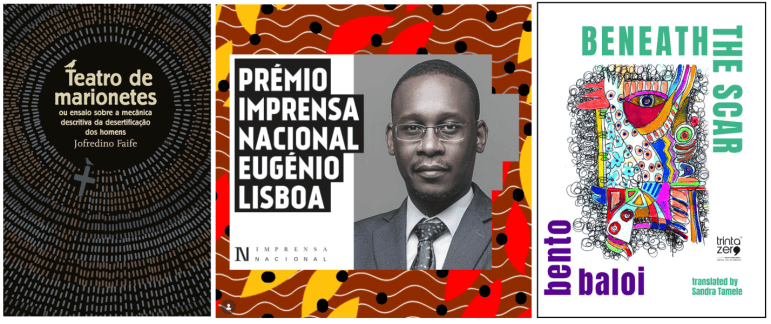
I am particularly excited about expanding our catalog of Mozambican literature translated into English. Following the encouraging international reception of Beneath the Scar, we are developing several projects, including As 12 Caixas do Império by Eusébio Sanjane, a historical novella that explores the experiences of victims of Portuguese colonial political repression that is the recipient of the 2025 Imprensa Nacional/Eugénio Lisboa Literary Prize (Prémio Literário Imprensa Nacional/Eugénio Lisboa), and Teatro de Marionetes, a dystopian novel by Jofredino Faife.
I am also actively seeking female Mozambican voices to ensure our international catalog reflects the diversity of our literary landscape. Another exciting development is our Portuguese translation of The Polygamist by Zimbabwean bestselling author Sue Nyathi, which we will launch in connection with the inaugural Maputo International Book Fair.
This acquisition reflects an ambition I share with Sue: African books must begin to travel in different directions. For too long, African markets have primarily consumed literature imported from Europe and North America; we need more African stories circulating between African countries.
Beyond individual titles, the Maputo International Book Fair represents our most ambitious undertaking to date. Under the theme “Cities That Write Themselves,” the inaugural edition will take place from November 15 to 17, 2026. It will combine a public literary festival with professional programming, including publishing workshops, rights exchanges, discussions on technology and innovation, and opportunities for international collaboration.
Our long-term vision is to establish Maputo as a gateway connecting Southern Africa, Portuguese-speaking countries, and the broader international publishing community.
GLLI: What are the greatest challenges you face, and how could international partners help?
Our challenges are structural, financial, and increasingly environmental. Mozambique is somewhat of a Portuguese-speaking island in Southern Africa. Although we’re geographically close to South Africa, there are significant linguistic and commercial barriers between our book markets. Books published in Maputo struggle to reach Johannesburg, which is just a few hundred kilometers away. Conversely, African books from English-speaking neighboring countries often remain inaccessible to Mozambican readers.
International distribution provides visibility, but this visibility does not automatically translate into affordability or sales. Production costs present another challenge. As a micro-publisher, I constantly negotiate the balance between editorial quality, attractive design, print runs, and retail prices. Every rights acquisition is both a creative decision and a financial risk.
There are also unpredictable challenges. In January 2026, devastating floods destroyed approximately 80% of our book stock, resulting in losses nearing US$200,000. For a small independent publisher, such an event can erase years of investment almost overnight.
We have persevered, but this experience reinforced how vulnerable independent cultural businesses are, especially in markets with limited access to insurance, financing, and institutional support. International libraries and publishing partners can make a tangible difference through consistent acquisitions, translation partnerships, co-publishing agreements, professional exchanges, and support for local publishing infrastructure. What we need is not simply greater visibility for African literature but stronger commercial relationships that allow African publishers to benefit from the international success of their books.
GLLI: Is there anything else you’d like to share with our readers?
I would like to challenge the notion that African literature must be discovered elsewhere before it is considered valuable. Africa has extraordinary writers, translators, illustrators, editors, and publishers. What we often lack is not talent, but the infrastructure needed to connect our stories with readers. As a translator, I believe that literature creates bridges between cultures. As a publisher, I have learned that these bridges also require investment, distribution, and commercial sustainability. As a bookseller and librarian, I have discovered that the most important reader may be the child who walks into Livroteca having never owned a book.
Now, as a book fair organizer, I am trying to bring these different parts of the ecosystem together. I hope that librarians and readers internationally will look beyond the familiar names and established publishing centers when building their collections. Explore books published in Maputo, Lusaka, Nairobi, or Accra. Seek out translations from African languages. Support the independent publishers who take risks on stories that might otherwise never reach you.
A book doesn’t truly cross a border simply because it appears in an international catalog. It crosses a border when it reaches a reader who might never have encountered it otherwise. That is the journey we are trying to make possible, one book at a time.
Sandra Tamele: Editora Trinta Zero Nove

Sandra Tamele (BArch, MCIL) is an award-winning publisher, literary translator, bookseller, speaker, and moderator. She is recognized as the first Black woman to own an independent publishing house in the PALOP countries. Currently, she serves as the President of the Mozambican Publishers and Booksellers Association (AMEL). Additionally, she is a member of the International Committee of Independent Publishers and is on the advisory boards of PublisHer and the African Books Collective. Sandra has translated over 50 titles and has received several accolades, including the London Book Fair International Excellence Award for Literary Translation Initiatives, the Bologna BOP Children’s Publisher of the Year Award, a PEN Translates Award, and a Looren Excellence Grant. She was longlisted for the Dublin Literary Award and her publisher shortlisted to the CANEX prize for Publishing in 2026. (Image and bio curtesy of Catalyst Press)

