Today’s post comes to you from Dr. Annette Goldsmith & Dr. Vashalice Kaaba.
GLLI Executive Director Dr. Vashalice Kaaba and GLLI board member Dr. Annette Y. Goldsmith attended a much-anticipated #ReadingAfrica Week panel on translation and have together written this reflection on what they heard.
Dr. Kaaba introduces the panel and shares her takeaways on how cultural content is transposed from one language into another.
Then Dr. Goldsmith summarizes the discussion about publishing African books in African and other languages, considering the implications for global publishing overall.
THE PANEL
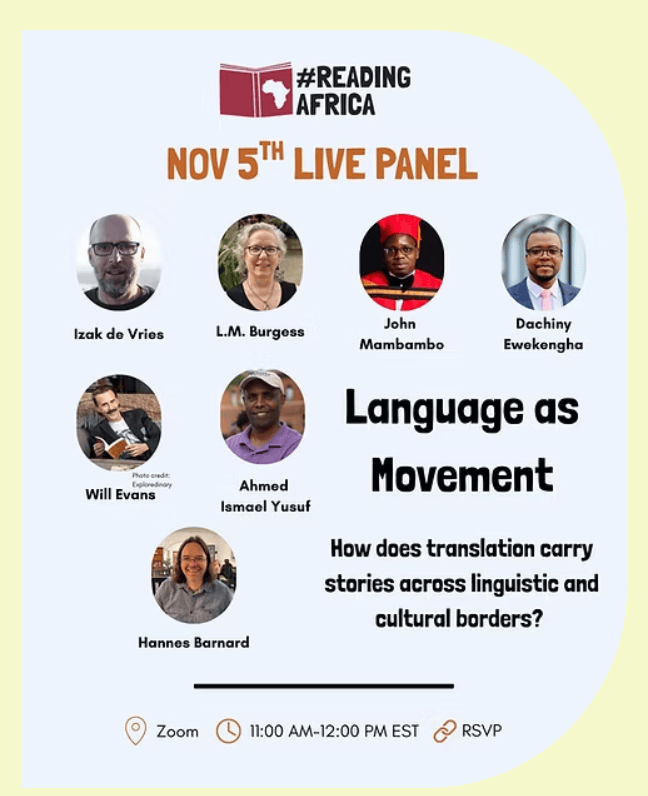
On November 5, Catalyst Press’s live Zoom panel “Language as Movement” explored how stories travel between languages and what it takes for them to reach new readers. The conversation was a highlight of #ReadingAfrica Week and took up this year’s theme, “Crossing Pages, Crossing Borders.”
The panel brought together writers who work across languages and genres. South African writer and translator Izak de Vries moderated the discussion. Lisa Maria Burgess, based in New York and Benin, uses hand-stitched textile art to illustrate bilingual children’s books, including her English–Spanish titles. Burgess also works in French and all the other languages spoken in Benin. In Johannesburg, young adult author Hannes Barnard writes in Afrikaans and English and has translated his own work between the two. Minneapolis-based Ahmed Ismail Yusuf writes fiction, plays, and essays and translates Somali literature into English. Yusuf writes in both English and Somali.
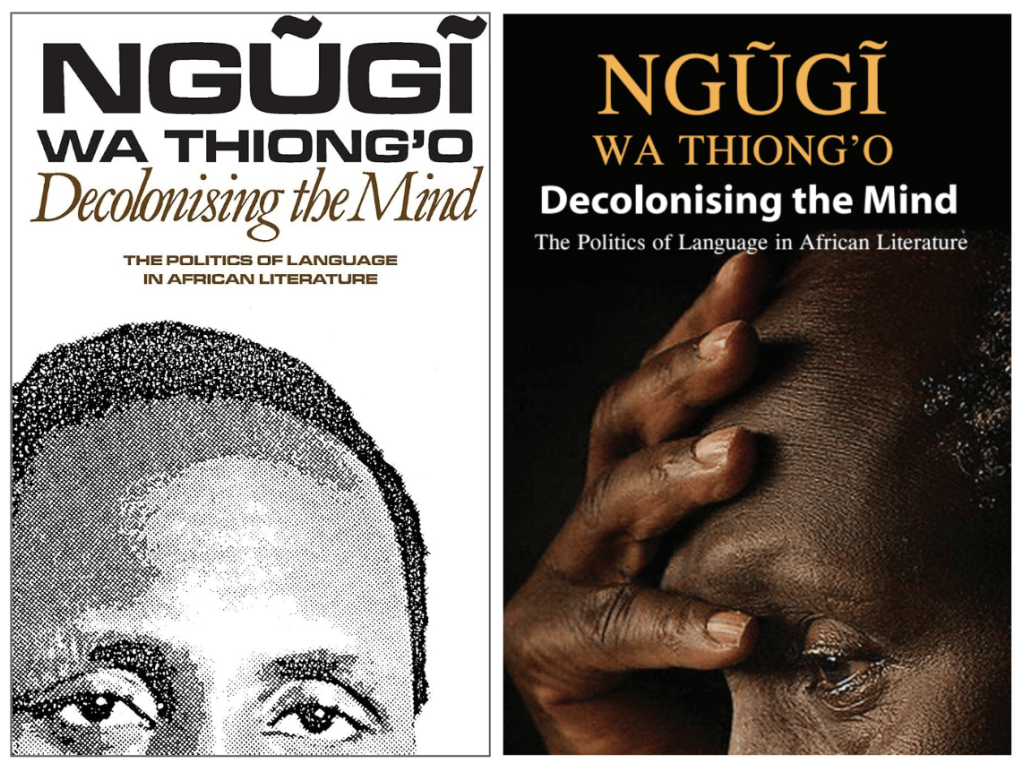
Dr. John Mambambo, a Zimbabwean-born translator based in Norwich, England, brought Ngũgĩ wa Thiong’o’s 1986 book Decolonising the Mind: The Politics of Language in African Literature from English into Shona. His translation, Kutapanura Pfungwa Dzakatapwa, appeared in 2021. Dachiny (Dash) Ewekengha, a translator and subtitler from the Republic of the Congo, works from English into French and Lingala.
For Will Evans, translating Russian literature into English was a route into publishing. He founded Deep Vellum, a Dallas nonprofit press whose list includes African literature in translation. His experience brought a publisher’s perspective to the discussion of how books find readers across borders.
More detailed biographies of the panel are available courtesy of Catalyst Press.
For GLLI’s A Month of Reading Africa, we return to two questions from that conversation.
In Cultural Content, Dr. Kaaba looks at how a translator carries a story’s humor, voice, and cultural references into another language.
In On Publishing, Dr. Goldsmith addresses what it takes to publish books in African languages and get them into the hands of readers across the continent and around the world.
CULTURAL CONTENT
Imagine a grandmother scolding her grown grandson with a nickname she gave him as a child. The name makes the others at the table laugh. It also lets him know she’s still on his side. How does a translator help a reader in another language hear all of that in a single line?
During #ReadingAfrica Week, Catalyst Press’s Language as Movement panel explored how stories move between languages and cultures. As we continue our month of reading African literature at the Global Literature in Libraries Initiative (GLLI), I keep returning to two questions from that conversation.
How does a story keep the feel of the world it came from? And what will it take for more readers to find it?
The first question asks for what I think of as cultural intimacy. A translator needs an ear for who can tease whom, when a familiar saying carries a warning, and what a character reveals by switching languages. A clue in the surrounding dialogue might give readers enough context to catch a joke. In another scene, a different expression might land with the same surprise. The work is to give readers a chance to notice and feel what the original makes possible. We might recognize the affection in the grandmother’s voice while discovering a way of expressing it that we’ve never heard before.
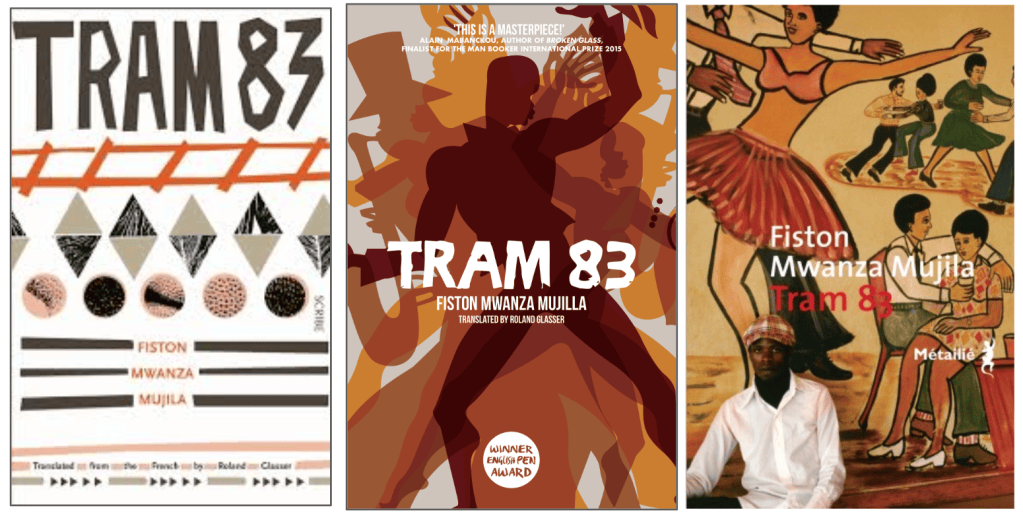
Two Congolese novels bring that work into focus. Fiston Mwanza Mujila uses the rhythms of jazz to put readers inside the nightclub at the center of his French-language novel. The quick turns and repetitions of the prose are part of what Roland Glasser carried into English for Deep Vellum’s edition of Tram 83.
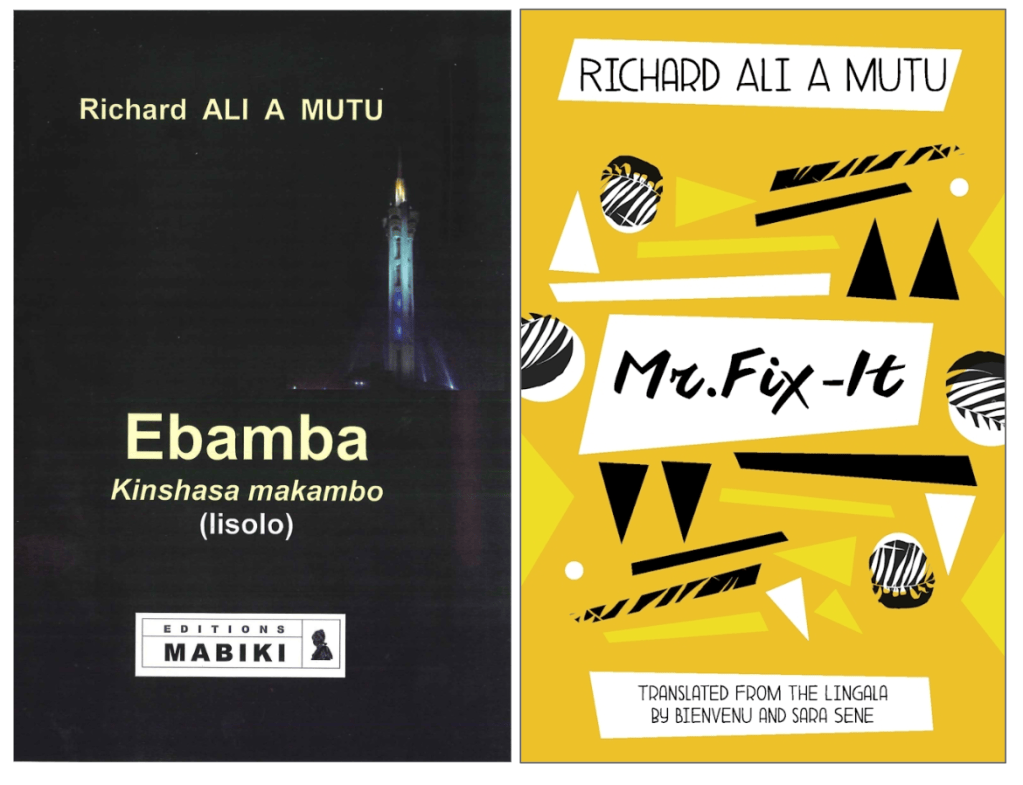
Richard Ali A Mutu’s Ebamba, Kinshasa Makambo offers a different example. In Lingala, the protagonist’s name means “mender,” an irony that grows sharper as his own life comes apart. Bienvenu Sene Mongaba and Sara Sene carry some of that irony into English in the title itself, Mr. Fix-It.
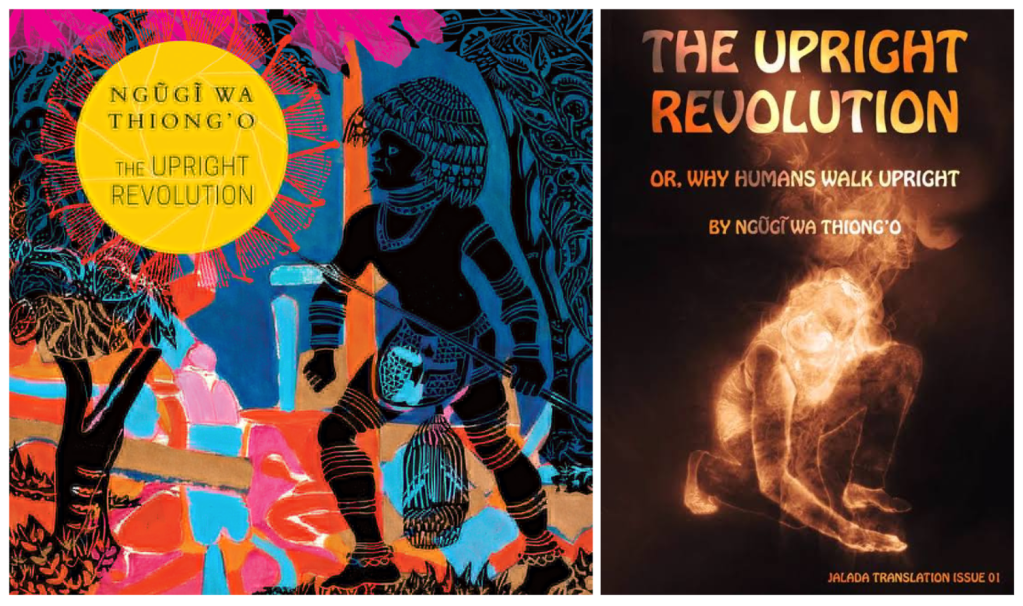
Ali A Mutu has also helped stories travel into Lingala. For Jalada Africa, he translated Ngũgĩ wa Thiong’o’s “The Upright Revolution,” originally written in Gĩkũyũ. Readers can hear both versions read aloud and find the story in Kiswahili, Luganda, and other languages. It’s a glimpse of how readers across the continent can encounter one another’s literature in languages they already use to tell stories of their own. (See Jalada Africa’s 2016 translation issue.)
For that exchange to become an ordinary part of reading life, the books have to be within reach. A publisher can believe in a manuscript and still have to work out how to pay for a translation and where to sell the finished book. Those decisions shape which languages readers encounter in print and which stories teachers can bring into a classroom. For educators working to decolonize a curriculum, the language of a book matters alongside whose story it tells. A novel written in a language students speak at home can become a book they discuss together in class, provided their school can get the copies.
What would make it possible for writers and translators to earn a living working in African languages and for publishers to keep those books in print? How might libraries, booksellers, reviewers, and literary prizes help those books reach readers across the continent and around the world?
I think about a person who opens a library book and hears, in its first line, a language they know from home. I want that person to be able to come back next week and find another.
— Dr. Vashalice Kaaba
ON PUBLISHING
As a scholar who follows translation publishing I was especially keen to hear this part of the discussion. Deep Vellum publisher Will Evans is passionate in his belief that we need more stories to build a fuller picture of the world, and raises the issue of how to create a marketplace for those stories.
As Izak de Vries pointed out, it’s difficult just to get African works translated into languages other Africans can read. Certainly one goal, according to Lisa Maria Burgess, is to have cross-country movement, and for that to happen, she proposes creating projects. Movement should not just be one-way: for example, from Tanzania to the UK. John Mambambo raised the political question of who has power over the language –- people need economic power to move their languages. Hannes Barnard is convinced that if African writers keep producing exceptional products, “the door will be kicked open.”
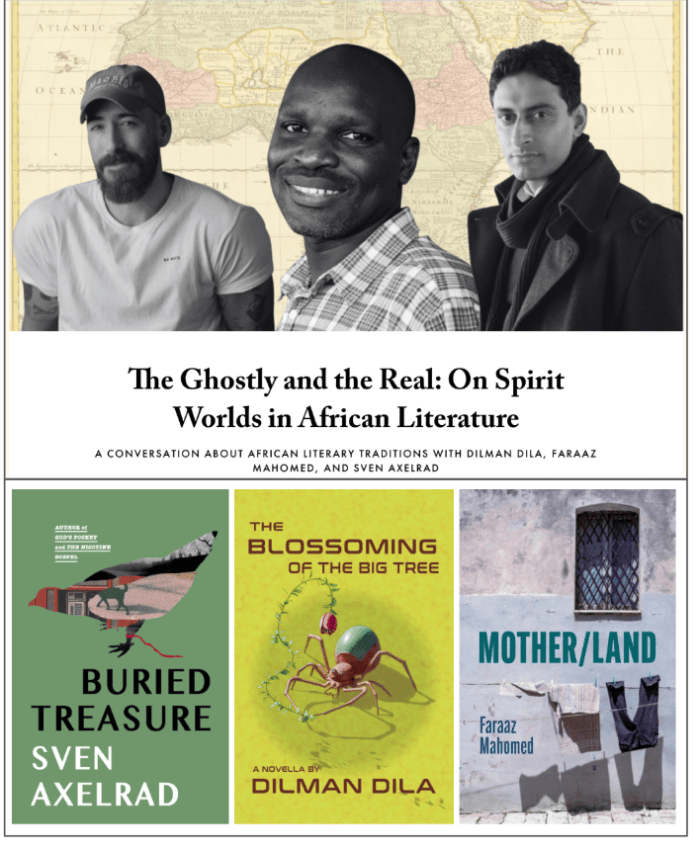
And there is so much for readers in Africa and beyond to discover! For example, magical realism usually brings to mind the work of Latin American writers, but there is a long tradition of magical realism in African writing. A #ReadingAfrica Week author panel moderated by Karina M. Szczurek, “The Ghostly and the Real: On Spirit Worlds in African Literature,” explores this fascinating subject on Literary Hub.
Taking it back to the business side, Evans recommended using existing platforms to incentivize writers. He offered the example of how South Korea has invested in and built a literature that has moved to the world stage. Finally, he said that, though publishing on the Internet is certainly a way to improve the dissemination of stories, a physical book is another experience entirely. At that many heads nodded on the screen, and doubtless in the audience, too!

Last week a blog post on Publishing Perspectives by Thai publisher, Trasvin Jittidecharack of Silkworm Books, addressed the global availability of books. The use of digital technology and modern approaches to make books more available are welcome, she says, but they do not necessarily help with accessibility. Rather, the future of global publishing “should be about making books from everywhere accessible to everyone.”
I think initiatives like #ReadingAfrica Week are part of the ecosystem necessary to make books more accessible to more people in more places. We do not want to miss out on the rich literatures from African and other countries, and we applaud Catalyst Press and their publisher, Jessica Powers, for ten years of #ReadingAfrica Week!
— Dr. Annette Y Goldsmith
References
Catalyst Press. (n.d.). Language as movement [Event listing]. https://www.catalystpress.org/event-details/language-as-movement www.catalystpress.org
Herzfeld, M. (2005). Cultural intimacy: Social poetics in the nation-state (2nd ed.). Routledge.
Jittidecharak, T (2026, November 3). Global publishing: More accessible, but for whom? Publishing Perspectives. https://publishingperspectives.com/2026/11/global-publishing-more-accessible-but-for-whom/
Szczurek, K. M. (2026, November 2). The ghostly and the real: On spirit worlds in African literature.” Literary Hub. https://lithub.com/the-ghostly-and-the-real-on-spirit-worlds-in-african-literature/
Recommended Works
Ali A Mutu, R. (2014). Ebamba: Kinshasa makambo (lisolo) [Ebamba: Troubles in Kinshasa (a novel)]. Éditions Mabiki. katalog.mikanda.info
Ali A Mutu, R. (2017). Mr. Fix-It (B. Sene Mongaba & S. Sene, Trans.). Phoneme Media. (Original work published 2014) static1.squarespace.com
Jalada Africa. (2016, March 22). Jalada translation issue 01: Ngũgĩ wa Thiong’o. https://jaladaafrica.org/2016/03/22/jalada-translation-issue-01-ngugi-wa-thiongo/ Jalada Africa
Mwanza Mujila, F. (2014). Tram 83. Éditions Métailié. Deep Vellum
Mwanza Mujila, F. (2015). Tram 83 (R. Glasser, Trans.). Deep Vellum Publishing. (Original work published 2014) Deep Vellum
Ngũgĩ wa Thiong’o. (2021). Kutapanura pfungwa dzakatapwa: Chiremerera chemitauro yeUvaranomwe hwemuAfurika [Decolonising the mind: The politics of language in African literature] (J. Mambambo, Trans.). Centre for Advanced Studies of African Society. (Original work published 1986)
Ngũgĩ wa Thiong’o. (2016a, March 22). Ituĩka rĩa mũrũngarũ: Kana kĩrĩa gĩtũmaga andũ mathiĩ marũngiĩ [The upright revolution: Or why humans walk upright]. Jalada Africa. Gĩkũyũ original jaladaafrica.org
Ngũgĩ wa Thiong’o. (2016b, March 22). Mbongwana ya kotelema, to pe, pona nini bato batambolaka ya kotelema? [The upright revolution: Or why humans walk upright] (R. Ali A Mutu, Trans.). Jalada Africa. Lingala translation (Original work published 2016) Jalada Africa
Ngũgĩ wa Thiong’o. (2016c, March 22). The upright revolution: Or why humans walk upright (Ngũgĩ wa Thiong’o, Trans.). Jalada Africa. English translation (Original work published 2016) English edition illustrated by Sunandini Banerjee, published by Seagull Books (2019).
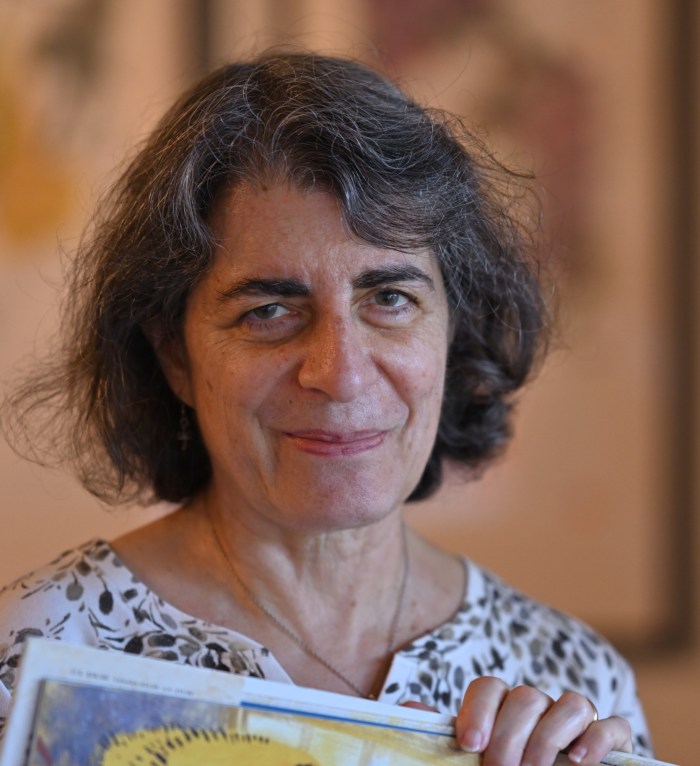
Dr. Annette Y. Goldsmith, Sephardic Temple Tifereth Israel, Los Angeles — GLLI Secretary. She has long enjoyed working collaboratively to design community spaces and tools for readers — first as a youth services librarian in Toronto, Miami, and Tallahassee; then as an instructor of online graduate courses in children’s literature and librarianship, most recently for Kent State University; and currently as a Judaica librarian at Sephardic Temple Tifereth Israel (STTI) in Los Angeles. Annette was the founding editor of the online international children’s literature journal, The Looking Glass; spearheaded the GLLI Translated YA Book Prize; won a 2023 American Library Association Carnegie-Whitney grant (with Dr. Marc Aronson and David Jacobson) to create GLLI’s “Building a Global Youth Literature Collection 101,” also known as globalyouthlit.org; and runs the virtual STTI Second Sunday Book Club. She has served on numerous children’s and young adult book award committees including the Batchelder Award, the Sibert Medal, the Sydney Taylor Book Award, and the Kirkus Prize.
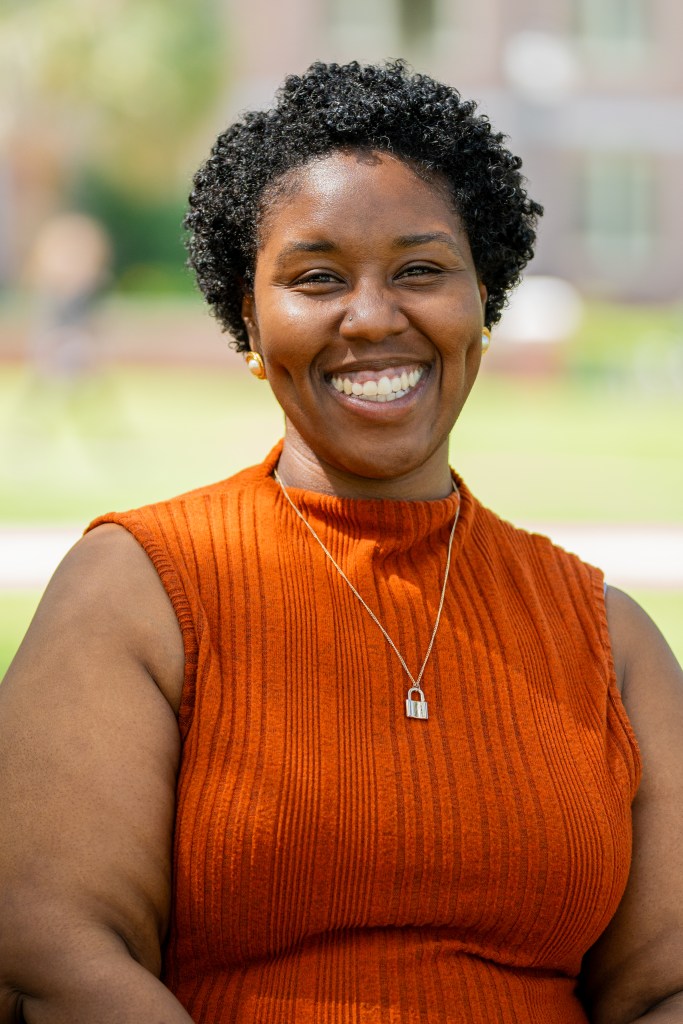
Dr. Vashalice Kaaba, Valdosta State University, Georgia (USA). Dr. Vashalice Kaaba, Executive Director, the Global Literature in Libraries Initiative is a librarian-scholar, grant strategist, and educator advancing access to world literature for readers of all ages. She holds a Doctor of Philosophy in Information Studies (Florida State University), a Master of Science in Education (Iowa State University), and a Bachelor of Science in Sociology (Florida State University). Her work spans the United States, Kenya, and Uganda, where she has led initiatives such as “Library in a Box,” curated digital collections for primary schools, taught undergraduate English courses, and facilitated grant-development trainings with United States Embassy partners.
A frequent presenter at the Children’s Literature Association, the Association for Library and Information Science Education, the American Library Association, and the Modern Language Association, she researches Black children’s literature, critical librarianship, and global information equity, and has secured more than $1 million in competitive funding for libraries and community organizations. Vashalice serves as Chair of the Services to Children of African Descent Committee within the Black Caucus of the American Library Association and serves on the Grants Committee of the Children’s Literature Association. She has earned honors, including the Outstanding Doctoral Dissertation Award at Florida State University, and leads the Global Literature in Libraries Initiative’s programs, including the global literature blog and youth literature initiatives, building cross-border partnerships that connect readers, creators, and translators worldwide
Disclaimer: The opinions and views expressed are the author’s and do not necessarily reflect those of GLLI.

