
Today’s post comes to you from Pudthila Srisontisuk:
On a visit to the ‘recommended’ shelf at most book stores here in Bangkok, there always seems to be a row of translated fictional stories based in shops, cafés, convenience stores or laundromats. In a world where connections, transactions and communication are increasingly curated online, it is as if humans still yearn for the relevance of these simple communal spaces. Despite the proliferation of social media in young people’s lives, there also emerges a relevance for authentic and physical human interactions. As a teacher-librarian who works with the youngest of students and teenagers, recommending books that ‘work’ is all part of the job. These translated Japanese stories set in shops are just a small sample of fiction that could hook teen readers. Although these books may be aimed at adults, the stories are easily accessible to teenagers, especially as they start grasping more ‘grown-up’ themes and concepts. The common denominator is easily accessible: a physical space that most of us have visited at some point. Whether you are a teenager living in Bangkok, Tokyo or San Francisco, the majority of our students will have had to buy a drink from a convenience store, or watch their parents grab a coffee from a café, or visit a bookstore large or small. These translations pull the reader in through that connection to a common physical space, but take you further to explore forgotten history and lives or even allow you to dip into a magical surrealist realm.
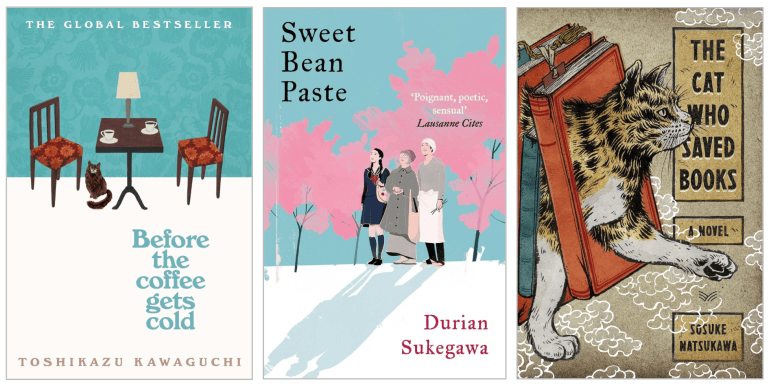
Before the Coffee Gets Cold by Toshikazu Kawaguchi / Translated by Geoffrey Trousselot (Hanover Square Press, 2020)
Shop Type: café
A strict set of rules governs the ability of characters who are able to time travel in this small, hidden cafe in Tokyo. Through the main character Fumiko’s heartbreak, readers are introduced to other characters who are also able to revisit a particular moment in time. Themes of loss, regret and love weave through the book. The magical surrealist element of this set up is what makes it so appealing to readers of all ages. An unassuming cafe, a single seat that takes you back in time, the rules of returning to the present … before the coffee gets cold. The enormity of being able to time travel contrasting with the relatable experience of coffee or a hot drink going cold, underlines the beauty of small moments and the value of human connection.
This particular book holds a special place in my heart, not only because it highlights the vulnerability of small fleeting moments, but also because of a memorable moment it created for me. On a family holiday to Fukuoka, I found myself reading this book about a shop (café) at a shop (laundromat). Despite my very little (read non-existent) Japanese, I could tell from the physical interactions between owners and customers that this tiny laundromat on a side street of Fukuoka held the soul of the community. The owners were an elderly couple with gentle smiles, welcoming people from all walks of life, from elders in the area, to young office workers and passing tourists. As I read Before the Coffee Gets Cold, waiting for my clothes to dry, the elderly female owner walked up to me and gestured to the book cover with her hands, followed by a strew of Japanese words, a smile and a thumbs up. I gestured back with lots of thumbs up and flipped through the side flaps to point to the pictures of book covers in the same series. Somehow we had made a connection through a book, despite not understanding a single word each had said. That interaction left such an imprint, and reminded me of the power of books and the power of translations to open our world up to more connections than we might have thought possible.
For readers who enjoy Book 1, there are now six books in this Before the Coffee Gets Cold time travelling series.
Sweet Bean Paste by Durian Sukegawa / Translated by Alison Watts (One World Publications, 2017)
Shop Type: Dorayaki Store
If a title were ever to describe the whole feel of a book, it would be Sweet Bean Paste. Warm, sweet, comforting and making you leave the book with that same sigh you have after eating a delicious sweet bean paste-filled dorayaki. Three characters, Sentaro, Tokue and Wakana, come from different walks of life, are at different stages of their lives, and meet through a tiny confectionary shop selling dorayaki. Sentaro is a middle aged man with a criminal record, Tokue is an elderly woman who appears at Sentaro’s shop with a mysterious past, and Wakana is a young middle schooler who finds herself unexpectedly learning life lessons through her interactions with the older characters in the book. The meaning and purpose of life is brought up, but through a very non-confronting, gentle interweaving of backstories of the characters. Despite the cozy aftermath of the book, the Author’s Note does remind the reader of the very real and unjust treatment faced by former Hansen’s disease patients.
Stories that follow a different pattern or pace can sometimes pull in young readers who may have already pigeon-holed themselves as ‘non-readers’. A connection to experiences in books goes a long way to helping young readers make that decision of whether they “like,” “dislike” or “love” a book, or simply find the curiosity to continue reading. This sweet gem of a book may just do that for young readers in search of a cozy and comforting read. Also–will it make you go searching for the best sweet bean paste dorayaki after reading the book? I think you know the answer.
The Cat Who Saved Books by Sosuke Natsukawa, translated by Louise Heal Kawai (Harper Via, 2021)
Shop Type: Bookshop
When a confident, insistent tabby cat enters the life of teenager Rintaro Natsuki, a self-proclaimed hikikomori (shut-in), the story unfolds into an adventure past the bookshelves. The story makes readers consider what makes a book valuable. This title’s current popularity may be that it highlights and questions our modern world’s need for speed and efficiency in everything, including in the realm of reading and books. Although the references to more classical western philosophy might throw off some younger readers, they won’t take away from the enjoyment of the story. If anything, the book may even encourage readers to explore and research to gain a better understanding of these references. The moments of laugh-aloud dialogue between self-assured Tiger, the tabby cat and the human characters, alongside Rintaro’s process of self-discovery, make this book one that a teen reader can latch onto.
With philosophical quotes scattered throughout the text, it also makes for great discussion with young adults who are ready to go more in depth with understanding the role that knowledge and learning play in their lives. The following quote from the book beckons us as readers, whether adults or teens, to welcome translated works into our lives, and serves as an encouragement to take our reading further, to experience and see the world in a different lens:
“It’s not true that the more you read, the more you see of the world. No matter how much knowledge you cram into your head, unless you think with your own mind, walk with your own feet, the knowledge you acquire will never be anything more than empty and borrowed.”
Pudthila Srisontisuk is a Teacher-Librarian at MYIS, a small, community-centered school in Thailand. She works with students from preschoolers up to Grade 11 in her current role. After graduating with her PGCE from Cambridge University in 2010, Pudthila spent her initial years teaching in the early years and primary years at schools in England, China, Hong Kong and Thailand. Shifting priorities, a slightly obsessive love of books and a lucky opportunity gave her the chance to move into librarianship. She is now happily living in a world where her two passions of education and books collide on a daily basis.


One thought on “#WorldKidLit Month Focus on Japan: Coffee, Counters and Cafés–Cozy Fiction for Teens”