
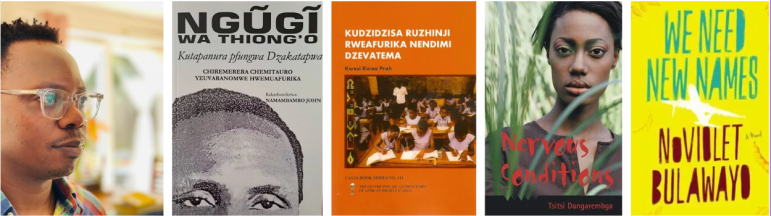
Today’s post comes to you from a tech entrepreneur, linguist, editor, and translator, Dr. John Mambambo who currently works and resides in England. His recent product, the FONA App is in seven different languages – English, Shona, Ndebele, isiXhosa, Kiswahili, Igbo, and Twi (Akan) – with more still to come, a strong affirmation of his passion to include African languages in technology.
Dr. Mambambo shares with us his deep knowledge of Zimbabwe’s literary past and a roadmap of how librarians around the world could help propel its future by motivating authors to create in their own native tongues.
I was born and raised in Zimbabwe, speaking Shona as my first language. It was the language of home, of the playgrounds and the yard, of the stories my grandmother, with whom I was once privileged to stay, told before the lights went out. English arrived with school. It was the language of instruction, of examinations, of ambition, and the unspoken message was clear: if you wanted to go somewhere, you spoke English. Shona was for home. English was for the world.
That tension never left me. It followed me through my undergraduate studies at Midlands State University, where I read Languages & Linguistics and graduated with Distinction in 2007. It continued through my Master of Arts at the University of South Africa, which I completed with Distinction in 2017. It then became the central question of my doctoral research, which examined how Shona-speaking Zimbabweans in Cape Town navigate identity, belonging and language when they are caught between three worlds: their Shona heritage, their Zimbabwean nationality, and the isiXhosa-Afrikaans- and English-dominated social landscape of the Cape.


My entry into translation was not a career decision. It was a response to a question I could not answer in any other way. I was writing papers, presenting at conferences, producing work that circulated among academics. But the people my research was about, ordinary Shona speakers, would never read it. That bothered me enormously. So when I decided to translate Professor K. K. Prah’s African Languages for the Mass Education of Africans into Shona, I funded it myself and did it because I believed Shona speakers deserved to encounter that argument in their own language. When Professor Prah saw the finished manuscript, he told me he had initially assumed the approach was, in his own words, “just another wild goose chase.” That the project succeeded and was widely celebrated taught me something important: the gatekeepers of knowledge are often the last to believe that their own communities are ready for it.
The translation of the late Professor Ngũgĩ wa Thiong’o’s Decolonising the Mind into Shona followed the same logic, but met far greater institutional resistance. I approached Professor Ngũgĩ directly. He was supportive, but the rights were held by Watkin Loomis in New York, who made clear that they did not negotiate with individual translators but only with publishers. I found a publisher in CASAS in Cape Town. CASAS and Watkin Loomis negotiated, and the project went ahead. When it was completed, Professor Ngũgĩ, who had seen his book translated into more than sixty languages, almost all of them European, described the Shona translation as “a homecoming”. It was the first time in forty years that the book had been rendered into an African language.
Rhodes University subsequently invited me to take up a Postdoctoral Fellowship, through which I worked on a project expanding my translation of the same book into a further five African languages. The Kiswahili translation was launched in Kenya just last week. I am now based in Norwich, England, where I work. I recently launched FONA Technologies Ltd, and our first product is a diaspora communications app (being released on both iOS and Android platforms) that will launch with eight African languages built in from the ground up: English, isiXhosa, Shona, Ndebele, Igbo, Twi (Akan), Kiswahili and Dagaare. While serving the needs of these communities, this App will also be a reminder of the importance of integrating African languages into technologies as we develop, and not as an afterthought. We are aiming to offer the localisation service to the world for any industry or organisation that seeks to reach the African market in their languages.
Shona is a Bantu language spoken by approximately seventy per cent of Zimbabwe’s population. It is not a monolithic tongue, but comprises several major dialects, including Karanga, Zezuru, Korekore, Manyika and Ndau. These are mutually intelligible and share a rich literary and oral heritage that long predates the written word.
The Contested Origins of the Name “Shona”
The very name “Shona” is itself a contested and revealing part of history. In my 2016 Master’s dissertation at the University of South Africa, titled “Blessed with a Curse? Linguistic Constraints on the Code-Switching of Bilingual Shona-Xhosa Speakers in Cape Town”, I examined the competing etymological theories behind the term, and what that contested naming reveals about how identity, language and power intersected long before colonial standardisation arrived to tidy everything up.
Four theories compete for the word’s origins, summarised below, and I articulate these extensively in my Master’s dissertation entitled “Blessed with a curse?” linguistic constraints on the code-switching of bilingual Shona-Xhosa speakers in Cape Town:
| Etymological Theory | Proposed Origin and Meaning |
| The Nguni / Ndebele Theory | Derived from the Ndebele term AmaShona (or Amaitshona), meaning “those who clear out” or “those who hide in caves”. Reportedly used by Mzilikazi’s Ndebele warriors during the 19th-century Mfecane to describe local populations who used hilly caves as defensive military structures. |
| The Kalanga / Sunset Theory | Linked to the older western Kalanga word Ntshonalanga, meaning “the setting sun” or “the West”, and used regionally to denote peoples living in the western regions of the kingdoms. |
| The Global Gold Trade Theory | Stemming from ancient Indian Ocean maritime trade networks with Arab and Asian merchants, in Hindi and Gujarati, Sona or Sohna translates directly as “gold” or “beautiful”, and was used by traders to denote the gold-producing interior empires of the Zimbabwe plateau. |
| The Pre-Colonial Map Records | Evidence from Portuguese and European cartographers dating from the 1600s and 1700s records variations of the term, including Soyouna, Sajona and Matshone, proving that the word predates the 19th-century Ndebele conflicts entirely. |
What this plurality of origins reveals is that “Shona” was never a simple or settled designation. It was assembled from conquest, commerce, geography, and cartography over centuries. The orthographic standardisation imposed in the early twentieth century – what I describe in that dissertation as a “linguistic matrimony” forced upon diverse dialects and identities under a single administrative umbrella – did not create the language. It constrained and codified what was already a living, complex, and internally varied tradition. That history does not simply sit in the archive; it shapes how Zimbabwean migrants today conceptualise their identity, how they code-switch between languages, and how they project their linguistic selfhood in multilingual environments like Cape Town.
The Oral Tradition
Oral tradition is the bedrock. Ngano, the folktales, were the primary vehicle for transmitting values, history, morality and cosmology across generations. Nhetembo, praise poetry and verse, celebrated heroism, mourned loss and anchored communities to their ancestors. Marairo, the riddles, sharpened children’s minds and enforced communal participation in learning. None of this required literacy. It required presence, memory and voice. This was a fully functioning literary culture, sophisticated in structure and purpose, long before European missionaries arrived with the alphabet.
Colonisation and the Written Word
The British South Africa Company, under Cecil Rhodes, colonised the territory that became Southern Rhodesia in 1890. The colonial education system that followed imposed English as the medium of instruction and effectively relegated Shona to the domestic and informal spheres. What is often overlooked is that the colonial Literature Bureau, established ostensibly to promote African-language writing, also served a political containment function: confining African intellectual production to “tribal” languages rather than to English, through which political consciousness and organised resistance could spread far more dangerously.
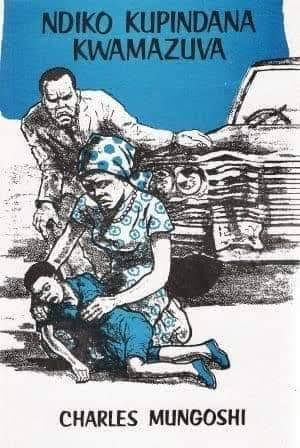
Despite this, serious literary work in Shona only emerged in the mid-twentieth century. Solomon Mutswairo’s Feso, published in 1956, is widely recognised as the first Shona novel. Patrick Chakaipa followed with Karikoga Gumiremiseve in 1958 and Pfumo Reropa in 1961, works that drew on oral storytelling traditions while negotiating the tight constraints of colonial publishing. Charles Mungoshi, one of Zimbabwe’s most celebrated literary voices, wrote in both Shona and English. His Shona novel Ndiko Kupindana Kwamazuva (1975) and Kunyarara Hakusi Kutaura? (1983) demonstrated that the language could carry the full weight of literary complexity and moral ambiguity.


Zimbabwe achieved independence in 1980. The 2013 constitution recognised sixteen official languages, a progressive acknowledgement on paper. In practice, English remained and still remains the language of power: of courts, of universities, of commerce, of international trade. Shona remains the language of the majority but not of the institutions that the majority depended on.This is the wound that Ngũgĩ diagnosed in Decolonising the Mind in 1986: that colonialism’s most durable achievement was not the physical occupation of territory but the psychological occupation of the colonised mind through language. When a child grows up believing that their mother tongue is inferior to the coloniser’s language, the coloniser has achieved something that flags and borders cannot undo.
The body of published literary work in Shona remains small relative to the size of the population that speaks it, and the reasons for that are political, economic, and structural in equal measure.
Zimbabwe’s publishing industry has been devastated by decades of economic crisis. The hyperinflation of 2008, when the Reserve Bank of Zimbabwe issued a one-hundred-trillion-dollar note that could not buy a loaf of bread, did not only destroy savings and livelihoods. It destroyed institutions. Universities lost staff. Publishers collapsed. The African Languages Research Institute at the University of Zimbabwe, which had been a critical home for Shona literary scholarship, operated under severe resource constraints. I was fortunate to have been handpicked by Professor Herbert Chimhundu who was the Director of the institute, from my university (the Midlands State University) to go and work as a Research Assistant at the University of Zimbabwe for my attachment year (third year) of my undergraduate studies) in 2006. The ALLEX [The African Languages Lexical – glli] project, which produced the landmark Duramazwi ReChiShona Shona dictionary in 1996, a moment of enormous cultural celebration, struggled to sustain momentum in the decade that followed.

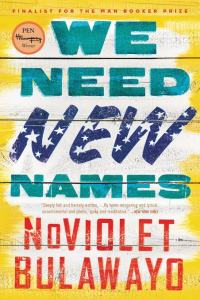
Brain drain compounded everything. Zimbabwe’s professional and intellectual class emigrated in enormous numbers to South Africa, the United Kingdom, the United States, and Australia. Writers went with them. Some continued writing in English for international audiences. Tsitsi Dangarembga’s Nervous Conditions, published in 1988, is one of the most important novels to emerge from Zimbabwe and is read in universities across the world, but it was written in English. NoViolet Bulawayo’s We Need New Names, shortlisted for the Man Booker Prize in 2013, is another landmark, again in English. These writers are Zimbabwean, their subjects are Zimbabwean, their sensibilities are Zimbabwean, but their chosen vehicle is English because that is where the global publishing market lives.
The translation picture in Zimbabwe tells an instructive and somewhat uncomfortable story about the direction of literary traffic. English-to-Shona translations have gathered genuine momentum in recent years, while the reverse flow remains far rarer and faces a disproportionately steeper climb.
English into Shona: A Growing Tradition
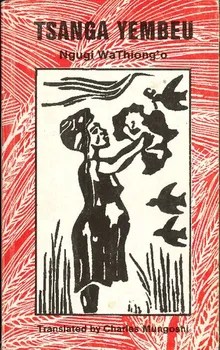
Dangarembga’s own Nervous Conditions has been translated into Shona as Kusagadzikana by Ignatius Mabasa, published by House of Books. It is a landmark moment, bringing one of Zimbabwe’s most celebrated English-language novels back into the language of the community it portrays. George Orwell’s Animal Farm exists in Shona as Chimurenga Chemhuka, translated by Petina Gappah and Tinashe Muchuri, a pairing that is itself politically resonant given how directly Orwell’s allegory maps onto post-independence African political experience. Charles Mungoshi translated the late Professor Ngũgĩ wa Thiong’o’s A Grain of Wheat into Shona as Tsanga yeMbeu, a translation that carries particular weight given Ngũgĩ‘s own lifelong insistence that African literature must speak to African readers in African languages.


Shona into the World: Rare but Significant Breakthroughs
The breakthroughs in the reverse direction, from Shona into English and other global languages, are therefore all the more significant. Solomon Mutswairo’s Feso, published in 1956 and widely recognised as the first Shona novel, was later translated into English by the author himself. Its subtle critique of colonial oppression had led to it being banned by the Rhodesian government, which is itself a measure of how seriously the colonial administration understood that Shona-language literature could carry political power.
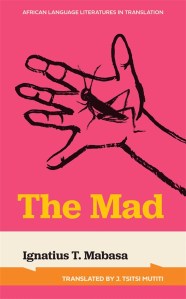
Ignatius Mabasa’s Mapenzi, a legendary 1999 Shona masterpiece exploring post-independence disillusionment, waited twenty-five years before it was finally brought to English readers as The Mad, through the African Literary Translation Series. I was fortunate to have been assigned as a reviewer of the translation by the institution that handled the production. Twenty-five years is not simply a publishing lag. It is a structural indictment.
The Hurdles: Systemic and Structural
Local publishing houses face profound financial constraints that make the translation of a full novel an enormous risk. Translating literary work demands significant time, fair compensation for translators, and a financial commitment that independent publishers operating in Zimbabwe’s economic climate cannot easily absorb. The result is that even works of proven cultural significance can sit untranslated for decades simply because no institution with the resources to act has been motivated to do so.
Western literary markets compound this problem rather than solve it. Global publishers overwhelmingly select, fund, and celebrate Zimbabwean literature that arrives already written in English. There is little institutional infrastructure, and less appetite, in international publishing to seek out, commission, and market texts originally written in Shona. The assumption embedded in that system is that literary value migrates naturally towards English, and that anything worth reading will eventually arrive there on its own terms. The twenty-five-year journey of Mapenzi to English readers gives the lie to that assumption.
There is also a linguistic dimension to the problem that goes beyond economics. Shona prose relies heavily on intricate idioms known as madimikira, proverbs known as tsumo, and a rhythmic quality that is inseparable from how meaning is made in the language. Translating these into English without stripping away the emotional depth, the humour, and the distinctively Zimbabwean texture of the original is an extraordinary creative challenge. It requires translators who are genuinely bilingual in a cultural sense, not merely a linguistic one, and that is a rare and undervalued skill.
Due to economic pressure and the collapse of traditional bookstore infrastructure, many contemporary Zimbabwean writers are bypassing print entirely, publishing directly to readers through WhatsApp groups and online platforms. This keeps local storytelling alive and reaches audiences that formal publishing channels no longer serve. But it also isolates those stories from the translation pipelines, however inadequate those pipelines may be, through which global distribution becomes possible.
Taken together, these conditions describe not a failure of Shona literature but a failure of the systems built around it. The literature exists. The writers exist. The stories exist. What has not yet been built, at anything like the scale required, is the infrastructure that would allow those stories to travel.
How to motivate writers to create in Shona is the question that sits closest to what I actually do with my life, and I want to explore it honestly rather than optimistically.
Motivation without infrastructure is a romance. You can tell a writer that their language is beautiful, that their stories matter, that Shona deserves a literature as rich as any in the world, and all of that is true. But if that writer cannot find a publisher, cannot access an editor, cannot get their book into schools or libraries or bookshops, cannot earn any income from the work, and watches their English-writing peers gain international recognition while their Shona manuscript sits in a drawer, the motivation drains. Survival is not an abstract concern in Zimbabwe. It is the daily question.
The Motivations and the Future
Talking about motivating writers to create in Shona is really talking about building the conditions that make creation sustainable, and that requires several things simultaneously.
It requires publishing infrastructure. CASAS in Cape Town has done important work in this space, but Southern Africa needs more publishers with the capacity and commitment to bring African-language literary work to market at scale. It requires an education policy that takes seriously the constitutional recognition of Shona and other languages, not as a ceremonial gesture but as a material reality in classrooms. Tanzania’s decision under Julius Nyerere to make Kiswahili the national medium of instruction is a standing example of what political will can do for a language’s social and economic standing. Rwanda’s shift towards Kinyarwanda as a language of instruction and national identity post-1994 is another. Zimbabwe has not made that commitment with comparable resolve.
It requires digital infrastructure. The internet is both a threat and an opportunity for minority-language literature. It is a threat because the overwhelming volume of content is in English and algorithmically rewards what already dominates. It is an opportunity because the cost of digital publishing and distribution is low enough to bypass traditional gatekeepers entirely. A Shona writer today can self-publish, build a readership through social media, and reach the diaspora in England, South Africa, Australia and the United States without needing a contract from a Harare publisher that may no longer exist.
It requires economic incentives: translation grants, literary prizes, writer-in-residence programmes that specifically target African-language work. The European model of public funding for literary translation, through bodies such as Arts Council England or the Swedish Arts Council, has no equivalent at scale in Africa. The African Union’s Language Plan of Action for Africa acknowledged this gap years ago without generating the resources to close it.
And finally, it requires changing the cultural conversation about what constitutes serious writing. The prestige gap between writing in English and writing in Shona is not natural. It was constructed over generations by colonial education. Deconstructing it requires writers of stature, translators, scholars, publishers, and teachers all making the same argument simultaneously and persistently: that a story told in Shona is not a lesser story. It is a story told in its own home.
That is what the late Professor Ngũgĩ argued forty years ago. It is why translating his words into Shona felt to me less like an academic exercise and more like an act of faith.

Dr John Mambambo is a Zimbabwean-born scholar, editor and language practitioner based in Norwich, England, whose work sits at the intersection of language, literature, translation and knowledge production. His interests include African languages and literatures, translation and localisation, and the ways in which language mediates cultural memory, identity and the movement of ideas across linguistic and geographical boundaries. He works professionally as an academic and journal editor, alongside his wider engagement with African literary and linguistic scholarship. His work is particularly informed by the intellectual traditions of African literary studies and the enduring importance of preserving, translating and creating knowledge through African languages.
Dr. Mambamo translated Ngũgĩ wa Thiong’o’s 1986 book Decolonising the Mind: The Politics of Language in African Literature from English into Shona. His translation, Kutapanura Pfungwa Dzakatapwa, appeared in 2021.
(bio courtesy of Catalyst Press)

