Today’s post comes to you from Ama Dadson, Founder and CEO of Ghana based AkooBooks Audio.
Ama invites GLLI readers to adjust our assumption that “Africa’s reading market can be measured simply by printed book sales.”
GLLI: How did AkooBooks Audio begin?
My journey into audiobook publishing began with my mother, Nana Dadson, a Ghanaian children’s book author who lost her sight. I watched someone who had spent her life surrounded by books lose access to something she loved. That experience made me question something we rarely stop to consider: why do we equate reading with looking at words on a page? Storytelling was an oral tradition long before it became written, particularly in Africa. Why shouldn’t we read with our ears too?
I came to publishing from a background in information technology, having worked with USAID in Abidjan, UNEP DTIE in Paris and the University of Ghana. I was interested in how digital technology could remove barriers to books, but also in something more ambitious: creating an African-owned publishing business that would bring African literature to readers and listeners around the world.
That dream became AkooBooks Audio, based in Accra, Ghana.
We began with audiobook production and publishing, when African audiobooks were still relatively unfamiliar. Today, we produce and distribute audiobooks and eBooks, working with African authors, publishers, narrators and other creative professionals.
Our work has two complementary sides: publishing and distributing African books through our digital platform, and providing professional audiobook production services for international publishers.Both share the same ambition: to make African stories more accessible while building a sustainable African publishing and audio production industry.
GLLI: What is your mission, and who are your readers?
I find it difficult to imagine just one reader.
I think about young Ghanaians who enjoy stories but haven’t developed the habit of buying books. The professional sitting in Accra traffic who might listen to a biography on the journey home. Africans living abroad who want to remain connected to home through familiar voices, languages and stories. And students whose schools have few books, or no functioning library at all.
One assumption I’d like to challenge is that Africa’s reading market can be measured simply by printed book sales. Those figures tell us about purchasing habits, certainly, but also about availability, affordability and distribution. A person who doesn’t buy printed books isn’t necessarily someone who has no interest in stories.
Of course, putting books on mobile phones doesn’t automatically create readers. We still have to earn their attention, make books affordable and help them discover stories they want. Our platform offers audiobooks and eBooks through mobile apps and the web, with offline access and payment options suited to African markets. These choices reflect the realities of connectivity, affordability and how people use their phones.
We’re particularly interested in institutional access. Why should a school without the resources to build a substantial physical library be excluded from offering its students a rich collection of African literature?
For me, accessibility isn’t only about disability, although that was where my journey began. It’s also about geography, language, income, format and opportunity.
GLLI: What kinds of books do you publish, and how can international librarians acquire them?
Our catalogue spans African literary fiction, children’s stories, biographies, memoirs, history and contemporary nonfiction, alongside works from African publishing partners.
One of the most exciting aspects of audio publishing is introducing an existing book to an entirely new audience. A literary classic can find younger listeners; a biography can reach a generation discovering it on their phones. A story that has already travelled geographically can cross another boundary when it moves from print into performance.
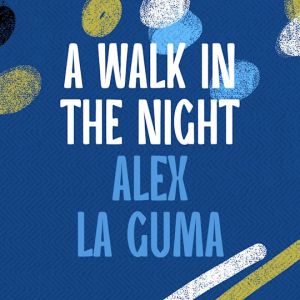
We experienced this while producing two audiobooks by South African writer Alex La Guma for Bloomsbury UK’s Apollo Africa Audio imprint: A Walk in the Night and Time of the Butcherbird. Hearing these important works performed by contemporary South African voices brings a new immediacy to stories that have already crossed geographical and historical boundaries. Bloomsbury is scheduled to release A Walk in the Night on 26 November 2026.
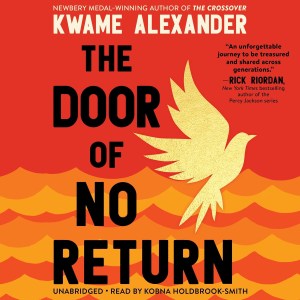
Our international production work also includes The Door of No Return by Kwame Alexander, narrated by Kobna Holdbrook-Smith, which we recorded and directed for Hachette Audio. The audiobook received a 2023 Audie Award nomination, a proud moment for our Ghanaian production team and a demonstration of the calibre of audiobook production possible in Africa.
These experiences reinforce something I feel strongly about: a narrator is not simply someone who reads the words aloud. Accent, pronunciation, rhythm and character interpretation all influence how listeners experience a story. A narrator who understands its cultural setting can bring extraordinary authenticity to a production.
Another project especially close to my heart is Suma Went Walking, written by my mother and originally published by Afram Publications. Inspired by Sergei Prokofiev’s Peter and the Wolf, which introduces children to orchestral instruments through storytelling, we developed Suma Went Walking into a Pan-African symphonic audiobook using narration and African musical instruments. Ghanaian master flautist Dela Botri brings the beautiful sound of the atenteben to the production.
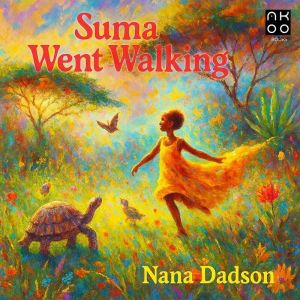
Taking Suma Went Walking to the Frankfurt Book Fair with Dela in 2019 was one of my happiest publishing experiences. The enthusiastic response to this little Ghanaian story reminded me that books can cross borders through music and performance, not only translation.The story has also travelled across languages, including African languages, German and Mandarin.
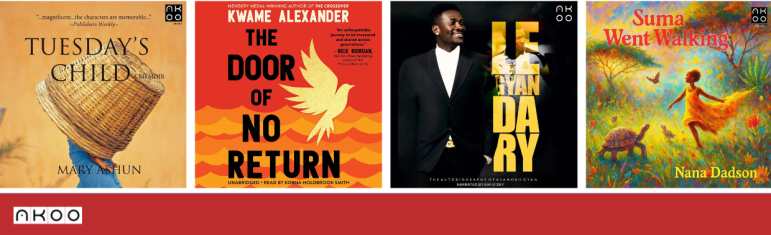
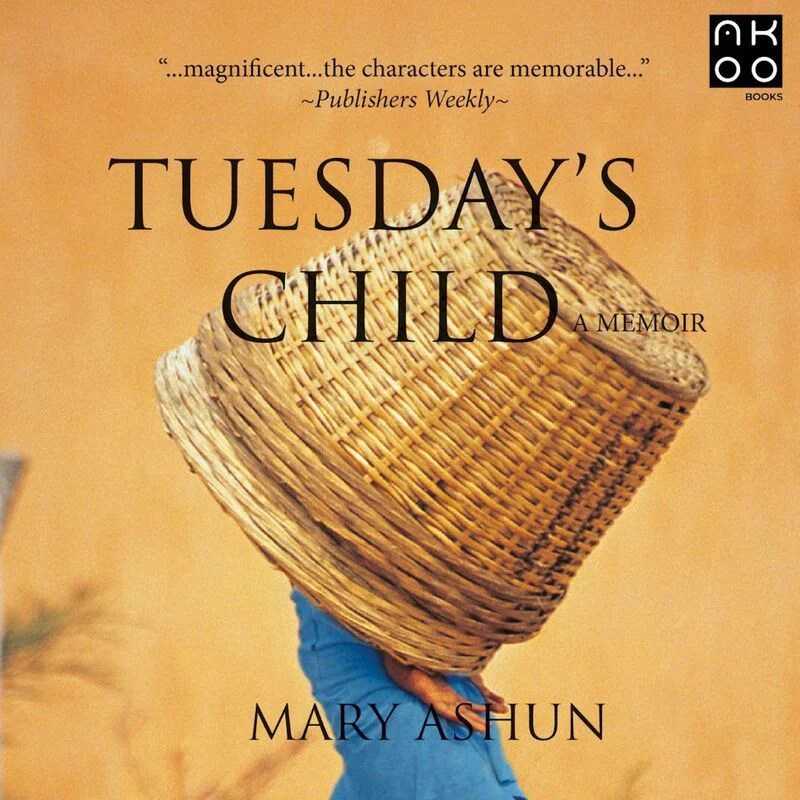
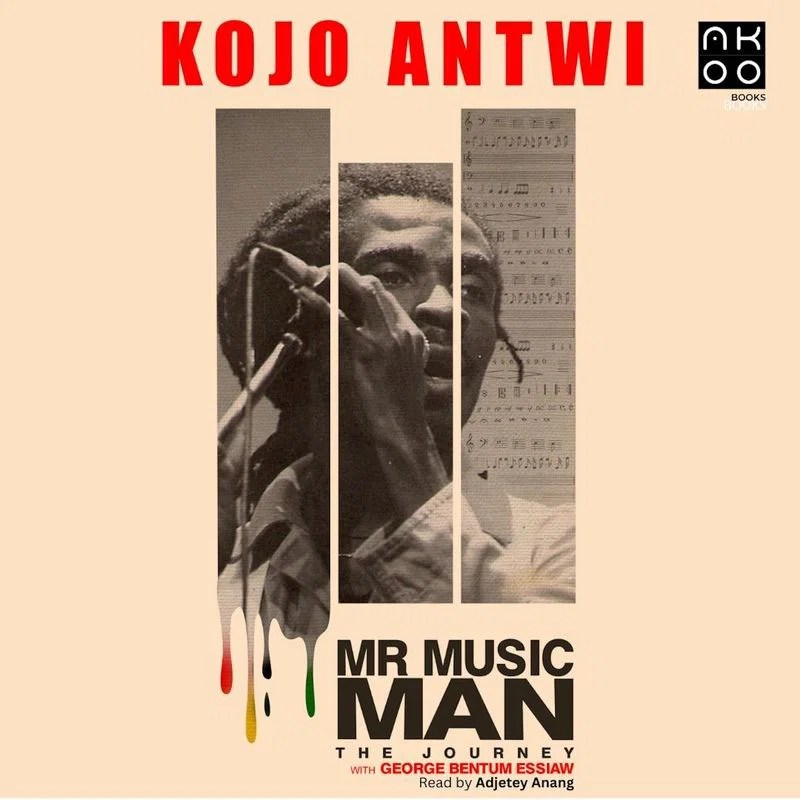
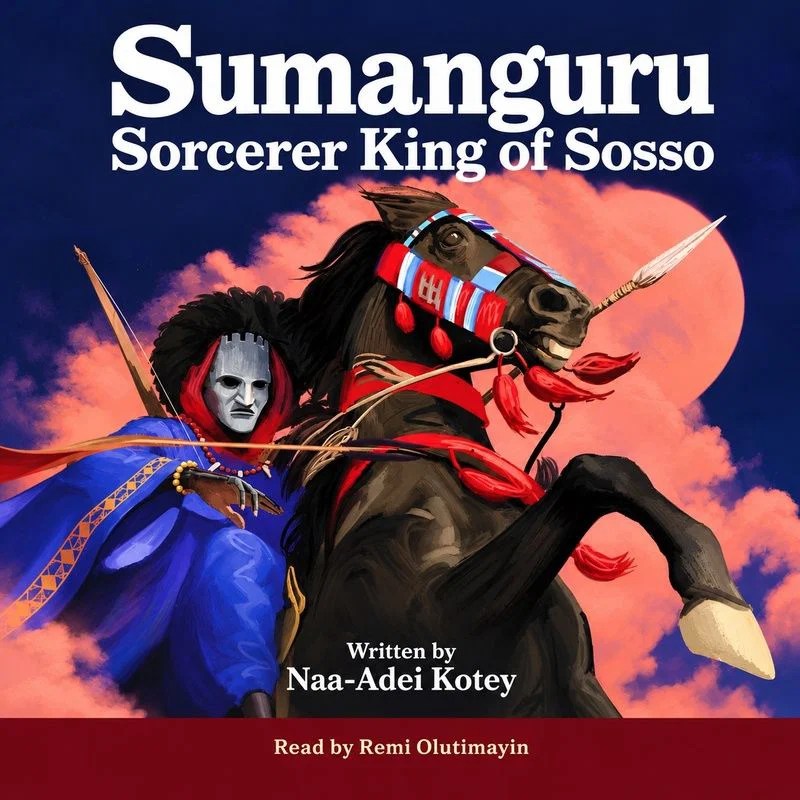
Our own catalogue includes Kojo Antwi’s memoir Mr. Music Man, Sumanguru: Sorcerer King of Sosso, LeGyandary: The Autobiography of Asamoah Gyan, narrated by Kafui Dey, and Tuesday’s Child, a memoir by Ghanaian author Mary Ashun.
We’re also expanding our eBook offering through partnerships with African publishers, including African Books Collective, helping readers discover literature from across the continent.
 |  |  |  |
For international librarians, selected AkooBooks audiobooks are available through OverDrive and discoverable in the Libby app.
Two examples are LeGyandary and Tuesday’s Child. Both appear in Libby, although individual libraries must acquire them before patrons can borrow them. Where a library hasn’t acquired a title, Libby may offer a “Notify Me” option, allowing readers to express interest and receive a notification if the library adds it.
Librarians can search OverDrive Marketplace for available AkooBooks titles and acquire them for their collections. Not every book on our platform is available through OverDrive, so we welcome direct enquiries about titles, formats and licensing.
Our catalogue is also available to explore at akoobooks.com.
We particularly welcome conversations with public, academic and school libraries interested in expanding their African literature collections.
GLLI: What are your plans for the next two years?
I’d like to see African audiobooks considered much earlier in the publishing process.
Too often, publishers begin thinking about audio a year or two after a print book appears, usually because production is expensive. By then, the original publicity campaign may have ended, reviews appeared and much of the excitement around the launch dissipated. Even when simultaneous publication isn’t financially possible, planning for print, eBook and audio together gives a title a better chance of reaching readers and listeners.
At AkooBooks, we want to expand audiobook production, particularly African literary classics, contemporary writing, children’s literature and works in African languages.
Another priority is literary translation. I want to bring more Francophone African literature to English-speaking audiences, while also translating African works into African languages. Too many books remain inaccessible to readers elsewhere on the continent because of language barriers. Through eBooks and audiobooks, we have an opportunity to help African stories travel across our own linguistic borders, not just beyond Africa.
Education is another priority. We’re exploring affordable access to curated African digital collections for schools and other institutions, treating reading and listening as complementary experiences.
And we want to improve discovery. Readers shouldn’t have to know a title or author in advance to find something wonderful. We’re exploring more intuitive, conversational ways of introducing people to African literature.
Our broader ambition is to help build an African digital publishing ecosystem in which books, rights, creative skills and revenues circulate more freely across borders.
GLLI: What are your biggest challenges, and how can librarians help?
One of our biggest challenges is the economics of audiobook production. A quality audiobook requires skilled narrators, direction, recording, editing, mastering and quality control. The upfront investment can be substantial, while returns remain uncertain.
Our experience with the African Writers Series illustrates this challenge. Bringing major works of African literary heritage into audio is tremendously exciting, but financing production at scale is another matter.
Distribution and rights present further obstacles.
I grew up reading African writers from across the continent. Series such as Heinemann’s African Writers Series helped create a shared literary landscape in which Ghanaian readers encountered Nigerian, Kenyan and South African authors.
Today, despite digital technology, African publishing can feel surprisingly fragmented. Sometimes a writer must be discovered in London or New York before readers in another African country hear about them.
There’s an irony in our own experience: AkooBooks, a Ghanaian digital publishing platform, has partnered with African Books Collective, based in the UK, to bring a substantial pan-African eBook catalogue onto our platform.
We value that partnership enormously, but it illustrates how much of the infrastructure connecting African publishers still sits outside Africa.
Digital distribution eliminates shipping costs, but not territorial rights restrictions, payment difficulties, pricing or discoverability challenges.
International partnerships are essential, and some of our most exciting projects have emerged from them. But I want those relationships to build lasting African production capacity and publishing businesses, rather than simply supply African stories to platforms controlled elsewhere.
Librarians can make a real difference by turning interest into acquisitions.
Seek out African-published titles, not only books by African authors released through major international houses. Request audiobooks, introduce readers to less familiar African voices and include audio in collection development, particularly where it improves accessibility.
And tell publishers like us what your libraries need: which subjects, age groups, languages and formats are missing? Those conversations can influence what gets produced next.
GLLI: Is there anything else you would like librarians to know?
I’d love librarians to think of African literature not simply as a specialist collection, but as part of their communities’ everyday reading lives.
An African children’s book can delight a child who has never visited the continent. A memoir can illuminate a country’s history, and a novel can introduce readers to an unfamiliar world without asking its author to explain every cultural reference.
But an audiobook adds something more: the sound of a place, the cadence of a language and the personality of a voice.
I grew up in the UK and returned to Ghana when I was twelve. Moving between cultures taught me that unfamiliar words, customs and perspectives are part of the pleasure of reading. We shouldn’t need to make every story culturally neutral before allowing it to travel.
I also hope libraries will challenge the idea that African literature must first be validated elsewhere before it deserves attention. Extraordinary literary work is being created, published, and performed across Africa right now. Much of it simply needs more opportunities to be discovered.
At AkooBooks, we’re creating some of those opportunities. And I hope librarians everywhere will join us.
Explore AkooBooks Audio: https://akoobooks.com
Library acquisitions and partnerships: ama.dadson@akoobooks.com
Here are four titles that librarians can immediately consider adding to your collection:
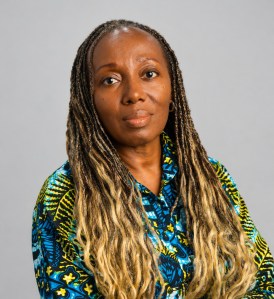
Ama Dadson is the Founder and CEO of AkooBooks
Audio, a pioneering Ghana-based digital publishing
company dedicated to amplifying African voices,
stories, and languages. Inspired by her mother who
lost her sight, she has led AkooBooks to international
recognition, with productions earning Audie Award
finalist spots and Kirkus Reviews acclaim.
Her expertise spans content development, audio
production, and leveraging digital formats to expand
global access to African literature. Ama serves as the Audio Ambassador for the
Frankfurt Book Fair 2025/26 and was the winner of the AFD Digital Challenge 2023.
She also received the Women In Tech Africa Startup of the Year Award 2021 and
was a Mastercard Foundation African EdTech Fellow in 2020.
A former Deputy Director of IT Services at the University of Ghana (2005–2022),
Ama has also advised UNEP DTIE on ICT and sustainability. She is committed to
strengthening Africa’s audio-storytelling ecosystem and building a vibrant global
market for African voices. (image: courtesy of Ama Dadson; bio: courtesy of Catalyst Press.)

