Today’s post comes to you from Jessica Powers.
Catalyst Press, founded by Jessica Powers, specializes in publishing African writers. It is also the organizer of the annual #ReadingAfrica Week. Read on to learn more.
GLLI: Could you tell our readers a little about yourself and give us a short history of Catalyst?
I launched Catalyst Press in 2017 to publish African writers in North America. In my opinion, Americans need the influx of other ideas, other experiences, other historical and social and cultural realities–a fresh stream of water into a possibly stagnant pond. But at the same time, I have become more and more committed to publishing Africans *for* Africans, wherever they are in the world. That means a strong focus on how to make books available throughout the continent, whether through distribution, co-publishing, or rights sales, not to mention translation.
I have worked in publishing since January 2002, when I started working as a publicist for Cinco Puntos Press, a U.S.-Mexico-border-based publisher known for bilingual books for kids and diverse books for all ages (and now an imprint of Lee & Low). That stood me in good stead but my love for Africans and African writing led me to launch my own company so I could focus on that. Last year, in addition to our own publishing program, we started co-publishing books already released by several august publishers in South Africa. Here I am, ten years and two hundred books later….
Why Africa? I grew up on the U.S.-Mexico border as a third-culture kid, but ended up working with street kids in Nairobi, Kenya the summer I turned nineteen. That led me to a couple of graduate degrees in African history, to learning Zulu (don’t ask me to speak it now but at one time, I could manage a conversation at the level of perhaps a five-year-old), and to writing my own novels set on the continent. It was only natural that I would decide to publish African writing.
We are based in both the United States and South Africa, with half my staff in South Africa and the other half scattered throughout the U.S.
GLLI: What would you say the philosophy and mission of Catalyst is? Who are your target readership and what could they get out of your books?
I chose the word “catalyst” because I see books as an agent of change–a spark, if you will, that can cause individuals, communities, even entire nations to change (and hopefully for the better!) Our main target readership is anybody who is curious about the world, who sees everybody as their “neighbor.” Our other target audience is all of the African people on the continent and in the diaspora who want to see themselves–and their neighbors in countries across the continent–depicted in art. And finally, of course, any reader who just wants a great read!
GLLI: Where can librarians in the U.S. or elsewhere acquire your titles and what could they expect from your books?
First of all, librarians in the U.S. can access all of our titles through their accounts at Ingram, as we are a publisher client of Ingram’s via Consortium, so distributed by them. We have offered a lot of children’s, YA, and Adult fiction and non-fiction titles.
We are about to reach 200 titles, so there’s a lot! Let me just highlight a couple?
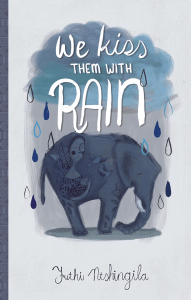
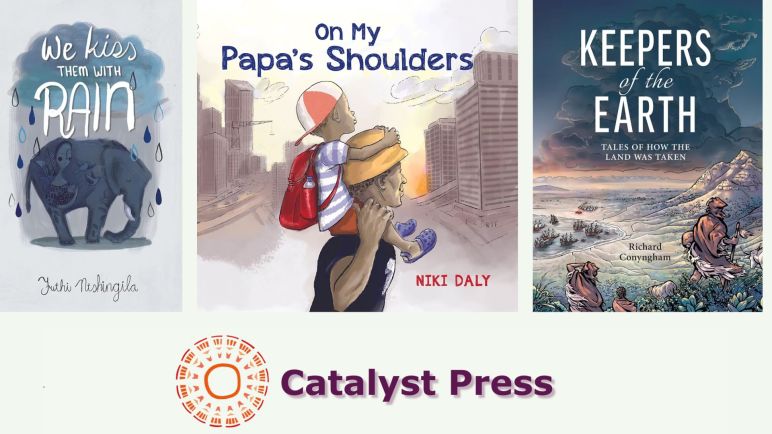
One of our seminal titles was We Kiss them With Rain by Futhi Ntshingila, originally published by Modjaji Books. (GLLI, tomorrow’s post is a spotlight on Modjaji Books.) This book has sold remarkably well! I have to admit, I didn’t know what to expect, but it got a starred review from both Kirkus and Shelf Awareness, and was a 2019 USBBY Outstanding International Book.
The description is simple: Life wasn’t always this hard for 14-year-old Mvelo. There were good times living with her mother and her mother’s boyfriend. Now her mother is dying of AIDS and what happened to Mvelo is the elephant in the room, despite its growing presence in their small shack. In this book, the things that seem to be are only a façade and the things that are revealed hand Mvelo a golden opportunity to change her fate.
To me, We Kiss them With Rain is a Shakespearean comedy, in that nothing and nobody is what they seem on the outside, and through circumstances revealing the truth, there is a happy ending after all.
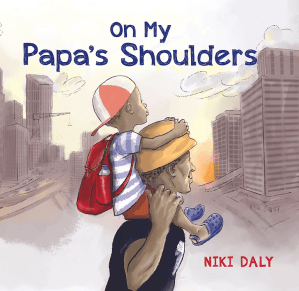
Another one of my favorites is On My Papa’s Shoulders by Niki Daly, a picture book, a Skipping Stones award winner for 2024. Whether it’s jumping in puddles with Tata in the rain, greeting the neighborhood cat on the quiet back streets with Gogo, or holding hands with Mama while rushing to make the bell, walking to school with family is the best. But nothing is better than walking to school with Papa. From high above, resting on Papa’s shoulders, all of the town is in perfect view, and Papa always says “I love you” when he says goodbye.
A sweet ode to fatherhood and the special relationships children share with each member of their family, On My Papa’s Shoulders reminds us that it’s not about where we’re going, but rather the people who walk with us along the way.
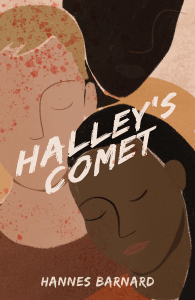
Last but not least, let me mention Halley’s Comet by Hannes Barnard, translated (by the author) from the original Afrikaans, a 2024 IBBY Honor List Selection, and a CBC Spring 2024 Showcase Selection.
In the final years of South Africa’s Apartheid era, an unlikely trio—a sheltered white rugby player, a black farmworker’s son, and an Indian shopkeeper’s daughter—discover the consequences of knowing the truth and having the courage to speak it. Halley’s Comet is the coming-of-age story of Pete de Lange, a white 16-year-old schoolboy, set in small-town South Africa in 1986. Pete lives a relatively sheltered life, primarily concerned with girls and rugby— until one January night changes everything. Thrust together with two complete strangers—Petrus, a black farmworker’s son and Sarita, an Indian shopkeeper’s daughter—the trio find themselves running for their lives from the vicious Rudie, whose actions will ripple far beyond that fateful night.
This era-defying friendship—sparked by a shared secret— challenges everything Pete thought he knew and believed. And when anti-Apartheid revolutionaries set their sights on the town, it will change the course of the three young people’s lives forever. Halley’s Comet is a story of friendship, love, change, taking chances, hope, a comet, and some pretty cool 80s music.
GLLI: Could you share with us what’s to come for the next couple of years?
So many great titles!
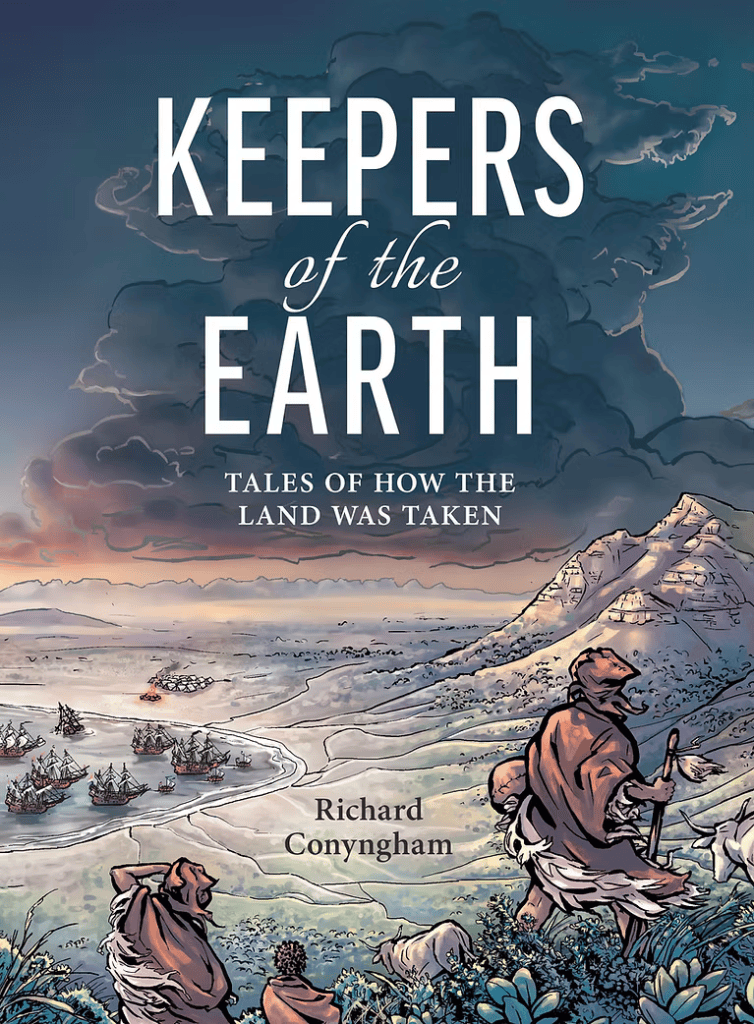
One of the books we’re bringing out next summer that we’re super excited about is a graphic history, Keepers of the Earth: How the Land Was Stolen by Richard Conyingham. The book is an elegy to the land in southern Africa and the indigenous people who first inhabited it. A collection of six quietly moving stories drawn from archival fragments and dramatized in the graphic medium, it explores belonging, loss, and the forces that drive human beings to conquer and destroy one another. Set in South Africa between the seventeenth and nineteenth centuries, its relevance cuts across time and place—a reminder that the land itself is a witness to history’s unfinished wrongs.
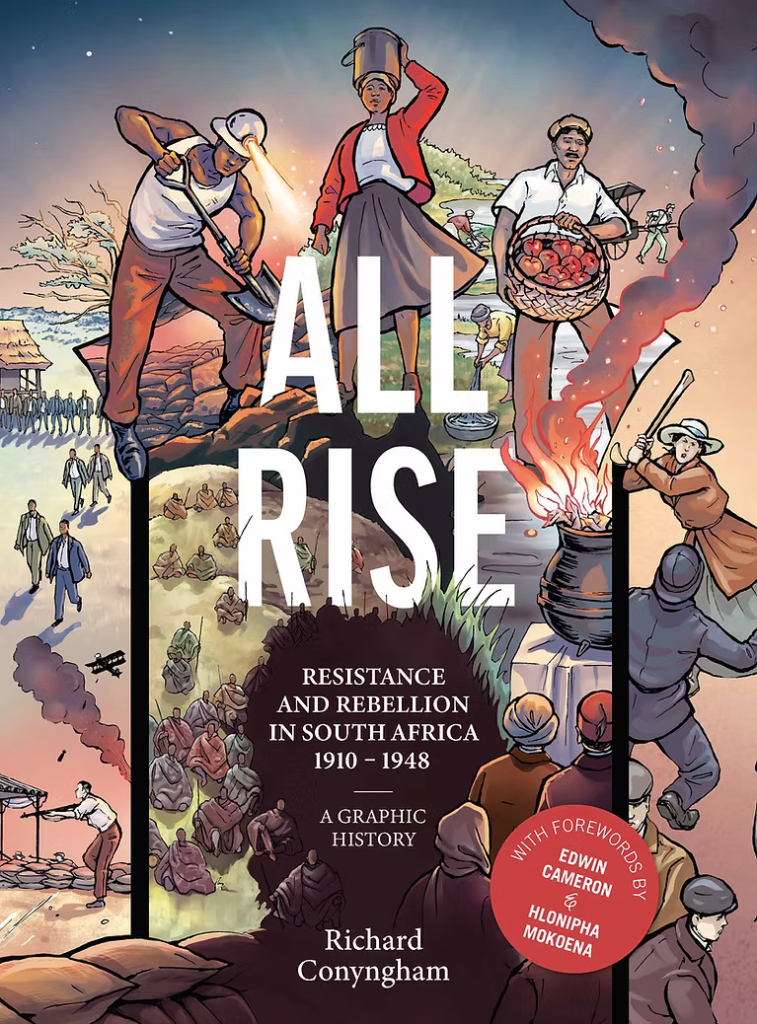
Richard Conyngham is the South African-born, Mexico-based author of the exquisite graphic history All Rise: Resistance and Rebellion in South Africa. In this follow-up volume Keepers of the Earth, he and eight of southern Africa’s finest comic artists deliver a spellbinding work of creative non-fiction, blending historical fact and archival record with indigenous myth and lore.
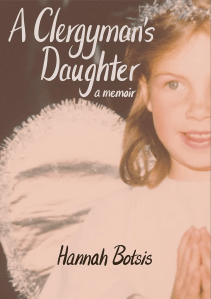
Another book we’re excited to be publishing via our co-publishing agreement with Modjaji Books is A Clergyman’s Daughter by Hannah Botsis, a memoir.
The son of a family of ‘happy Greek pagans’ finds God and decides to become a clergyman. His family don’t know what to think, and quite frankly neither does the small, white conservative congregation in the unglamorous northern suburbs of Cape Town when this young irreverent Reverend becomes their minister. He remains there for forty years, as South Africa moves from apartheid into democracy. Four decades later his incorrigible daughter tries to get to the bottom of whatever it was she was brought up in, unravelling the complicated ties between racism, religion, and love.
Unsentimental, often wry, and always honest, this is a father-daughter conversation about their family history, a nation’s scars, and why we remain part of communities that often break our hearts. It’s a memoir about the importance of love and belonging in a changing world—and the power of trying to understand one another, even when it feels nearly impossible.
GLLI: What are some hurdles Catalyst faces? What do you see as ways that such hurdles could be reduced?
Like all small publishers, we face a real dearth of funding. It’s always a struggle to pay staff, freelancers, and authors. It’s always a struggle to find the cash to print books. We manage, but people can help by buying books, preferably the retail option from our website, or by donating to us via our tax-deductible option via Fractured Atlas.
I mean, not to be the person who always brings up money, the elephant in the room–but every single one of the publishers here (GLLI: at the written Panel for #ReadingAfrica) could say the same thing!
GLLI: Is there anything else that you’d like to share with our readers?
In addition to publishing great books, we offer great opportunities for writers and readers to be part of our community through our newsletter, the writing classes we offer, and our annual #ReadingAfrica campaign. Come join us!
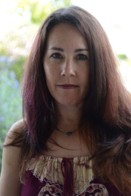
Jessica Powers is founder and publisher of Catalyst Press, which has specialized in publishing African writers since its founding in 2016. This year marks both its tenth anniversary and the publication of two hundred books. Catalyst Press has offices in Texas and Maine (USA), South Africa, and Kenya. Writing under the name J.L. Powers, she is also the author of nine award-winning books for all ages, including two novels set in KZN.

